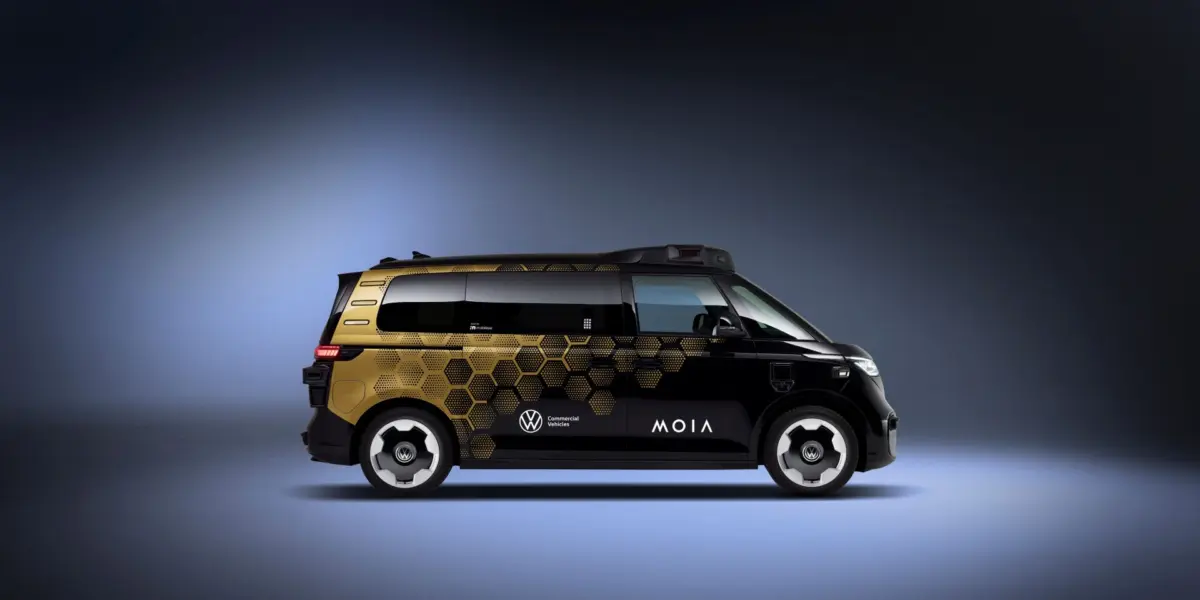
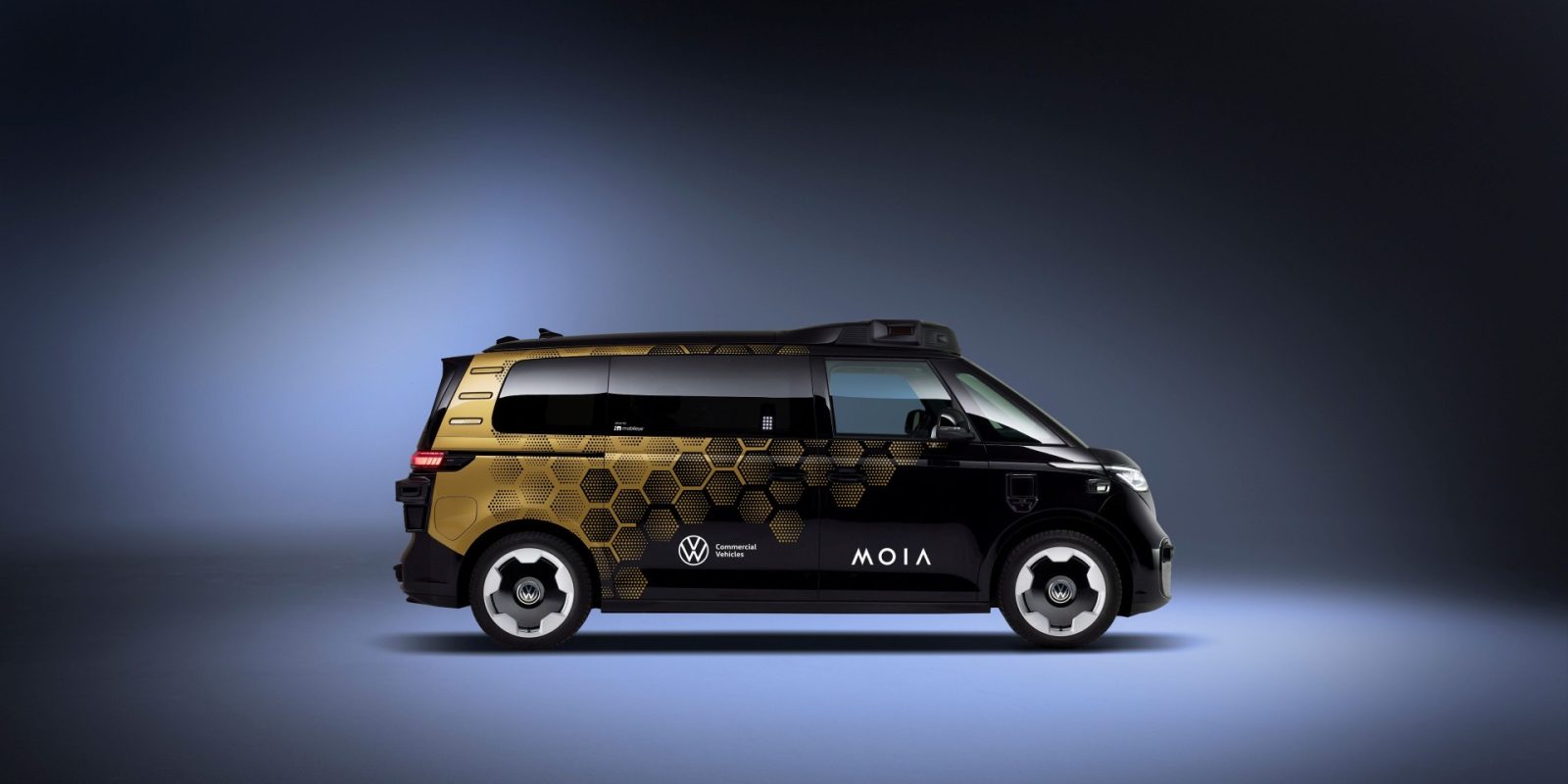
The commercial landscape of public transit and urban mobility is undergoing a tectonic shift. Volkswagen’s dedicated mobility subsidiary, MOIA, has officially reached a monumental milestone with the rollout of the ID. Buzz AD—Volkswagen’s first fully autonomous production vehicle engineered from the ground up specifically for modern mobility services.
Rather than merely retrofitting an existing consumer electric vehicle with aftermarket self-driving hardware, Volkswagen has conceptualized the ID. Buzz AD as an integrated ecosystem node. MOIA is not simply delivering a van that can navigate city streets without a human behind the wheel; the company is bundling the vehicle with an exhaustive, turn-key suite of tools tailored for both public and private transit operators. This comprehensive package includes the core autonomous driving technology, intelligent fleet management software, round-the-clock passenger support systems, and rigorous operator training protocols.
By providing a holistic solution, Volkswagen and MOIA are effectively dismantling the traditional barriers to entry for autonomous transit. Cities, municipalities, and private fleet operators can now deploy scalable, driverless shuttle services with unprecedented speed, heightened safety, and economic efficiency. Following an initial launch phase across Hamburg, Germany, the autonomous ID. Buzz shuttles are slated for widespread commercial deployment across major urban centers in Europe and the United States by 2026. This strategic initiative cements the Volkswagen Group as an undeniable frontrunner in the multi-billion-dollar global autonomous transport market.
Detailed Chronology and Technical Architecture
The journey toward the realization of the ID. Buzz AD represents years of rigorous research, technological partnerships, and regulatory calibration. To understand the gravity of MOIA’s latest deployment, it is necessary to examine the vehicle’s architectural lineage and the precise integration of its autonomous systems.
The Evolution of the ID. Buzz Platform
When Volkswagen initially conceptualized the modern electric reincarnation of its iconic Microbus, the modular electric drive matrix (MEB) platform was designed with scalability in mind. While consumer variants of the ID. Buzz captured global attention for their retro-futuristic aesthetic and family-friendly utility, the commercial and autonomous engineering teams at Volkswagen Commercial Vehicles and MOIA were quietly laying the groundwork for a Level 4 commercial workhorse.
The ID. Buzz AD transcends the limitations of a typical passenger car modification. Certified rigorously to stringent automotive safety standards, the vehicle’s physical and electrical architecture is optimized for continuous, high-utilization commercial operation.
Inside the Sensor Suite and AI Processing
At the literal and figurative heart of the vehicle’s self-driving capability is Mobileye’s advanced self-driving system. Mobileye, an industry leader in computer vision and automated driving solutions, provides the sensory perception engine that allows the ID. Buzz AD to interpret complex urban environments in real-time.
To achieve true Level 4 autonomy—which permits the vehicle to operate completely unassisted within designated operational design domains (ODDs)—the ID. Buzz AD is equipped with an exhaustive array of 27 distinct environmental sensors:
13 High-Resolution Cameras: Providing a comprehensive visual spectrum overlay, detecting traffic lights, pedestrians, lane markings, and sudden obstacles.
9 LiDAR Sensors: Utilizing light detection and ranging to create precise, real-time 3D depth maps of the vehicle’s surroundings, functioning seamlessly in adverse weather conditions and low-light scenarios.
5 Advanced Radars: Offering long-range velocity and distance tracking of surrounding traffic, cutting through heavy rain, fog, and snow where optical cameras might experience degraded performance.
The fusion of data from these 27 sensors is processed by on-board artificial intelligence algorithms capable of making split-second driving decisions. Furthermore, the system is backed by a redundant safety architecture, including remote monitoring capabilities and human backup personnel for rare, highly complex edge cases.
The AD MaaS Ecosystem
Hardware and perception are only half the battle in commercial autonomy. To manage a fleet of driverless vehicles effectively, operators require sophisticated software infrastructure. This is where MOIA’s proprietary Autonomous Driving Mobility-as-a-Service (AD MaaS) platform comes into play.
The AD MaaS platform serves as the central nervous system for the ID. Buzz AD fleet. It handles dynamic ride-pooling, matches passengers with optimal vehicles, coordinates charging cycles, manages routing optimization in real-time, and handles emergency response protocols. By integrating passenger booking applications directly with fleet management software, MOIA has ensured that the end-user experience is as seamless as hailing a traditional rideshare, while backend operators retain total visibility and control over their vehicle assets.
Supporting Context, Metrics, and Fleet Enablement
The deployment of autonomous vehicles has historically stumbled not due to technological failures, but because of operational friction. Integrating self-driving vehicles into existing municipal transit frameworks requires navigating complex regulatory environments, driver training deficits, and maintenance overhead. MOIA’s strategy addresses these pain points head-on through its comprehensive Operator Enablement framework.
Overcoming Operational Friction
Operators venturing into autonomous transit are rarely equipped to manage the nuances of AI-driven fleet maintenance, simulation testing, and live operational monitoring without extensive support. MOIA’s Operator Enablement program bridges this gap by offering:
Simulation and Digital Twin Testing: Operators can test routes, passenger load demands, and traffic scenarios in a virtual environment before a single vehicle hits physical asphalt.
Comprehensive Training Pipelines: Staff are trained not as traditional drivers, but as fleet managers, remote intervention specialists, and maintenance technicians.
End-to-End Deployment Support: From regulatory navigation to charging infrastructure integration, MOIA provides consulting and technical implementation support across urban, suburban, and rural operating environments.
Market Positioning and Financial Projections
The global market for autonomous mobility services is projected to balloon into a multi-billion-dollar enterprise over the remainder of this decade. Traditional public transit systems face mounting budget pressures, declining ridership in off-peak hours, and the persistent challenge of providing first-mile/last-mile connectivity.
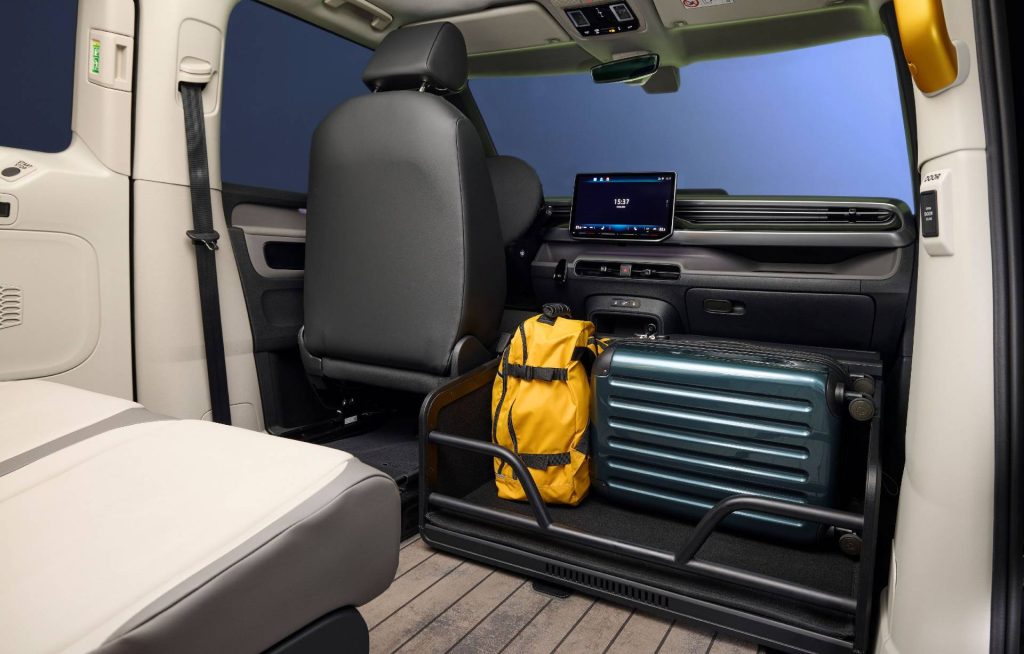
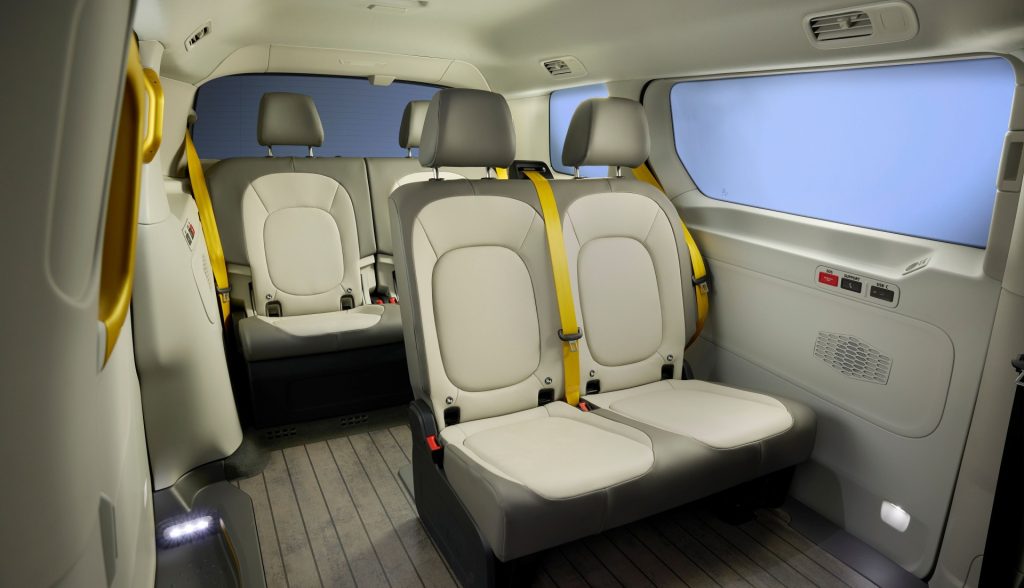
Autonomous ride-pooling fleets utilizing high-capacity vehicles like the ID. Buzz AD offer a viable economic remedy. With a spacious cabin designed to comfortably transport multiple passengers concurrently, the vehicle drastically lowers the cost-per-passenger-mile compared to single-occupant robotaxis. This efficiency is expected to drive widespread adoption among municipal transit authorities looking to modernize their offerings without exponentially expanding their operational budgets.
Official Statements and Leadership Vision
The strategic importance of the ID. Buzz AD rollout has been underscored by top-tier leadership within the Volkswagen Group, emphasizing a unified vision for the future of urban mobility.
Volkswagen Group CEO Oliver Blume highlighted the holistic nature of the offering during the initial rollout announcement:
"Our driverless ID. Buzz shuttles are part of a fully connected 360-degree package made up of leading technology, an attractive vehicle fleet, intelligent fleet management, and a customer-centric booking system — all from a single source and quickly scalable to fleet size on the road. This positions the Volkswagen Group among the frontrunners in a multi-billion-dollar global growth market."
Echoing this sentiment, MOIA CEO Sascha Meyer focused on the societal and human-centric implications of integrating artificial intelligence into public transit infrastructure:
"Mobility is a basic human need. Artificial intelligence opens entirely new opportunities to give people access to flexible, shared, comfortable, and affordable mobility."
By aligning technological capability with social utility, Volkswagen and MOIA are framing autonomy not merely as a commercial product, but as an essential upgrade to human infrastructure.
Future Outlook: The Road to 2026 and Beyond
As MOIA prepares to expand its autonomous ID. Buzz shuttles from the initial testbeds in Hamburg to broad commercial scaling across Europe and the United States by 2026, the industry will be watching closely.
The success of the ID. Buzz AD will likely serve as a litmus test for the viability of OEM-led autonomous mobility services. While numerous technology startups have attempted to crack the robotaxi code with heavily modified passenger sedans, Volkswagen’s approach leverages its massive manufacturing scale, commercial vehicle expertise, and dedicated mobility software infrastructure.
Furthermore, recent strategic moves—such as partnerships aimed at deploying thousands of Volkswagen ID. Buzz vans onto major ride-hailing networks like Uber—signal that the company’s autonomous ambitions extend far beyond closed-loop municipal pilots.
As cities continue to grapple with congestion, carbon emissions, and the rising cost of public infrastructure, the arrival of scalable, turnkey autonomous transit solutions like the ID. Buzz AD could not be more timely. If MOIA and Volkswagen can successfully execute their 2026 rollout blueprint, the future of urban mobility may finally look less like a sci-fi experiment and more like a quiet, efficient, electric reality.