
Executive Overview
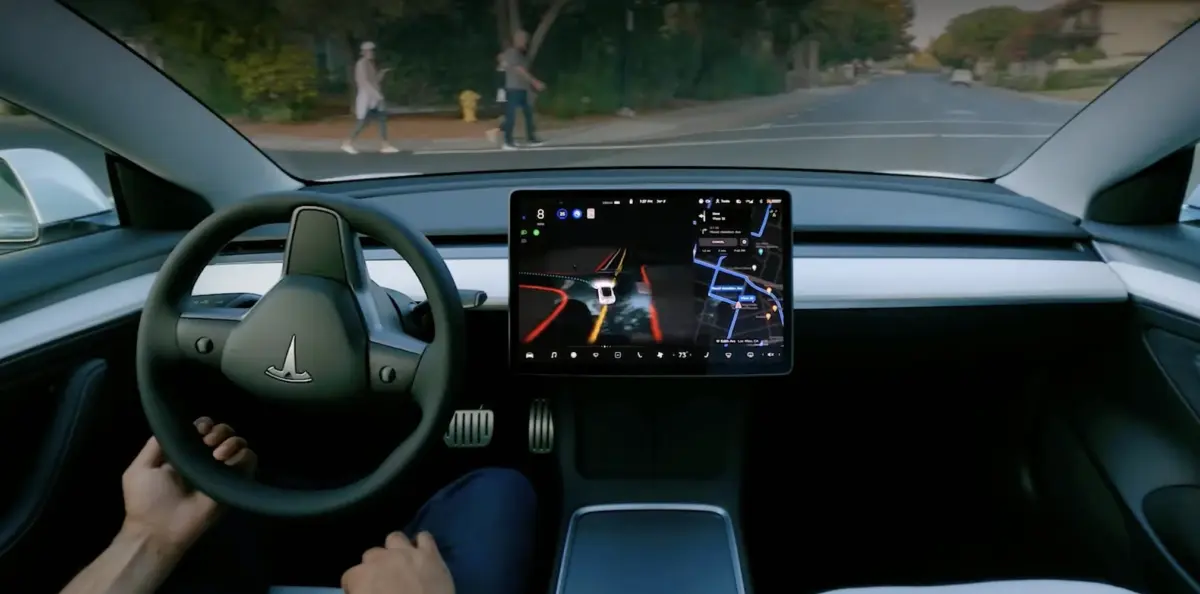
Tesla has issued a fierce denial following viral social media rumors that it has dismantled its Full Self-Driving (FSD) development team and abandoned its specialized operations in China. Categorically rejecting claims that its Shanghai data center has been vacated or that its autonomous driving staff has been laid off, the American electric vehicle pioneer insisted that its local operations are “operating normally.” In a move that underscores the extreme sensitivity of the situation, Tesla confirmed it has formally reported the rumors to local law enforcement, treating the speculation not merely as bad press, but as malicious, market-moving misinformation.
The rumors arrived at a precarious time for Elon Musk’s company. While Tesla fiercely defends the structural integrity of its Chinese operations, the company remains ensnared in a frustrating regulatory limbo. China is notably absent from Tesla’s official global rollout list for FSD subscriptions—a roster that currently encompasses 12 countries, including the United States, Canada, Australia, South Korea, and several European markets.
This contradiction highlights a deeper strategic crisis: while Tesla’s U.S. website continues to list China as a market where FSD (Supervised) is technically available for use, the software has faced repeated regulatory road-blocks. Renamed locally as "Tesla Assisted Driving," the feature lacks a concrete launch date or explicit subscription pricing for Chinese consumers.
Meanwhile, domestic EV behemoths such as Huawei, Xiaomi, and Xpeng are aggressively deploying advanced urban navigation and Level 2 driver-assistance suites directly onto city streets across China. As domestic rivals outpace Tesla in rolling out commercial autonomous features, the stakes for Musk’s ambitions in Asia have never been higher. This report examines the origins of the viral rumors, the regulatory and technical hurdles Tesla faces, the intense competitive pressures from local manufacturers, and what the future holds for FSD in the world’s most competitive EV ecosystem.
Detailed Chronology: The Anatomy of a Rumor and Tesla’s Aggressive Pushback
The friction surrounding Tesla’s autonomous driving software in China reached a boiling point on a Tuesday, when incendiary reports began cascading across Chinese social media platforms like Weibo and WeChat. The rumors alleged that Tesla had effectively thrown in the towel on its long-awaited FSD rollout in China. Specifically, speculators claimed that the company’s dedicated Shanghai data center—established specifically to process the massive streams of driving telemetry required to train neural networks for Chinese road conditions—had been hastily vacated. Furthermore, the rumors asserted that local liaison teams had been systematically withdrawn and all associated autonomous engineering positions eliminated.
These claims quickly gained traction because they fed into a broader, increasingly plausible narrative: that Tesla was quietly executing a tactical retreat from an arduous, delayed effort to bring FSD to the world’s largest automotive market.

Tesla China reacted with uncharacteristic swiftness and hostility. On Wednesday, representatives from Tesla pushed back forcefully against the reports in statements to prominent local outlets, including Tencent Tech and the National Business Daily. The company clarified that the Shanghai data center is functioning entirely without disruption, that recruitment for autonomous driving and AI engineering roles is actually accelerating, and that localization work is progressing steadily.
In an aggressive escalation, Tesla announced that it had officially reported the purveyors of the rumors to local police. In the Chinese regulatory and corporate landscape, reporting online rumors to authorities is a powerful deterrent. However, it also highlights how deeply sensitive Tesla is to any narrative suggesting that its autonomy strategy in China is faltering. For an automaker whose valuation relies heavily on the promise of eventual robotaxi deployment and widespread FSD monetization, a perception of retreat in its most vital overseas market represents an existential threat to its investor narrative.
Supporting Context & Metrics: Regulatory Hurdles and the Contradiction of Market Lists
To understand why these rumors struck such a sensitive nerve, one must examine the timeline of Tesla’s regulatory struggles in China over the past year.
The Data Localization Breakthrough
In February, industry reports confirmed a critical milestone: Tesla had successfully secured official AI training capability within mainland China. This was a non-negotiable prerequisite for any foreign autonomous driving firm operating under Beijing’s stringent data security laws, which mandate that all domestic driving telemetry must be stored and processed locally rather than transferred back to servers in the United States. Achieving local AI training capability was widely viewed as the hardest technical and political hurdle standing between Tesla and an eventual FSD release.
Elon Musk’s Premature Proclamation
However, progress has been repeatedly dogged by regulatory friction. In January, Chinese regulatory bodies effectively shut down public comments made by Elon Musk, who had boldly claimed that FSD would secure official government approval for use in China “next month.” The swift public correction by regulators exposed the friction between Tesla’s aggressive Silicon Valley marketing cadence and Beijing’s methodical, safety-first bureaucratic approach to autonomous software.
The Market List Paradox
The structural confusion is best exemplified by a glaring contradiction in Tesla’s public-facing documentation:

- The Global Subscription List: Tesla’s updated global roster of markets where FSD (Supervised) subscriptions can be purchased lists 12 countries. The list includes the United States, Canada, Australia, South Korea, and various European nations. China is conspicuously absent.
- The U.S. Web Portal: Conversely, Tesla’s U.S. website continues to list China among the regions where FSD Supervised is “available for use.”
This dichotomy captures the essence of Tesla’s China autonomy story throughout the year. In May, Tesla formally announced FSD availability in China, subsequently rebranding the software as "Tesla Assisted Driving" on its Chinese consumer portal to comply with local terminology and liability laws. Yet, months later, the company has still failed to publish subscription pricing, safety disclaimers for end-users, or a transparent timeline for a full rollout.
Local Rivals Aren’t Waiting: The Competitive Pressure Cooker
While Tesla struggles to navigate the regulatory maze and quash internet rumors, its domestic competitors are aggressively capturing market share with sophisticated autonomous driving solutions.
The competitive landscape in China has evolved at a dizzying pace. Domestic giants such as Huawei (via its automotive partnerships) and consumer electronics giant Xiaomi have rapidly expanded advanced urban navigation features. These systems operate seamlessly on congested city streets across tier-one and tier-two Chinese cities—delivering precisely the capability that Tesla is still trying to clear through bureaucratic channels.
At the same time, established Chinese EV makers like Xpeng are preparing to launch upgraded iterations of their proprietary Level 2+ driver-assistance systems. These domestic offerings have reached a level of technological maturity that makes them fiercely competitive against even the localized versions of Tesla’s FSD software.
This dynamic creates a perilous competitive gap for Tesla. The company’s overall market share in China is already under intense pressure from an aggressive wave of domestic competitors offering cheaper, feature-rich electric vehicles loaded with cutting-edge cabin tech and advanced driver-assistance systems (ADAS) as standard equipment. Tesla’s assisted-driving software was intended to serve as its ultimate differentiator—a high-margin software product capable of maintaining brand loyalty and pricing power. Every month that passes without a full FSD rollout is another month for local rivals to cement their dominance in the minds of tech-savvy Chinese consumers.
Official Statements and Industry Reactions
Tesla’s public relations and executive teams have maintained a strict posture of denial regarding the alleged withdrawal, emphasizing that recruitment and development efforts remain robust.

Independent industry analysts point out that filing police reports over social media speculation is a standard, albeit aggressive, corporate playbook in China. Chinese regulatory authorities maintain a zero-tolerance policy toward the generation and dissemination of market-moving misinformation, particularly when it targets major foreign direct investors that employ tens of thousands of local workers and contribute significantly to local GDP.
However, industry observers note that while Tesla’s forceful legal response successfully swats down the rumor of an outright operational shutdown, it fails to address the underlying commercial anxiety. Statements assuring the public that recruitment is "accelerating" and that work is "progressing steadily" echo the exact forward-looking language that Tesla executives have repeated for well over a year. Until regulatory clearance translates into paying customers utilizing full urban FSD on Chinese public roads, skepticism from investors and consumers alike will persist.
Future Outlook: Navigating the Road Ahead
The most accurate assessment of Tesla’s current position in China is one of prolonged, highly scrutinized stasis. The fundamental technical bottleneck—data localization—has been successfully cleared, allowing Tesla to train its neural networks on indigenous driving data. However, the commercial deployment of a wide-scale urban FSD release remains firmly gated by Beijing’s deliberate, multi-layered regulatory approval process.
Denying a retreat from Shanghai is easy; securing the regulatory green light to deploy unmonitored or deeply integrated autonomy across China’s complex urban environments is an entirely different challenge.
As Tesla moves through the remainder of the year, all eyes will remain on Beijing. If regulatory approval is finally granted, Tesla could experience a massive resurgence in its Chinese software monetization strategy, potentially leveling the playing field against domestic rivals like Huawei and Xpeng. If, however, the regulatory stalemate continues, Tesla risks seeing its technological edge permanently eroded by domestic competitors who are shipping features today rather than promising them tomorrow.
For now, Tesla’s Shanghai data center remains lit, its engineers continue to train neural networks, and the company stands guard—both at its facilities and in the courts—against any narrative that threatens its long-term bet on Chinese autonomy.
