

Executive Overview
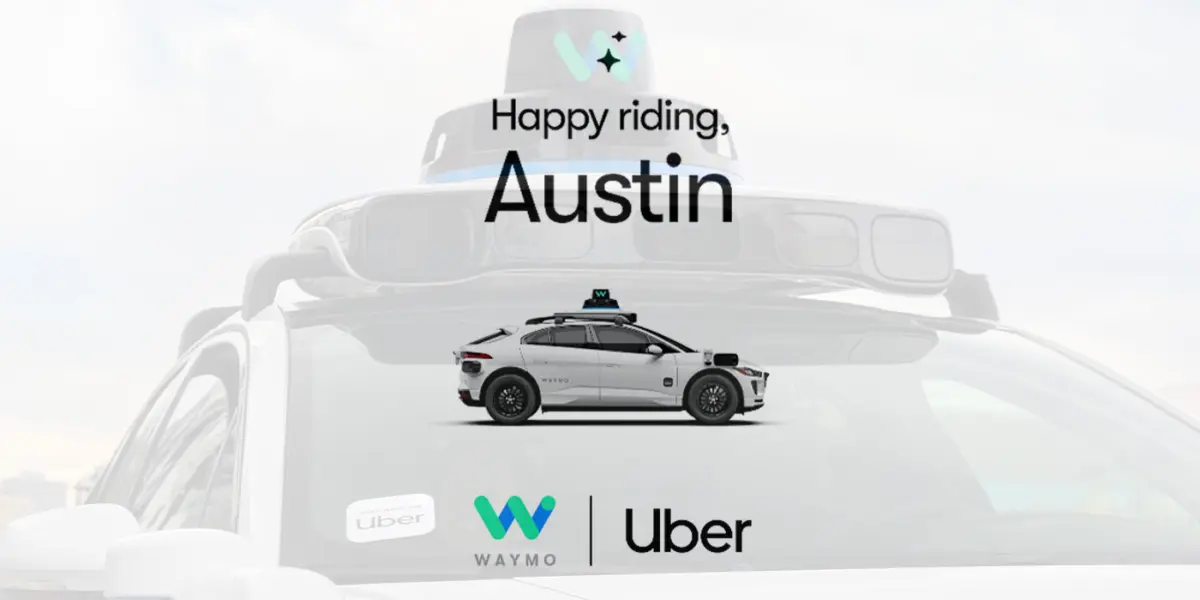
The commercialization of autonomous transportation reached a significant new milestone as Alphabet-backed Waymo officially launched its fully autonomous Waymo One ride-hailing service in Austin, Texas. Marking a distinct evolution in how consumers access driverless technology, this deployment is available exclusively to customers through the Uber application.
This strategic rollout is not merely another city launch for the dominant robotaxi provider; it represents the operational cornerstone of a multi-year partnership between the global ride-sharing giant and the autonomous vehicle pioneer. In Austin, Uber is taking the reins on managing and dispatching the Waymo fleet—a first-of-its-kind arrangement that could redefine how ride-hailing platforms integrate third-party autonomous systems.
Covering a substantial 37-square-mile footprint encompassing the heart of Austin—from downtown corridors to historic neighborhoods like Hyde Park and Montopolis—this launch provides a practical look at how robotaxis scale in complex, fast-growing American metropolitan areas. Backed by a massive $5.6 billion funding round secured in late 2024 and sustained by the financial and engineering muscle of parent company Alphabet Inc. (Google), Waymo is pressing forward while public skepticism and regulatory debates regarding autonomous safety continue to swirl.
With Atlanta, Georgia, slated for a similar integration later this year and Miami targeted for 2026, the Austin deployment serves as the vital proving ground for the future of mass-market autonomous mobility.
Detailed Chronology: From Concept to Austin’s Streets
To fully appreciate the gravity of the Austin launch, one must trace the deliberate, highly calculated trajectory Waymo and Uber have taken over recent years to merge their technological ecosystems.
The Foundation of a Strategic Alliance
The groundwork for the Austin integration was laid long before the first driverless Jaguar I-Pace hit Texas tarmac. In May 2023, Waymo and Uber signed a multi-year partnership designed to bridge the gap between autonomous vehicle (AV) development and widespread consumer accessibility. While Waymo had spent years building its proprietary Waymo One ride-hailing app in cities like San Francisco and Phoenix, scaling consumer acquisition independently in every new market presented massive logistical and marketing hurdles.
Conversely, Uber possessed a ubiquitous global user base, established local regulatory frameworks, and sophisticated dispatching infrastructure. The alliance aimed to marry Waymo’s industry-leading Driver software with Uber’s massive marketplace network.
![Waymo One begins autonomous rides in Austin, Texas, exclusively through Uber [Video]](https://electrek.co/wp-content/uploads/sites/3/2025/03/Waymo-Austin-Uber.jpg?quality=82&strip=all&w=1400)
Capital Infusion and Accelerated Expansion Plans
The momentum behind Waymo’s 2025 roadmap accelerated drastically in October 2024, when the company closed a massive $5.6 billion Series C funding round. Led by Alphabet, with participation from prominent external investors, this capital injection provided Waymo with the financial runway necessary to accelerate its hardware procurement, software iterations, and geographic expansion.
During the funding announcement, Waymo leadership explicitly detailed plans to expand Waymo One services into Austin and Atlanta throughout 2025, leveraging their ongoing collaboration with Uber to streamline market entry.
Precursor Markets and Testing Phases
Waymo’s path to Austin involved years of meticulous mapping, manual testing, and incremental validation. As the company expanded its commercial service areas across Los Angeles, San Francisco, and Phoenix through late 2023 and 2024, its autonomous fleet accumulated millions of miles in diverse traffic conditions.
Austin was subjected to rigorous testing phases where safety drivers mapped the unpredictable Texas traffic patterns, construction zones, and notoriously vibrant nightlife corridors. By late 2024 and early 2025, the stage was set for the transition to fully driverless commercial operations.
Launch Day in Austin
Beginning today, the vision realized in 2023 becomes operational reality. Austin residents opening the Uber app can now experience commercial, uncrewed autonomous transport. By integrating directly into the standard Uber UI, the launch eliminates friction for everyday users, seamlessly blending human-driven vehicles and autonomous machines into a single digital marketplace.
Supporting Context & Metrics: Safety, Infrastructure, and Economics
While consumer novelty drives initial ridership, the long-term viability of the robotaxi industry rests heavily on quantifiable safety data, regulatory approval, and operational economics.
Safety Performance and Empirical Data
Public skepticism regarding full-fledged robotaxi operations in major metropolitan areas remains a hurdle for the industry. However, Waymo continues to amass a robust body of empirical data demonstrating that its autonomous vehicles outperform human drivers across several critical safety metrics.
![Waymo One begins autonomous rides in Austin, Texas, exclusively through Uber [Video]](https://electrek.co/wp-content/uploads/sites/3/2025/03/Waymo-Austin-Uber-Map.jpg?quality=82&strip=all&w=1024)
Independent studies and internal data released by Waymo indicate that its robotaxis experience significantly fewer injury-causing crashes compared to human-driven counterparts operating in identical environments. By removing human variables—such as distraction, fatigue, intoxication, and aggressive driving—Waymo’s sensor suite (comprising lidar, radar, and high-resolution cameras) provides a 360-degree, latency-free field of vision that reacts faster than human biological reflexes.
The 37-Square-Mile Austin Footprint
The Austin service area spans approximately 37 square miles, strategically chosen to capture high-density commercial zones, residential communities, and cultural hubs. The operational boundary includes:
- Downtown Austin: Navigating the dense, pedestrian-heavy urban core, complex one-way systems, and weekend nightlife traffic.
- Hyde Park: Managing tight residential streets, parked vehicles, and local bicycle traffic.
- Montopolis: Integrating suburban-to-urban transitional thoroughfares.
Within this zone, riders matched with a Waymo vehicle will ride in the company’s current flagship autonomous EV platform: the Jaguar I-Pace. (Though vehicle line-ups will inevitably evolve as newer hardware iterations are introduced to the fleet).
The Mechanics of the Uber Integration
The user experience in Austin has been meticulously designed for simplicity through the Uber application:
- Opt-In Booking: When customers request a ride via UberX, Uber Comfort, Uber Green, or Uber Comfort Electric within the designated 37-square-mile zone, they may be automatically matched with a Waymo vehicle if one is available nearby.
- Digital Access Control: Once the autonomous vehicle arrives, riders use the Uber app to remotely unlock the doors and open the trunk to load luggage or personal items.
- In-Cabin Onboarding: Upon entering the vehicle, passengers use interface screens inside the cabin to begin the trip, adjust climate settings, or contact remote support if assistance is required.
Official Statements and Industry Implications
The unique nature of the Austin rollout—where Uber acts as the fleet manager and dispatcher for Waymo vehicles—has sent ripples through the mobility and tech sectors.
Industry analysts view this arrangement as a potential blueprint for the future of autonomy. Building and maintaining a dedicated, proprietary ride-hailing app, customer service network, and local fleet-cleaning operation in dozens of global cities requires staggering capital expenditures. By outsourcing the marketplace management and dispatching layer to Uber, Waymo can concentrate its engineering prowess on what it does best: developing the autonomous Driver software and managing vehicle hardware maintenance.
For Uber, the partnership solves a critical existential question: how to remain the dominant marketplace platform even if personal vehicle ownership and human-driven ride-share models face disruption from autonomy. By hosting Waymo on its app, Uber ensures that whether a customer requests a human driver or a robotaxi, Uber remains the primary transactional gateway.
![Waymo One begins autonomous rides in Austin, Texas, exclusively through Uber [Video]](https://electrek.co/wp-content/themes/ninetofive/dist/images/google-preferred-source-badge-dark.png)
While neither company has disclosed the exact revenue-sharing or operational cost splits of this first-of-its-kind arrangement, executives from both firms have repeatedly emphasized that seamless consumer access is paramount to driving mass adoption. The performance of the Austin fleet will serve as a heavily scrutinized case study for investors and municipal regulators worldwide.
Future Outlook: Atlanta, Miami, and the Road Ahead
The launch in Austin is merely the opening salvo for Waymo’s aggressive 2025 expansion strategy.
Expanding the Uber Partnership to Atlanta
Following the operational rollout in Austin, Waymo and Uber have confirmed that their partnership will expand to Atlanta, Georgia, later this year. Atlanta presents a distinct set of infrastructural and traffic challenges, characterized by sprawling suburban connections, massive highway interchanges, and high congestion rates. Successfully deploying robotaxis in Atlanta will further validate the geographic adaptability of the Waymo Driver.
Looking Toward Miami in 2026
Looking further down the pipeline, Waymo announced in late 2024 that Miami, Florida, is slated for a robotaxi rollout in early 2026. Miami’s unique mix of high-speed interstate corridors, unpredictable tropical weather events, dense pedestrian tourism zones, and international driving behaviors will push the autonomous software to new levels of environmental complexity.
Regulatory and Public Acceptance Horizons
As Waymo scales its operations from thousands of weekly rides to hundreds of thousands, the company faces ongoing scrutiny from municipal governments, transit unions, and safety advocates. Issues concerning emergency vehicle interactions, temporary construction zone navigation, and curbside drop-off congestion remain focal points for city planners.
However, with nearly $5.6 billion in fresh capital, the backing of Alphabet, and a powerful distribution partnership with Uber, Waymo is transitioning from an experimental Silicon Valley moonshot into a permanent fixture of urban public transit.
As Austin residents step into driverless Jaguar I-Paces via their familiar Uber apps today, they are not just taking a taxi ride—they are participating in the living history of transportation’s most profound transformation in a century. All eyes now turn to the Lone Star State to see how the public embraces the future, and how smoothly Uber and Waymo can manage the road ahead.
