


LONDON — In a strategic move to bolster its technological capabilities and tap into one of the world’s most sophisticated technology ecosystems, American electric vehicle (EV) pioneer Rivian has announced the opening of a brand-new engineering and development office in London, United Kingdom.
The announcement, made early this morning, marks a significant milestone in Rivian’s international expansion strategy. While the company is widely recognized for its robust lineup of adventure-ready electric trucks and SUVs—such as the R1T and R1S—its sights are now firmly set on securing a leading position in the fiercely competitive artificial intelligence (AI) and autonomous driving landscape.
By establishing a specialized hub in the British capital, Rivian aims to leverage the UK’s renowned talent pool in AI engineering, software development, and machine learning. This move underscores the automaker’s long-term vision: transforming its vehicles from traditional mechanical and electrical transports into rolling, continuously evolving software-defined platforms.
Executive Overview: Bridging Silicon Valley and European Engineering
Rivian’s expansion to the UK is not merely an administrative or sales-driven branch office; it is a laser-focused engineering initiative designed to solve some of the most complex challenges in modern mobility. The London hub will act as a specialized center for artificial intelligence engineering, feeding critical algorithmic advancements back into the company’s core vehicle architectures.
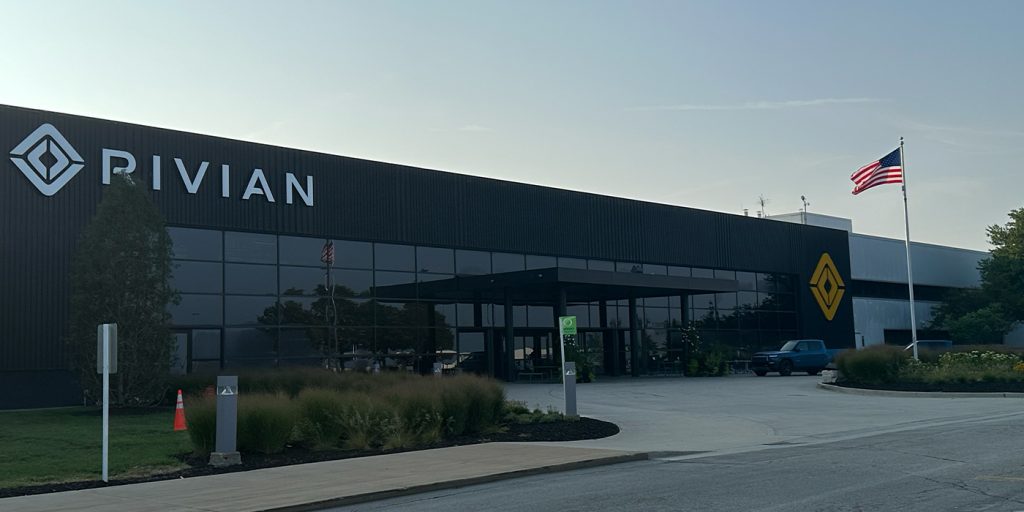
At present, Rivian is headquartered in Palo Alto, California, with its primary manufacturing behemoth located in Normal, Illinois. The company also maintains a significant corporate and R&D footprint across the United States, including facilities in Irvine and Carson, California; Wittmann, Arizona; and Plymouth, Michigan. Internationally, Rivian’s footprint spans Vancouver, British Columbia; Amsterdam, the Netherlands; and Belgrade, Serbia.

The addition of the London office weaves the UK into the company’s global web of technical excellence. In recent years, the UK has cultivated a reputation as a global powerhouse in artificial intelligence research and development—spurred by world-class academic institutions, a rich history of computer science breakthroughs, and a thriving startup ecosystem. By planting its flag in London, Rivian positions itself directly adjacent to a dense concentration of elite engineering talent, positioning the company to scale its autonomous driving ambitions more rapidly than ever before.
Detailed Chronology: From Adventure-Lifestyle Brand to Software-Defined Powerhouse
To understand the significance of Rivian’s London expansion, one must trace the company’s rapid evolution from an ambitious EV startup into a mature automotive manufacturer with a sharp focus on software architecture.
The Foundation and US Scale-Up
Founded by Robert Scaringe in 2009, Rivian spent over a decade in stealth mode developing its proprietary "skateboard" platform—a flexible chassis architecture housing the battery pack, drive units, suspension, and braking systems all below the height of the wheels.
By 2021, the company achieved a monumental milestone by launching the R1T pickup truck, closely followed by the R1S SUV. Manufacturing commenced at the company’s sole production facility in Normal, Illinois, a massive plant that previously served as a Mitsubishi manufacturing hub. To support future volume demands, Rivian has also laid out extensive plans for a second production footprint situated approximately 40 minutes outside of Atlanta, Georgia.
Going Global
As vehicle deliveries scaled domestically, Rivian began expanding its corporate and engineering footprint internationally. The establishment of European operations in Amsterdam provided a strategic base for future commercial deployment, while the technical office in Belgrade, Serbia, bolstered software engineering capabilities.

Parallel to these geographical expansions, Rivian quietly restructured its vehicle electronics and software stacks. The introduction of the second-generation (Gen2) vehicle lineup represented a tectonic shift for the brand. Abandoning a legacy supplier-dependent electrical architecture, Rivian engineered its Gen2 vehicles from the ground up with an AI-centric approach, drastically reducing the number of electronic control units (ECUs) and implementing a centralized, high-performance computing network capable of supporting advanced driver-assistance systems (ADAS) and over-the-air (OTA) updates.
Supporting Context & Metrics: The Race for the "Large Driving Model"
Rivian’s decision to plant an AI hub in London is driven by an urgent industry-wide imperative: the transition from rule-based driving assistance to neural-network-driven autonomous capabilities.
The Evolution of the Autonomy Platform
Currently, Rivian vehicles are equipped with the company’s proprietary Autonomy Platform, which enables hands-free, eyes-on highway driving. While this technology places Rivian on par with many modern luxury EV competitors, the automaker’s roadmap points toward much higher levels of autonomous functionality.
According to technical briefs released by the company, Rivian’s Gen2 vehicles serve as data-gathering powerhouses. As the fleet grows in volume and vehicles log millions of real-world miles, the volume of edge-case driving data flowing back to Rivian servers scales exponentially. This telemetry is vital for training the deep learning models required for complex urban and rural navigation.
Building a Large Driving Model (LDM)
In its latest announcements, Rivian articulated a strategy centered on the creation of a Large Driving Model (LDM). By combining the strength of its advanced sensor perception platform with robust in-vehicle data infrastructure, the automaker intends to train foundational AI models capable of understanding highly complex, unpredictable driving scenarios.
- Perception: Utilizing a suite of high-resolution cameras, radar, and ultrasonic sensors to map the vehicle’s environment in 360 degrees.
- Data Infrastructure: Processing vast streams of fleet-wide driving data to identify edge cases, near-misses, and intricate traffic patterns.
- Large Driving Models (LDMs): Moving beyond rigid programming to neural networks that generalize driving behavior, allowing the vehicle to "reason" through novel traffic situations much like a human driver.
The London engineering hub will play a pivotal role in researching, training, and deploying these advanced machine learning architectures, ensuring that Rivian’s software stack remains competitive against entrenched Silicon Valley rivals and legacy automotive giants alike.
Official Statements and Industry Insights
The strategic rationale behind the London office highlights the UK’s unique positioning in the global technology sector.
In its official release this morning, Rivian explicitly pointed to the United Kingdom as a burgeoning epicenter for artificial intelligence engineering. The company noted that the regional talent pool—imbued with expertise from world-leading universities and cutting-edge AI labs—offers the exact multidisciplinary skill set required to solve complex computer vision and neural network challenges.
Industry analysts have praised the move as a pragmatic and cost-effective method to secure scarce engineering talent. While Silicon Valley remains the spiritual home of automotive software innovation, hiring competition in the San Francisco Bay Area is fierce, and compensation packages for elite AI researchers have skyrocketed. By establishing a presence in London, Rivian taps into a deep, highly educated European talent pool without entering a direct salary bidding war exclusively anchored in Northern California.
Furthermore, the integration of European software engineering talent aligns with Rivian’s broader international ambitions. Although the company’s current vehicle deliveries are primarily concentrated in North America, future export markets—particularly Europe, where vehicle size constraints and stringent regulatory frameworks demand nuanced engineering—will require localized software calibration and compliance frameworks.

Future Outlook: What to Expect Next
Rivian’s expansion into London is just the opening salvo in what promises to be a transformative year for the company’s software and technology roadmap.
While specific details regarding the exact size, leadership, and physical location of the London office remain tightly guarded, company representatives have confirmed that recruitment is already underway. Engineers specializing in computer vision, machine learning, deep neural networks, and sensor fusion are expected to make up the core of the initial London team.
Crucially, Rivian has announced plans to host an official “AI and Autonomy Day” later this year. This dedicated investor and media event is expected to lift the hood on the company’s long-term product roadmap, offering a deeper dive into the architecture of its upcoming Large Driving Models, sensor hardware upgrades, and the timeline for deploying advanced autonomous features via over-the-air (OTA) updates to its existing Gen2 fleet.
As the automotive industry pivots irrevocably toward software-defined vehicles, Rivian’s investment in a London-based AI hub signals that the company is playing the long game. By bridging American manufacturing scale with British and European algorithmic ingenuity, Rivian is positioning itself not just as a builder of premium electric adventure vehicles, but as a formidable player in the future of autonomous mobility.
