

Executive Overview
The landscape of modern urban transportation is undergoing a profound structural evolution, driven by the convergence of electrification, artificial intelligence, and on-demand mobility platforms. In a landmark development for the autonomous vehicle (AV) industry, Volkswagen’s US-based self-driving subsidiary, Volkswagen ADMT (Autonomous Driving Mobility & Transport), has forged a strategic, multi-year partnership with ride-hailing giant Uber.
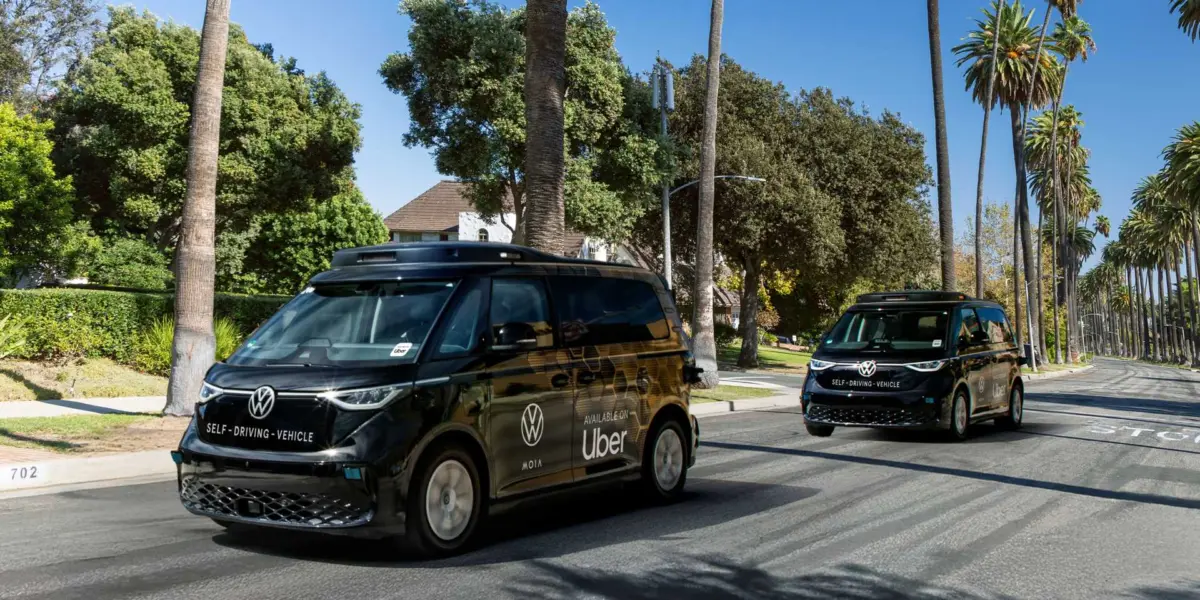
The core objective of this ambitious alliance is the large-scale deployment of thousands of autonomous, all-electric ID. Buzz vans across major metropolitan areas in the United States over the coming decade. This partnership signals more than just a commercial collaboration; it represents a major maturation point in how legacy automotive manufacturing intersects with software-driven ride-sharing infrastructure.
The rollout will officially commence in Los Angeles, California. Initial closed-loop and on-road testing phases are slated to begin later this year, with commercial consumer rides targeted for launch by 2026. By integrating Volkswagen’s proprietary Level 4 autonomous driving software and hardware stack directly into Uber’s globally recognized ride-hailing network, the partnership aims to create a seamless, zero-emission robotaxi ecosystem.
As regulatory frameworks evolve and consumer acceptance of autonomous transit grows, this collaboration stands to redefine the competitive dynamics of the robotaxi market, putting pressure on established AV pioneers like Waymo and Tesla while proving that traditional original equipment manufacturers (OEMs) can successfully pivot into full-stack mobility providers.
Detailed Chronology and Deployment Roadmap
Bringing a fleet of thousands of Level 4 autonomous vehicles to the bustling streets of major American cities is a monumental undertaking that requires a methodical, step-by-step implementation strategy. Volkswagen and Uber have outlined a rigorous roadmap designed to balance rapid commercial expansion with absolute safety and regulatory compliance.
Phase 1: Foundation and Initial Testing (Late 2025)
The operational genesis of the partnership will take place in Los Angeles. Later this year, Volkswagen ADMT will deploy an initial test fleet of autonomous ID. Buzz vans. Crucially, these early operational phases will not be driverless. Human safety operators will remain behind the wheel during all testing phases to monitor vehicle behavior, evaluate software performance in complex urban environments, and intervene should edge-case scenarios demand human judgment.
This phase is designed to gather vast amounts of telemetry and real-world driving data specific to Los Angeles’s notoriously complex traffic patterns, pedestrian habits, and roadway infrastructure.
Phase 2: Commercial Launch and Regulatory Sign-Off (2026)
Following the iterative data-gathering phase, the partners expect to transition to commercial operations by 2026. However, this milestone is strictly contingent upon regulatory approvals. Volkswagen and Uber have emphasized that every progressive stage of the rollout will advance only after receiving the explicit green light from municipal, state, and federal regulatory bodies.
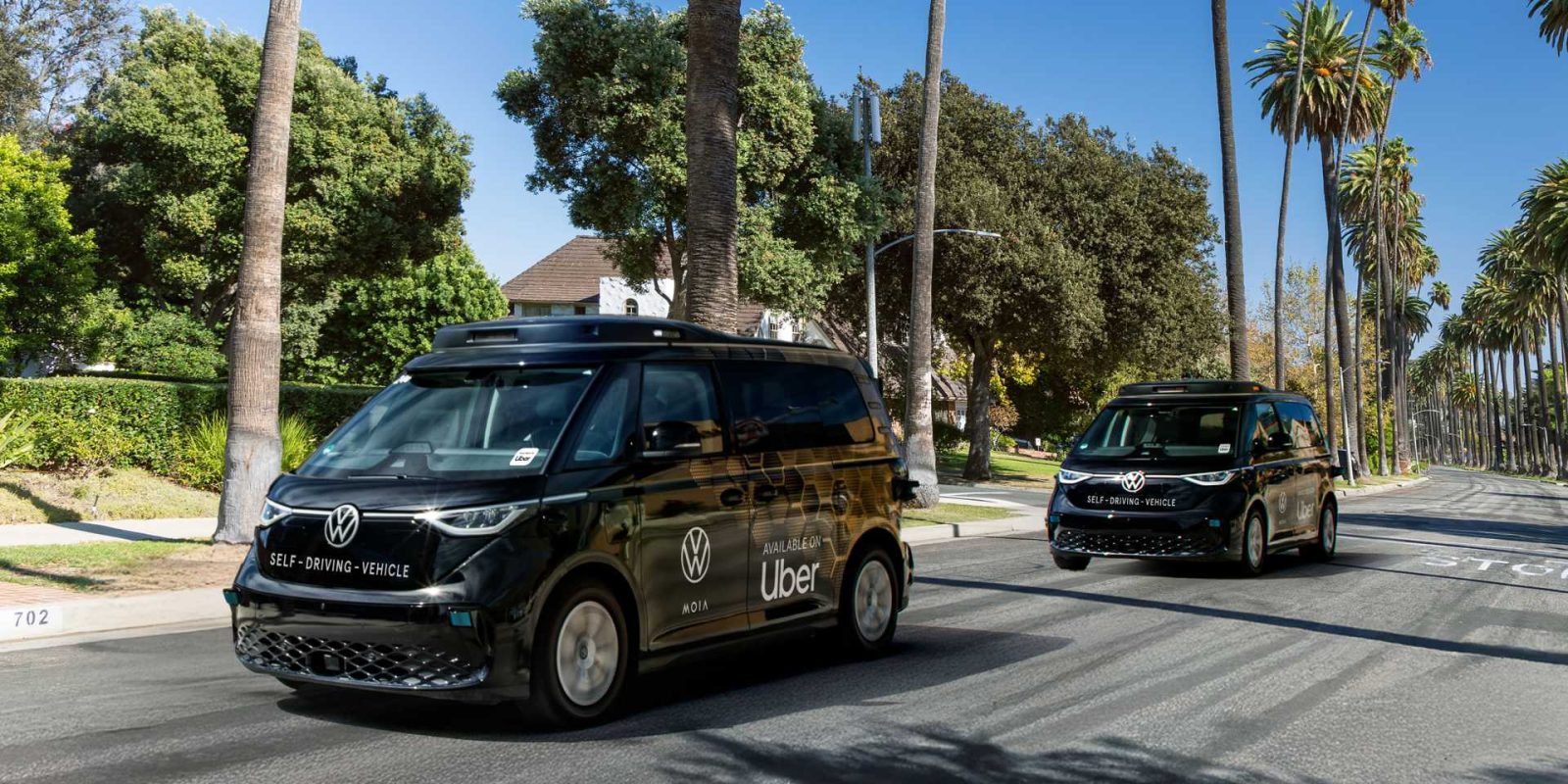
When the commercial service officially goes live, users opening the Uber app in designated launch zones will have the option to match with a self-driving ID. Buzz van for their urban trips, seamlessly blending automated transit into their daily routines.
Phase 3: Long-Term Scaling (2026–2035)
Over the next decade, the deployment will scale aggressively. The partnership envisions expanding operations from Los Angeles to a multitude of other major US metropolitan markets. By leveraging Uber’s massive user base and established dispatch algorithms alongside Volkswagen’s high-volume manufacturing capacity, the fleet is expected to grow into the thousands, establishing a dominant footprint in the North American urban robotaxi market.
Supporting Context, Technology, and Industry Metrics
To fully grasp the significance of the Volkswagen-Uber partnership, one must examine the underlying technology, the structural architecture of the vehicles, and the broader economic context of the global autonomous vehicle race.
The Vehicle: The All-Electric ID. Buzz AD
At the heart of this venture is the Volkswagen ID. Buzz, the German automaker’s modern, all-electric reinterpretation of its iconic microbus. The autonomous variants being deployed are engineered specifically for passenger transport and fleet integration.
Unlike traditional sedans or SUVs frequently utilized in early robotaxi experiments, the ID. Buzz offers a spacious cabin, generous cargo room, and an accessible layout that makes it exceptionally well-suited for ridesharing and pooled transit applications. Its distinctive aesthetic also serves as a mobile billboard for the normalization of autonomous technology in public spaces.
The Software and Mobility Ecosystem: MOIA’s Role
The self-driving system powering these vehicles is a comprehensive, full-stack solution. Volkswagen’s dedicated mobility brand, MOIA, is playing a central role by supplying both the physical vehicles and the sophisticated Autonomous Driving (AD) software stack.

MOIA brings years of experience in ride-pooling and urban mobility services, having operated shuttle services in European cities. By combining MOIA’s AD stack with Uber’s massive dispatch and marketplace platform, the partnership bridges the gap between vehicle manufacturing and digital fleet management. This vertically integrated approach ensures that the vehicles communicate efficiently with the ride-hailing backend, optimizing wait times, routing, and fleet maintenance.
Defining Level 4 Autonomy
A critical milestone underpinning this collaboration occurred in March 2024, when Volkswagen made history by becoming the first vehicle manufacturer to develop a Level 4 autonomous driving service vehicle designed for large-scale production.
According to the Society of Automotive Engineers (SAE) taxonomy, Level 4 autonomy means that a vehicle can handle all aspects of driving independently within a defined operational design domain (ODD)—such as a specific city or geofenced zone. Under Level 4 conditions, the vehicle requires zero human intervention during normal operation and is capable of safely bringing itself to a stop or executing fallback maneuvers if it encounters conditions outside its operational parameters. Crucially, Level 4 vehicles can also operate entirely empty, opening up lucrative possibilities for automated fleet rebalancing and delivery services.
The Macroeconomic and Competitive Landscape
The robotaxi market is currently locked in a high-stakes, capital-intensive race. While tech conglomerates and specialized startups have spent years attempting to commercialize autonomous ride-hailing—often struggling with the high costs of retrofitting third-party vehicles—the Volkswagen-Uber alliance represents a unique fusion of industrial might and software dominance.
By pairing an established global OEM capable of mass-producing crash-tested, purpose-built electric vehicles with the world’s most ubiquitous ride-hailing platform, this partnership bypasses many of the manufacturing bottlenecks that have historically plagued independent AV developers. Furthermore, the transition to an all-electric robotaxi fleet aligns with corporate ESG (Environmental, Social, and Governance) targets and urban air quality initiatives, addressing both congestion and carbon emissions simultaneously.
Official Statements
Corporate leaders from both entities have underscored the transformative nature of this collaboration, highlighting its alignment with long-term strategic visions for the future of human transit.
Christian Senger, CEO of Volkswagen Autonomous Mobility, articulated the company’s evolving corporate identity in the wake of the announcement:

"Volkswagen is not just a car manufacturer – we are shaping the future of mobility, and our collaboration with Uber accelerates that vision."
Senger’s remarks point to a broader industry shift: traditional automakers are aggressively shedding their identities as purely hardware-focused companies, pivoting instead toward becoming holistic mobility and software service providers in an era defined by shared and autonomous usage models.
Future Outlook
As Volkswagen and Uber prepare to break ground on their testing protocols in Los Angeles later this year, the implications of their partnership extend far beyond the borders of Southern California.
The success of the ID. Buzz AD deployment will serve as a bellwether for the broader automotive and tech industries. If Volkswagen can successfully manufacture, certify, and scale thousands of Level 4 autonomous vans while maintaining seamless integration with Uber’s software platform, it could establish a new blueprint for how autonomous ecosystems are commercialized globally.
However, significant challenges remain on the horizon. Regulatory hurdles vary wildly from state to state and city to city, requiring constant negotiation and compliance monitoring. Public trust and safety perceptions must also be carefully managed, particularly during the transition from safety-driver-assisted testing to fully driverless commercial operations.
Nevertheless, the convergence of Volkswagen’s engineering prowess and Uber’s market reach marks a defining chapter in the evolution of transportation. Over the next decade, the iconic silhouette of the ID. Buzz may well become the defining symbol of urban mobility—quietly, efficiently, and autonomously shuttling millions of passengers into a cleaner, software-driven future.
