

Executive Overview
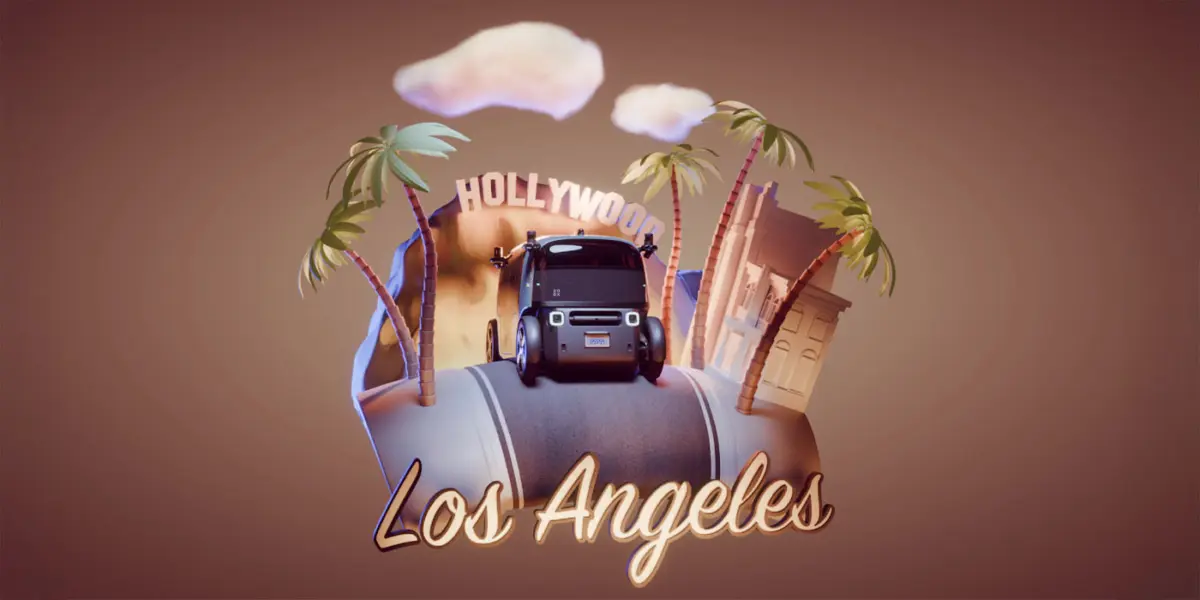
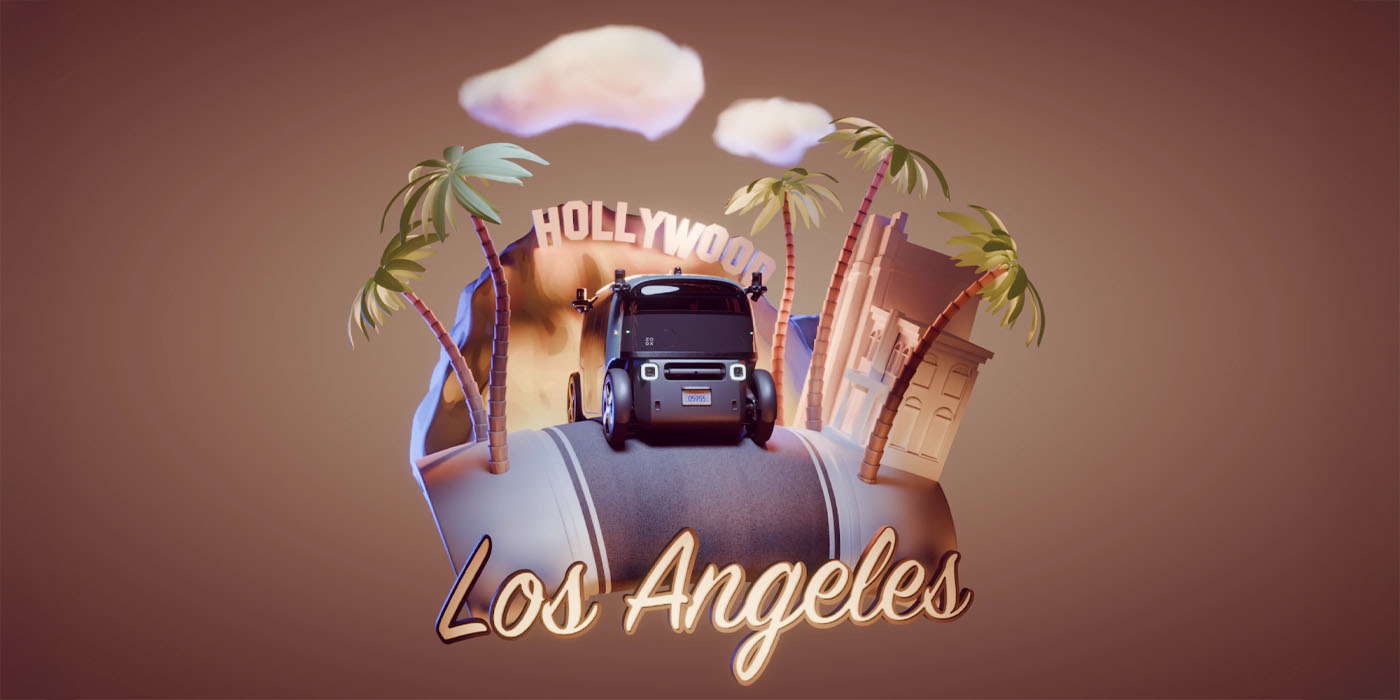
Autonomous mobility is once again expanding its footprint in the United States, and this time, it is targeting one of the most notoriously complex driving environments in the world. Zoox, the autonomous vehicle subsidiary of Amazon, has officially announced its expansion into Los Angeles, California. This makes the City of Angels the sixth urban market to join the company’s growing North American testing portfolio.
Unlike many of its competitors in the autonomous vehicle (AV) space—who favor retrofitting commercially available internal combustion or electric vehicles with heavy sensor pods—Zoox has charted a radically distinct engineering path. The company has designed and manufactured a bespoke, purpose-built electric robotaxi completely devoid of a steering wheel or manual pedals. While its initial deployment in Hollywood will rely on retrofitted test vehicles driven by human safety operators to map the complex urban grid, the ultimate goal is clear: to introduce bidirectional, carriage-style autonomous transport to the masses.
This strategic move into Southern California comes at a critical juncture for the AV industry. Regulatory bodies are scrutinizing safety records, public skepticism remains a hurdle, and urban planners are desperately seeking solutions to ballooning congestion. By tackling Los Angeles—where the average driver logged a staggering 157 hours stuck in traffic in 2024 alone—Zoox is diving headfirst into the ultimate crucible of American driving culture.
Detailed Chronology: From Bay Area Innovation to Nationwide Testing
The journey that led Zoox’s sensor-laden pods to the sun-baked avenues of Hollywood has been deliberate, highly calculated, and marked by significant milestones in regulatory navigation and technical scaling.
The Genesis of Purpose-Built Autonomy
Founded in 2014 and acquired by Amazon in 2020, Zoox approached autonomous mobility with a philosophy that rejected the "driver-seat conversion" model utilized by companies like Waymo or Cruise (in their early iterations). By designing a symmetrical, toaster-shaped vehicle with opposing bench seating, four-wheel steering, and redundant safety systems in every conceivable direction, Zoox eliminated the concept of "front" and "back."
However, regulatory approval for a vehicle without human controls required unprecedented cooperation with state and federal authorities.
Key Milestones on Public Roads
- February 2023: Zoox achieved a major regulatory and technological breakthrough by operating its purpose-built, driverless robotaxi on public roads in Foster City, California. This marked the first time an autonomous vehicle without manual controls transported public passengers on open roads in the state.
- June 2023: The company expanded its testing footprint to Las Vegas, Nevada, establishing a one-mile loop near its headquarters capable of transporting employees at speeds up to 35 mph.
- Early 2024: Zoox widened its Las Vegas geofence significantly, stretching operations into a five-mile route connecting its headquarters to the southern end of the Las Vegas Strip, while increasing maximum operating speeds to 45 mph.
- Late 2024: The company continued its aggressive geographical diversification, launching testing protocols in San Francisco, Austin, and Miami.
- April 2025: Zoox officially designated Los Angeles as its sixth testing hub, signaling the beginning of mapping operations ahead of a summer autonomous rollout.
Supporting Context & Metrics: The Los Angeles Traffic Equation
To understand why Zoox views Los Angeles as a critical milestone, one must examine the staggering metrics of Southern California commuter culture. LA traffic is not merely an inconvenience; it is an economic and psychological tax on millions of residents daily.
The Numbers Behind the Gridlock
According to recent traffic indexing data from TomTom, the average Los Angeles commuter spent 157 hours behind the wheel in 2024 alone—a figure that effectively doubled compared to the previous year. This compounding congestion has transformed urban transit into a daily battleground of aggressive lane changes, unpredictable pedestrian movements, and labyrinthine highway interchanges.
[ Zoox Expansion Metrics Overview ]
--------------------------------------------------
• Total Active Testing Cities: 6 (LA, SF, Vegas, Seattle, Austin, Miami)
• Average LA Commuter Delay (2024): 157 Hours/Year
• Target Speeds (Custom Pods): Up to 75 mph (Initial testing capped lower)
• Seating Capacity: Up to 4 passengers
--------------------------------------------------
The Phased Deployment Strategy
Zoox’s operational playbook for new markets follows a strict, safety-first methodology:
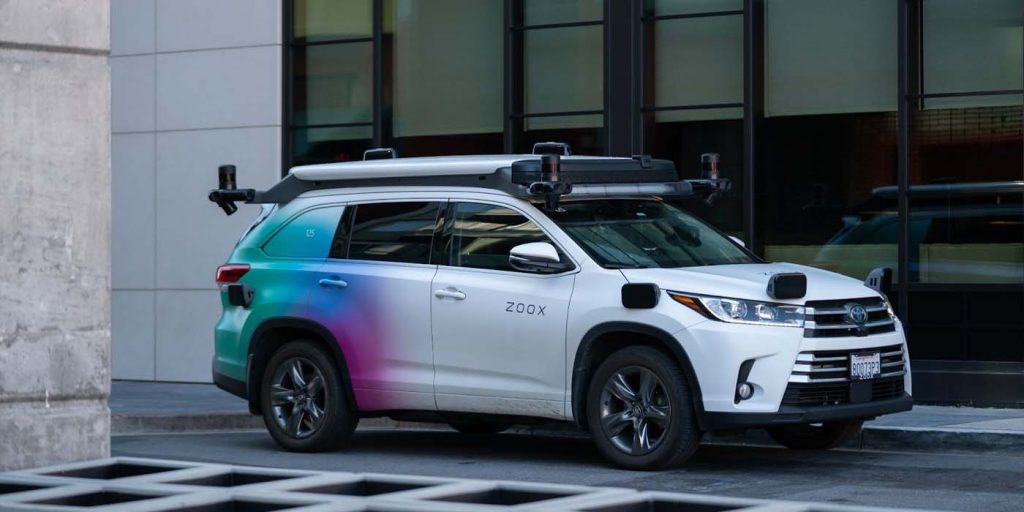
- Manual Mapping Missions: Before a single autonomous command is executed, human-driven test vehicles fitted with high-resolution LiDAR, radar, and camera suites traverse the target neighborhoods (starting in Hollywood) to build a millimeter-accurate 3D map of the urban environment.
- Safety-Driver Integration: Once mapping is complete, retrofitted test fleet vehicles are deployed with safety drivers behind the wheel to validate the maps against real-world anomalies like unexpected roadwork, erratic pedestrian behavior, and localized city events.
- Autonomous Transition: Following rigorous internal safety reviews and data validation, human drivers are phased out within designated geofenced boundaries, opening the service to employees and, eventually, the general public.
Official Statements and Industry Insights
Zoox has emphasized that its expansion into Los Angeles is designed to be measured, methodical, and deeply analytical. In an official company blog post detailing the launch, executives outlined the strategic rationale behind selecting the sprawling metropolis.
"Similar to our efforts in Austin and Miami, deploying in Los Angeles provides us with an opportunity to gather valuable feedback and insights," Zoox stated in its release. "While traffic rules are consistent across different locations, there are a variety of driving conditions, potential roadwork, city events, and other map changes we want to learn about before expanding to other neighborhoods."
The company is positioning its technology not merely as an alternative taxi service, but as a lifestyle reclamation tool for urbanites exhausted by the daily commute:
"Zoox sees potential in testing in Los Angeles and is excited to be able to give those that live, work, and travel to LA time back to socialize, relax, or work in the Zoox robotaxi en route to their destination."
Industry analysts note that while operating in Los Angeles presents unique regulatory hurdles—including strict oversight by the California Public Utilities Commission (CPUC) and the Department of Motor Vehicles (DMV)—mastering the city’s chaotic street layouts provides an invaluable proving ground. If an autonomous vehicle can navigate the intersection of Hollywood Boulevard and Highland Avenue during peak tourist hours, it can theoretically handle almost any urban environment on earth.
Future Outlook: What Lies Ahead for Zoox and Autonomous Rides
As Zoox lays down its digital roots in Southern California this summer, the broader roadmap for the company involves several high-stakes commercial inflection points.

Milestones on the Horizon
- Commercial Public Launches (2025): Zoox is actively working toward welcoming its first paying public riders in both Las Vegas and San Francisco later this year. These launches will serve as the commercial blueprint for scaling operations nationwide.
- Scaling the Bespoke Fleet: While early testing relies heavily on retrofitted vehicles to gather environmental data, the long-term economic viability of Zoox depends on scaling the production of its steering-wheel-free robotaxis at dedicated manufacturing facilities.
- Neighborhood Expansion: Following initial small-scale rollouts in Hollywood, the company intends to gradually expand its Los Angeles geofence, stitching together sprawling neighborhoods into a cohesive, on-demand autonomous transit network.
Challenges and Regulatory Realities
Despite the optimism surrounding the launch, Zoox—like its competitors—faces a gauntlet of external challenges. Public skepticism regarding autonomous safety, shifting municipal regulations, labor union pushback regarding driving jobs, and unpredictable weather events remain ever-present variables. Furthermore, the company must prove that its bespoke, bidirectional vehicles can achieve the unit economics required to compete with traditional ride-hailing giants like Uber and Lyft.
For now, however, the spotlight remains firmly on the streets of Hollywood. As Zoox’s sensor-laden test vehicles begin their mapping sweeps, the dream of reclaiming those 157 lost hours of Los Angeles gridlock moves one step closer to reality.
