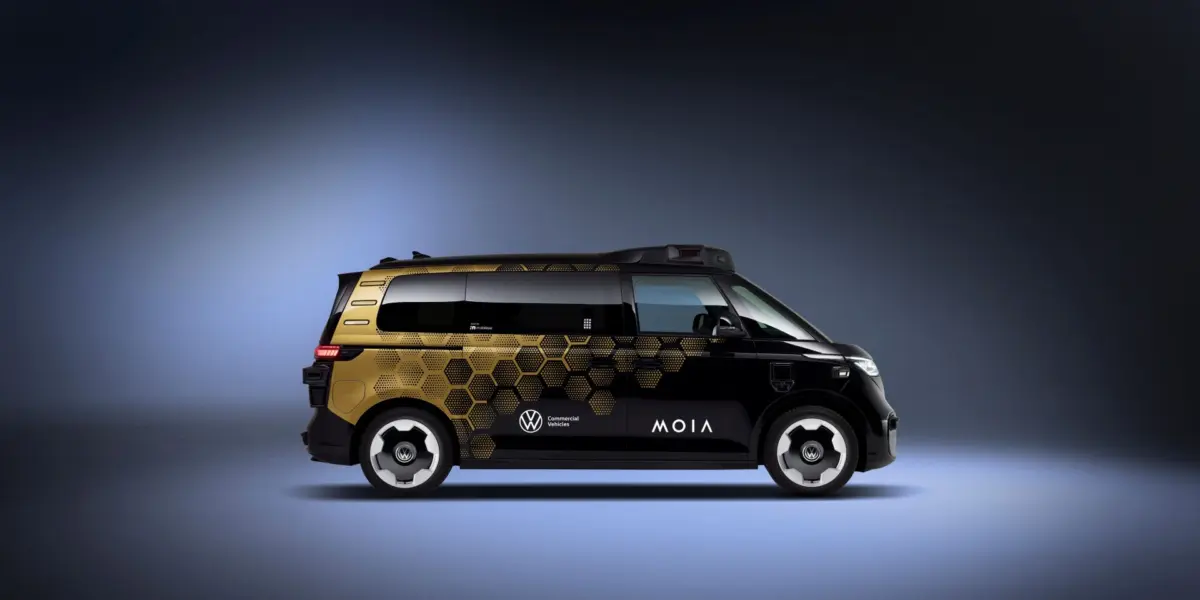
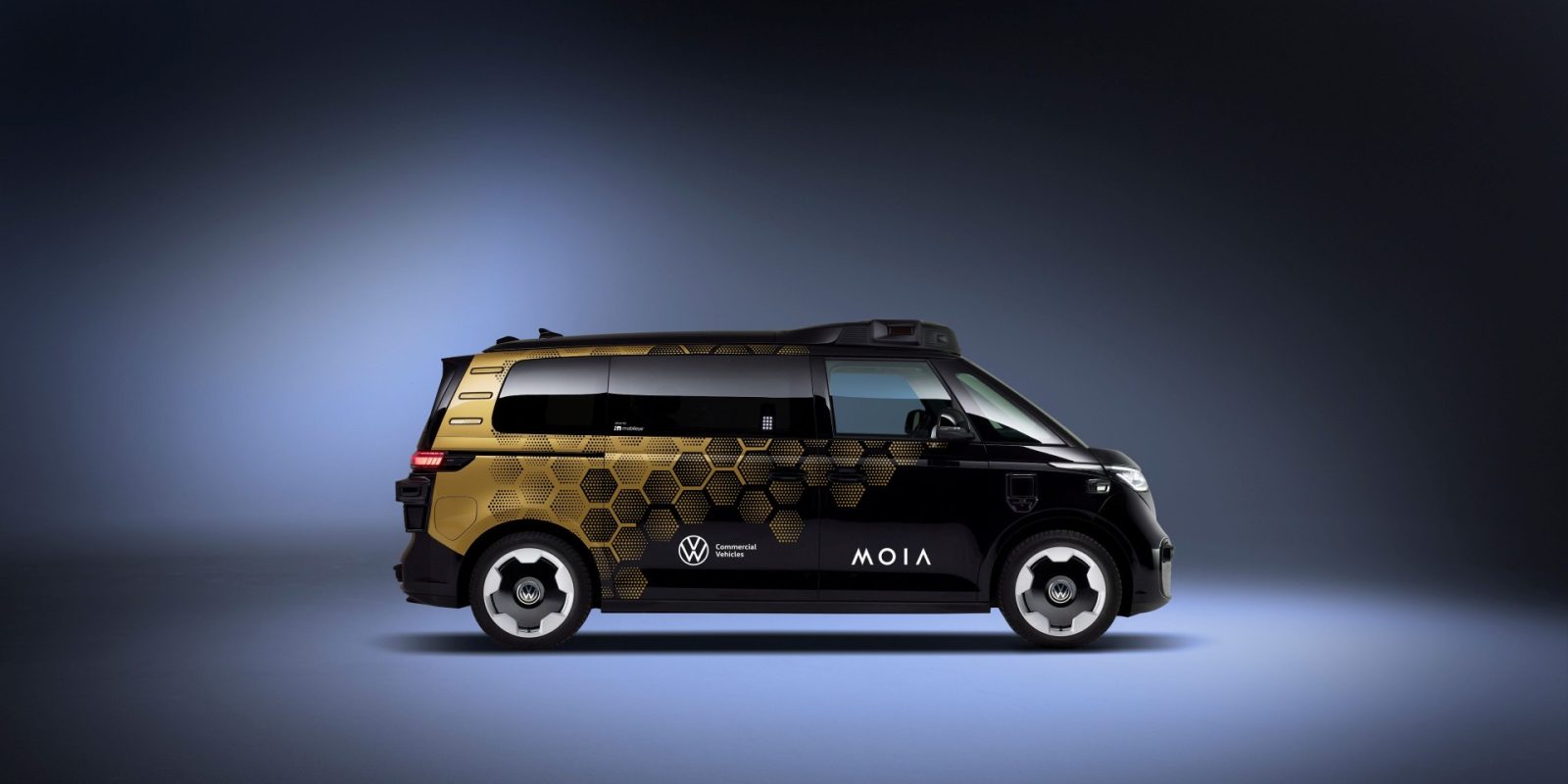
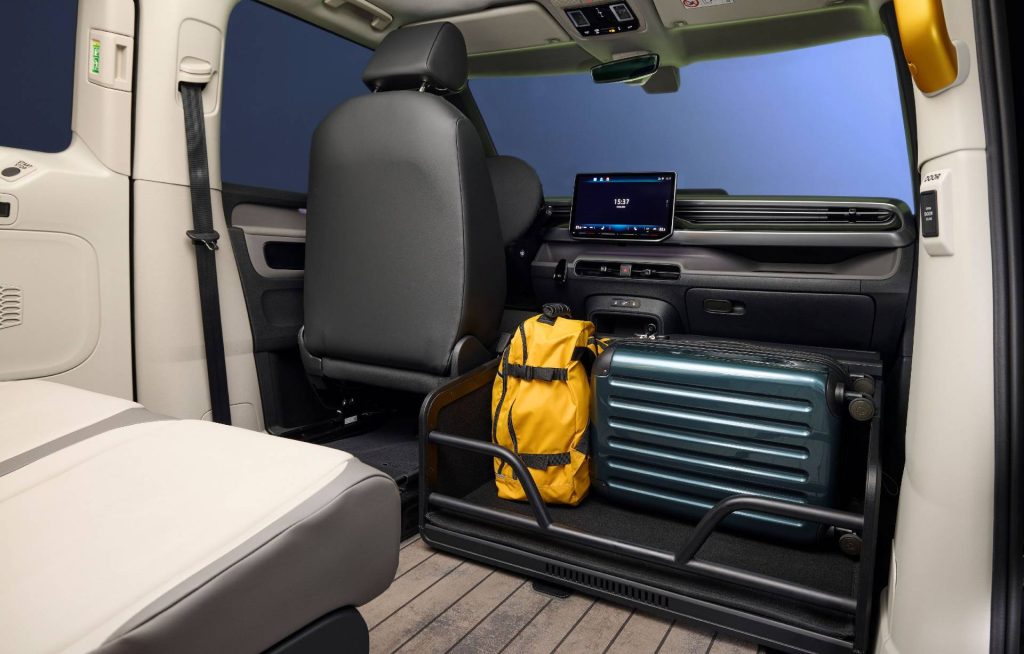
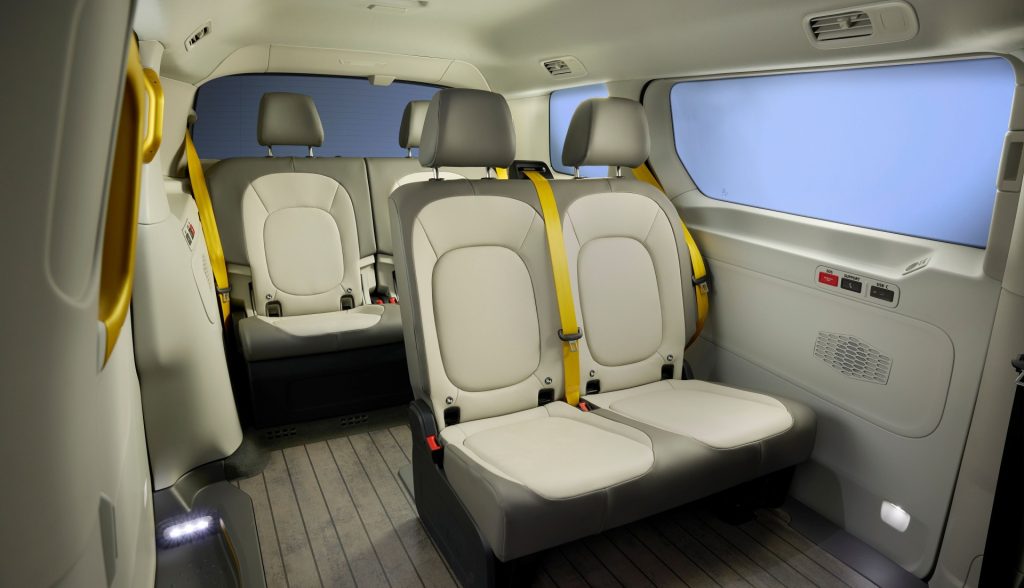
The landscape of urban public transit and shared mobility is undergoing a tectonic shift. In a major milestone for autonomous driving and commercial fleet deployment, Volkswagen’s mobility services subsidiary, MOIA, has officially rolled out the ID. Buzz AD. Representing Volkswagen Group’s first fully autonomous production vehicle engineered specifically from the ground up for commercial mobility services, this purpose-built electric van is much more than a retro-styled vehicle fitted with cameras.
Rather than merely offering a self-driving car, MOIA is introducing a comprehensive, turnkey ecosystem. The company is bundling the ID. Buzz AD with an end-to-end suite of tools tailored for both public and private transit operators. This holistic approach includes advanced self-driving software, sophisticated fleet management systems, passenger support frameworks, and rigorous operator training programs. By packaging these disparate elements into a single cohesive offering, Volkswagen aims to empower cities and transit operators to deploy driverless fleets rapidly, safely, and at a massive scale.
Set for its initial commercial rollout on the streets of Hamburg, Germany, before scaling to major metropolitan markets across Europe and the United States in 2026, the ID. Buzz AD positions Volkswagen at the vanguard of the burgeoning multi-billion-dollar global autonomous mobility market. Combining Mobileye’s industry-leading autonomous driving system with MOIA’s proprietary Autonomous Driving Mobility-as-a-Service (AD MaaS) platform, the vehicle promises to redefine the economics, safety, and accessibility of urban transit.
Detailed Chronology: From Concept to Commercialization
The journey toward the commercial reality of the ID. Buzz AD has been years in the making, marked by strategic partnerships, regulatory navigation, and rigorous technological development within the Volkswagen Group.
The Foundation and Partnership Era
The groundwork for Volkswagen’s autonomous strategy began long before the physical unveiling of the production-ready van. Volkswagen recognized early on that developing a Level 4 autonomous system entirely in-house for commercial applications would be prohibitively slow and resource-intensive. Consequently, the automaker forged strategic alliances—most notably with Mobileye, a global leader in advanced driver-assistance systems (ADAS) and autonomous driving technology.
By integrating Mobileye’s robust self-driving system into an automotive-grade version of the electric ID. Buzz, Volkswagen solved one of the industry’s most complex challenges: marrying reliable mechanical and electrical architecture with advanced artificial intelligence. Simultaneously, MOIA—founded in 2016 as Volkswagen’s standalone mobility services provider—began developing the software architecture required to manage shared rides, optimize routing, and interface with municipal transit networks.
Testing, Certification, and Hamburg Pilot
Following extensive closed-course testing and simulation phases, Volkswagen and MOIA shifted their focus to real-world validation. Testing grounds moved to complex urban environments, where the sensor suite and AI decision-making algorithms were put through their paces against unpredictable pedestrian behavior, aggressive human drivers, and complex European street layouts.
Hamburg was selected as the primary launchpad for MOIA’s autonomous operations. The Hanseatic city has long positioned itself as a progressive hub for smart city initiatives and sustainable urban transport. By deploying the autonomous ID. Buzz shuttles in Hamburg, MOIA can gather critical operational data, fine-tune its booking and dispatch algorithms, and build regulatory trust with municipal authorities. This initial deployment serves as the crucial proving ground before the company unlocks large-scale commercial availability across international markets.
Supporting Context & Metrics: Under the Hood of the ID. Buzz AD
Achieving Level 4 autonomy—where a vehicle can handle all driving tasks under specific conditions without human intervention—requires an extraordinary hardware and software payload. The ID. Buzz AD is a masterclass in sensor integration and computing redundancy.
Comprehensive Sensor Array
To achieve a fail-safe, 360-degree understanding of its surrounding environment, the ID. Buzz AD is packed with 27 distinct sensors. This multi-modal sensory configuration ensures that no single point of failure can compromise the safety of the vehicle or its passengers:
13 High-Resolution Cameras: Providing long-range and peripheral visual data, traffic light detection, and pedestrian tracking.
9 LiDAR (Light Detection and Ranging) Sensors: Generating precise 3D maps of the vehicle’s surroundings, measuring exact distances to objects regardless of lighting conditions.
5 Radar Sensors: Offering superior velocity and distance tracking, particularly in adverse weather conditions like heavy rain, fog, or snow where cameras and LiDAR may experience degraded performance.
The Brains: Mobileye and MOIA AD MaaS
Hardware is only as effective as the software interpreting it. At the core of the vehicle’s intelligence is Mobileye’s self-driving system, which processes incoming data from the 27 sensors in real time. The AI makes split-second driving decisions, navigating complex intersections, yielding to cyclists, and handling unexpected road obstructions.
Complementing Mobileye’s driving system is MOIA’s Autonomous Driving Mobility-as-a-Service (AD MaaS) platform. This proprietary software layer transforms the autonomous van from a clever robot into a fully integrated public transit asset. The AD MaaS platform handles:
Fleet Management: Monitoring vehicle health, optimizing charging schedules, and deploying vans based on real-time demand forecasting.
Emergency Handling & Remote Supervision: Providing a safety net for rare edge cases. While the vehicle operates independently at Level 4, remote operators can monitor fleets and provide guidance or path-planning assistance if the vehicle encounters an unresolvable obstruction.
Ride-Hailing & Booking Integration: Seamlessly syncing with mobile apps to allow passengers to hail, board, and pay for shared rides efficiently.
Operator Enablement and Scalability
Recognizing that many transit agencies and private operators lack the internal technical infrastructure to manage a autonomous fleet, MOIA has introduced Operator Enablement. This comprehensive support framework covers simulation, deployment planning, ongoing training, and live operational monitoring. Whether an operator wishes to deploy shuttles in dense urban centers, sprawling suburban neighborhoods, or underserved rural transit corridors, MOIA’s turnkey enablement package significantly lowers the barrier to entry.
Official Statements and Industry Perspective
The launch of the ID. Buzz AD has drawn significant attention from industry leaders, underlining the strategic importance of the project for the Volkswagen Group and the future of urban mobility.
Volkswagen Group CEO Oliver Blume emphasized the comprehensive nature of the rollout, framing it as a major competitive advantage in a lucrative global sector:
"Our driverless ID. Buzz shuttles are part of a fully connected 360-degree package made up of leading technology, an attractive vehicle fleet, intelligent fleet management, and a customer-centric booking system — all from a single source and quickly scalable to fleet size on the road. This positions the Volkswagen Group among the frontrunners in a multi-billion-dollar global growth market."
Echoing these sentiments, MOIA CEO Sascha Meyer focused on the broader socio-economic and human implications of deploying autonomous ride-sharing fleets:
"Mobility is a basic human need. Artificial intelligence opens entirely new opportunities to give people access to flexible, shared, comfortable, and affordable mobility."
By combining the emotional appeal and passenger-friendly packaging of the iconic ID. Buzz with cutting-edge autonomous architecture, Volkswagen is attempting to bridge the gap between futuristic technology and practical, human-centric public transportation. Furthermore, recent industry developments—such as partnerships aimed at integrating thousands of Volkswagen driverless vans into commercial ride-hailing networks like Uber—signal that the commercial footprint of these vehicles will extend far beyond municipal bus replacement.
Future Outlook: The Road Ahead to 2026 and Beyond
As the automotive and technology sectors race toward a shared-mobility future, the rollout of the MOIA ID. Buzz AD establishes a clear benchmark for commercial autonomy.
Overcoming Regulatory and Technical Hurdles
While the technological readiness of Level 4 autonomous systems has advanced rapidly, the road ahead is not without obstacles. Regulatory frameworks regarding driverless commercial vehicles vary wildly across global jurisdictions. While Germany and select European nations have established progressive legal pathways for autonomous testing and commercial deployment, the regulatory patchwork across U.S. states and municipalities presents a complex maze that MOIA and Volkswagen will need to navigate carefully as they prepare for their 2026 expansion.
The Economic Promise of Shared Autonomous Fleets
The ultimate success of the ID. Buzz AD will be measured not just by its technological sophistication, but by its economic viability for transit operators. Traditional public transit systems often struggle with high operational costs, driver shortages, and low utilization rates in suburban or off-peak hours. By removing the driver from the equation and utilizing intelligent, demand-responsive fleet management software, MOIA aims to drastically lower the per-mile cost of public transit while increasing service availability.
If MOIA’s Hamburg pilot proves successful and the subsequent 2026 international expansion hits its targets, the ID. Buzz AD could fundamentally reshape how millions of people move through cities. By turning the nostalgic, electric reincarnation of the classic Volkswagen microbus into an intelligent, autonomous transit workhorse, Volkswagen is betting that the future of mobility is shared, electric, and entirely driverless.