

Executive Overview
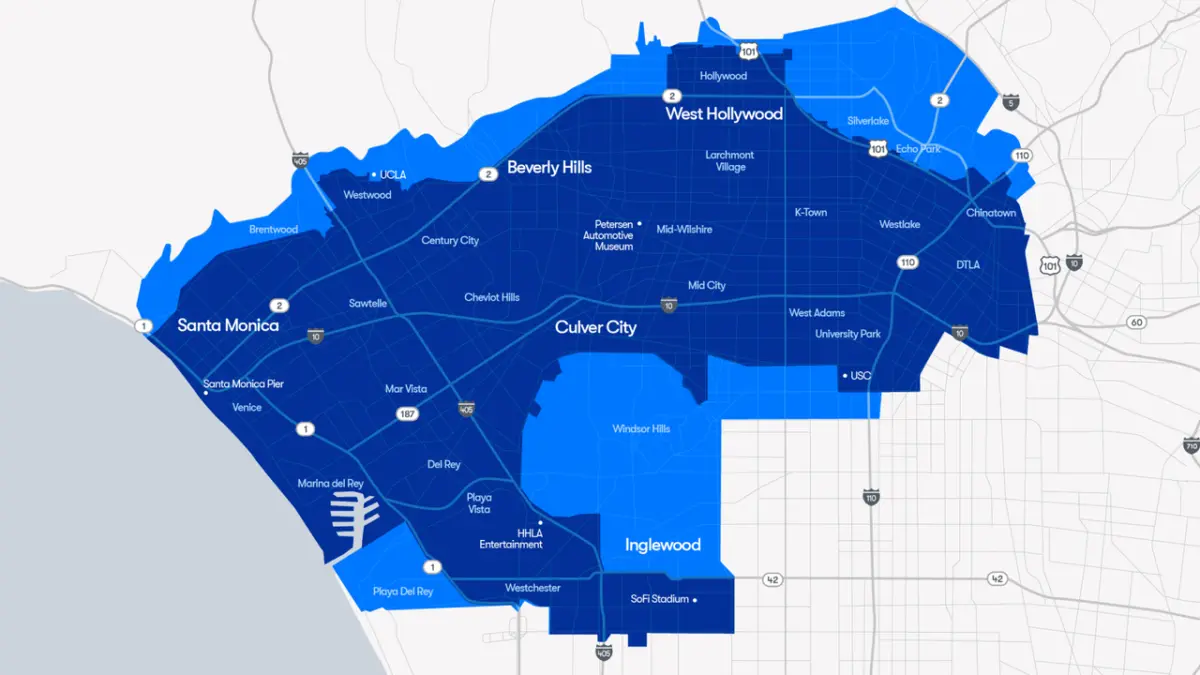
Alphabet-owned autonomous driving pioneer Waymo has significantly scaled up its commercial driverless taxi footprint across California, adding over 80 square miles of combined coverage across Los Angeles, San Francisco, and Silicon Valley. This aggressive infrastructure and service extension increases Waymo’s total footprint in the Golden State by roughly 50%, bringing its cumulative operational territory to approximately 250 square miles.
This latest territorial expansion arrives at a critical juncture for the autonomous vehicle (AV) sector. It precedes by mere days the tentative, highly anticipated launch of Tesla’s long-promised robotaxi service in Austin, Texas—a overlapping market where Waymo already operates. The juxtaposition of Waymo’s methodical, heavily mapped, geofenced, Level 4 rollout against Tesla’s rapid, historically volatile approach to Level 2 and potential Level 4 autonomy highlights a profound philosophical and engineering divide within the autonomous transit landscape. While Waymo continues to painstakingly secure regulatory approvals, map intricate urban corridors, and build public trust through incremental deployment, competitors face intense market pressure to deliver commercial viability.
Detailed Chronology of the California Expansion
Waymo’s strategy has always relied on a slow-burn deployment model. Rather than flooding a market overnight, the company tests and meticulously maps new roads to ensure its autonomous stack can handle complex edge cases before opening access. Deployment typically follows a strict hierarchy: initial internal employee-only testing, followed by a gradual release to targeted waitlists, and finally, full public commercial availability.

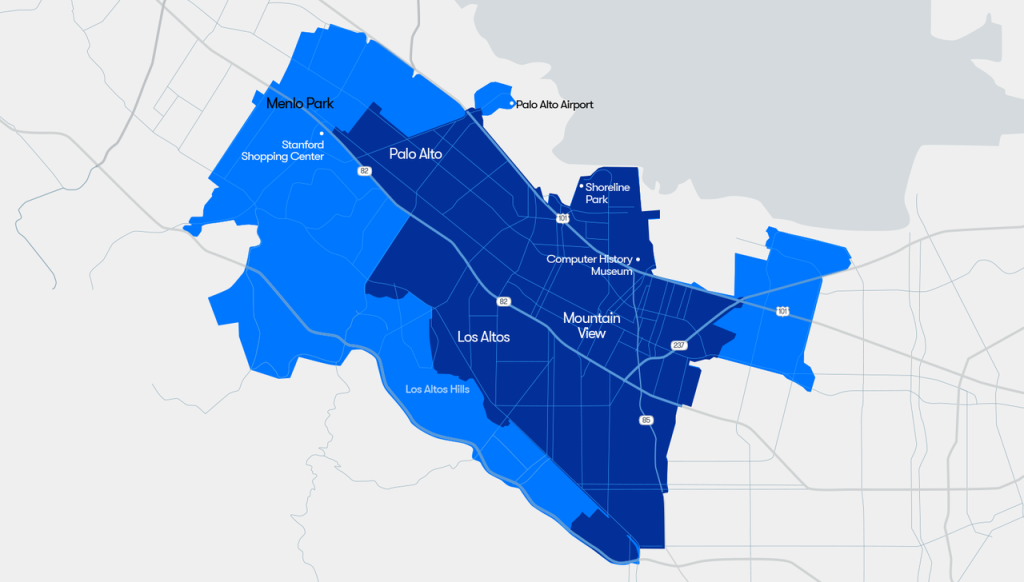
In San Francisco and Los Angeles, the service is fully public. Meanwhile, the Silicon Valley service area—which launched just months ago—remains partially restricted, and its physical infrastructure currently remains disconnected from the San Francisco grid, meaning riders cannot book a continuous cross-bay autonomous journey.
San Francisco and the Peninsula Corridor
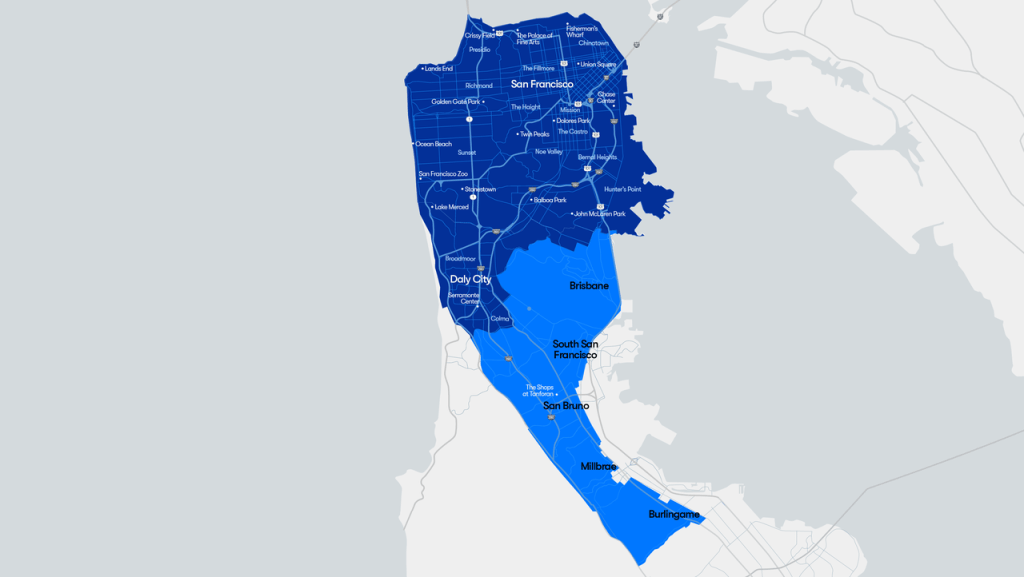
The rollout across the San Francisco Bay Area heavily prioritizes the peninsula. Commuters and casual riders in San Francisco now enjoy access stretching deep into neighboring municipalities. The newly cleared zones encompass:
- Brisbane
- South San Francisco
- San Bruno
- Millbrae
- Down to the city limits of Burlingame
Despite the sprawling coverage on the peninsula, the service boundaries deliberately skirt around San Francisco International Airport (SFO), maintaining a distinct buffer west of US Route 101. While Waymo successfully services major transportation hubs like Phoenix Sky Harbor Airport in Arizona, California riders must continue waiting for direct airport integration.
Silicon Valley Updates
While the Silicon Valley grid remains physically separated from San Francisco, its borders shifted outward. The updated geofence now pushes deeper into Menlo Park and absorbs a significantly larger portion of Palo Alto. Notably, this zone now encompasses the Palo Alto Airport—though, similar to other small municipal airfields, it primarily caters to private aviation and aviation enthusiasts rather than major commercial airline passengers.
Los Angeles: A Comprehensive Metro-Wide Spread
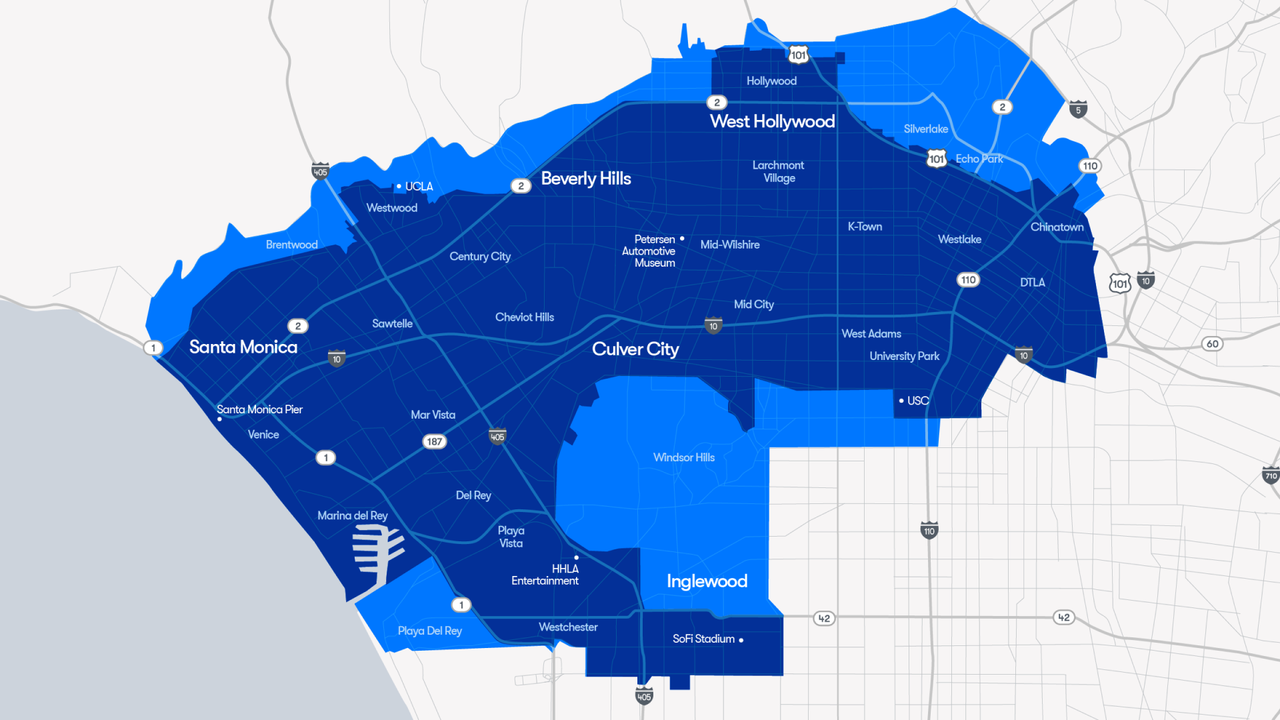
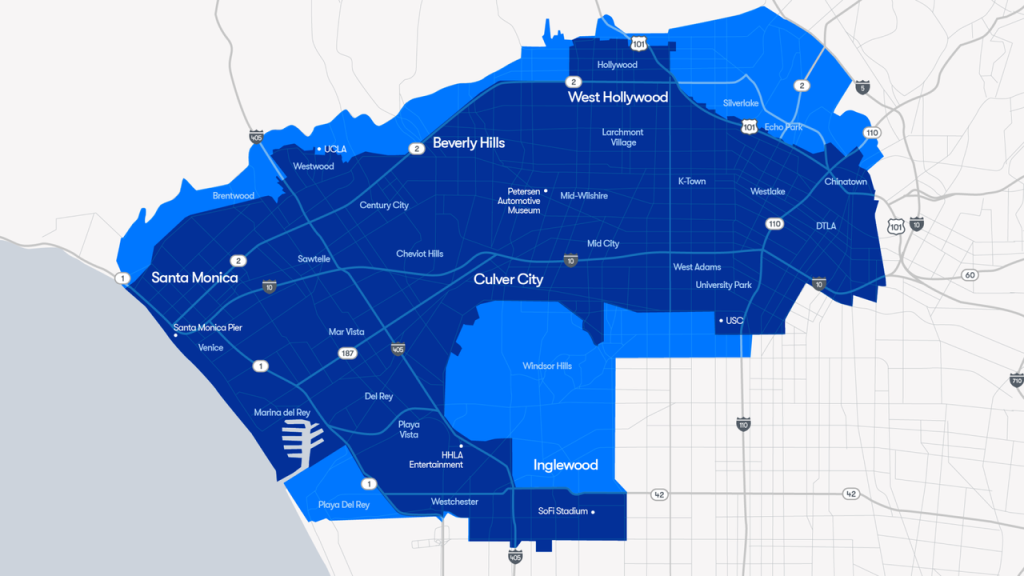
The Los Angeles expansion introduces multi-directional growth rather than a simple linear extension. Encompassing the new territory requires a staggered activation schedule, with full integration rolling out across various districts.
The updated Los Angeles footprint sweeps through:
- Playa Del Rey
- Ladera Heights
- Echo Park
- Silver Lake
- Deeper into Inglewood
- The entirety of the iconic Sunset Boulevard
For the first time, the service perimeter envelops the University of California, Los Angeles (UCLA) campus, pushing directly past previous boundaries in adjacent Westwood. Furthermore, Waymo’s strategic inclusion of major entertainment and transit destinations—such as the Kia Forum, the Howard Hughes Center, the Inglewood stadium district, and the notoriously congested Dodger Stadium—serves a vital consumer need. These coverage zones offer a reliable alternative for event-goers seeking to bypass nightmarish parking logistics or safely outsource their transportation after consuming alcohol.
Much like the Bay Area, the Los Angeles expansion stops short of Los Angeles International Airport (LAX). While vehicles can drop passengers off within walking distance at nearby long-term parking facilities, the geofence falls a few hundred yards short of the dedicated "LAX-it" ride-hailing ground transportation zone.
Supporting Context & Metrics: Navigating Urban Complexity vs. Highway Speeds
A defining characteristic of Waymo’s current California operations is the deliberate segmentation of surface street driving versus high-speed freeway navigation. While limited freeway testing and operation are active for specific cohorts in San Francisco, Waymo vehicles in Los Angeles are currently restricted to non-highway surface streets.
This geographic limitation occasionally renders cross-town transit slower than human-driven alternatives, which can utilize the sprawling Los Angeles freeway network. However, testing on LA freeways is actively underway, with public rollout anticipated as safety validation metrics are met.
The Engineering Philosophy: Surface Streets First
Waymo’s approach directly contrasts with the historical path chosen by Tesla and many early autonomous startups. Tesla initially deployed its Level 2 driver-assist suite—marketed as Autopilot and Full Self-Driving (FSD)—on controlled-access highways. From an engineering standpoint, highways represent a simplified operational design domain (ODD). They feature predictable traffic flow, uniform lane markings, minimal pedestrian interference, and an absence of cross-traffic.
Conversely, Waymo tackles the hardest problem first: complex urban environments. Operating autonomously through the dense, chaotic mix of pedestrians, cyclists, erratic delivery trucks, and unpredictable drivers found in San Francisco and Los Angeles requires a far more robust sensor suite and cognitive software architecture.
According to the SAE (Society of Automotive Engineers) definitions of driving automation:
- Level 2 (Tesla Autopilot/FSD): The automated system can execute steering, acceleration, and braking, but a human driver must maintain continuous supervision and take immediate control when necessary. The legal liability remains entirely with the human.
- Level 4 (Waymo One): High automation. The vehicle can perform all driving tasks under specific conditions without any human intervention. If the system encounters a situation outside its operational parameters, it can safely bring itself to a stop. No human driver is required inside the vehicle.
Official Statements and Industry Stakes: The Shadow of Tesla’s Austin Robotaxi Event
The timing of Waymo’s 80-square-mile expansion is not lost on industry observers. It lands directly in the shadow of Tesla’s tentative, high-stakes rollout of its own robotaxi service in Austin, Texas—a market where both companies operate.
The impending Austin launch brings decades of unfulfilled promises from Tesla CEO Elon Musk into sharp relief. For over ten years, Musk has repeatedly claimed that fully autonomous Teslas capable of operating without a human safety driver would arrive "next year," continually shifting timelines as technical hurdles mounted.
Tesla’s upcoming Austin deployment is slated to debut following what Musk described as mere "several days" of internal driverless testing. This rapid deployment timeline starkly contrasts with Waymo’s methodical protocols. Waymo’s framework demands months of rigorous closed-course testing, progressive real-world mapping, phased employee trials, and incremental public scaling before a market is deemed ready for unrestricted commercial use.
Industry analysts and safety advocates have increasingly scrutinized the race toward commercial autonomy. Questions remain regarding whether rapid, camera-and-neural-net-dependent systems like Tesla’s can match the safety redundancies of Waymo’s multi-modal sensor arrays, which combine expensive LiDAR, radar, and high-definition cameras. As regulatory bodies and the public watch the Austin launch, the stark philosophical differences between Waymo’s cautious, geofenced, hardware-heavy validation and Tesla’s aggressive, vision-only software scaling will face their ultimate real-world test.
Future Outlook
Waymo’s swift geographic expansion signals a maturing business model that is rapidly transitioning from a localized technological novelty to a viable, mainstream urban transit utility. By capturing critical cultural touchstones like major sports stadiums, university campuses, and dense entertainment districts, the company is embedding itself deeper into the daily routines of urban residents.
Looking ahead, several milestones will dictate the next phase of the autonomous vehicle industry:
- Freeway Integration: The successful public deployment of freeway-speed autonomous transit in Los Angeles will dramatically alter travel times and expand Waymo’s utility for longer cross-metropolitan journeys.
- Airport Partnerships: Resolving regulatory and logistical hurdles to secure direct drop-off and pickup zones at major international transit hubs like LAX and SFO will remove one of the last major friction points for travelers.
- National Scaling vs. Competitor Pressure: As alternative platforms like Tesla attempt to enter the commercial robotaxi space with condensed testing timelines, public scrutiny regarding safety benchmarks, regulatory compliance, and system transparency will intensify.
For now, Waymo holds a commanding lead in operational maturity, proving that deliberate, sensor-redundant deployment can safely scale across some of the most complex urban driving environments in the world. Whether rival networks can replicate this safety record on compressed timelines remains the defining question for the autonomous vehicle sector in the years ahead.
