


Executive Overview
American electric vehicle (EV) manufacturer Rivian Automotive is officially setting its sights across the Atlantic. In a strategic maneuver designed to anchor its position at the vanguard of automotive software and machine learning, the company has announced the establishment of a brand-new international office in London, United Kingdom.
While Rivian has long been celebrated for its rugged, adventure-ready lifestyle electric trucks and SUVs—such as the R1T pickup and R1S SUV—the company’s long-term valuation and market relevance hinge heavily on its technological evolution. This latest expansion is not about assembling vehicles or establishing retail storefronts on British soil; rather, it is a calculated talent acquisition play. Rivian is looking to tap directly into the United Kingdom’s robust, highly specialized artificial intelligence (AI) engineering talent pool.
The London hub will function as a specialized, AI-centric development center. Its core mission will be to push the boundaries of Rivian’s Advanced Driver Assistance Systems (ADAS) and autonomous driving architectures. By establishing a presence in one of Europe’s primary tech capitals, Rivian aims to leverage world-class software engineering capabilities to build what it describes as a "Large Driving Model." This proprietary system is intended to radically improve the perception, interpretation, and response capabilities of its upcoming vehicle generations.
As the automotive landscape shifts rapidly from hardware-centric manufacturing to software-defined mobility, Rivian’s London expansion marks a pivotal milestone. It underscores the company’s transition from a pure-play boutique EV startup into a sophisticated global technology enterprise. With an upcoming "AI and Autonomy Day" scheduled for later this year, the pressure is on for Rivian to prove that its software investments can deliver profitable, scalable, and safe autonomous solutions to a global consumer base.
Detailed Chronology: Rivian’s Global Footprint and the Road to London
To understand the strategic gravity of Rivian’s London expansion, it is necessary to examine how the company has methodically scaled its operational footprint since its inception. Founded in 2009 by CEO RJ Scaringe, Rivian spent more than a decade operating largely in stealth mode, focusing on foundational engineering before launching its first vehicles in late 2021.
From Stealth Startup to Multi-Facility Enterprise
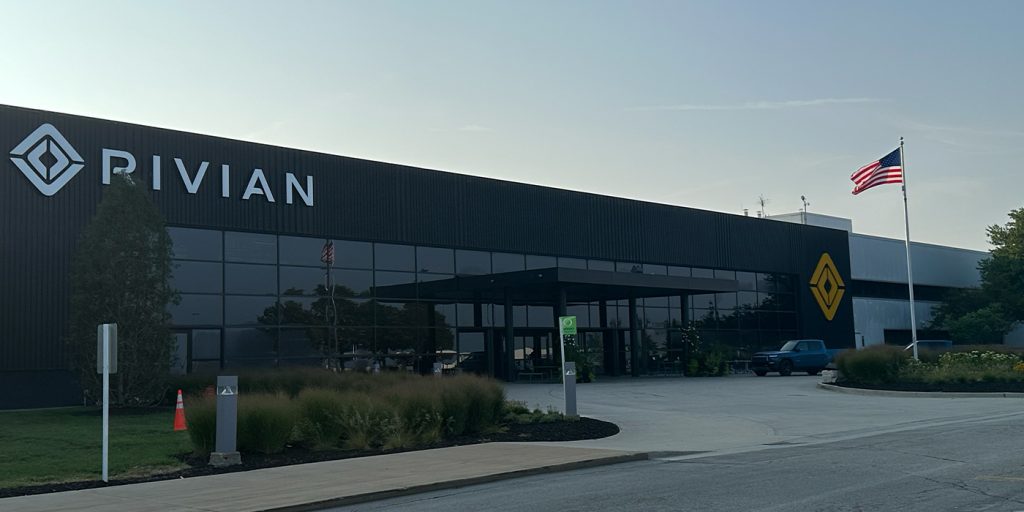
Headquartered in Palo Alto, California, Rivian has carefully distributed its operations across North America to capture specialized talent and optimize manufacturing logistics. Its primary manufacturing heartbeat remains centered in Normal, Illinois, where the company took over a former Mitsubishi assembly plant. This facility produces the current generation of R1T and R1S vehicles, as well as the commercial electric delivery vans designed for major partners like Amazon.
To support its anticipated long-term volume growth, Rivian broke ground on a massive, multibillion-dollar manufacturing campus approximately 40 minutes east of Atlanta, Georgia. Although that project has experienced strategic phasing and timeline adjustments to preserve capital, it remains a cornerstone of the company’s future production capacity.

In addition to its corporate headquarters in Palo Alto and manufacturing in Illinois, Rivian’s domestic footprint includes critical engineering and administrative hubs in:
- Irvine, California: A major design and engineering center.
- Carson, California: Advanced styling and specialized design studio operations.
- Plymouth, Michigan: Powertrain development and testing facilities located in the heart of America’s traditional automotive corridor.
- Wittmann, Arizona: Extensive hot-weather testing and validation grounds.
Expanding Beyond Domestic Borders
Rivian’s ambitions have never been strictly confined to the United States. Recognizing that top-tier software and engineering talent is a globally distributed resource, the automaker previously established strategic international offices to support its digital infrastructure, vehicle connectivity, and embedded systems development.
Prior to the London announcement, Rivian’s international presence included:
- Vancouver, British Columbia (Canada): A vital software and engineering outpost taking advantage of Canada’s strong tech corridor.
- Amsterdam (Netherlands): Serving as an early European operational bridgehead.
- Belgrade (Serbia): A specialized engineering and software development center that has quietly scaled up to support backend infrastructure, mapping, and advanced compute operations.
The addition of the London hub represents the next logical phase of this international maturation process. By planting a flag in the UK capital, Rivian is positioning itself directly within one of the most vibrant artificial intelligence ecosystems in the world—one heavily bolstered by world-class academic institutions like Oxford and Cambridge, alongside pioneering commercial AI enterprises nurtured in the region.
Supporting Context & Metrics: The Shift to AI-Centric Architectures
Rivian’s decision to open a dedicated AI engineering hub in London is deeply intertwined with the technical evolution of its vehicle lineup, specifically the introduction of its Second-Generation (Gen 2) platforms.
The Gen 2 Hardware and Software Overhaul
In mid-2024, Rivian introduced heavily updated versions of its R1T and R1S vehicles. While outwardly retaining the familiar, critically acclaimed aesthetic that consumers have come to love, under the sheet metal, the Gen 2 vehicles represent a complete foundational re-architecture.
Rivian dramatically overhauled its electrical architecture, drastically reducing the number of electronic control units (ECUs) in the vehicle, simplifying the wiring harness, and introducing a vastly more powerful centralized computing platform. This new hardware stack was purpose-built to handle massive computational loads—a strict prerequisite for advanced machine learning and neural network-driven autonomy.

According to Rivian’s engineering leadership, the Gen 2 vehicles were designed from the ground up with an "AI-centric approach." This means that every sensor suite, camera placement, and computing node was selected and optimized not just to support passive safety alerts, but to actively feed data into machine learning pipelines designed to improve over time.
The Power of the Perception Platform and In-Vehicle Data
Traditional driver assistance systems rely heavily on hard-coded rules and deterministic programming to navigate roadways. However, modern autonomous vehicle development has pivoted toward data-driven machine learning models that mimic human perception and decision-making.
Rivian’s current Autonomy Platform enables drivers to utilize hands-free, eyes-on highway driving—a capability that places the company in competitive alignment with other modern EV manufacturers. Yet, achieving the holy grail of higher-level autonomy requires orders of magnitude more data, superior sensor fusion, and advanced neural network training.
In its official release detailing the London expansion, the company elaborated on its strategy:
"Rivian believes the combined strength of its perception platform and in-vehicle data infrastructure will enable it to build a Large Driving Model, unlocking unparalleled understanding of complex driving scenarios and accelerating the path to safer, more capable autonomous features."
By leveraging its growing fleet of Gen 2 vehicles on public roads, Rivian is capturing a continuous stream of real-world driving data. This telemetry is anonymized, processed, and channeled back into the company’s machine learning infrastructure. The London engineering hub will play a pivotal role in designing, training, and validating the algorithms that make up this Large Driving Model.
Over-the-Air (OTA) Capabilities
One of the defining characteristics of modern software-defined EVs is their ability to improve long after they have rolled off the assembly line. Rivian has heavily invested in robust over-the-air (OTA) update capabilities.
The advancements hatched by the AI engineering team in London will not require owners to visit a service center. Instead, once models are trained, tested, and validated, they can be pushed directly to customer vehicles via OTA software updates. This dynamic ensures that a Rivian vehicle purchased today will theoretically possess superior autonomy, safety, and perception capabilities years into the future simply through software maturation.
Official Statements and Industry Perspective
The launch of the London AI hub has generated significant discussion within both the financial markets and the automotive technology sector. For Rivian, the move signals a clear intent to compete not just as a vehicle manufacturer, but as a software and autonomous systems leader.
Industry analysts have pointed out that establishing an engineering presence in London allows Rivian to tap into a labor market that possesses deep expertise in computer vision, neural networks, and machine learning architectures—fields that have received monumental boosts from British institutions and research labs over the past decade.
While corporate leadership has kept specific staffing targets and exact real estate details under wraps for the moment, the strategic intent is crystal clear. Rivian is positioning itself to attract elite engineering talent that might otherwise gravitate toward traditional tech giants, legacy European automakers, or autonomous vehicle pure-plays.
Furthermore, the company has announced that it will host a dedicated "AI and Autonomy Day" later this year. This event is widely anticipated by investors, analysts, and tech enthusiasts alike, as it is expected to provide a deep-dive walkthrough of Rivian’s product roadmap, software architecture, sensor suites, and commercial timeline for unsupervised or highly automated driving features.
Future Outlook: Challenges and Opportunities on the Horizon
As Rivian plants its flag in London and accelerates its transition toward software-defined autonomy, the company faces a complex matrix of both formidable challenges and extraordinary opportunities.
Navigating the Competitive Landscape
The market for advanced driver assistance and autonomous driving is intensely crowded and heavily contested. Rivian is competing against established industry heavyweights, legacy automakers investing tens of billions of dollars into software joint ventures, and specialized autonomy companies that have spent over a decade refining self-driving stacks.

To stand out, Rivian must prove that its "Large Driving Model" can deliver superior safety, reliability, and user experience without compromising consumer trust. The automotive industry has seen numerous companies overpromise on autonomous capabilities, making skepticism from regulators and consumers a natural hurdle that Rivian must overcome through rigorous validation and transparent communication.
Capital Allocation and Financial Discipline
Developing cutting-edge artificial intelligence infrastructure is famously capital-intensive. It requires massive investments in high-performance computing clusters, specialized engineering talent, cloud data storage, and rigorous real-world testing.
Rivian, like many growth-stage EV manufacturers, has had to navigate the delicate balancing act of aggressively investing in future technologies while maintaining strict financial discipline and driving toward sustained gross profitability. The success of the London AI hub will ultimately be judged by its ability to generate high-margin software features, subscription services, or foundational technologies that enhance the overall value proposition of Rivian’s vehicle ecosystem.
Looking Ahead to the Autonomy Showcase
All eyes will now turn toward Rivian’s upcoming "AI and Autonomy Day." This showcase will serve as the ultimate litmus test for the company’s technical strategy. Stakeholders will be looking for concrete demonstrations of how the London engineering team, alongside their counterparts in Palo Alto, Vancouver, and Belgrade, are turning raw vehicle telemetry into sophisticated, life-saving autonomous features.
If Rivian can successfully harness the talent pool of the United Kingdom and integrate its AI-centric vehicle architecture into a seamless, highly capable autonomous driving platform, the company will secure its place not merely as a successful niche adventurer brand, but as an enduring technological titan in the global mobility revolution.
