

Executive Overview
The field of robotics continues to accelerate at a breathtaking pace, balancing ambitious real-world deployments with the inevitable, highly instructive failures that drive engineering innovation. In this week’s edition of IEEE Spectrum’s flagship robotics roundup, Video Friday, the spotlight shines brightly on the chaotic, exhilarating, and deeply educational moments that define modern automation development. From high-stakes aerial challenges to microscopic agricultural assistants and heavy-duty construction automation, the latest video releases capture a discipline actively reshaping the physical world.
This week’s curated showcase features highlights from the grueling final days of the DARPA Lift Challenge, advanced drone delivery systems tested by the HKUST Aerial Robotics Group, and a charmingly meticulous plant-climbing robot named STEMbot. Furthermore, commercial milestones—such as Monumental’s semi-detached home brickwork achieved entirely by autonomous systems—demonstrate that robotics is moving rapidly from laboratory curiosity to industrial bedrock.
As the global robotics community looks ahead to major upcoming gatherings—including Actuate 2026 in San Francisco, the Humanoids Summit in Seoul, and IROS 2026 in Pittsburgh—the videos analyzed in this report illustrate both the current capabilities and the remaining hurdles facing researchers, engineers, and industry leaders worldwide.
Detailed Chronology & Project Breakdowns
1. The DARPA Lift Challenge: Embracing Failure as a Catalyst for Progress
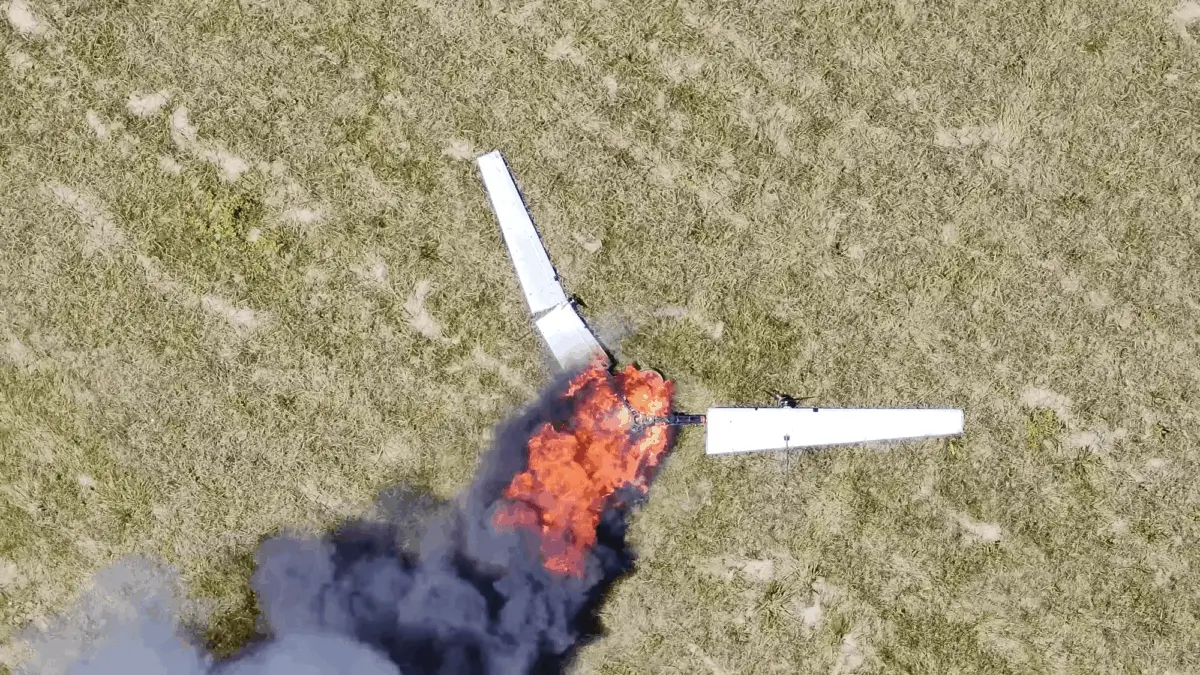
The hallmark of any rigorous engineering trial is the inevitable point where expectations collide with physical reality. According to seasoned observers, the most enlightening moments of any Defense Advanced Research Projects Agency (DARPA) challenge occur when systems experience catastrophic failures. Following dramatic crashes and subsequent battery thermal events, the final days of the DARPA Lift Challenge have been immortalized in a series of comprehensive video recaps.
The footage underscores the immense complexities of heavy-lift aerial robotics. Designing platforms capable of autonomously lifting, navigating, and delivering massive payloads requires balancing structural integrity, power efficiency, and fail-safe recovery mechanisms. The featured recaps serve as an invaluable case study in aerospace resilience, highlighting how competitors iterate under extreme pressure.
2. Precision Aerial Logistics: HKUST Aerial Robotics Group
Moving from heavy-lift industrial struggles to agile logistics, the HKUST Aerial Robotics Group has unveiled cutting-edge demonstrations of advanced drone delivery capabilities. As showcased in their latest video release, future drone delivery concepts are pushing beyond static porch drops.
The footage demonstrates drones interacting dynamically with moving vehicles and executing precision maneuvers capable of delivering packages directly through open windows. This level of autonomy requires sub-millimeter positioning accuracy, real-time computer vision, and advanced predictive trajectory modeling to ensure safety in cluttered, unpredictable environments.
3. Agricultural Micro-Robotics: Introducing STEMbot
Not all impactful robots require massive industrial footprints. Enter STEMbot (named after plant stems, not STEM education), a microscopic robotic platform designed by researchers to traverse and inspect vegetation.
While STEMbot moves at a deliberately modest pace, its engineering is marvelously specialized. Built to climb up and around delicate plant stems, the robot navigates complex biological geometries to inspect crops for early signs of pests and disease. Its diminutive size and gentle locomotion minimize damage to crops, offering a promising glimpse into the future of precision agriculture and autonomous crop monitoring.
4. Construction Automation: Monumental Bricklaying
In the realm of large-scale civil engineering, Monumental has crossed a major commercial threshold. Their specialized construction robots successfully executed the brickwork for an entire semi-detached residential home, autonomously laying approximately 20,000 bricks within a new community development.
The video footage reveals a seamless collaboration between robotic positioning systems and precision articulation. By automating repetitive, physically grueling masonry tasks, Monumental’s technology addresses chronic labor shortages while maintaining strict structural tolerances and accelerating project timelines.
5. Modular and Space-Bound Innovations
- ModLab University of Pennsylvania: Demonstrating why it has earned the moniker of the world’s most "truss-t-worthy" robot, ModLab’s latest modular systems continue to redefine adaptive structural configurations.
- Stanford BDML & Honeybee Robotics: Looking far beyond Earth’s atmosphere, researchers have proposed an exciting new NASA payload designed to test gecko-inspired dry adhesives in the microgravity and vacuum of space. These reversible adhesives could revolutionize how space rovers grip surfaces and how astronauts anchor tools.
- BRAIN VISTEC: Addressing the core mechanics of locomotion, researchers presented the Differential Adaptive Steering (DAST) mechanism. This decentralized adaptive control system allows legged robots to organize their own walking patterns while maintaining precise directional control across uneven terrain.
6. Humanoid Resilience, Manipulation, and Domestic Integration
The intersection of artificial intelligence and humanoid hardware continues to yield fascinating insights into physical interaction and failure recovery:
- Sancciuary AI: Emphasizing that physical errors are acceptable provided safety and recovery are prioritized, Sanctuary AI showcased robust failure-recovery protocols in humanoid systems. A robot that can stumble, analyze the situation, and correct its posture independently represents a massive leap toward safe human-robot coexistence.
- Kawasaki Robotics: Highlighting dexterity in industrial settings, Kawasaki demonstrated fluid pouring maneuvers with a mechanical precision that leaves little room for waste.
- LimX Dynamics & Sharpa: Tackling domestic and logistical chores, these teams demonstrated robotic shirt-folding and garment management. While the operational speed remains leisurely—drawing self-deprecating comparisons from human reviewers—the underlying computer vision and delicate fabric-handling algorithms represent significant milestones.
- DEEP Robotics: Their DR02 humanoid robot demonstrated remarkable stability while ascending and descending complex stairwells, proving that steady, controlled progression is key to dynamic locomotion.
- AgileX: Pushing the boundaries of compact utility, AgileX showcased multi-functional robotic frameworks that blur the line between mobile units and structural utility fixtures—affectionately dubbed "structural mini-fridges."
Supporting Context & Metrics
The rapid expansion of the robotics sector is underpinned by substantial global investments and an accelerating cadence of academic and industrial milestones. To contextualize the innovations featured in this week’s Video Friday, consider the following structural metrics driving the industry:
- Commercial Construction Automation: The deployment of robotic masonry units, such as those by Monumental, addresses an industry facing a global deficit of skilled labor. Automated bricklaying systems can increase laying speeds by up to 300% compared to traditional manual methods while maintaining uniform mortar joints.
- Aerospace and Defense R&D: Programs like the DARPA Lift Challenge reflect multi-million-dollar commitments to advancing vertical takeoff and landing (VTOL) capabilities, autonomous heavy logistics, and fault-tolerant power systems.
- Agricultural Automation Market: Micro-robots like STEMbot tap into an agricultural technology sector projected to exceed tens of billions of dollars over the decade, driven by the urgent need for sustainable, chemical-free pest management and yield optimization.
- Academic Collaboration Hubs: Major international conferences—such as IROS 2026 in Pittsburgh and the Humanoids Summit in Seoul—serve as the primary clearinghouses for peer-reviewed breakthroughs in decentralized control, gecko adhesives, and dynamic legged navigation.
Official Statements & Expert Perspectives
The philosophy underpinning modern robotics development heavily favors iterative testing and resilience over flawless, risk-averse initial designs.
Reflecting on the nature of high-stakes testing, robotics researchers frequently emphasize the educational value of failure. As noted in editorial commentary accompanying the DARPA Lift Challenge:
"Speaking from experience, I can tell you that the best part of any DARPA challenge is when things go horribly wrong. And after you enjoy all the crashes (followed by all of the battery fires), get caught up with the heavy-lift drone recaps."
This sentiment is echoed in hardware durability philosophies, such as those championed by Sanctuary AI:
"I do not care even a little bit if a robot fails (safely, of course), as long as it recovers from that failure."
In the realm of advanced control systems, institutions like BRAIN VISTEC highlight the necessity of autonomous adaptation:
"How can a legged robot organize its own walking while maintaining a desired direction? In this work, we present a Differential Adaptive Steering (DAST) mechanism for directional adaptation in legged robots under decentralized adaptive control."
Finally, industrial deployments continue to validate long-term economic models, with construction innovators like Monumental confirming:
"Monumental’s robots delivered the brickwork for a semi-detached home, laying around 20,000 bricks in a new community."
Future Outlook
As the robotics community prepares for the upcoming conference circuit—including Actuate 2026 in San Francisco this August, the Humanoids Summit Seoul in September, and IROS 2026 in Pittsburgh this fall—the trajectory of the industry is clear.
The gap between theoretical computer science and physical hardware execution is narrowing. Whether it is a tiny STEMbot inspecting crops, a heavy-lift drone navigating the turbulence of a DARPA trial, or a humanoid robot gracefully recovering from a stumble, the emphasis has shifted toward robustness, adaptability, and real-world utility.
Looking forward, the integration of advanced materials (such as gecko-inspired space adhesives), decentralized control architectures (like DAST), and practical commercial automation (such as autonomous masonry and textile handling) will continue to redefine human labor and technological capability. The trials, crashes, and breakthroughs captured in this week’s Video Friday are not merely isolated experiments; they are the foundational building blocks of the automated future.
