

Executive Overview
The rapid acceleration of robotics and automation has reached a fascinating inflection point, marked by a blurring line between conceptual engineering and real-world deployment. In this comprehensive edition of IEEE Spectrum’s Video Friday, we examine a sweeping array of breakthroughs that redefine what machines can do, how they are built, and how they learn. From an Italian humanoid platform featuring full-body multimodal skin to flat-packable cardboard drones designed for rapid deployment, the engineering community is actively tackling the fundamental bottlenecks of hardware design, physical intelligence, and deployment scalability.
Central to this week’s technological showcase is the paradigm shift toward Physical AI—a domain where advanced machine learning models intersect with sophisticated physical hardware. Companies and academic labs are no longer content with isolated software breakthroughs or fragile laboratory prototypes. Instead, they are pushing out robust, multipurpose platforms capable of navigating dynamic human environments, manipulating novel objects through human demonstration, and bridging the elusive sim-to-real gap using advanced generative techniques and reinforcement learning.
This report provides an in-depth analysis of the latest milestones featured in the global robotics community. We explore the structural mechanics of advanced humanoids, the integration of universal foundation models for multi-interface manipulation, innovative automated logistics solutions—such as NHS medical drone deliveries in London—and the heavy-duty autonomous trucking architectures poised to reshape global supply chains.
Detailed Chronology: Breakthroughs in Hardware, AI, and Autonomous Systems
The innovations featured across this week’s global robotics landscape span diverse subfields, reflecting a concerted push toward modularity, generalizability, and physical adaptability.
1. Generative Bionics and GENE.01: Bringing Physical AI to Life
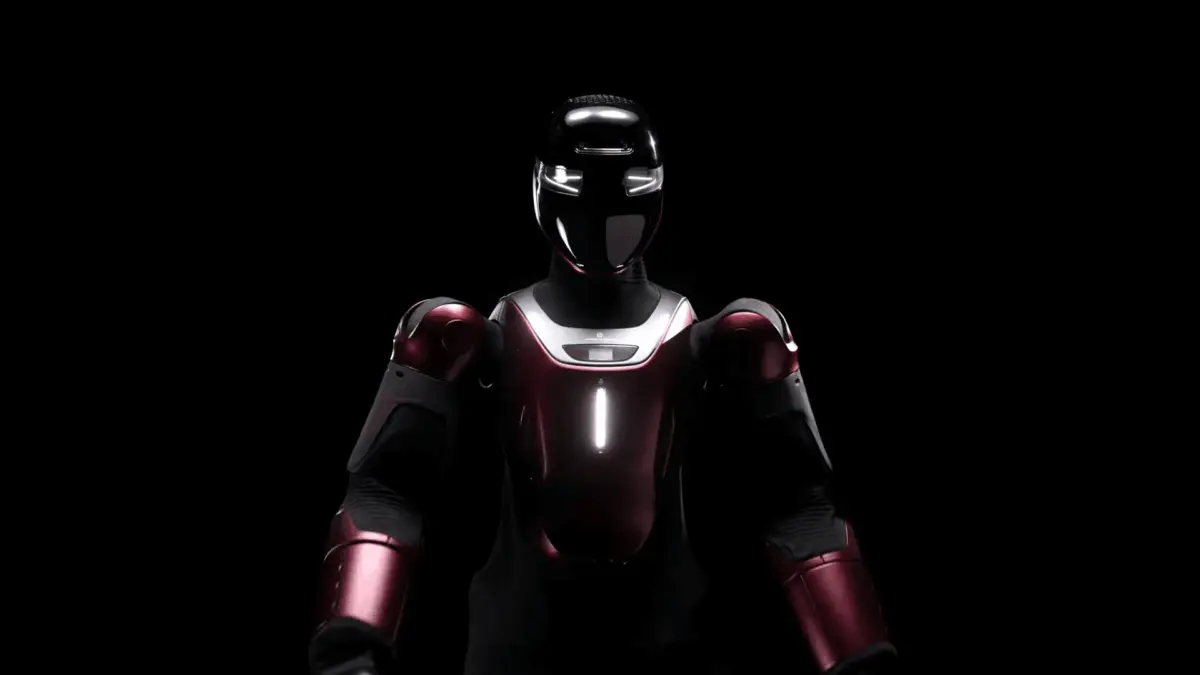
In a remarkably compressed development window of just six months, robotics startup Generative Bionics transformed its conceptual vision into reality with GENE.01, a fully functional humanoid platform. Unlike many early-stage humanoids that rely purely on visual feedback and rigid exteriors, GENE.01 is distinguished by its full-body multimodal electronic skin. This advanced sensory mesh perceives touch, proximity, force, and temperature simultaneously.
By endowing the machine with a distributed tactile nervous system, the platform brings Physical AI significantly closer to safe, natural collaboration with humans. The team emphasizes that GENE.01 is neither a computer render nor a static concept model, but a fully realized hardware-software ecosystem marking the dawn of responsive, touch-aware humanoid platforms.
2. Generalist AI and the Universal Sensorimotor Interface (GEN-1)
Addressing one of the most persistent scaling challenges in robotics—how to train manipulation intelligence across myriad end-effectors—Generalist introduced its latest embodied foundation model, GEN-1. Traditionally, robot learning models are tightly coupled to a specific hand design. GEN-1 flips this paradigm by supporting a vast array of interfaces, ranging from dexterous five-finger hands to specialized industrial tools and everyday objects like a surprise spatula.
By scaling pretraining across thousands of distinct sensorimotor interfaces, GEN-1 acquires a universal "physical common sense." This foundational intelligence seamlessly transfers to entirely new hands and novel manipulation primitives, allowing robots to grasp, push, pull, and twist objects without requiring custom-built training pipelines for every new hardware iteration.
3. Rapid Deployment and Aerospace Innovations: Cardboard Drones
Moving away from complex, costly manufacturing processes, researchers at the AIR Lab (SUTD) have unveiled a flat-packable flying wing built primarily from corrugated cardboard. Fabricated from just three laser-cut sheets, the aircraft relies on an ingenious fold-and-lock architecture that forms load-bearing wing structures without the need for permanent fasteners or specialized tooling.
The entire airframe can be assembled in under 15 minutes, opening up exciting possibilities for rapid-deployment emergency logistics, low-cost environmental monitoring, and scalable field use where traditional carbon-fiber or molded-plastic UAVs are impractical.
4. Open-Source Data Collection and Sim-to-Real Pipelines
Open-source robotics received a major boost with the introduction of MEVION, a $14,000 open-source data-collection system equipped with robust physical interaction capabilities. Designed to democratize high-end robotics research, MEVION lowers the financial barrier for labs aiming to gather high-fidelity kinematic and tactile datasets.
Simultaneously, Flexion, in collaboration with Niantic Spatial and Nvidia, demonstrated a massive leap forward in closing the notorious sim-to-real gap. By using off-the-shelf hardware to scan real deployment sites, the system reconstructs environments into photorealistic Gaussian splats. This allows engineers to run massively parallel reinforcement learning training regimens within simulated "Gym" environments. The resulting policies transfer zero-shot to real-world robots, drastically accelerating the deployment cycle for robust autonomous systems.
5. Commercial Humanoids and Novelty Applications
The commercial humanoid sector continues to capture public imagination with platforms like LimX Dynamics’ Tron 2, which features a compact, agile lower-body architecture optimized for dynamic stability. Meanwhile, enterprises are actively exploring the commercial viability of bipedal and wheeled humanoids across service industries.
Companies such as EngineAI, PNDbotics, and Sharpa are pushing the boundaries of retail and service automation. Sharpa, for instance, demonstrated a humanoid setup designed to assist in ice cream preparation. To maintain transparency, the company released a detailed operational disclaimer noting that while the demonstration highlights autonomous preparation steps, real-world deployment involves specialized protective food-safety gloves and strictly demarcated operational zones.
6. Healthcare Logistics and Long-Haul Autonomy
In the realm of large-scale deployment, operational automation is already saving lives and cutting emissions. South West London Pathology (SWLP), in partnership with Wing and Apian, expanded its medical drone delivery network. Operating since February 2026, automated UAVs now transport urgent NHS medical samples across southwest London up to 85% faster than traditional ground courier services.
On America’s highways, Aurora introduced the next generation of the Aurora Driver. Engineered to scale commercial freight operations, the new hardware suite is built to last one million miles while slashing hardware costs in half, signaling a mature, commercially viable future for driverless logistics.
7. Learning from Observation: The Robotics and AI Institute
Rounding out the technological advancements, the Robotics and AI Institute showcased a novel approach to object recognition. Traditional Vision-Language Models (VLMs) often struggle with novel or unusual objects, even when guided by carefully engineered text prompts. The institute’s new system bypasses this limitation by watching short human demonstrations. By tracking what a person touches and manipulates, the system automatically builds training datasets that cluster detections across time—even when objects merge or split apart—proving that in robotics, showing is often far more effective than telling.
Supporting Context and Key Metrics
To contextualize the scale of progress observed in this week’s video roundup, it is essential to examine the underlying metrics driving industry investments:
- Development Velocity: Generative Bionics’ ability to move from concept to a fully functional multimodal humanoid (GENE.01) in just 6 months highlights a compressed hardware-software iteration cycle enabled by modern simulation tools and rapid prototyping.
- Cost Reduction: Open-source platforms like MEVION have democratized data collection hardware, bringing advanced kinematic capture systems down to a price point of $14,000. Meanwhile, Aurora’s latest autonomous driving hardware has cut production costs by 50% while extending operational lifespans to 1 million miles.
- Logistical Efficiency: In urban healthcare logistics, drone delivery networks operated by Wing and the NHS have demonstrated time savings of up to 85% compared to traditional ground-based transport in congested metropolitan corridors.
- Sim-to-Real Parity: Through the integration of Nvidia-powered parallel reinforcement learning and Niantic Gaussian splatting, zero-shot transfer success rates from virtual Gym environments to physical testbeds have increased substantially, reducing physical hardware wear and tear during training.
Official Statements and Industry Insights
The leaders and research institutions behind these developments emphasize a shared philosophy: the future of automation relies on generalization, safety, and seamless human-robot integration.
"In just six months, our team turned GENE.01 into a fully functional humanoid platform that can walk, sense and interact. Its full-body multimodal skin perceives touch, proximity, force, and temperature, bringing Physical AI closer to safe and natural collaboration with people. Not a render. Not a concept. This is GENE.01. The future of Physical AI is taking its first steps."
— Generative Bionics
Addressing the challenge of multi-interface manipulation, the engineering team at Generalist noted:
"Why create robot intelligence for just one hand, when we could have it learn from many? GEN-1, our latest embodied foundation model, now supports a broad range of end effectors from 5-finger hands, to specialized tools, and everything in between… Scaling pretraining across thousands of these interfaces teaches GEN-1 a universal physical common sense."
Highlighting the structural innovations in sustainable aerospace, the AIR Lab team described their cardboard aircraft:
"The aircraft is manufactured from three laser-cut sheets and assembled through a fold-and-lock architecture that forms load-bearing wing structures with minimal tooling and no permanent fasteners. The full airframe can be assembled in under 15 minutes, demonstrating strong potential for rapid deployment."
Finally, in the healthcare sector, the modernization agenda continues to yield tangible public benefits:
"Since February 2026, our highly automated aircraft have been delivering urgent NHS samples across south west London, with service up to 85% faster than ground transport. We are thrilled to be part of this initiative, supporting clinicians in providing timely, effective care…"
— Wing & South West London Pathology (SWLP)
Future Outlook
As the robotics industry looks toward major upcoming gatherings—including the Summer School on Multi-Robot Systems in Prague (July–August 2026), Actuate 2026 in San Francisco (August 2026), IROS 2026 in Pittsburgh (September–October 2026), and the Humanoids Summit in Seoul (September 2026)—the trajectory of the field is unmistakable.
The transition from brittle, task-specific automation to generalized Physical AI is accelerating. We are moving past the era where humanoid robots were viewed merely as expensive laboratory novelties. With the advent of distributed tactile skins (such as GENE.01), universal sensorimotor foundation models (like GEN-1), photorealistic sim-to-real training pipelines, and robust commercial deployments in logistics and healthcare, machines are becoming active, reliable participants in human environments.
Over the next several years, the primary engineering focus will shift from proving basic mobility to refining safety, reducing hardware costs, and scaling data collection through human-in-the-loop imitation and reinforcement learning. As these technologies mature, the line between science fiction and everyday operational reality will continue to dissolve, ushering in a transformative new chapter for automation across society.
