

Executive Overview
From the vehicles we drive to the smartphones we carry in our pockets, modern civilization runs on goods manufactured by industrial automation. Today, more than 4 million industrial robots toil away in factories across the globe, assembling the endless stream of products that power the global consumer economy. Driven by rapid industrialization and shifting labor demographics, industry forecasts project that this installed base will skyrocket to over 16 million units by 2030.
Yet, this unprecedented acceleration in manufacturing creates an inescapable shadow: an impending tidal wave of technological obsolescence and industrial waste. When these complex machines, appliances, and consumer electronics inevitably break down, society faces a daunting disposal crisis. Traditional recycling methods are frequently crude, labor-intensive, and destructive, reducing high-value components to scrap metal or toxic electronic waste (e-waste).
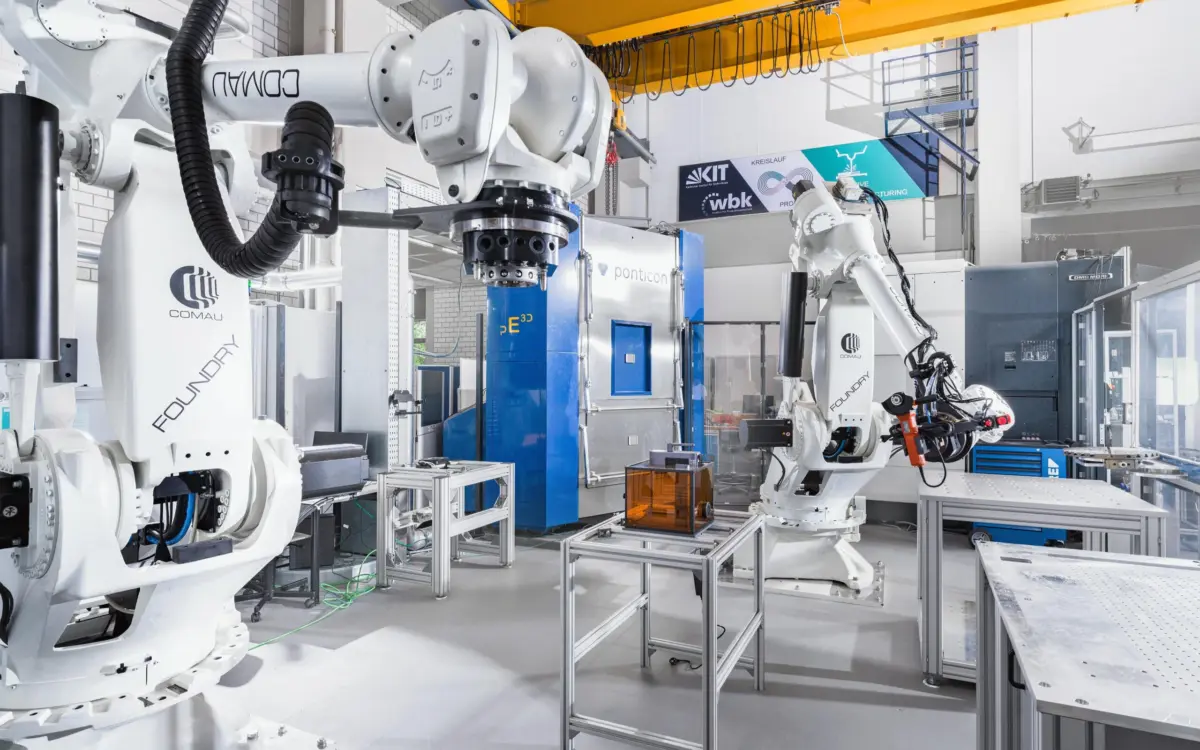
Enter a groundbreaking technological breakthrough from researchers at the Karlsruhe Institute of Technology (KIT) in Germany. Recently showcased at the prestigious IEEE International Conference on Robotics and Automation (ICRA) in Vienna, a novel robotic disassembly system is poised to redefine how we handle broken machinery. By pairing predictive algorithms with nimble robotic manipulators, KIT’s system can diagnose defects in damaged products, formulate a real-time deconstruction strategy, and meticulously salvage high-value parts without causing structural harm.
This innovation addresses one of the most stubborn bottlenecks in engineering: while assembly is a predictable, linear process, disassembly is fraught with unknowns. By pioneering a system that adapts to unexpected damage—such as stripped screws, corroded joints, or deformed chassis—KIT researchers are laying the foundational infrastructure for a fully automated, highly scalable circular economy. If realized on a global industrial scale, this technology could fundamentally alter consumer habits, making the repair and refurbishment of complex electronics cheaper than manufacturing them anew.
Detailed Chronology & Technological Mechanics
To understand the magnitude of the KIT breakthrough, one must first understand the fundamental asymmetry between building and dismantling. According to Jan Baumgärtner, one of the primary architects of the KIT disassembly system, assembling a new product is straightforward. Each step of an assembly line is explicitly mapped out in advance, operating under the comforting assumption that all components are pristine, standardized, and precisely where they are supposed to be.
Disassembly, however, is an exercise in managing chaos. Baumgärtner notes, "We can imagine 100 ways that something can go wrong." When an engineer or a conventional robot attempts to dismantle a broken device without knowing the exact nature of the failure, they risk compounding errors. For instance, if a technician spends valuable time meticulously removing 100 screws to separate two housing units, only to discover that the final screw is hopelessly rusted and stuck, the preceding 99 steps represent wasted time and labor. A dynamic approach is required—one that can alter its strategy on the fly.
The Anatomy of an Intelligent Disassembler
The KIT system bridges this gap by combining three core elements:
- Detailed CAD (Computer-Aided Design) Models: The system requires digital blueprints of both the intact product and its individual sub-components. This provides the robot with a baseline understanding of how parts should theoretically behave, interact, and move.
- Predictive Mathematical Modeling: Using specialized algorithms, the system evaluates the health of individual components, predicting the nature and extent of damage based on physical feedback.
- Adaptive Robotic Manipulators: Equipped with various tools—ranging from precision screwdrivers to industrial milling cutters—the physical robotic arms execute the deconstruction while continuously monitoring their environment.
The process begins the moment a broken device and its corresponding CAD files are fed into the system. The disassembler tests the degrees of freedom of each component—the specific axes along which a part is designed to move. For example, a functional screw should rotate smoothly along its longitudinal axis without shifting laterally.
The robotic manipulator applies gentle, exploratory nudges to each part to observe its physical response. By comparing this real-time feedback against the mathematical damage model, the system diagnoses anomalies:
- Restricted Movement: If a joint moves significantly less than anticipated, the system infers corrosion, jamming, or structural binding.
- Excessive Movement: If a component moves more than expected—such as a screw wobbling sideways—the system flags it as stripped, loose, or fractured.
- Altered Degrees of Freedom: If a component moves along axes forbidden by its original design, the system recognizes severe physical deformation.
Real-Time Adaptation in Action
What sets KIT’s technology apart from previous automated recycling attempts is its loop of continuous observation and adaptation. The robot does not follow a blind, hardcoded script; instead, it constantly updates its operational hypothesis based on tactile and visual feedback.
In demonstrations of the technology, researchers simulated a common industrial headache: a jammed, immovable screw. Initially, the system’s algorithm formulates a plan to unscrew the component normally. However, as the robotic manipulator attempts the action, sensors detect that the screw is failing to back out. Rather than grinding to a halt or stripping the surrounding housing, the system recognizes the anomaly in real time. It seamlessly aborts the standard unscrewing protocol, switches tools, and initiates a milling operation to carefully carve away the surrounding material, freeing the valuable part underneath without compromising its integrity.
Furthermore, human operators can interface with the system to designate specific "high-priority" components within a complex device. If a particular microchip, motor, or sensor holds high economic or ecological value, the system dynamically adjusts its deconstruction strategy to ensure that specific component is preserved at all costs.
Supporting Context & Metrics: The Global E-Waste Crisis
The urgency driving researchers at institutions like KIT cannot be overstated. We are living through an unprecedented boom in industrial robotics, coupled with an accelerating global addiction to consumer electronics and automated manufacturing.
According to data compiled by the International Federation of Robotics (IFR), there are currently more than 4 million industrial robots operating in factories worldwide. This milestone represents a staggering doubling of the global robot demand in factories over a single ten-year span. Yet, this is merely the tip of the iceberg. Industry researchers and market analysts project that the installed base of manufacturing robots will skyrocket to over 16 million units by 2030. This exponential growth is catalyzed not only by surging consumer demand, but also by macroeconomic pressures—most notably the "baby boomer exodus," wherein retiring skilled labor forces manufacturing plants to automate at an unprecedented pace.
The Mounting Shadow of Electronic Waste
However, every manufactured asset has a finite lifecycle. As millions of industrial robots, automated guided vehicles (AGVs), electric vehicle battery packs, and household appliances reach the end of their operational usefulness, humanity faces an ecological reckoning.
- The E-Waste Epidemic: Electronic and electrical waste represents one of the fastest-growing solid waste streams on the planet. Millions of tons of discarded machinery end up in landfills or are processed in developing nations under hazardous conditions.
- The Limits of Manual Recycling: Currently, much of our recycling infrastructure relies on brute-force shredding or hazardous manual labor. Shredding mixes valuable rare-earth elements, precious metals, and reusable plastics into a contaminated slurry, making high-grade material recovery extraordinarily difficult and energy-intensive.
- The Energy Cost of Virgin Extraction: Mining raw materials like lithium, cobalt, nickel, and rare-earth magnets requires massive energy inputs and causes severe environmental degradation. Salvaging existing components directly bypasses the extraction phase, slashing carbon footprints.
By shifting the paradigm from destructive recycling to intelligent, non-destructive disassembly, technologies like the KIT robotic system offer a vital bridge toward a sustainable industrial future. Ensuring that robotic systems themselves—along with the products they build—are designed for dismantling and remanufacturing is no longer just an academic exercise; it is an economic and environmental imperative.
Official Statements & Visionary Perspectives
The implications of this research extend far beyond a single laboratory in Germany. They challenge the foundational philosophies of modern product design, mass production, and consumerism.
Jan Baumgärtner, speaking on the core motivation behind the development of the robotic disassembler, emphasizes that the ultimate goal transcends mere automation efficiency. "The big future is saving our planet," Baumgärtner asserts. In his view, industrial engineering has spent the last century perfecting the art of creation while entirely neglecting the science of un-creation.
To make a circular economy viable on a mass scale, disassembly cannot remain a manual, cost-prohibitive chore performed by human technicians picking through hazardous waste. It must be automated, optimized, and scaled. Baumgärtner outlines a compelling future vision for the technology: scaling up a modest experimental setup—currently composed of a few robotic arms—into a unified, sprawling industrial ecosystem.
Instead of a traditional manufacturing plant designed to push raw materials into finished goods, Baumgärtner envisions specialized disassembly factories. Picture an industrial floor operating not as a traditional assembly line, but as a giant composite organism: "as a giant robot with 100 arms." Each robotic limb within this mega-system would be specialized, equipped with unique tools, sensors, and end-effectors tailored to specific tasks in the deconstruction pipeline.
This vision points toward a future where the economics of repair completely eclipse the economics of replacement. Baumgärtner summarizes the ultimate ambition of the KIT research initiative with striking clarity:
"That’s why we need to think about scaling this. Because it means it becomes so cheap that it’s cheaper to repair this [electronic device] than to produce it. That’s the goal."
When repair becomes more cost-effective than replacement, consumer habits will naturally shift. Rather than discarding a malfunctioning appliance or smartphone for a new model, consumers can rely on automated service hubs where robotic systems instantly extract, refurbish, and replace faulty modules at a fraction of the cost—and with a fraction of the environmental toll.
Future Outlook: Building the Automated Circular Economy
The debut of the KIT robotic disassembly system at ICRA 2026 marks a crucial stepping stone, but the path toward a fully realized automated circular economy requires overcoming several distinct hurdles before widespread commercial adoption can occur.
1. Standardization in Product Design
For an autonomous robot to successfully take a product apart, the product itself must be intelligible to the machine. Currently, consumer electronics are frequently glued, welded, or hermetically sealed to maximize durability and minimize manufacturing costs—making disassembly notoriously difficult. For automated salvage to succeed, manufacturers must embrace "Design for Disassembly" (DfD) principles, incorporating standardized fasteners, modular architectures, and accessible CAD metadata into their product lines.
2. Expanding AI and Computer Vision Capabilities
While KIT’s current mathematical modeling and predictive algorithms excel at handling mechanical anomalies like stuck screws, scaling this technology to process millions of wildly different consumer products will require advanced artificial intelligence. Future iterations of these systems will likely integrate generative AI and advanced computer vision to instantaneously recognize uncatalogued damage, worn-out polymers, and degraded circuit boards on the fly, eliminating the strict reliance on pre-existing CAD models for legacy or damaged items.
3. Integration into Industrial Infrastructure
Governments and regulatory bodies are beginning to take notice of the e-waste crisis, implementing stricter "Right to Repair" legislation and extended producer responsibility (EPR) laws. As regulatory penalties for waste mount, manufacturers will have a powerful financial incentive to integrate automated disassembly hubs into their supply chains. Forward-thinking companies may soon lease products rather than sell them, retaining ownership of the hardware so that automated systems can reclaim, refurbish, and redeploy components across multiple product generations.
Conclusion
The convergence of predictive algorithms, adaptable robotic manipulation, and an urgent global mandate for sustainability has birthed a new frontier in engineering. The research from the Karlsruhe Institute of Technology proves that untangling the complex web of modern manufacturing is no longer an insurmountable human impossibility. By teaching robots how to carefully, intelligently undo what they have built, science is laying the cornerstone for a truly regenerative industrial ecosystem—one where waste is obsolete, resources are endlessly recycled, and saving our planet aligns seamlessly with economic reality.
