

By Terrence O’Brien
Enriched and Expanded Special Report
Executive Overview
In the pristine yet unforgiving waters of Southeast Alaska, maritime traditions of mutual aid and camaraderie form the bedrock of survival. When a vessel finds itself in distress or disabled far from port, the unwritten law of the sea dictates that the nearest capable craft renders assistance. However, a recent incident near the remote entrance of Farragut Bay has sparked a fierce public debate, drawing international scrutiny to the obligations of ultra-luxury private vessels and the complex realities of modern marine communication.
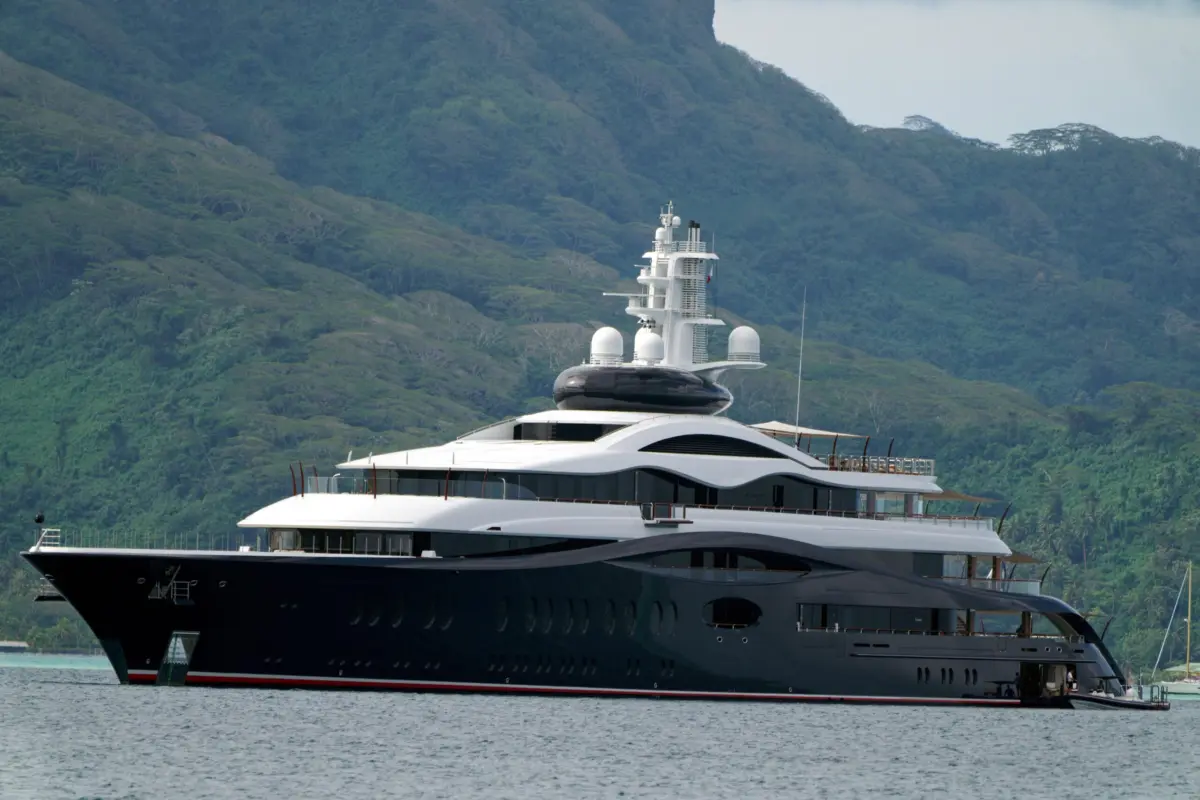
Earlier this week, a small skiff carrying a stranded crew ran entirely out of fuel in remote Alaskan waters. According to maritime tracking data, Automatic Identification System (AIS) logs, and eyewitness accounts, the vessel best positioned to effect a rapid rescue was not a local fishing boat or a government cutter, but Launchpad—the massive 118-meter (387-foot) superyacht owned by Meta CEO Mark Zuckerberg. Yet, while passengers aboard a nearby coastal cruise ship watched in disbelief, Launchpad allegedly remained stationary, failing to respond to radio hails. Instead, the smaller American Safari Cruises vessel, Wilderness Legacy, altered its course, passed the tech billionaire’s idle mega-yacht, tracked down the stranded skiff, and towed it back to safety.
The incident quickly ignited online indignation following eyewitness posts on social media platforms like Bluesky, subsequently echoed by regional investigations from the Alaska Beacon and the Halifax Shipping News. Public outcry centered on a perceived failure of maritime solidarity: Why did a multibillion-dollar superyacht allegedly ignore a distress call in its immediate vicinity?
As the story reverberated across global tech and maritime circles, representatives for Zuckerberg and his wife, Priscilla Chan, issued a clarifying statement. According to the spokesperson, neither Zuckerberg nor his family were aboard the vessel at the time of the incident. Furthermore, the superyacht’s crew was monitoring a different radio frequency and failed to review the Coast Guard’s broadcast until rescue operations were already well underway by the Wilderness Legacy. Meanwhile, the United States Coast Guard confirmed that while the skiff was technically out of fuel—a perilous situation in cold, unpredictable Alaskan waters—it was not actively taking on water or facing imminent danger, leading to a localized broadcast for marine assistance rather than a full-scale emergency deployment.
This comprehensive report examines the timeline of the Farragut Bay incident, analyzes the maritime tracking data, explores the legal and ethical obligations of superyacht operators in remote regions, and evaluates the technological communications gap that turned a routine assistance call into a public relations firestorm.
Detailed Chronology: From Fuel Depletion to the Farragut Bay Tow
To understand how an ordinary marine breakdown transformed into a viral controversy, one must examine the precise sequence of events that unfolded in the rugged wilderness of Southeast Alaska.
Phase One: The Breakdown and Initial Drift
The incident began in the late afternoon hours near Farragut Bay, a steep-walled fjord known for its dramatic glacial scenery, unpredictable winds, and powerful tidal currents. A small outboard-powered skiff, carrying a local crew, exhausted its fuel supply. Stranded without propulsion in an area with sparse commercial traffic and limited cellular connectivity, the crew faced the immediate psychological and physical hazards characteristic of Alaskan waters: rapidly dropping temperatures, potential wind-driven drift toward rocky shoals, and isolation from standard maritime routes.
Under standard maritime protocols, the skiff operators or witnesses would attempt VHF radio contact on Channel 16—the international distress, safety, and calling frequency—to alert nearby vessels or shore stations.
Phase Two: The Proximity of Launchpad
According to historical AIS tracking data reviewed by regional journalists, Launchpad was anchored or drifting near the entrance of Farragut Bay at the time the skiff lost power. Given its immense scale and proximity, the superyacht was objectively the closest capable platform to the stranded vessel.
Under maritime custom, vessels of all sizes—ranging from commercial freighters to private pleasure craft—are expected to maintain a listening watch on Channel 16. However, the operational protocols aboard ultra-luxury superyachts often differ significantly from those of commercial passenger vessels. Large yachts frequently operate with specialized crew divisions, rotating watches, and, in some cases, distinct communication channels or secondary bridges that may not actively monitor every localized broadcast unless specifically hailed or alerted to a Mayday situation.
Phase Three: The Arrival of the Wilderness Legacy
As the minutes ticked by and the stranded skiff awaited assistance, the Wilderness Legacy—an expedition cruise ship operated by American Safari Cruises, designed to navigate intimate Alaskan waterways—was transiting the same area.
Passengers aboard the Wilderness Legacy noticed unusual activity and heard bridge announcements regarding the stranded skiff. According to Michael Love, a passenger aboard the cruise ship who chronicled the event on Bluesky, the captain of the Wilderness Legacy informed passengers over the public address system that Launchpad was significantly closer to the disabled boat than their own ship, but had “repeatedly refused to respond” to hails.
This announcement reportedly elicited audible booing and discontent from the cruise passengers assembled on the deck. Recognizing that the occupants of the skiff required immediate assistance, the captain of the Wilderness Legacy made the command decision to intervene. AIS data visualizes the cruise ship actively altering its course, passing near the stationary Launchpad, and steaming directly toward the coordinate of the stranded skiff.
Phase Four: The Rescue and Aftermath
Upon reaching the drifting skiff, the crew of the Wilderness Legacy established a tow line, securing the small vessel and its occupants. The cruise ship then towed the skiff to a secure location, ensuring the safety of all personnel involved.
Throughout this operation, Launchpad remained in the vicinity, stationary near the bay’s entrance, before eventually continuing its voyage. The stark visual contrast of a modest eco-tourism and expedition cruise ship detours out of its schedule to rescue a stranded local crew while a 118-meter floating palace remained anchored or idle provided the narrative core that propelled the story into mainstream media headlines.
Supporting Context & Metrics: The Anatomy of Launchpad and Alaskan Maritime Law
To contextualize the public’s reaction and the technical realities of the event, it is vital to examine the vessel at the center of the controversy, as well as the regulatory framework governing maritime assistance in the United States.
The Vessel: Superyacht Launchpad
Commissioned for a reported sum exceeding $300 million, Launchpad is one of the world’s most recognizable and technologically advanced private superyachts. Delivered to its owner in early 2024, the Feadship-built vessel boasts staggering specifications:

- Length: 118 meters (387 feet)
- Gross Tonnage: Approximately 6,552 GT
- Amenities: Helipad, massive deck spaces, state-of-the-art navigation arrays, and accommodation for dozens of crew members and high-profile guests.
- Operational Profile: Designed for global blue-water cruising, Launchpad spends considerable time navigating remote coastlines, requiring an elite professional crew trained in advanced seamanship, security, and vessel management.
Given its pedigree and advanced sensor suites, critics argued that the yacht’s crew should have been acutely aware of any vessel in distress within its radar and AIS horizon. However, critics often conflate the technological capability of a ship with the operational focus of its crew at any given micro-moment.
The Legal and Moral Framework of Sea Rescue
Under international maritime law—specifically the International Convention for the Safety of Life at Sea (SOLAS), Chapter V, Regulation 33—the master of a ship at sea which is in a position to be able to provide assistance on receiving information from any source that persons are in distress at sea, is bound to proceed with all speed to their assistance.
However, legal distinctions are crucial here:
- Definition of Distress: Under United States Coast Guard definitions, a vessel "in distress" faces imminent danger requiring immediate intervention to save lives (e.g., sinking, fire, severe medical emergency, or active capsize).
- Non-Distress Assistance: A vessel out of fuel in protected or semi-protected waters, while inconvenient and potentially hazardous if weather deteriorates, is often classified as needing marine assistance rather than an emergency rescue.
In this instance, Coast Guard Public Affairs Specialist Shannon Shepard clarified to the Alaska Beacon that at approximately 9:56 p.m., the Coast Guard evaluated the situation, determined the skiff was not in active, life-threatening distress, and therefore issued a standard marine assistance request broadcast rather than mobilizing emergency rescue assets.
While moral imperatives under the seafaring code strongly encourage any capable vessel to assist a stranded mariner regardless of legal technicalities, the absence of a formal "Mayday" declaration significantly alters how bridge watch officers prioritize incoming radio chatter amidst routine operational duties.
Official Statements and Counter-Perspectives
As public speculation mounted regarding the motivations and actions of the superyacht crew, official statements from representatives and regulatory bodies provided essential context to the incident.
The United States Coast Guard Perspective
The Coast Guard’s role in the incident underscores the bureaucratic and operational triage that occurs daily in vast maritime districts like Alaska. With thousands of miles of rugged coastline, maritime authorities rely heavily on the commercial and private fleet to assist disabled vessels when government cutters are hours away.
By broadcasting a marine assistance request, the Coast Guard alerts nearby mariners who may have towing capabilities or spare fuel. The fact that the Coast Guard explicitly noted the skiff was not in immediate peril explains why no direct order or emergency mobilization was directed at Launchpad or any other specific vessel in the vicinity.
The Owner’s Representative Response
In a formal statement provided directly to The Verge, Brian Baker, spokesperson for Mark Zuckerberg and Priscilla Chan, addressed the controversy head-on:
"Mark and his family were not on board at the time of the incident. As the Coast Guard noted, the boat was not in distress, and by the time the crew reviewed the Coast Guard contact on a different radio channel from the one they were operating on, the assist was already underway. We’re grateful all parties are safe."
This statement highlights three critical defense points from the yacht’s management:
- Absence of Ownership: Highlighting that the prominent billionaire and his family were absent refutes any narrative implying personal callousness or direct refusal by the principal owner. Superyachts frequently operate under the direction of professional captains while repositioning between charter or private family legs.
- Radio Channel Divergence: Modern superyachts operate complex communication suites with multiple VHF and UHF transceivers monitoring bridge-to-bridge, company operations, internal communications, and local channels simultaneously. The assertion that the crew was monitoring a "different radio channel" points to a common logistical hurdle in maritime communications: watchstanders can easily miss localized broadcasts if their primary attention is dedicated to navigational safety, port coordination, or secondary operational frequencies.
- Temporal Overlap: The confirmation that the Wilderness Legacy had already initiated the towing maneuver by the time Launchpad’s crew processed the Coast Guard broadcast aligns with the rapid timeline of expedition cruise operations in narrow waters.
Future Outlook: Accountability, Etiquette, and the Changing Face of Alaskan Waters
The convergence of a stranded local skiff, an expedition cruise ship filled with observant travelers, and one of the world’s most high-profile superyachts in Farragut Bay offers a fascinating lens through which to view the future of modern maritime culture.
The Social Media Panopticon at Sea
In previous eras, incidents in remote Alaskan fjords remained localized tales shared among commercial fishermen and wilderness guides over VHF radio or at port docks. Today, the ubiquity of satellite internet (such as Starlink), personal mobile devices, and decentralized social networks like Bluesky ensures that isolated maritime events are instantly broadcast to a global audience.
For superyacht owners and operators, this reality introduces an unprecedented layer of public scrutiny. Even when operating in the most remote corners of the planet, private vessels are effectively under continuous observation by passengers, drones, AIS trackers, and digital sleuths. Consequently, public perception and optics increasingly demand higher standards of proactive community engagement and adherence to traditional maritime neighborliness, regardless of strict legal definitions of "distress."
Operational Reforms for Ultra-Luxury Fleets
Following this incident, maritime management firms overseeing ultra-luxury assets are expected to review their standard operating procedures regarding local radio monitoring in populated wilderness corridors like the Inside Passage. Key areas of internal review will likely include:
- Enhanced Channel Watch Protocols: Ensuring that dedicated watchstanders actively monitor Channel 16 and regional marine safety broadcasts even when anchored in scenic bays.
- Proactive Community Relations: Training crews to recognize that local assistance requests in remote areas carry immense symbolic weight for coastal communities who view the influx of mega-yachts with a mixture of economic pragmatism and cultural skepticism.
- Transparent Communication: Improving protocols for responding to public or Coast Guard queries to prevent minor logistical delays from metastasizing into international public relations crises.
Conclusion
The incident in Farragut Bay ultimately concluded without loss of life or property, thanks to the swift intervention of the crew and captain of the Wilderness Legacy. While the failure of Launchpad to render immediate assistance generated understandable frustration among eyewitnesses and online observers, subsequent clarifications from the Coast Guard and representatives for Mark Zuckerberg provide a nuanced picture of misaligned radio channels, crew watches, and the distinction between formal distress and routine marine assistance.
As the waters of Southeast Alaska continue to host an eclectic mix of multi-million dollar luxury yachts, traditional commercial fishermen, and adventure cruise vessels, the event serves as a stark reminder: in the wilderness of the North Pacific, technology and wealth cannot replace the timeless maritime duty of keeping a watchful eye on one’s neighbors.
