

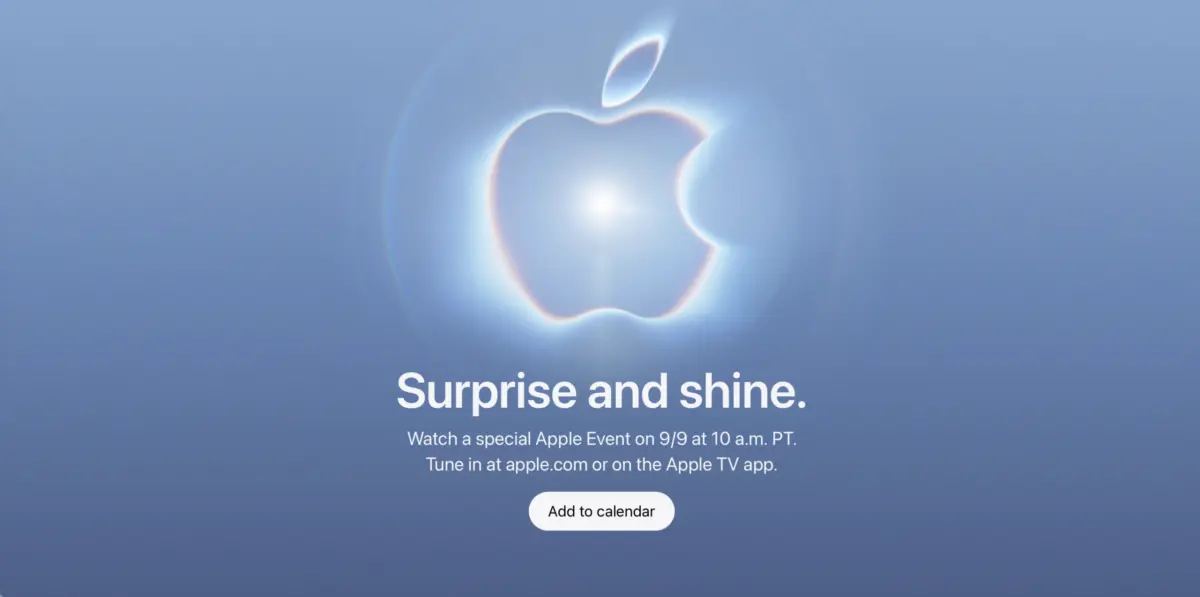
CUPERTINO, California — Apple has officially sent out media invitations for its upcoming autumn hardware showcase, scheduling the high-stakes event for September 9 at 1:00 PM Eastern Time. Bearing the intriguing tagline "Surprise and shine," the invitation has sent ripples of anticipation across the global technology sector.
While the Cupertino-based tech giant typically uses its customary September window to unveil iterative hardware updates, the looming presentation is shaping up to be one of the most consequential product launches in the company’s recent history. Beyond the expected hardware refreshes, industry insiders and supply chain leaks suggest that Apple is finally poised to enter the foldable device market—a category pioneered by competitors like Samsung and Google years ago.
Adding an extraordinary layer of historic significance, the September 9 showcase will mark the official debut of John Ternus as Apple’s Chief Executive Officer. Ternus, who previously helmed the company’s hardware engineering division, is set to formally step into the CEO role on September 1st, succeeding long-serving executive Tim Cook.
For an organization that has meticulously orchestrated its product pipelines and public relations for decades, the simultaneous transition of executive leadership and entry into an entirely new device form factor signals a profound turning point. As analysts, developers, and consumers ready themselves for the broadcast from the Steve Jobs Theater at Apple Park, the stage is set for a masterclass in modern corporate reinvention.
Executive Overview: A Paradigm Shift in Cupertino
The juxtaposition of executive transition and hardware evolution cannot be overstated. Tim Cook’s tenure as CEO transformed Apple into the world’s most valuable publicly traded company, characterized by supply chain mastery, the explosive growth of high-margin services, and the refinement of the smartphone form factor perfected by Steve Jobs. Yet, as Cook prepares to hand the reins to John Ternus, Apple faces a maturing smartphone market where traditional year-over-year upgrades yield diminishing returns in consumer excitement.
The "Surprise and shine" tagline hints at a dual mandate for the September 9 event. The "surprise" is almost certainly the long-awaited entry into the foldable smartphone segment—a venture that Apple has researched for nearly a decade without committing to commercial production. The "shine" points to the refinement of materials, displays, and internal silicon architectures designed to re-ignite consumer demand across premium tiers.
However, the hardware roadmap revealed through leaks and insider reports also underscores a strategic segmentation of Apple’s product line. While high-end Pro models are expected to receive traditional annual refreshes, the baseline iPhone 18 has reportedly been pushed to a later release window, upending a multi-decade rhythm of synchronized annual releases.
When viewers tune into the livestream on Apple’s website or gather inside the iconic Steve Jobs Theater, they will not merely be watching a product catalog update. They will be witnessing the opening act of the John Ternus era, testing whether the new leadership can successfully navigate both monumental design risks and shifting macroeconomic realities.
Detailed Chronology of the September 9 Event & Product Lineup
To fully grasp the scope of Apple’s upcoming presentation, it is vital to examine the specific hardware matrix expected to be unveiled, alongside the strategic delays and shifts rippling through the supply chain.
1. The Crown Jewel: The Foldable iPhone Debut
For years, skeptics argued that Apple would avoid the foldable category due to concerns over screen crease durability, mechanical hinge longevity, and thickness penalties. However, industry reporting indicates that Apple has cleared these hurdles.
Leaked dummy units and component specifications point to a foldable device featuring a wide form factor reminiscent of the Samsung Galaxy Z Fold series—specifically mirroring the dimensional philosophy of the Galaxy Z Fold 8, which industry reviewers have lauded as a harbinger of mobile computing’s future.
- Form Factor: A book-style horizontal fold that opens into a tablet-sized interior display while maintaining a highly usable outer cover screen.
- Engineering Focus: Special attention has reportedly been paid to minimizing the central display crease and utilizing advanced aerospace-grade titanium alloys to keep the chassis remarkably slim.
- Market Implications: By entering the foldable space, Apple immediately legitimizes a category that has spent years trying to transition from a niche enthusiast plaything into a mainstream productivity powerhouse.
2. The Pro Tier Iterations: iPhone 18 Pro and Pro Max
While the foldable device will command the media spotlight, Apple’s bread-and-butter flagship lineup will also receive its annual update. Following historical naming conventions, the company is expected to introduce the iPhone 18 Pro and iPhone 18 Pro Max.
Unlike the radical architectural and aesthetic redesigns seen in previous generations, these devices are projected to be iterative upgrades. Industry insiders note that the physical chassis will largely mirror its predecessors, focusing instead on internal performance gains.
- Silicon: Equipped with next-generation Apple Silicon (likely the A18 Pro or an early variant of the A19 architecture depending on foundry nomenclature), built on advanced sub-nanometer nodes.
- Camera Capabilities: Incremental enhancements to periscope telephoto lenses and sensor-shift stabilization, alongside deeper computational photography integration driven by Apple Intelligence frameworks.
- Thermal Management: Upgraded vapor chamber cooling systems to sustain peak performance during prolonged gaming and generative AI workloads.
3. The Base Model Shuffling and Future Roadmaps
Perhaps the most surprising operational shift associated with this autumn’s cycle involves the baseline iPhone hardware. According to supply chain trackers, Apple will not announce the base model iPhone 18 at the September 9 event.
Instead, the standard consumer-tier handset has been delayed, with production schedules pointing toward a launch next year. This staggering of product releases allows Apple to de-conflict its manufacturing lines—ensuring that assembly factories can dedicate maximum yield capacity to the complex assembly processes required for the new foldable device and the high-margin Pro models.
Looking further ahead into the 2027 product horizon, rumors suggest Apple is laying the groundwork for an expanded device matrix, including an iPhone 18e aimed at value-conscious buyers and a second-generation iPhone Air, signaling an ongoing quest to engineer ultra-thin devices without sacrificing structural integrity.

Supporting Context & Metrics: The Business and Technology Landscape
Understanding why Apple is making these sweeping changes requires a close look at the macroeconomic and technological pressures currently shaping the consumer electronics sector.
| Metric / Indicator | Historical Context | Current Projections (2025–2027) | Strategic Impact |
|---|---|---|---|
| Global Smartphone Growth | Plateauing upgrade cycles (38+ months average replacement window). | Slight rebound driven by AI integration and foldable novelty. | Forces Apple to create high-value, differentiated form factors to maintain Average Selling Prices (ASPs). |
| Foldable Market Share | Dominated historically by Samsung, Huawei, and regional Chinese OEMs. | Projected compound annual growth rate (CAGR) exceeding 25% over the next four years. | Apple’s entry validates the segment, threatening to cannibalize traditional tablet and ultra-premium phone sales. |
| Executive Leadership | Tim Cook (2011–2025): Focus on operational excellence, services growth, and supply chain logistics. | John Ternus (Beginning Sept 2025): Engineering-first pedigree with a focus on hardware innovation and design integration. | Signals a potential return to aggressive hardware-led risk-taking reminiscent of the early smartphone boom. |
The Engineering Challenges of Folding Displays
To appreciate the engineering feat represented by Apple’s rumored foldable iPhone, one must look at the manufacturing hurdles overcome by early pioneers. Samsung’s Galaxy Z Fold series spent years refining hinge mechanisms, utilizing complex water-drop hinge designs that allow the internal ultra-thin glass (UTG) to curve without developing a sharp, permanent crease.
Apple’s supply chain partners—predominantly Asian component manufacturers specializing in proprietary glass compositions and multi-link mechanical hinges—have reportedly been under contract for strict confidentiality regarding Apple’s custom-engineered tension systems. If Apple has successfully built a foldable phone that avoids the dust-ingress vulnerabilities and mechanical wear-and-tear of earlier market entries, it could establish a new benchmark for device durability.
The Silicon Advantage
Regardless of form factor, Apple’s proprietary system-on-a-chip (SoC) design remains its most formidable competitive moat. As generative AI features demand increasing neural processing unit (NPU) throughput, the integration of advanced silicon with unified memory architectures allows Apple devices to run complex on-device machine learning models efficiently. The iPhone 18 Pro models and the foldable flagship are expected to feature expanded neural engines, laying the groundwork for ambient, context-aware artificial intelligence interactions that operate locally rather than relying exclusively on cloud servers.
Official Statements & Industry Reactions
As news of the September 9 event date reverberated through Wall Street and Silicon Valley, analysts and industry stakeholders rushed to interpret the tea leaves of the invitation’s minimalist design and corporate messaging.
In a brief memo distributed to Apple employees following the announcement of the CEO transition, outgoing Chief Executive Tim Cook reflected on the milestone:
"Serving as Apple’s CEO has been the honor of a lifetime. Over the past fourteen years, we have pushed the boundaries of what technology can achieve, enriching hundreds of millions of lives. As I pass the baton to John, I do so with absolute confidence in his vision, his engineering brilliance, and his unwavering dedication to the values that define Apple. The future is unimaginably bright."
John Ternus, stepping into the spotlight as the incoming CEO, emphasized continuity combined with a relentless pursuit of product perfection:
"Apple’s greatest strength has always been our relentless drive to build products that empower humanity. Tim’s leadership has set an extraordinary standard of excellence, integrity, and grace. As we look toward September 9 and beyond, our focus remains unchanged: pushing the limits of design, engineering, and user experience to surprise and delight our customers in ways they never thought possible."
Independent tech analysts have also weighed in on the strategic weight of the upcoming announcements. Sarah Henderson, principal hardware analyst at TechInsight Global, noted:
"Delaying the base model iPhone 18 while introducing a foldable device is a calculated gamble. Apple is essentially bifurcating its audience. For the volume buyer, they are maintaining existing stock and waiting for a cleaner supply chain window. For the ultra-premium buyer who is experiencing upgrade fatigue, Apple is offering an entirely new luxury category. If the foldable device hits the market with the build quality users expect from Cupertino, it will completely re-energize the high-end smartphone market."
Future Outlook: Navigating the Post-Cook Era
The days leading up to September 9 will be scrutinized with a level of intensity rarely seen in the tech industry. For John Ternus, the event represents an immediate trial by fire. Stepping into the CEO role mere days before hosting a global product launch is an unprecedented logistical and psychological challenge.
However, those who have worked alongside Ternus during his tenure as hardware chief describe a leader who thrives in high-stakes engineering environments. Known for his calm demeanor, deep technical fluency, and close collaboration with Apple’s industrial design team led by Evans Hankey and industrial design veterans, Ternus represents a return to an engineering-led executive profile.
Looking past the immediate glitz of the Steve Jobs Theater stage, the long-term implications of this product cycle will reverberate for years:
- The Maturation of Foldables: Apple’s participation will accelerate component innovation, driving down manufacturing costs across the entire supply chain and forcing competitors to innovate faster.
- AI Integration: The hardware roadmap underscores Apple’s commitment to building devices capable of handling heavy local AI computations, setting up a clash with cloud-dependent ecosystems.
- Leadership Continuity: How Ternus manages investor relations, regulatory scrutiny, and supply chain resilience in the wake of Tim Cook’s departure will define the next decade of Apple’s corporate trajectory.
As the countdown to September 9 ticks away, the technology world waits with bated breath. Whether the "Surprise and shine" invitation heralds a golden age of folding displays and revitalized hardware design, or simply marks a steady transition into a new executive era, Apple is once again commanding the absolute center of the global stage.
