

Executive Overview
The global race toward full vehicle autonomy reached a significant milestone today as electric vehicle (EV) manufacturer ZEEKR—a prominent subsidiary of the Geely Holding Group—hosted a high-profile live broadcast event in China. During the presentation, the youthful yet rapidly scaling automaker pulled back the curtain on its next-generation smart driving solution, christened G-Pilot.
At the center of this technological leap is the integration of advanced artificial intelligence architecture, highlighted by ZEEKR’s position as a premier customer for NVIDIA’s cutting-edge DRIVE Thor system-on-chip (SoC). This high-performance computing hardware delivers an astounding 1,400 TOPS (Tera Operations Per Second) of processing power, providing the backbone for a suite of sophisticated driver-assistance and safety features.
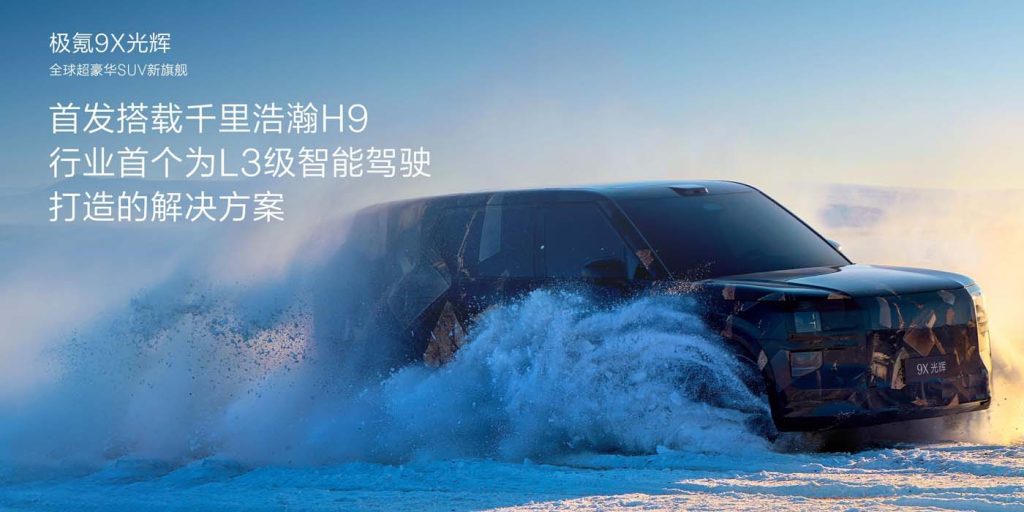
The crowning achievement of the G-Pilot unveiling is the introduction of Level 3 autonomous driving capabilities, which will debut exclusively on ZEEKR’s upcoming flagship electric SUV, internally and publicly designated as the 9X. Scheduled for its official global premiere at the upcoming Shanghai Auto Show next month, the 9X marks the official dawn of ZEEKR’s "L3 Era."
While the Level 3 functionality will initially be exclusive to the 9X when production commences in the second half of 2025, ZEEKR has confirmed plans to roll out scaled iterations of G-Pilot to its wider portfolio through over-the-air (OTA) software updates. This comprehensive maneuver not only cements ZEEKR’s status as an aggressive innovator in the fiercely competitive Chinese EV landscape but also signals a formidable challenge to legacy luxury automakers and Silicon Valley tech giants alike.
Detailed Chronology: From CES Teasers to the G-Pilot Reveal
To fully understand the gravity of ZEEKR’s recent announcements, it is vital to trace the strategic trajectory the company has pursued over the past several months, mapping out a meticulously planned roadmap that has culminated in today’s breakthrough reveal.
January 2025: Laying the Groundwork at CES
ZEEKR’s aggressive push into advanced computing began earlier this year at the Consumer Electronics Show (CES) in Las Vegas. During the global technology showcase, ZEEKR executives outlined an ambitious international and domestic expansion strategy for 2025. Having already successfully established a foothold in several European markets with a growing lineup of all-electric models—numbering six distinct production vehicles to date—the automaker confirmed it was preparing a massive pipeline of new products.
Among the highlights at CES 2025 was the preview of a sleek GT shooting brake variant of the brand’s flagship 007 sedan, alongside the announcement of three bespoke, internationally targeted EV models internally codenamed "EX," "DX," and "CC."
Crucially, CES served as the venue where ZEEKR publicly cemented its partnership with NVIDIA. By signing on as one of the very first automotive manufacturers to implement NVIDIA’s next-generation DRIVE Thor SoC into a vehicle domain controller, ZEEKR laid the technical foundation for the heavy computational loads required by modern artificial intelligence, neural networks, and real-time sensor fusion. Industry analysts quickly identified that this hardware partnership would anchor a new breed of large luxury SUVs slated for a 2025 rollout—the very vehicles that are now coming to light.
March 2025: The Live Broadcast and G-Pilot Debut
Fast forward to today, where ZEEKR’s leadership took to Chinese social media and broadcast platforms—specifically utilizing its official Weibo channels—to transition from hardware theory to software execution.
The live event served as the debut vehicle for G-Pilot, ZEEKR’s proprietary smart driving architecture. Rather than treating autonomous driving as a monolithic feature, ZEEKR structured G-Pilot as a scalable tiered solution designed to cater to varying consumer needs, driving environments, and regulatory frameworks.
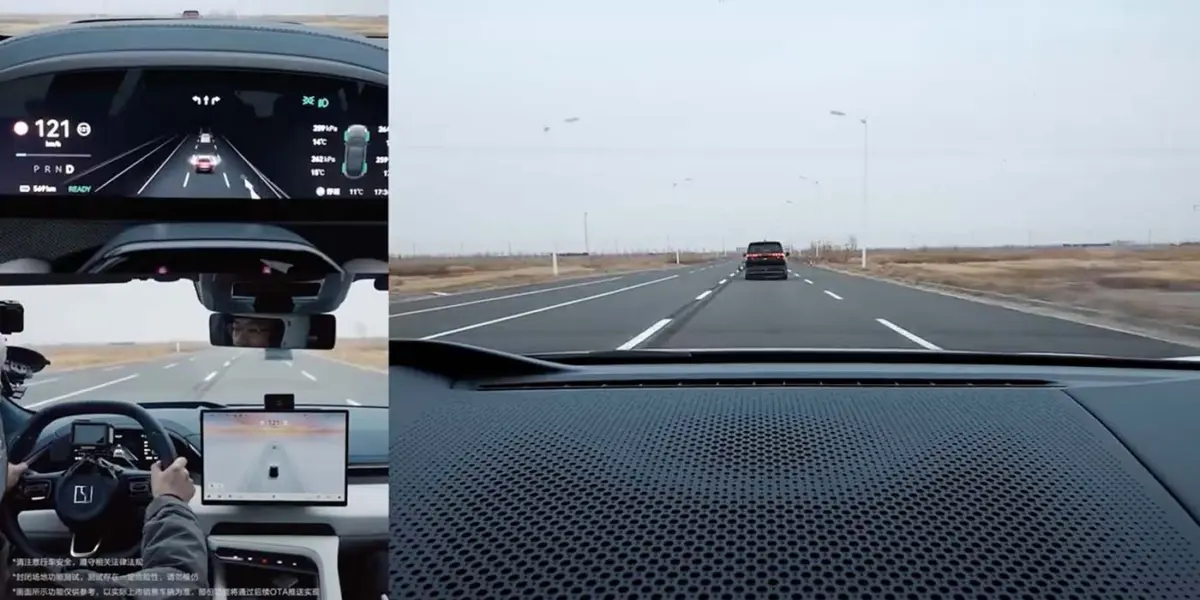
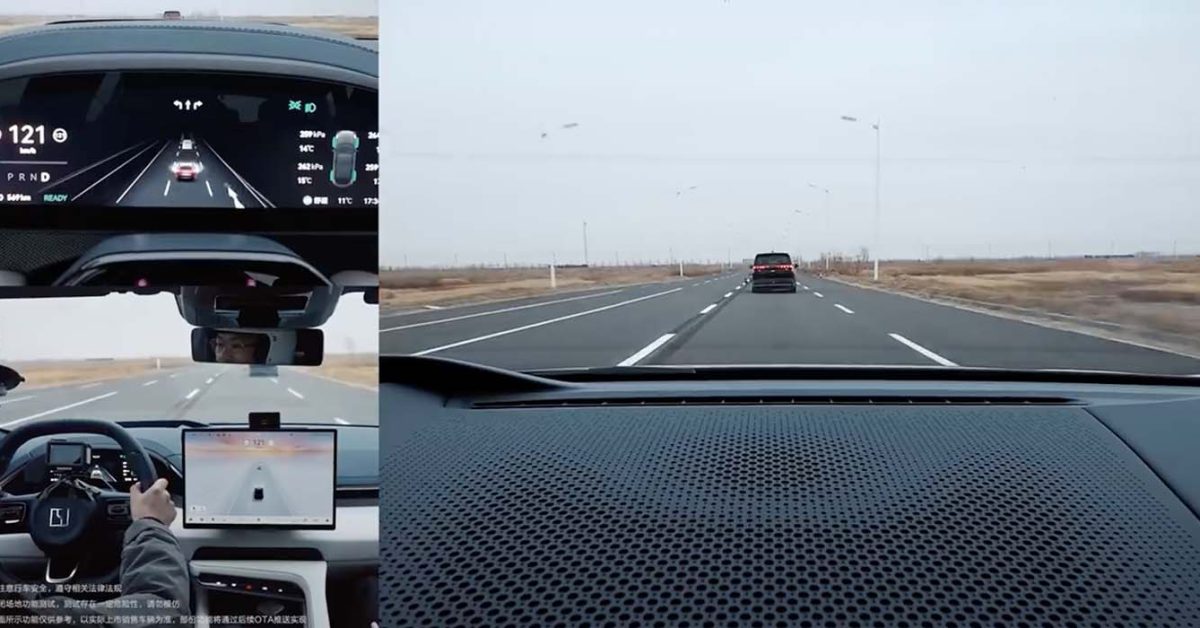
The presentation was heavily punctuated by real-world demonstration footage showcasing the system’s capabilities in extreme scenarios. The most arresting element of the broadcast was the introduction of the General Automated Evasion System (G-AES), a world-first safety technology engineered to handle sudden, high-speed obstacles on open roads.
Following the technical demonstrations, ZEEKR executives dropped the most anticipated detail of the day: the inaugural vessel for its Level 3 technology. The high-riding 9X SUV was confirmed as the launchpad for the highest tier of G-Pilot, dubbed G-Pilot H9. With production slated for the second half of 2025 following its April debut in Shanghai, the automotive world now has a clear timeline for when consumer-accessible Level 3 autonomy transitions from science fiction to dealership showrooms.
Supporting Context & Metrics: Under the Hood of G-Pilot and NVIDIA Thor
The leap to Level 3 autonomy—where the vehicle takes complete control under specific conditions, allowing the driver to legally divert their attention away from the road—is not merely a software achievement; it is a monumental hardware challenge. ZEEKR’s deployment of G-Pilot relies on a dense ecosystem of cutting-edge automotive components and computational brute force.
The Power of NVIDIA DRIVE Thor
At the heart of the G-Pilot ecosystem lies the NVIDIA DRIVE AGX Thor architecture. As a centralized system-on-chip, Thor consolidates autonomous driving, parking, in-cabin artificial intelligence, and digital cockpit functions onto a single, highly efficient silicon platform.
- Computing Muscle: The system boasts an unprecedented 1,400 TOPS of computing performance. To put this in perspective, this massive throughput allows the vehicle to process high-resolution data streams from an array of LiDAR units, long-range cameras, high-definition radar, and ultrasonic sensors simultaneously and in real-time.
- Neural Network Integration: The massive computing power enables deep learning models to run locally on the vehicle, improving path planning, object classification, and predictive modeling without suffering from the latency issues associated with cloud-dependent systems.
Breakthrough Safety: The General Automated Evasion System (G-AES)
One of the most technically impressive metrics revealed during the live event was the operational envelope of G-AES. Designed to mitigate catastrophic accidents caused by sudden road obstructions—such as fallen cargo, stalled vehicles, or debris appearing out of nowhere at night—G-AES operates at highway velocities.

- Speed Parameters: Unlike traditional emergency braking systems that primarily focus on stopping within a fixed lane, G-AES calculates dynamic evasion trajectories at speeds ranging from 80 km/h to 130 km/h (approx. 50 mph to 81 mph).
- Execution: The system can automatically execute emergency steering maneuvers and precision braking concurrently, pushing the vehicle’s dynamic limits to safely route around hazards faster than human reaction times allow.
Door-to-Door Navigation and V2P Capabilities
Beyond high-speed evasion, G-Pilot introduces a fully integrated door-to-door smart driving experience. This encompasses complex urban navigation, tight-space maneuvering, and a full-capacity Vehicle-to-Parking (V2P) system. The V2P architecture allows the vehicle to autonomously navigate multi-level parking structures, locate vacant stalls, and park itself without human intervention, leveraging the NVIDIA Thor platform to map and memorize complex indoor environments.
Official Statements and Industry Implications
While formal press releases and corporate statements often lean heavily toward marketing hyperbole, the strategic positioning of Geely and ZEEKR reveals a calculated effort to outpace both domestic rivals in China and traditional Western luxury brands.
ZEEKR’s Strategic Vision
In communications released via their official channels, ZEEKR representatives emphasized that the rollout of G-Pilot represents a paradigm shift in how the company approaches vehicle safety and user experience.
"The launch of G-Pilot and our entry into the L3 era with the upcoming 9X SUV demonstrates our unwavering commitment to redefining mobility," indicated statements shared during the broadcast. "By harnessing the revolutionary computing capabilities of NVIDIA’s DRIVE Thor technology, we are not just adding driver assistance features; we are engineering a self-evolving automotive ecosystem that prioritizes human safety above all else."
Industry analysts have noted that ZEEKR’s aggressive integration timeline positions the Geely subsidiary at the vanguard of the Chinese EV market’s technological consolidation. As price wars intensify across mainland China, hardware-agnostic software advantages and proprietary safety features like G-AES are becoming the primary differentiators for premium brands trying to capture affluent, tech-savvy consumers.

The Competitive Landscape
ZEEKR’s rapid iteration cycle—moving from CES hardware announcements in January to fully demonstrated Level 3 software solutions in March—puts pressure on international competitors. While brands like Mercedes-Benz and BMW have introduced limited Level 3 systems in specific markets (such as Drive Pilot in Germany and select U.S. states), their deployment has been notoriously conservative regarding operational speeds and geographical bounds.
By targeting highway evasion speeds up to 130 km/h and deploying massive localized processing power via NVIDIA Thor, ZEEKR is signaling an ambition to leapfrog legacy regulatory bottlenecks and deliver high-performance autonomy directly to the mass-luxury consumer base.
Future Outlook: The Road to Shanghai and Beyond
As the automotive industry looks ahead, all eyes are turning toward the upcoming Shanghai Auto Show next month. The event will serve as the global stage for the physical unveiling of the ZEEKR 9X SUV, giving journalists, industry experts, and potential buyers their first close-up look at the vehicle destined to pioneer the brand’s "L3 Era."
Immediate Milestones (2025–2026)
- April 2025 (Shanghai Auto Show): Global public debut of the ZEEKR 9X SUV, complete with deep-dive technical briefings regarding its sensor suite, interior layout, and G-Pilot H9 implementation.
- Second Half of 2025: Official commencement of mass production for the 9X in China, alongside the initial retail delivery rollout for early adopters.
- Late 2025 to 2026: Initiation of over-the-air (OTA) updates designed to cascade scaled versions of G-Pilot functionality to other vehicles within ZEEKR’s existing and upcoming lineup, including the aforementioned "EX," "DX," and "CC" models slated for international markets.
Investigative Summary
The transition of ZEEKR from a budding electric vehicle startup into a technological powerhouse is accelerating at a breathtaking pace. By securing early access to world-class computing hardware like NVIDIA’s DRIVE Thor and pairing it with aggressive software engineering—exemplified by G-AES and G-Pilot—ZEEKR is crafting a compelling blueprint for the future of intelligent mobility.
As journalists prepare to boots-on-the-ground report from the Shanghai Auto Show next month, the central question will no longer be whether Chinese automakers can compete on vehicle design or battery range, but whether legacy Western automotive giants can adapt quickly enough to match this relentless pace of autonomous innovation. Stay tuned for our live coverage from Shanghai as we put ZEEKR’s bold new claims to the test.
