

Executive Overview
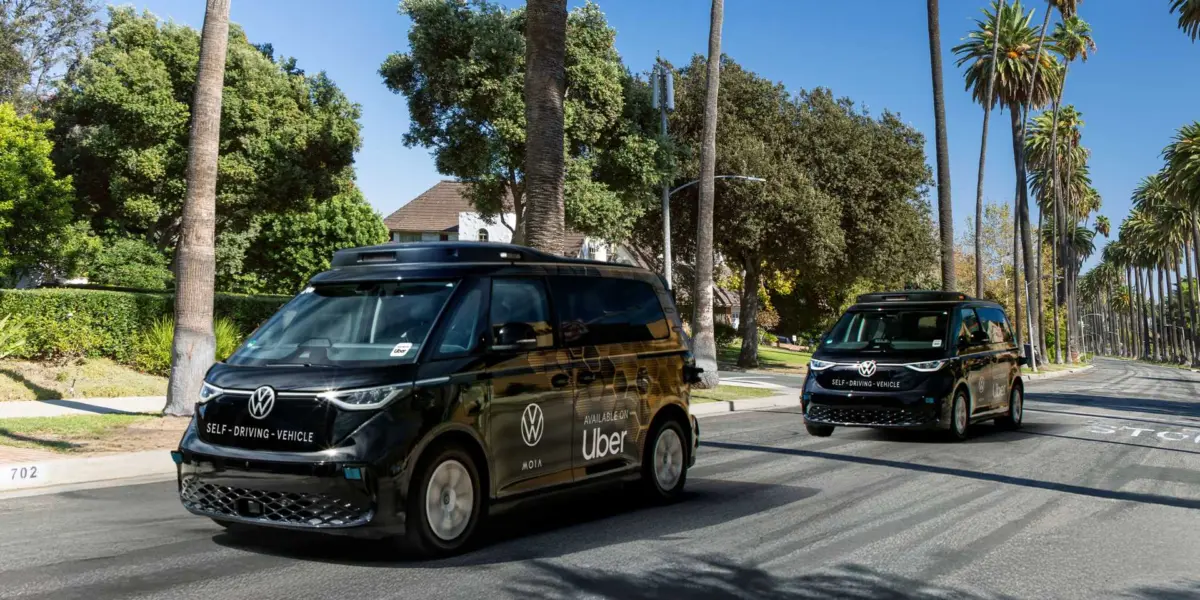
The global autonomous vehicle landscape is undergoing a massive paradigm shift, and the race for robotaxi dominance has officially intensified. In a landmark collaboration announced by the Volkswagen Group, the automaker’s US self-driving arm—Volkswagen ADMT (Autonomous Driving Mobility & Transport)—has officially partnered with ride-hailing giant Uber.
The ambitious, multi-year agreement will see the rollout of thousands of fully autonomous, all-electric Volkswagen ID. Buzz vans onto US roads over the coming decade. Marking a significant milestone for both companies, the strategic partnership aims to reshape urban transit by blending Volkswagen’s cutting-edge Level 4 autonomous driving technology with Uber’s massive, globally recognized ride-sharing network.
The rollout will commence in Los Angeles, a prime battleground for autonomous vehicle (AV) testing and commercial deployment. Initial testing phases are scheduled to begin later this year, with commercial robotaxi operations slated to launch publicly by 2026. Behind this initiative is a sophisticated full-stack operational model: Volkswagen’s dedicated mobility brand, MOIA, is supplying both the purpose-built EV hardware and the advanced proprietary autonomous driving (AD) software required to pilot the fleet on Uber’s platform.
This alliance underscores a broader transformation within the traditional automotive industry. Major legacy automakers are no longer satisfied with merely manufacturing and selling personal vehicles; they are actively evolving into mobility-as-a-service (MaaS) providers. By combining Volkswagen’s manufacturing prowess and proprietary software development with Uber’s extensive consumer reach and logistics network, the partnership poses a formidable challenge to existing autonomous players like Waymo and Tesla as the battle for the future of urban mobility heats up.
Detailed Chronology and Rollout Timeline
The path toward commercializing thousands of autonomous ID. Buzz vans on American streets is built on a carefully structured, safety-first timeline designed to satisfy both regulatory bodies and consumer expectations.
Phase 1: Preparation and Initial Testing (Late 2025)
The operational footprint of this partnership begins in Los Angeles, California. Later this year, Volkswagen ADMT will deploy its initial fleet of modified ID. Buzz AD vans for rigorous real-world testing.
Unlike traditional vehicle testing, these early phases will feature human safety operators stationed behind the wheel. These drivers serve a dual purpose: they act as a fail-safe to handle unexpected edge cases, and they provide valuable qualitative feedback to fine-tune Volkswagen’s autonomous driving algorithms.

Furthermore, the operational rollout is strictly contingent upon regulatory approval. Volkswagen and Uber have emphasized that each distinct phase of the launch sequence will only move forward once local, state, and federal regulators give the green light. This cautious, phased approach aims to build public trust and ensure absolute safety before everyday consumers ever step foot inside a driverless vehicle.
Phase 2: Commercial Launch in Los Angeles (2026)
Following successful completion of the initial validation and testing milestones, the partnership will transition from closed trials to open commercial operations. By 2026, everyday users opening the Uber app in Los Angeles will be given the option to hail an autonomous ID. Buzz for their urban trips.
During this initial commercial phase, human operators may still be present in select vehicles depending on evolving regulatory frameworks and operational design domains (ODDs). However, the ultimate goal of the 2026 launch is to transition smoothly into driverless, remote-monitored operations within clearly defined metropolitan zones.
Phase 3: National Scaling Over the Next Decade (2026–2035+)
The long-term vision of the Volkswagen-Uber partnership extends far beyond Southern California. Over the next ten years, the collaboration aims to scale the fleet to thousands of autonomous ID. Buzz vans across multiple major metropolitan areas throughout the United States.
Because Uber possesses an established infrastructure of demand generation, dynamic pricing, and fleet management algorithms, scaling the footprint of Volkswagen’s AV fleet can happen much faster than if the automaker attempted to build a standalone ride-hailing network from scratch. Conversely, Volkswagen provides the physical infrastructure—spacious, electric, purpose-built passenger vans capable of moving small groups comfortably—which solves Uber’s perennial need for reliable, high-capacity autonomous supply.
Supporting Context, Technical Metrics, and Industry Evolution
To fully appreciate the gravity of the Volkswagen-Uber alliance, one must examine the underlying technology powering the iconic ID. Buzz vans and understand where this development fits within the broader autonomous vehicle landscape.
What is Level 4 Autonomy?
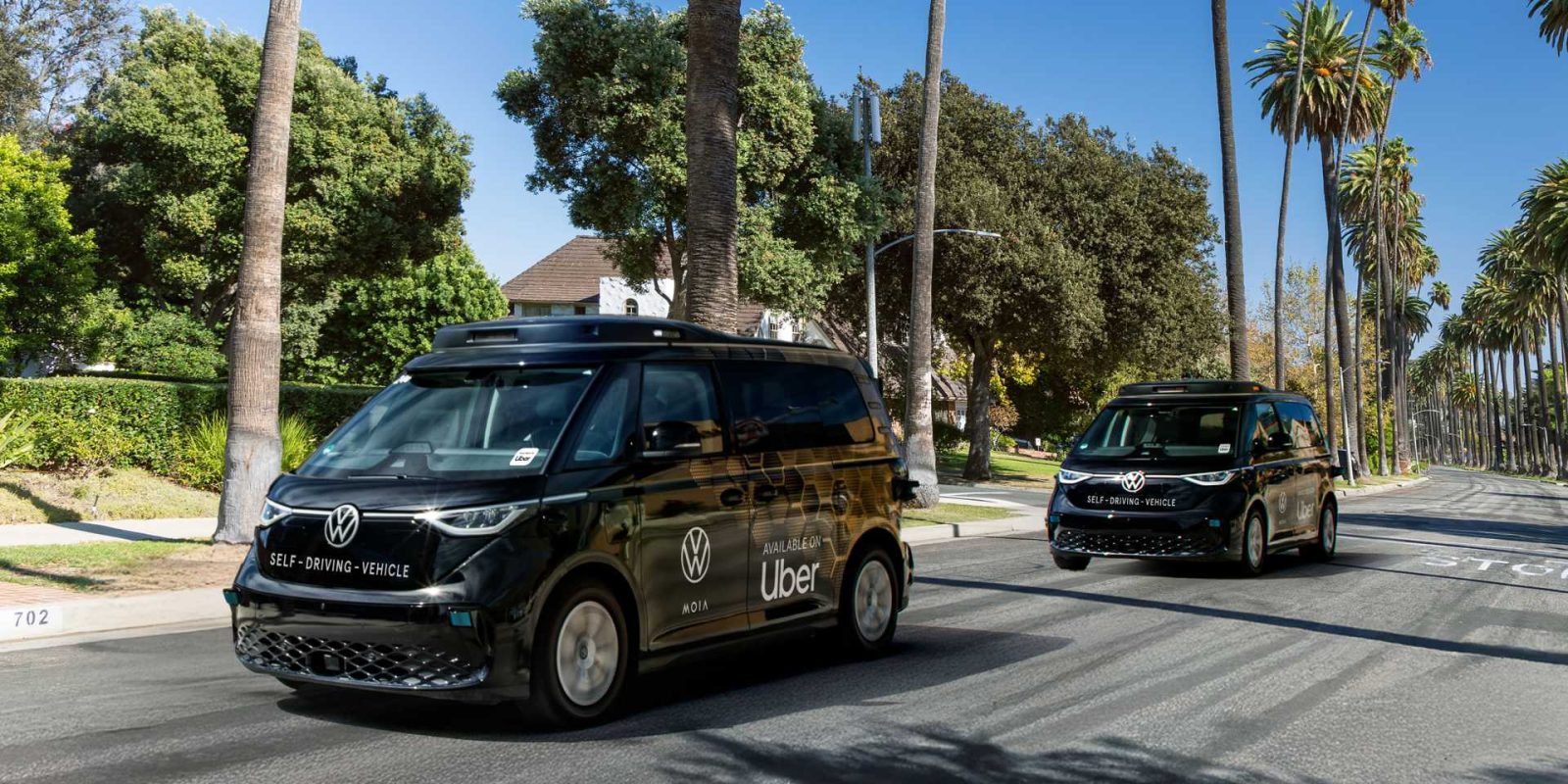
In March 2024, Volkswagen achieved a monumental industry milestone by becoming the first traditional vehicle manufacturer to develop a Level 4 Autonomous Driving (AD) service vehicle designed for large-scale industrial production.
To understand why this is revolutionary, it helps to review the Society of Automotive Engineers (SAE) levels of driving automation:
- Level 0–2: Driver must constantly supervise all aspects of driving; features are limited to cruise control, lane-keep assist, and basic driver-assistance systems.
- Level 3: The vehicle can handle dynamic driving tasks under specific conditions, but the human driver must be ready to take over when prompted.
- Level 4 (High Automation): The vehicle can independently handle all aspects of driving within a defined operational design domain (such as a specific city center or geofenced zone). Crucially, a Level 4 vehicle can operate entirely without a human driver or passenger onboard.
- Level 5 (Full Automation): The vehicle can drive anywhere under any conditions without human intervention.
Volkswagen’s Level 4 AD system places the ID. Buzz in an elite category. The vehicle is equipped with an intricate sensor suite comprising high-resolution LiDAR, long- and short-range radar, and 360-degree cameras. This hardware array feeds a high-performance onboard computer running MOIA’s proprietary software stack, allowing the van to perceive its environment in real time, anticipate pedestrian movements, navigate complex urban intersections, and make split-second safety decisions without human oversight.
The Rise of the ID. Buzz as a Robotaxi Platform
The choice of the ID. Buzz as the flagship vehicle for this autonomous fleet is far from accidental. While many competitors in the robotaxi space rely on standard sedans or modified SUVs—which often seat up to four passengers—the ID. Buzz offers a distinct ergonomic advantage.
Inspired by the legendary Volkswagen Microbus, the ID. Buzz combines retro-futuristic aesthetics with a cavernous, highly adaptable interior. In an autonomous ride-hailing context, passenger space is paramount. The van’s wide-opening doors, flat floor, and configurable seating layouts make it ideal for shared rides, airport transfers, and group commuting. Furthermore, as an all-electric vehicle, it produces zero tailpipe emissions, aligning perfectly with corporate sustainability goals and municipal zero-emission zone mandates gaining traction across major US cities.
The Robotaxi Race Heats Up
The partnership between Volkswagen and Uber is the latest salvo in an increasingly crowded and high-stakes global robotaxi war. For years, tech conglomerates and venture-backed startups dominated the autonomous vehicle landscape, with Alphabet’s Waymo leading the commercial charge in cities like San Francisco, Phoenix, and Los Angeles.
At the same time, traditional automakers watched cautiously, hesitant to sink billions into unproven software architectures. However, the calculus has changed. Volkswagen’s decision to develop its own full-stack software via MOIA and partner directly with Uber illustrates a new playbook: legacy automotive manufacturing muscle combined with tech-platform distribution. This hybrid model allows automakers to bypass the astronomical costs of building consumer apps and user bases from scratch, while giving ride-hailing platforms secure, long-term access to specialized fleets of autonomous electric vehicles.
Official Statements and Industry Perspectives
The announcement has drawn widespread commentary from key executives at both Volkswagen and Uber, highlighting the strategic alignment driving this venture.

Christian Senger, CEO of Volkswagen Autonomous Mobility, underscored the transformative nature of the project during the official reveal:
"Volkswagen is not just a car manufacturer — we are shaping the future of mobility, and our collaboration with Uber accelerates that vision."
Senger’s remarks point to an existential shift for Volkswagen Group. As global automotive markets transition away from internal combustion engines toward software-defined electric vehicles, traditional hardware sales face mounting margin pressures. By transforming into a mobility provider that supplies both the vehicles and the underlying artificial intelligence, Volkswagen is positioning itself to capture recurring revenues from shared transit networks.
Industry analysts have similarly praised the structure of the deal. Because Uber acts as the marketplace aggregator rather than an exclusive vehicle manufacturer, it avoids the massive capital expenditures associated with designing, crash-testing, and homologating automobiles. Conversely, Volkswagen gains instant access to Uber’s tens of millions of active monthly users, ensuring high utilization rates for its expensive autonomous fleet. This symbiotic relationship creates a powerful economic engine capable of scaling rapidly across regulatory jurisdictions.
Future Outlook: The Road Ahead for Autonomous Mobility
As Volkswagen ADMT and Uber prepare to break ground on their testing protocols in Los Angeles later this year, the broader implications for urban infrastructure, public policy, and consumer habits are profound.
Infrastructure and Urban Planning
The mass deployment of thousands of autonomous ID. Buzz vans over the next decade will force urban planners to rethink city design. Dedicated passenger loading and unloading zones, EV fast-charging depots tailored for commercial fleets, and updated digital infrastructure (such as high-definition 3D mapping and vehicle-to-infrastructure communication networks) will become essential. Cities that proactively adapt to these requirements will likely capture the economic and environmental benefits of reduced traffic congestion and lower emissions.
Safety, Regulation, and Public Acceptance
Despite technological advancements, public perception and regulatory hurdles remain significant barriers to universal robotaxi adoption. Incidents involving autonomous vehicles stalling in traffic or misunderstanding emergency personnel have historically sparked intense public scrutiny.

By insisting on a phased rollout that begins with human safety operators and relies strictly on regulatory sign-offs at every developmental milestone, Volkswagen and Uber are taking a measured approach to mitigate these concerns. Transparent communication, robust safety data sharing, and flawless execution during the 2025 testing phase will be critical in convincing skeptical consumers that driverless transport is not only viable, but fundamentally safer than human-driven alternatives.
Conclusion
The partnership between Volkswagen and Uber represents a watershed moment for the autonomous vehicle industry. By marrying Volkswagen’s Level 4 production-ready ID. Buzz vans and MOIA’s proprietary software stack with Uber’s unparalleled ride-hailing ecosystem, the two giants have laid the groundwork for the next generation of urban transit.
As testing commences in Los Angeles later this year and commercial operations loom on the horizon for 2026, the countdown has officially begun. The future of mobility is electric, autonomous, and shared—and it is arriving on American streets faster than ever before.
