

Executive Overview
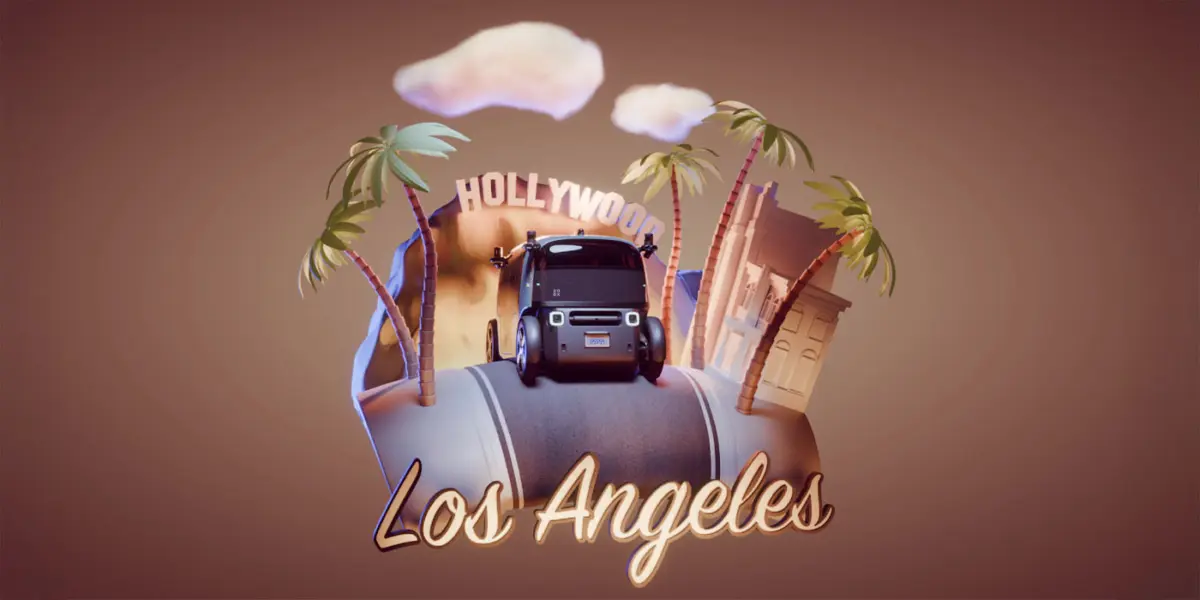
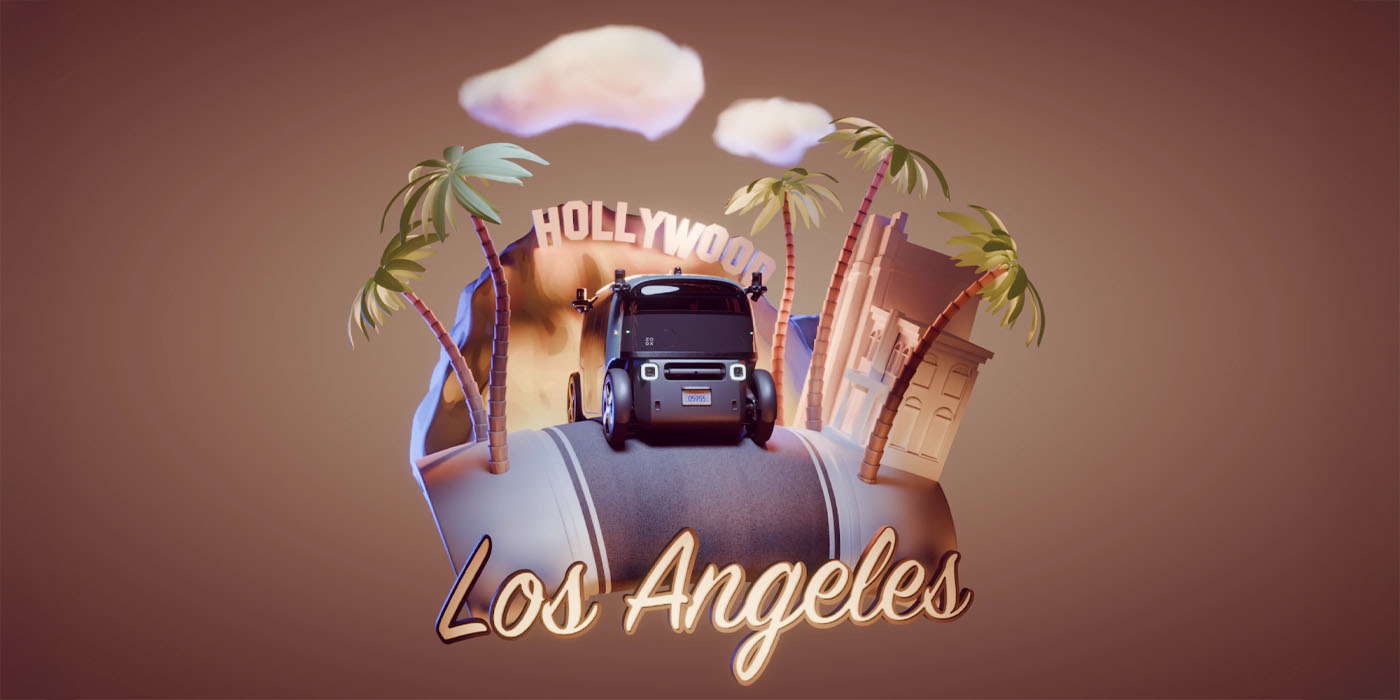
The autonomous vehicle landscape is shifting from theoretical promises to concrete, asphalt-level deployment. Zoox, the autonomous vehicle subsidiary of Amazon, is officially rolling its camera- and LiDAR-packed test fleet into its sixth major North American urban hub: Los Angeles.
Known for its unconventional approach to the robotaxi market, Zoox is carving out a distinct path. While industry competitors rely on retrofitting commercially available electric vehicles with autonomy suites, Zoox has spent years designing a bespoke, bidirectional, "toaster-style" EV built exclusively for driverless ride-hailing. Featuring no steering wheel, no gas pedal, and a carriage-style seating arrangement designed to prioritize passenger interaction, the Zoox vehicle represents a radical reimagining of urban mobility.
However, conquering the notorious gridlock of Southern California requires a measured, methodical strategy. The initial rollout in the Hollywood area of Los Angeles will start small. Zoox will deploy a limited fleet of retrofitted test vehicles—complete with safety drivers—to meticulously map the urban topography before transitioning to fully autonomous operations slated for later this summer.
This latest expansion underscores a broader, aggressive scaling phase for Zoox. Following foundational rollouts in California, Nevada, Texas, and Florida, the company is positioning itself to be a formidable player in the commercial robotaxi sector. As Zoox targets public-facing commercial launches in cities like Las Vegas and San Francisco later this year, its entry into Los Angeles marks a critical proving ground for testing hardware and software against some of the most chaotic traffic dynamics in North America.
Detailed Chronology: From Concept to Coastal Expansion
Zoox’s journey from a speculative Silicon Valley startup to a major autonomous player backed by one of the world’s largest tech conglomerates is defined by calculated, regulatory-approved milestones. Understanding the company’s trajectory highlights why its arrival in Los Angeles is a watershed moment for the brand.

The Foundation and Purpose-Built Philosophy
Founded in 2014 by Tim Kentley-Klay and Jesse Levinson, Zoox was conceptualized with a blank-sheet philosophy. Rather than adapting existing sedans and SUVs with autonomy kits—a strategy favored by firms like Waymo in its early days and Cruise—Zoox believed that true Level 4 autonomy required a purpose-built environment.
The resulting vehicle looks unlike anything else on traditional roads. It features a symmetrical, bidirectional design capable of traveling forward and backward with equal ease, a four-wheel steering system for hyper-tight turning radiuses in cramped urban environments, and a spacious cabin designed to seat up to four passengers face-to-face.
2023: Breaking Ground on Public Roads
The rubber truly met the road in February 2023, when Zoox made history in Foster City, California. The company began operating its purpose-built, totally manual-control-free robotaxi on public roads with employees onboard. This milestone marked the first time a custom-built autonomous vehicle without a steering wheel or pedals transported passengers on open public streets under normal traffic conditions.
Building on that momentum, Zoox expanded its testing footprint in June 2023 to the Las Vegas Strip. Establishing a testing loop near its Nevada headquarters, the company initially deployed vehicles capable of speeds up to 35 mph (though the hardware is architected to hit a maximum speed of 75 mph). These localized runs allowed engineering teams to gather critical telemetry data on pedestrian behavior, heavy tourism foot traffic, and erratic driving patterns unique to the entertainment capital.
2024–2025: Rapid Scaling Across North America
By early 2024, Zoox’s footprint in Las Vegas had noticeably matured. The company successfully expanded its geofenced route into a five-mile corridor stretching from its headquarters to the southern tip of the Las Vegas Strip, increasing operational speeds up to 45 mph.
Concurrently, Zoox began looking beyond its original test beds. The company initiated testing operations in San Francisco—tapping into the tech-dense, complex urban infrastructure of the Bay Area—while simultaneously planting flags in Austin, Texas, and Miami, Florida.
Now, in mid-2025, the addition of Los Angeles brings Zoox’s official roster of testing locations to six:
- The San Francisco Bay Area (including Foster City and San Francisco)
- Las Vegas, Nevada
- Seattle, Washington
- Austin, Texas
- Miami, Florida
- Los Angeles, California
Supporting Context & Metrics: Taming the Angelenos’ Commute
Expanding into Los Angeles is not merely a symbolic badge of honor for an autonomous vehicle developer; it is an immense technical trial by fire. Los Angeles traffic is a global benchmark for congestion, erratic driving, complex multi-lane interchanges, and high-density pedestrian zones.
The Cost of L.A. Traffic
According to urban mobility data from TomTom, the average Los Angeles resident spent an astounding 157 hours behind the wheel in 2024 alone—a figure that has doubled compared to previous years. This staggering loss of productivity and personal time forms the core pitch of Zoox’s value proposition.
By introducing a shared, autonomous ride-hailing service, Zoox aims to reclaim those lost hours for commuters. Inside a Zoox robotaxi, passengers are freed from the mental taxation of navigating the 405 or the 101. Instead, they can work, socialize, or simply decompress as the vehicle manages the cognitive load of urban transit.
The Operational Playbook: Mapping Before Driving
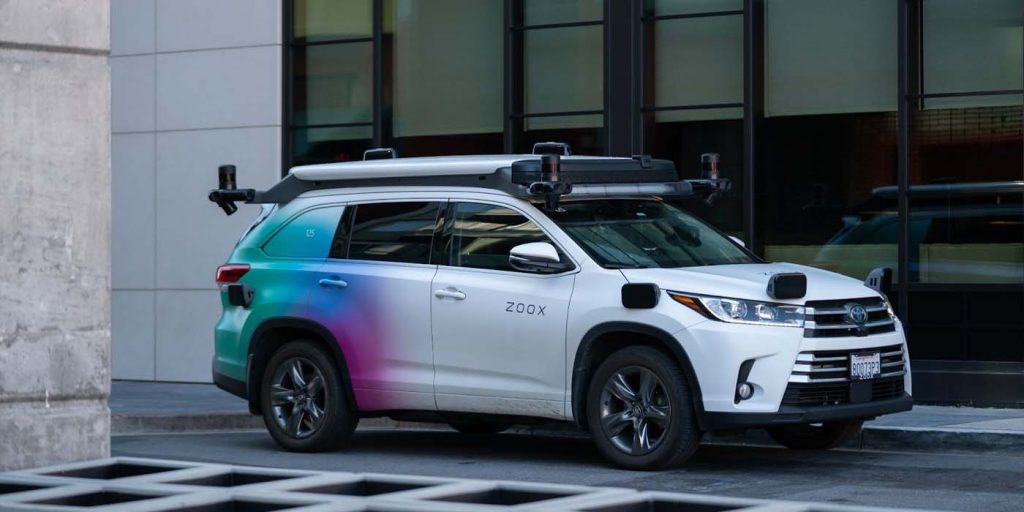
Zoox’s operational rollout in Los Angeles will follow its tried-and-true safety playbook, which has been refined across its five other testing markets.
- Phase 1: Manual Mapping Missions. Before a single foot of autonomous driving occurs, Zoox will deploy retrofitted test vehicles—outfitted with comprehensive sensor suites including LiDAR, radar, and high-resolution cameras—manned by safety drivers. These vehicles will drive systematically through designated target zones (starting around Hollywood) to build hyper-accurate, three-dimensional high-definition maps of the environment.
- Phase 2: Supervised Testing. Once the topographical and infrastructural data is compiled and verified, Zoox will initiate supervised autonomous test drives. Safety drivers will remain behind the wheel to monitor system performance and intervene if edge cases arise.
- Phase 3: Commercial Public Access. Following a rigorous internal review of safety metrics, edge-case handling, and regulatory compliance, Zoox will phase out safety drivers and open the service to the public, echoing its upcoming commercial rollouts in Las Vegas and San Francisco.
Official Statements and Industry Insights
In an official corporate blog post detailing the Southern California expansion, Zoox emphasized the strategic importance of learning from the city’s distinct environment before attempting broad commercial scaling.
"Similar to our efforts in Austin and Miami, deploying in Los Angeles provides us with an opportunity to gather valuable feedback and insights," Zoox noted in its release. "While traffic rules are consistent across different locations, there are a variety of driving conditions, potential roadwork, city events, and other map changes we want to learn about before expanding to other neighborhoods."
Industry analysts view this measured, city-by-city approach as a vital correction to the aggressive, over-promised timelines that plagued the autonomous vehicle sector in the late 2010s. By prioritizing hyper-local mapping, rigorous geofencing, and safety driver redundancies during early phases, companies like Zoox are working to secure public trust alongside regulatory approval.
Furthermore, Zoox’s backing by Amazon provides a massive financial and infrastructural safety net. While independent startups have frequently burned through venture capital trying to survive the lengthy research-and-development phases of hardware-heavy autonomy, Amazon’s long-term horizon allows Zoox to focus heavily on safety validation without immediate, unsustainable pressures for overnight profitability.

Future Outlook: What Lies Ahead for Zoox
As Zoox embeds its test fleet into the streets of Los Angeles this summer, the company stands at a crucial crossroads. The next twelve to eighteen months will likely determine whether the bespoke, carriage-style robotaxi can successfully transition from controlled testing environments to mainstream, scalable commercial operations.
Key Milestones on the Horizon
- Commercial Launches in 2025: Zoox is actively working toward welcoming its first paying public riders in Las Vegas and San Francisco later this year. The success of these public-facing services will serve as the primary litmus test for the company’s software reliability and passenger comfort ratings.
- Scaling Beyond Hollywood: While the initial L.A. footprint will remain tightly controlled around Hollywood, successful data collection will pave the way for geographic expansion into other high-density districts across Los Angeles County—including downtown, the Westside, and major transit hubs.
- Fleet Manufacturing Ramp-Up: As testing converts to commercial service, Zoox will face the ultimate manufacturing challenge: scaling the production of its custom-built, steering-wheel-free vehicles at its dedicated factory in Fremont, California, to meet growing fleet demands across all six operating markets.
The Bigger Picture
The arrival of Zoox in Los Angeles signals that the robotaxi race is entering a mature, highly competitive multi-city phase. While competitors continue to fine-tune retrofitted consumer EVs, Zoox’s bet on a purpose-built, passenger-first future is about to face its ultimate trial in the crucible of L.A. traffic. If Zoox can successfully navigate the complexities of Hollywood boulevards and the relentless congestion of the Angels’ city, it will prove that the future of urban transit isn’t just automated—it’s entirely reinvented.
