

Executive Overview
The robotics landscape is shifting at an unprecedented velocity, bridging the gap between theoretical computer science and rugged, real-world deployment. In this edition of IEEE Spectrum’s weekly robotics showcase—commonly known as Video Friday—the spotlight shines brightly on the bleeding edge of unmanned systems, biomimetic manipulators, and aerospace engineering.
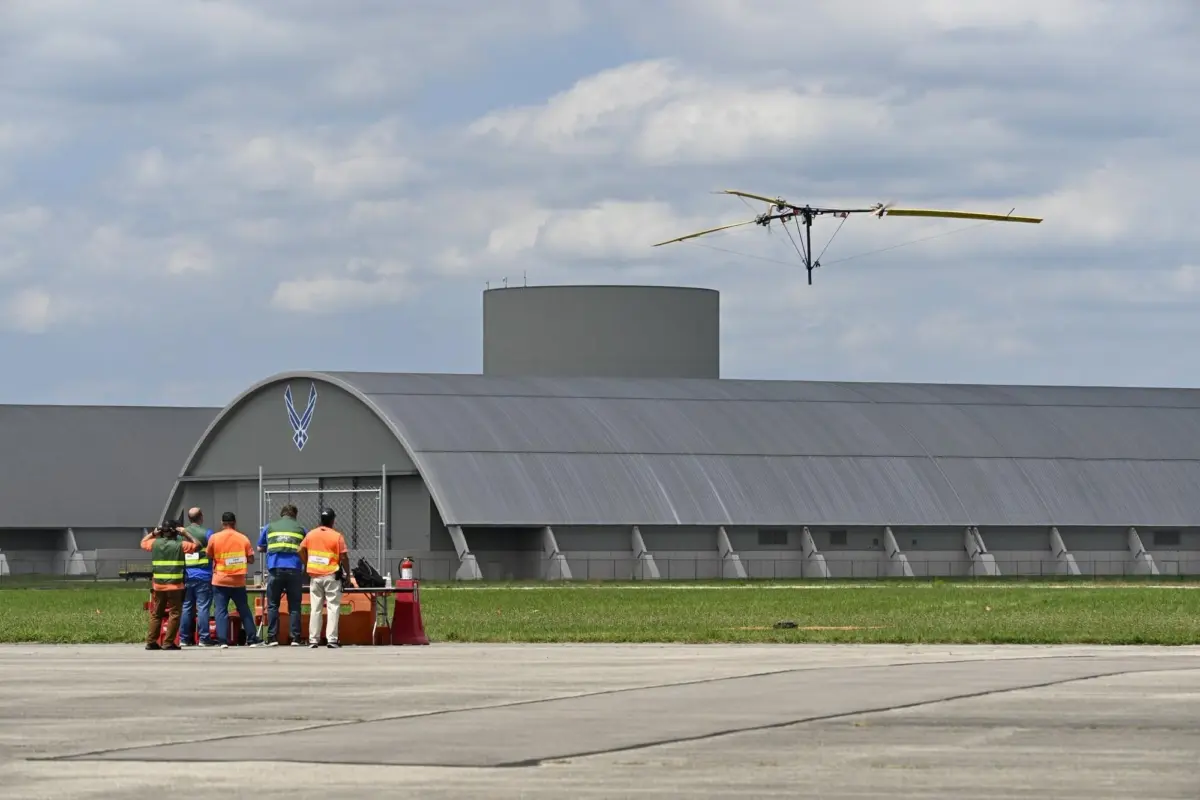
Chief among this week’s developments is the ongoing DARPA Lift Challenge, an intensive competition pushing the absolute boundaries of heavy-lift drone engineering. Far from traditional quadcopter designs, the event has introduced engineers, researchers, and defense contractors to radically unconventional, bizarrely configured heavy-lift aerial vehicles capable of redefining logistics, cargo transport, and tactical deployment.
Simultaneously, the broader robotics community continues to break ground across multiple domains. NASA is preparing its upcoming SkyFall Martian helicopters to hunt for frozen water using flexible, fabric-based radar antennas; companies like Flexiv and Generalist AI are redefining physical dexterity and low-level actuator adaptability; and academic labs are unveiling passive acoustic perception frameworks that allow drones to track each other using sound alone.
This comprehensive report explores the technologies, challenges, and implications driving this week’s most significant robotic innovations.
Detailed Chronology & Technological Breakdown
The past week has seen a steady cadence of video releases and milestone disclosures across multiple institutions, laboratories, and private enterprises. Below is a structured chronology of the key developments featured in this week’s robotics digest.
1. The DARPA Lift Challenge: Pushing Heavy-Lift Aviation to the Extreme
Running through the weekend, the DARPA Lift Challenge has commanded the attention of the aerospace and robotics communities. While standard commercial drones prioritize efficiency, maneuverability, and endurance for lightweight payloads, the DARPA challenge mandates radical performance metrics centered on heavy payloads and unorthodox mechanical configurations.
- Unconventional Aesthetics and Engineering: Overview videos released during the initial days of the event highlighted designs that depart dramatically from standard multirotor templates. Observers have noted heavily customized thrust-vectoring setups, tandem configurations, and hybrid lift architectures designed to solve the payload-to-weight efficiency bottleneck.
- Comprehensive Livestream Archives: For enthusiasts unable to attend in real time, DARPA has archived the complete livestreams of the multi-day event. Reviewing specific highlights—particularly the footage found around operational timestamps in the official logs—reveals the engineering trade-offs required to stabilize massive heavy-lift frames under dynamic wind conditions.
2. NASA’s SkyFall Mission: Sub-Surface Martian Radar
Looking beyond Earth, NASA’s planetary exploration division has released further details regarding the SkyFall helicopter initiative designed for future deployment on Mars.
- The Resource Challenge: A primary directive for future crewed and uncrewed Martian missions is locating accessible reserves of subsurface frozen water—a vital element for life support and propellant manufacturing.
- Engineering the Solution: To scan for ice, the SkyFall helicopter will utilize ground-penetrating radar. However, deploying bulky antennas on a lightweight rotorcraft presents severe weight and aerodynamic hazards. NASA’s solution involves a flexible, fabric-based antenna that trails beneath the aircraft. The design ensures the trailing element does not interfere with critical flight maneuvers, tangle during rotor startup, or sustain catastrophic damage upon touchdown.
3. Advanced Manipulation and End-Effectors
Back on Earth, industrial and service robotics companies are rethinking manipulation physics.
- Flexiv’s Alternative End-Effectors: Challenging the paradigm that a five-fingered humanoid hand is always the optimal solution for manipulation, Flexiv’s latest demonstrations showcase task-specific end-effectors optimized for high-force industrial environments. By stripping away anthropomorphic constraints, these systems achieve superior durability and grip stability.
- Generalist AI’s GEN-1 Low-Level Adaptability: Generalist AI announced major performance gains—ranging from 10x to 20x improvements on internal benchmarks—for its GEN-1 framework. By refining how the system adapts to new actuators and novel robot hardware at the lowest control levels, the platform has unlocked unprecedented precision. This capability was vividly demonstrated in high-precision tasks such as delicately disassembling components from a complex NIST (National Institute of Standards and Technology) test board.
4. Humanoid Aesthetics and Assistive Tactile Navigation
- Generative Bionics: The race to build aesthetically refined humanoid platforms took another step forward this week, with Generative Bionics showcasing a platform that ranks among the most visually polished humanoids currently in development, balancing outward design aesthetics with internal kinematic complexity.
- Tac-Nav (Touch-Based Assistive Control): In the realm of human-robot interaction, the Tac-Nav project introduced an advanced framework allowing operators to control assistive robots intuitively through tactile interfaces, bridging the gap between complex machine execution and human intent.
- SonicFly by General Robotics Lab: Pushing the boundaries of autonomous multi-agent coordination, the General Robotics Lab unveiled SonicFly. This passive aeroacoustic perception framework allows a secondary unmanned aerial vehicle (UAV) to accurately estimate the position of and seamlessly follow a leader drone using only the acoustic signature of the leader’s flight sounds, bypassing the need for heavy visual cameras or radar payloads.
- ROBOTIS AISapiens Ecosystem: Rounding out the hardware and software integrations, ROBOTIS demonstrated expanded capabilities within its AISapiens ecosystem, signaling continued movement toward modular, scalable robotic architectures.
Supporting Context & Metrics
To fully understand the weight of this week’s innovations, it is necessary to examine the underlying metrics, operational parameters, and structural constraints that drive modern robotics development.
Heavy-Lift Drone Economics and Physics
The DARPA Lift Challenge is not merely an academic exercise; it addresses a critical operational gap in military logistics and commercial cargo delivery.
- Payload-to-Weight Ratios: Traditional electric multirotors suffer from severe battery density limitations. Heavy-lift platforms must optimize power delivery systems—often shifting toward hybrid-electric or turbine-assisted propulsion.
- Aeroacoustic Challenges: As drones scale in mass and rotor size, noise pollution and aerodynamic instability scale non-linearly. Innovations like those seen in acoustic tracking (SonicFly) and specialized frame geometries directly inform how future heavy-lift networks will operate in congested airspace.
Planetary Exploration Constraints
NASA’s SkyFall project operates under extreme physical constraints unique to the Martian atmosphere:
- Atmospheric Density: Mars possesses roughly 1% of Earth’s atmospheric pressure, requiring ultra-lightweight composite materials and high-RPM rotor blades to generate sufficient lift.
- Deployment Reliability: Because communication delays preclude real-time human intervention, autonomous deployment mechanisms—such as the fabric radar antenna drop—must execute with 100% mechanical reliability under sub-zero thermal fluctuations.
Official Statements and Industry Insights
Reflecting on the rapid acceleration of foundational robotics, lead engineers and researchers have emphasized the shift from superficial demonstrations to deep architectural improvements.
"We’ve improved how GEN-1 learns to adapt to new actuators and new robots at the lowest level, with up to 10-20x gains on internal benchmarks. This significantly boosts performance on high-precision tasks like disassembling parts from a NIST board."
— Generalist AI Engineering Team
This sentiment is echoed across the aerial robotics sector, where researchers are increasingly focusing on passive, decentralized systems. As noted by the creators of the SonicFly framework:
"We present SonicFly, a passive aeroacoustic perception framework that enables one unmanned aerial vehicle (UAV) to estimate and follow another using only the leader’s intrinsic flight sound."
— General Robotics Lab
These developments illustrate a broader industry trend: moving away from sensor-heavy, computationally bloated architectures toward elegant, physics-informed, and resilient robotic designs.
Future Outlook
As the robotics community looks toward upcoming international conclaves—including the Actuate 2026 conference in San Francisco (August 18–19, 2026), the Humanoids Summit in Seoul (September 22–23, 2026), and IROS 2026 in Pittsburgh (September 27 – October 1, 2026)—the trajectory of the field is clear.
- Convergence of Aerospace and Terrestrial Robotics: Technologies initially forged for extraterrestrial environments (such as NASA’s flexible radar deployment) are finding terrestrial counterparts in ruggedized field robotics.
- Maturation of Heavy-Lift Logistics: The data harvested from the DARPA Lift Challenge will directly influence commercial drone delivery networks, disaster relief frameworks, and autonomous resupply vehicles over the next decade.
- Low-Level AI Integration: Platforms like Generalist AI’s GEN-1 prove that the next wave of robotic capability will not come solely from larger neural networks, but from deeper, more adaptive low-level control loops that make hardware universally interoperable.
For further updates, full event archives, and ongoing coverage of autonomous systems, stay tuned to IEEE Spectrum Robotics.
