

Executive Overview
For nearly half a century, the consumer technology landscape operated under a reliable, predictable law of economic physics: hardware gets exponentially cheaper, faster, and more efficient over time. Whether tracking the raw cost of processing power or the per-gigabyte price of volatile and non-volatile memory, consumers and enterprise buyers alike grew accustomed to a steady downward trajectory. This deflationary trend fueled the democratization of personal computing, the proliferation of cloud infrastructure, and the continuous evolution of mobile and smart devices.
However, a sudden and profound market shock has shattered this decades-old paradigm. Driven by an insatiable, unprecedented global demand for High-Bandwidth Memory (HBM) to fuel the generative artificial intelligence boom, the consumer electronics and PC hardware markets have been plunged into what industry analysts are calling a "RAM apocalypse."
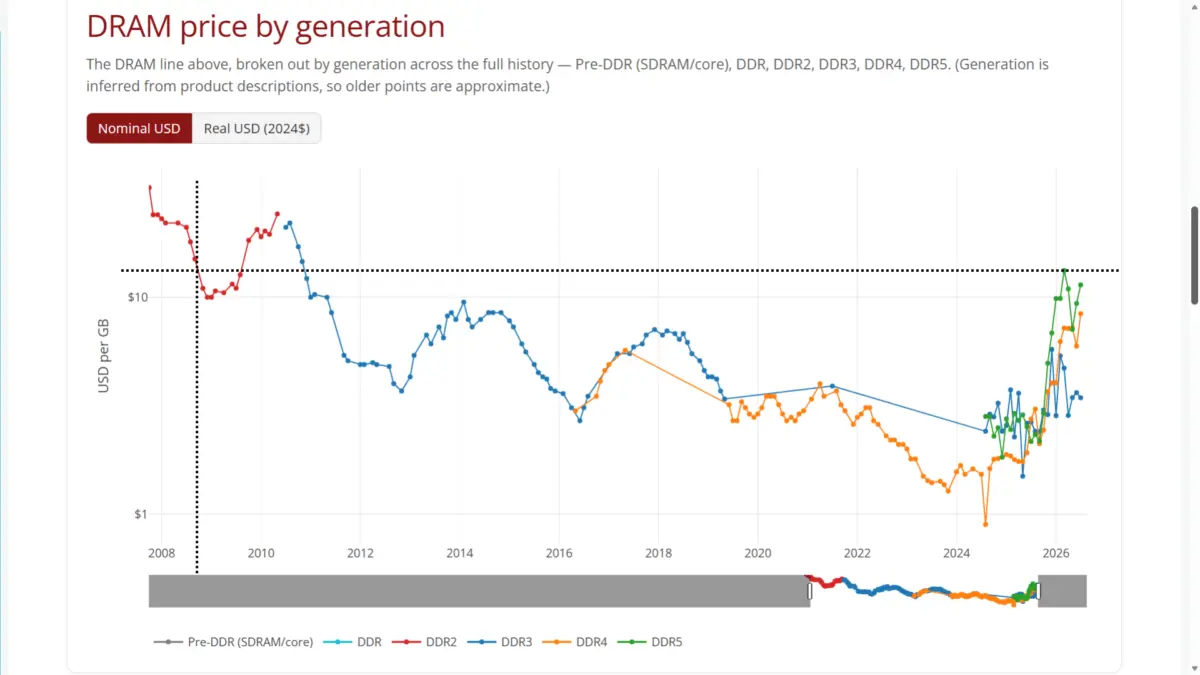
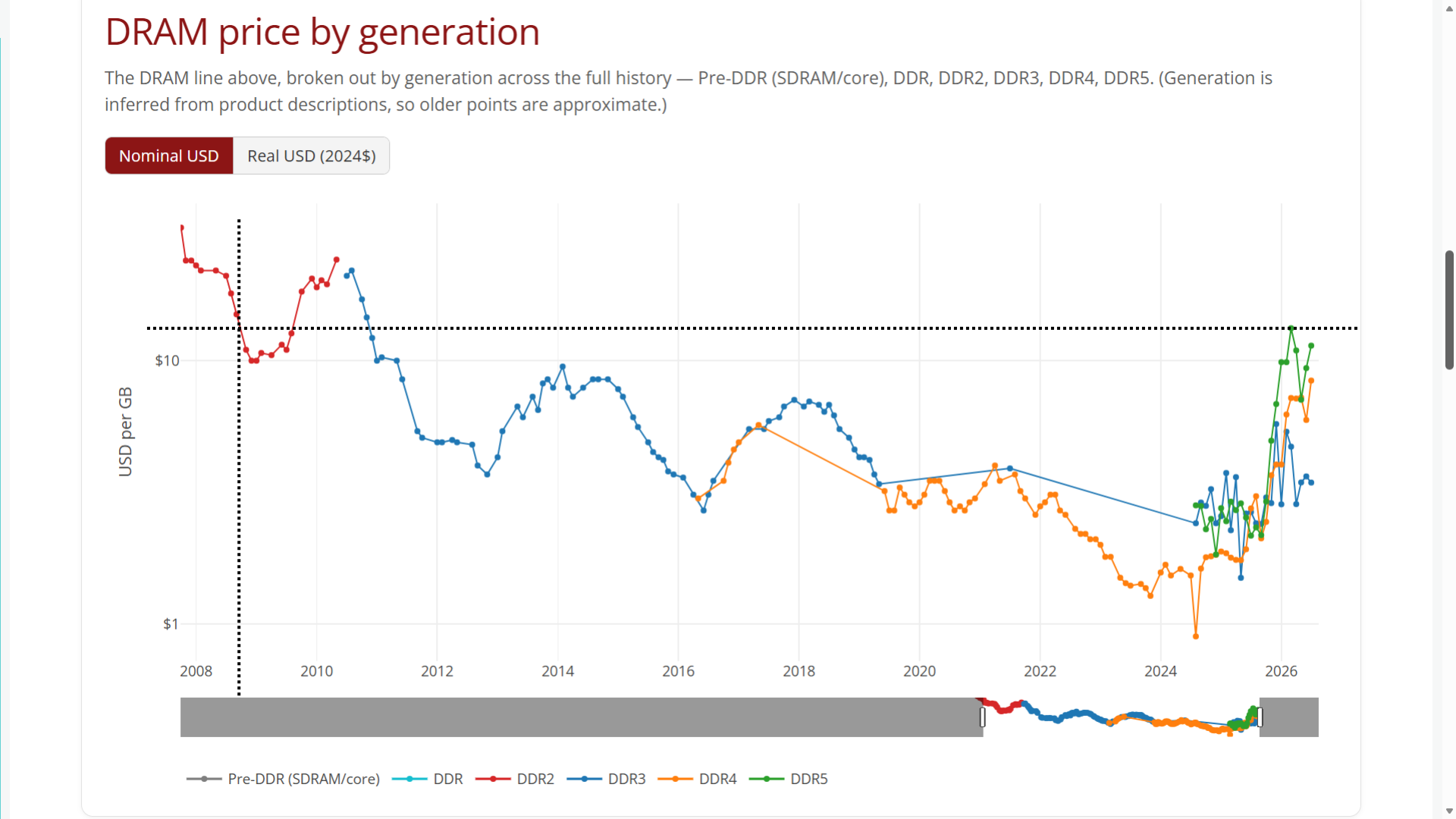
According to data compiled by software performance expert, scientist, and GitHub developer Daniel Lemire, the astronomical surge in component demand has completely undone roughly 20 years of continuous financial progress. RAM on a per-unit basis has violently reverted to price points not seen since the mid-to-late 2000s. Stanford University’s Digital Economy Lab (DAM Project) data confirms this jarring reality: current DDR5 memory pricing mirrors historic figures last recorded when older DDR2 or early DDR3 modules dominated the market.
This is not a traditional supply chain bottleneck caused by factory fires, localized weather anomalies, or short-term logistical snarls. Rather, it represents a structural collision between traditional semiconductor manufacturing capacities and the exponential resource demands of the artificial intelligence revolution. As manufacturing giants prioritize high-margin HBM production over standard consumer dynamic random-access memory (DRAM), shockwaves are reverberating far beyond custom PC builds, cascading into the budget smartphone sector, legacy graphics card markets, consumer consoles, and even the automotive industry.
Detailed Chronology: Unraveling Decades of Progress in Real Time
To comprehend the magnitude of the current crisis, one must examine the historical trajectory of computer memory pricing. Since the dawn of modern digital computing—marked famously by the debut of the room-filling ENIAC computer 80 years ago—the industry has relied on relentless manufacturing innovation, smaller lithography nodes, and massive economies of scale to drive down the cost per unit of computation and data storage.
For generations, this trajectory was virtually unshakeable. Year after year, consumers expected to pay less per gigabyte of RAM, allowing them to upgrade their systems with increasingly massive pools of memory for negligible costs.
The inflection point arrived with the hyper-acceleration of generative artificial intelligence training and inference workloads. Modern Large Language Models (LLMs) and deep learning accelerators require vast amounts of ultra-fast memory to feed parallel processing units (GPUs). Because traditional packaging methods could not satisfy the bandwidth requirements of these massive AI accelerators, the industry pivoted heavily toward High-Bandwidth Memory (HBM), which integrates multiple DRAM dies vertically via through-silicon vias (TSVs).
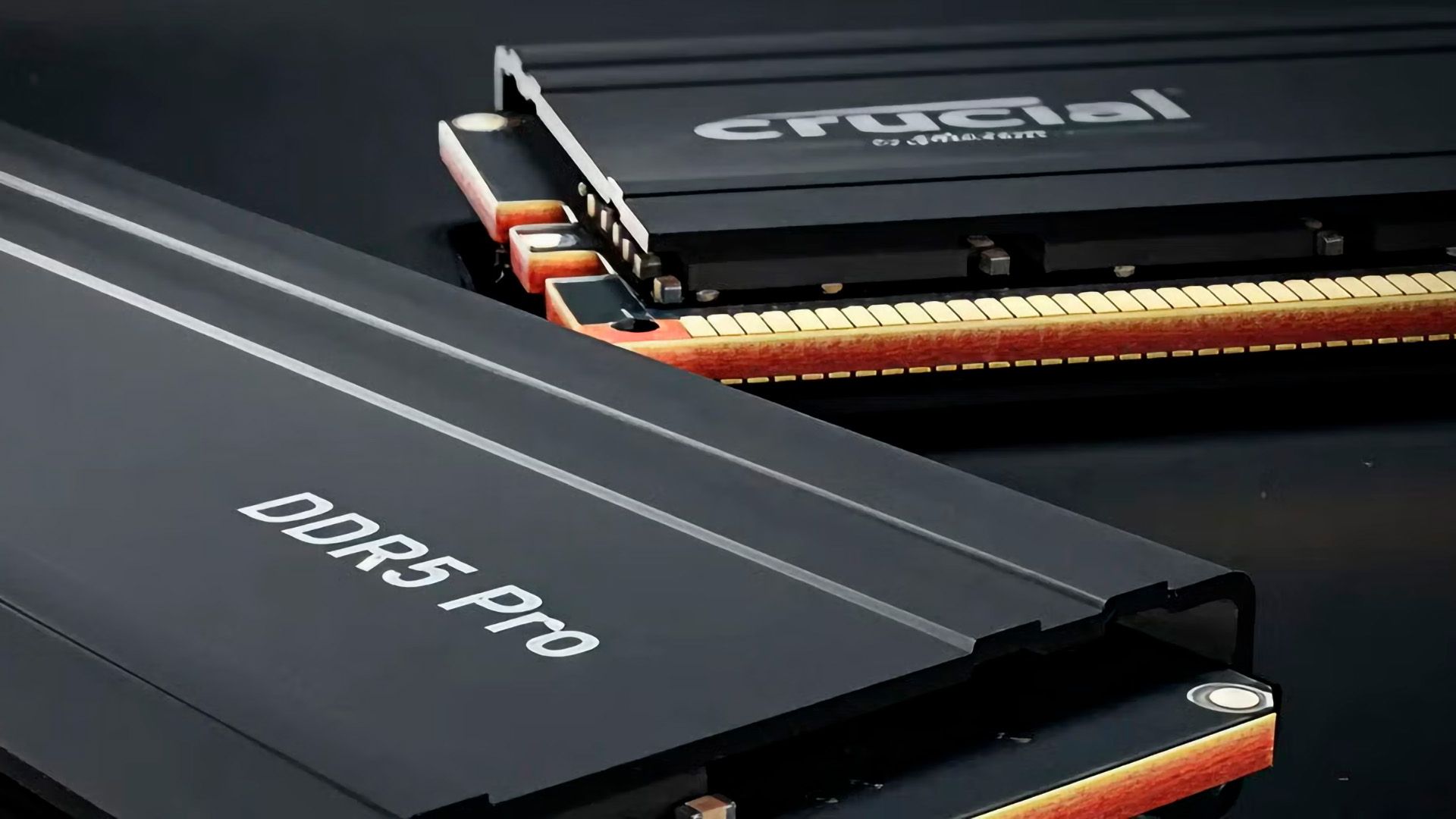
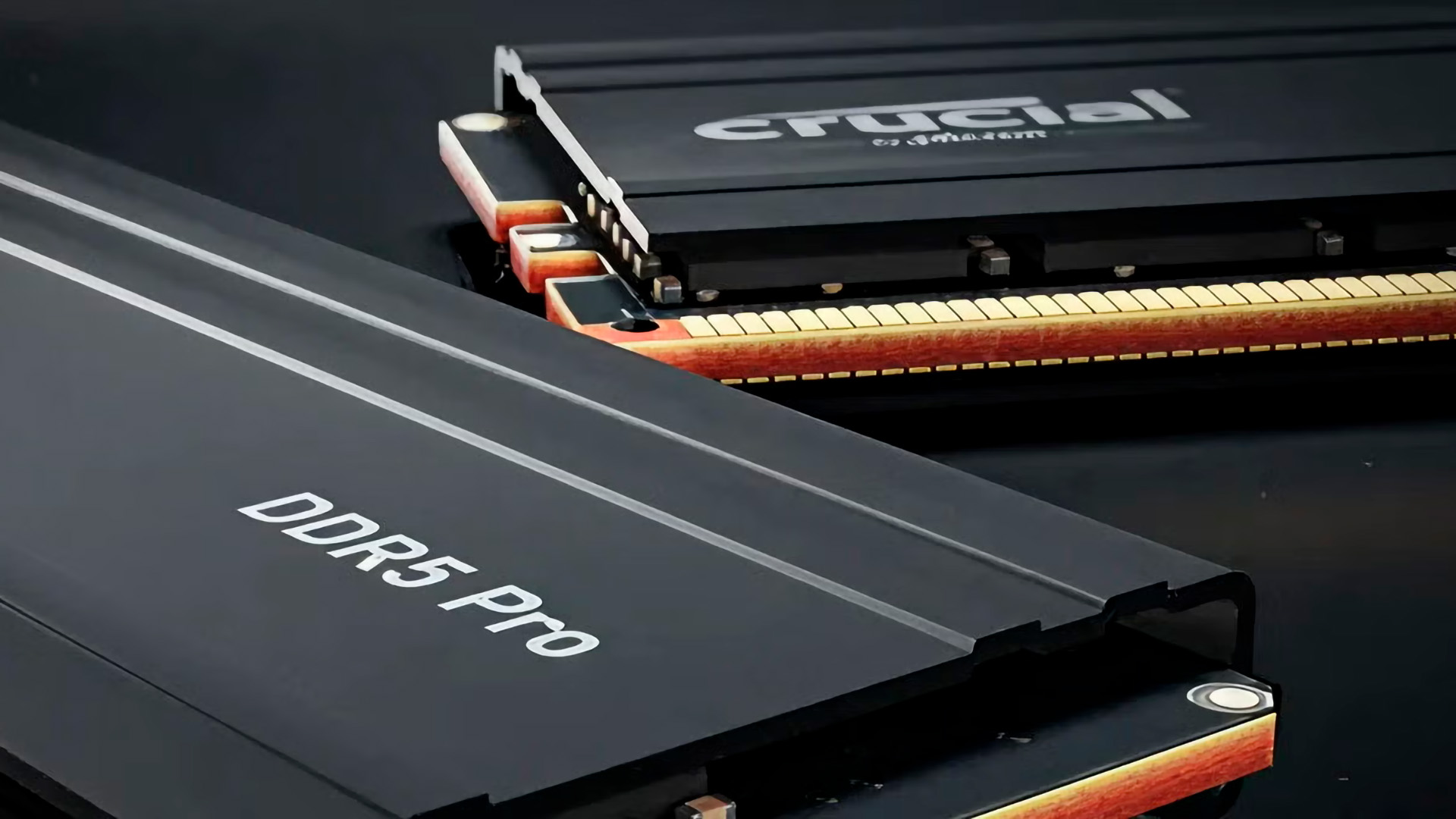
The manufacturing complexity and sheer silicon footprint required to produce HBM are immense. Consequently, the world’s primary memory manufacturers—Samsung, SK Hynix, and Micron—reallocated substantial portions of their fabrication lines away from standard consumer DRAM (such as DDR4 and DDR5) to capture the lucrative margins offered by hyperscale AI infrastructure providers.
The result was a textbook economic shock. Within a remarkably tight window of just a few months, consumer RAM prices ceased their historical decline and reversed course with violent velocity. As Daniel Lemire highlighted in a widely circulated analysis on X (formerly Twitter):
"On a historical basis, computer memory has been falling at an exponential rate for decades. But we just undid about 20 years of progress. RAM on a per-unit basis is about as expensive as it was in 2007… To my knowledge, it is a historical anomaly. I cannot recall a similar technological hardware reversion."
Lemire further underscored the unprecedented nature of the crunch, noting that predicting the resolution remains a fool’s errand. The industry is trapped between two difficult outcomes: engineering breakthroughs that allow AI systems to function effectively with drastically lower memory footprints, or radically accelerated methods to manufacture exponentially more memory at scale.
Supporting Context & Metrics: Crunching the Numbers
To quantify the scale of this historical regression, third-party datasets offer stark confirmation. Data compiled and maintained by David Shim for the Stanford DAM Project reveals that modern nominal pricing for DDR5 memory hovers between $11.41 and $13.28 per gigabyte.
To find comparable per-gigabyte costs in nominal terms, one must look back to 2008, when DDR2 prices routinely fluctuated between $11.00 and $15.00 per GB. When adjusted for modern inflation (using 2024 baselines), the current cost of DDR5—averaging roughly $10.94 to $12.74 per GB—lines up closely with pricing seen in 2011, a period when maturing DDR3 memory modules sat near $11.85 per GB.
Historical vs. Current RAM Pricing Milestones (Nominal USD per GB)
------------------------------------------------------------------
2007–2008 (DDR2 Era):      $11.00 – $15.00 / GB
2011      (DDR3 Era):      ~$11.85 / GB (Inflation Adjusted)
2024–2026 (DDR5 "Crisis"): $10.94 – $13.28 / GB
To fully appreciate the historical contrast in technological cost deflation, consider the computing ancestor of modern systems. The ENIAC machine cost the U.S. government $400,000 in 1946—an equivalent of roughly $6.85 million today. Yet, that monumental, room-sized machine performed a mere 5,000 basic additions per second.
Fast forward to the modern consumer market: an entry-level budget smartphone, such as the Moto G Play retailing around $99.99, utilizes a Snapdragon 680 processor capable of delivering 3.3 TOPS (trillion operations per second) of AI performance. While direct architectural comparisons between ENIAC and modern System-on-Chips (SoCs) are inherently flawed, the comparison illustrates the breathtaking scale of performance democratization that the tech industry achieved over the decades—a deflationary trajectory that the current memory crisis has abruptly arrested.
Furthermore, geographical diversification has failed to provide the safety net many consumers hoped for. While market watchers initially looked to Chinese manufacturer CXMT (ChangXin Memory Technologies) as a potential budget savior capable of undercutting major Western and South Korean players, recent market dynamics have shown otherwise. New budget modules entering the market utilizing CXMT chips have largely tracked the pricing trends established by the "Big Three" (Micron, Samsung, and SK Hynix), proving that the supply shortage is an overarching systemic issue rather than a localized pricing cartel.
Official Statements and Industry Perspectives
Industry leaders across the technology spectrum have acknowledged that the current pricing environment is fundamentally detached from normal market mechanics.
During a corporate earnings call, SpaceX and Tesla CEO Elon Musk bluntly contrasted the linear expansion of manufacturing capacity against the exponential surge of market demand:
"The memory output is increasing by around 20% per year. Now, normally, that would be fantastically fast and amazing for any large, mature industry, but ask yourself, ‘Is the demand increasing by 20% a year?’ No, the demand is increasing by 200% a year, maybe higher."
Echoing these concerns, leadership at SK Group—the parent conglomerate of memory giant SK Hynix—publicly admitted that prevailing RAM pricing levels are "abnormally high." The conglomerate has explored aggressive capital expenditures, including potential semiconductor plant expansions in the United States, in an attempt to expand aggregate supply and alleviate what financial pundits have dubbed "chipflation."
Meanwhile, major ecosystem players like Intel have emphasized that the broader hardware pipeline cannot absorb these distortions indefinitely. Industry executives have stressed that foundational components across computing must adapt, warning that "something has to give" as downstream manufacturers struggle to maintain margins while packaging increasingly expensive memory modules into consumer goods.
The Ripple Effect: Beyond the Custom PC Market
While custom PC builders and enthusiasts bore the immediate brunt of the price hikes, the memory famine has triggered cascading failures across multiple adjacent consumer electronics and industrial sectors:
1. The Budget Smartphone Collapse
Low-tier and budget smartphone markets have been severely destabilized. Industry forecasts project a potential 22% drop in budget phone sales as the cost of raw memory consumes an unsustainable share of the Bill of Materials (BoM). In some entry-level tiers, memory alone now accounts for up to 64% of the total production cost of the device, forcing manufacturers to either hike retail prices or abandon entry-level models altogether.
2. GPU Manufacturing Regressions
Faced with prohibitive costs for contemporary GDDR memory, graphics card vendors in regional markets (notably across Asia) have resorted to desperate measures. This includes the unexpected re-release and production revival of older, entry-level 2020-era GPUs, such as the GeForce RTX 3060 and RTX 3050, to satisfy consumer demand without incurring modern high-cost memory penalties.
3. Automotive Industry Pressures
Modern software-defined vehicles rely heavily on complex electronic control units (ECUs), infotainment systems, and advanced driver-assistance systems (ADAS), all of which require reliable DRAM and flash memory. Major automotive manufacturers, including General Motors, have issued warnings regarding sweeping cost increases, while Chinese EV giant BYD has already implemented price hikes of up to 20% on driver-assistance packages due to soaring semiconductor component costs.
Future Outlook
As the technology sector navigates this unprecedented anomaly, the ultimate trajectory of the memory market remains shrouded in uncertainty. The convergence of generative AI infrastructure spending and legacy silicon manufacturing constraints has created an ecosystem where standard economic rules are temporarily suspended.
Industry observers suggest that relief will not arrive overnight. Constructing multi-billion-dollar semiconductor fabrication plants requires years of lead time, regulatory navigation, and immense capital investment. Even as new fab capacity comes online toward the latter half of the decade, the appetite for high-performance AI compute shows no immediate sign of plateauing.
Ultimately, the resolution of the RAM apocalypse will likely require a dual-pronged evolution: hardware engineers must pioneer radically memory-efficient architectures that reduce the computational footprint of AI workloads, while materials scientists must accelerate innovations in high-density memory production. Until those breakthroughs scale to commercial levels, the electronics industry remains at a tense crossroads, waiting to see what gives first.
