

Executive Overview
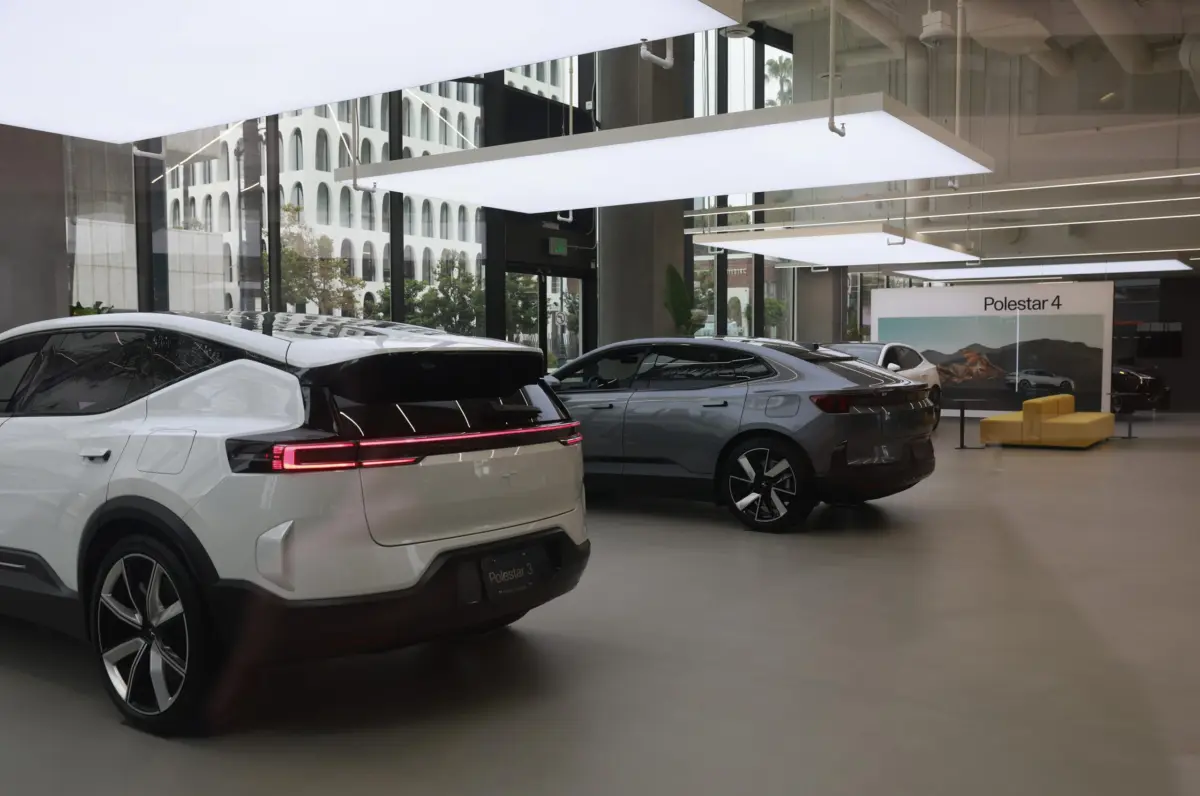
The American automotive landscape is undergoing a profound transformation, driven by an intensifying intersection of national security policy and global trade dynamics. In a dramatic fallout from federal prohibitions targeting connected vehicle software originating from adversarial nations, electric vehicle manufacturer Polestar has officially announced its withdrawal from the United States market, beginning with the 2027 model year.
The decision follows the rejection of a vital regulatory exemption request by the U.S. Department of Commerce. This denial has effectively terminated the brand’s commercial viability in North America.
According to internal communications obtained by industry media, Polestar executives feel profoundly misled by the Trump administration. The company claims it was strung along for months with false assurances of regulatory approval. The core of Polestar’s grievance rests on a jarring inconsistency in federal enforcement: its corporate sibling, Volvo Cars—which shares an identical majority owner in Chinese automotive giant Geely, as well as identical underlying hardware and software architectures—was granted a full import and sales exemption in May 2026. Yet, just weeks later, the Commerce Department’s Bureau of Industry and Security (BIS) abruptly slammed the door on Polestar without providing a substantive rationale.
The regulatory framework underpinning this exclusion originated under the Biden administration. It was designed to preemptively neutralize national security threats posed by connected and autonomous vehicle (CAV) technologies tied to countries of concern, primarily China and Russia. The rule outlaws the import and sale of vehicles equipped with certain software and hardware components originating from these jurisdictions, citing risks related to data harvesting, remote interference, and critical infrastructure vulnerability.
For Polestar, the denial marks a devastating blow to its global expansion strategy. The company had invested heavily in establishing a retail footprint across the United States. The sudden regulatory barrier has not only halted its commercial operations but also triggered immediate fallout across its dealer network.
Legal battles are already underway, including a multimillion-dollar lawsuit filed by disgruntled franchisees accusing corporate leadership of strategic mismanagement. This comprehensive report explores the timeline of Polestar’s regulatory engagement, the glaring contradictions in federal enforcement, the technical nuances of the software ban, and the broader economic ramifications for the transatlantic EV sector.
Detailed Chronology: A Timeline of Broken Promises and Regulatory Rejection
The trajectory of Polestar’s regulatory battle with the U.S. government is a case study in bureaucratic opacity, shifting political landscapes, and the high-stakes friction between globalized corporate structures and hyper-nationalist trade policies.
May 29, 2025: The Formal Application
Facing the impending enforcement deadlines of the connected vehicle software ban—a policy framework inherited from the Biden administration and adopted by the incoming Trump administration—Polestar formally submitted its exemption application to the Department of Commerce’s Bureau of Industry and Security (BIS).
The application argued that despite the company’s structural ties to China via Zhejiang Geely Holding Group, its operational profile, supply chain controls, and data protection protocols adequately mitigated any theoretical national security risks. Crucially, Polestar anchored its petition to the functional and architectural parity between its flagship vehicles and those of Volvo Cars. Specifically, the Polestar 3 electric performance SUV shares its underlying Sustainable Experience Architecture (SEA) platform, critical hardware components, and software stacks with the Volvo EX90.
Summer 2025 to Early 2026: The Illusion of Progress
In subsequent months, Polestar leadership engaged in a series of high-level consultations with federal officials. According to an August 18th internal letter distributed to Polestar dealers by Peter Wexler, the company’s head of product, these meetings fostered a strong, reasonable expectation of eventual approval.
Wexler specifically highlighted interactions with Jeffrey Kessler, the Under Secretary of Commerce for Industry and Security. During an in-person meeting, Kessler allegedly indicated to Polestar representatives that it would be entirely reasonable for the automaker to anticipate a favorable ruling. The rationale was simple and pragmatic: if Volvo Cars was cleared to market its vehicles under effectively identical shareholding structures and with interchangeable hardware and software systems, Polestar should logically receive the same dispensation.
Encouraged by these verbal assurances, Polestar proactively offered a comprehensive menu of operational "mitigation measures." These proposed safeguards were designed to eliminate any lingering anxieties federal regulators might harbor regarding data security. The package included:
- Mandatory, recurring third-party cybersecurity and compliance audits.
- Rigorous geographic restrictions ensuring that all U.S. consumer data is stored and managed exclusively on domestic servers.
- Strict limitations on digital keys, over-the-air (OTA) update pathways, and remote access capabilities to prevent unauthorized foreign telemetry or interference.
Despite these good-faith overtures, Wexler noted that the BIS abruptly stonewalled all technical discussions. Rather than engaging in collaborative risk-mitigation dialogues—a standard procedure in complex national security regulatory reviews—the agency drew a hard line. According to Wexler, BIS officials communicated that they already possessed all the information required to render a final decision, effectively freezing out any further negotiation.
May 2026: Volvo Cleared, Polestar Strung Along
The regulatory divide widened into an unbridgeable chasm in May 2026, when the Department of Commerce officially approved Volvo Cars’ application to continue importing and distributing its connected vehicles in the U.S.
The decision was hailed by Volvo as a validation of its corporate governance independence and stringent cybersecurity firewalls, notwithstanding its majority ownership by Geely. For Polestar, however, the Volvo announcement served as a cruel psychological anchor. It confirmed that the federal government was entirely capable of granting exemptions to automakers with Chinese ownership roots, yet was choosing to withhold that same grace from Polestar.
June 2026: The Final Rejection and Market Exit
Just one month after Volvo’s clearance, the other shoe dropped. The Commerce Department formally denied Polestar’s exemption request.
Deprived of any legal pathway to import its upcoming vehicle lineups, Polestar leadership realized that maintaining a U.S. sales operation was no longer commercially viable. The company officially announced that it would wind down and ultimately cease selling its vehicles in the United States, beginning with the 2027 model year.
Supporting Context & Metrics: The Geopolitical and Regulatory Landscape
To understand why Polestar’s regulatory bid failed while Volvo’s succeeded, one must examine the intricate web of corporate ownership, geopolitical anxiety, and legal constraints governing modern automotive technology.
+-----------------------------------------------------------------+
|                    Zhejiang Geely Holding Group                 |
+--------------------------------+--------------------------------+
                                 |
         +-----------------------+-----------------------+
         |                                               |
         v                                               v
+------------------+                            +------------------+
|    Volvo Cars    |                            |     Polestar     |
+--------+---------+                            +--------+---------+
         |                                               |
         | (Approved May 2026)                           | (Denied June 2026)
         v                                               v
+------------------+                            +------------------+
| Permitted U.S.   |                            | Forced U.S. Exit |
| Import & Sales   |                            | (2027 Model Year)|
+------------------+                            +------------------+
The Geely Ownership Matrix
At the center of this controversy is Zhejiang Geely Holding Group, one of China’s most aggressive and successful multinational automotive conglomerates. Geely exercises controlling ownership stakes across a diverse portfolio of legacy European and emerging electric brands.
- Volvo Cars: Geely acquired Volvo from Ford Motor Company in 2010. Over the intervening decade and a half, Volvo has successfully maintained a high degree of operational autonomy, research and development independence in Gothenburg, Sweden, and a pristine reputation among Western regulators.
- Polestar: Originally founded as a motorsport partner and performance division of Volvo, Polestar was spun off as a standalone electric vehicle brand in 2017, jointly owned by Volvo Cars and Geely.
Because Geely holds significant direct and indirect equity across both entities, critics within the U.S. national security apparatus argued that Polestar—unlike Volvo—maintained deeper operational, supply chain, and software development dependencies directly tied to mainland China.
The Connected Vehicle Software Ban
The regulatory instrument used to bar Polestar is rooted in sweeping executive authorities designed to protect America’s critical infrastructure from foreign intelligence and espionage threats.
Modern electric vehicles are essentially computers on wheels, generating terabytes of data daily regarding driver behavior, geographic movements, localized infrastructure, and high-resolution optical mapping. Furthermore, the capacity for remote vehicle disabling, software manipulation, and real-time telemetry tracking presents an unprecedented surface area for potential cyber warfare or state-sponsored disruption.
The rule, initiated under the Biden administration and vigorously enforced under subsequent leadership, establishes a strict prohibition against:
- Vehicle Connectivity Systems (VCS): Hardware designed to enable internet connectivity, cellular communication, satellite navigation, and Wi-Fi access originating from or controlled by entities associated with designated foreign adversaries (primarily China).
- Automated Driving System (ADS) Software: Software stacks capable of executing SAE Level 3 and above autonomous driving functions developed, stored, or maintained by hostile entities.
While the regulation contains provisions for case-by-case exemptions—designed precisely to accommodate multinational corporations caught in the crossfire of geopolitical decoupling—the discretionary power wielded by the Department of Commerce leaves immense room for administrative inconsistency.
Official Statements and Industry Reactions
The fallout from the Commerce Department’s decision has triggered fierce recriminations, corporate finger-pointing, and legal warfare across the American automotive sector.
Polestar’s Internal Discontent
In his August 18th memo to dealers, Peter Wexler did not mince words regarding the federal government’s bad-faith engagement. The revelation that Under Secretary Jeffrey Kessler had explicitly validated the logic of Polestar’s application—only for the BIS to reverse course without explanation—highlights a profound breakdown in administrative transparency.
"BIS never engaged in any such discussions with Polestar," Wexler wrote in the leaked communication. "Instead, BIS communicated that it had all the information it required to render a decision."
The lack of a written justification has left Polestar’s executive team scrambling. The company continues to press administration officials through diplomatic and legal channels to secure an official, documented rationale for the disparate treatment received by Polestar versus its sister company, Volvo.
The Dealer Backlash: Legal Warfare in New Jersey
While corporate leadership battles bureaucrats in Washington, the human cost of the exit is hitting independent franchise dealers hardest. Left with stranded inventories, broken business models, and depreciating franchise values, dealers are fighting back through the courts.
Most notably, Prestige Imports, a prominent Polestar dealership in New Jersey, recently filed a multi-million-dollar lawsuit against the automaker. The legal complaint alleges that Polestar effectively engineered its own quiet exit from the U.S. market by failing to aggressively pursue regulatory compliance or sufficiently lobby the Commerce Department. The lawsuit claims that Polestar leadership used the federal ban as a convenient escape hatch to abandon struggling American retail partners without fulfilling long-term contractual obligations.
Future Outlook: The Cascading Effects of Decoupling
Polestar’s forced exit from the United States market serves as a watershed moment for the global electric vehicle industry, carrying profound implications for international trade, supply chain strategy, and consumer rights.
1. The Death of the Transatlantic-Chinese Hybrid Brand
Polestar’s demise illustrates the growing impossibility of straddling two geopolitical superpowers in the high-tech automotive sector. Brands that attempt to leverage Chinese manufacturing efficiency and capital while marketing themselves as premium Western entities will increasingly find themselves vulnerable to national security protectionism. As Washington and Beijing continue their technological decoupling, regulatory zero-tolerance policies will likely expand, forcing other Sino-Western automotive ventures to reevaluate their global footprints.
2. Escalating Legal Battles and Dealer Protectionism
The Prestige Imports lawsuit is unlikely to remain an isolated incident. Across the United States, dealers who invested heavily in showroom upgrades, specialized tooling, and certified technician training for the Polestar brand are facing catastrophic financial losses. The coming months will likely see a wave of class-action and breach-of-contract lawsuits filed by franchise holders seeking compensation for stranded investments and unfulfilled corporate guarantees.
3. Consumer Anxiety and Residual Values
Current owners of Polestar vehicles in the United States face a deeply uncertain future. While the company has pledged to maintain basic parts availability, software maintenance, and warranty support for existing cars, the sudden withdrawal of the brand from the domestic market will inevitably crater vehicle residual values. Owners may find themselves stranded with high-end performance EVs that lack robust local service networks, specialized diagnostic support, and long-term resale liquidity.
4. A Chill on U.S. EV Innovation and Competition
By squeezing out viable market competitors through broad, heavy-handed software bans, the U.S. regulatory environment risks stifling domestic EV adoption and reducing consumer choice. As fewer manufacturers compete in the American electric vehicle landscape, traditional domestic automakers may face less pressure to innovate, potentially slowing the transition to a sustainable transportation future.
Conclusion
Polestar’s forced retreat from the United States stands as a cautionary tale of geopolitics colliding with industrial reality. Despite offering robust, verifiable technological mitigations and pointing to the undeniable precedent set by its sister company Volvo, Polestar fell victim to an unpredictable and opaque federal regulatory apparatus. As the company winds down its U.S. operations ahead of the 2027 model year, the broader automotive industry is left to grapple with a stark new normal: in an era of deepening international friction, corporate lineage and software provenance will outweigh engineering parity every single time.
