

Executive Overview
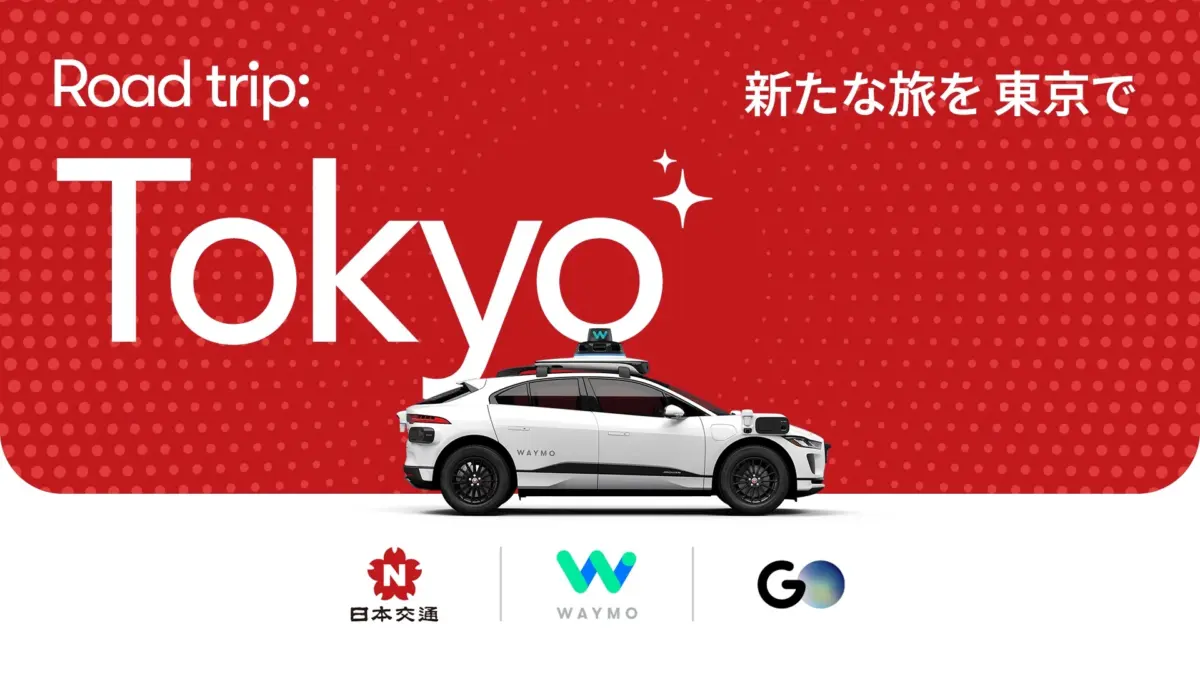
In a landmark move that signals a profound maturation of the autonomous vehicle industry, Waymo—the self-driving subsidiary of Alphabet Inc.—is officially taking its technology overseas. Beginning in early 2025, Waymo will deploy its fleet of all-electric Jaguar I-PACE vehicles to the bustling, hyper-dense streets of Tokyo, Japan. This initiative marks the company’s first-ever international road testing phase, laying the groundwork for what could eventually become a transformative public robotaxi service abroad.
The expansion comes at a time of immense financial and operational momentum for the Alphabet-backed company. Bolstered by a staggering $5.6 billion funding round secured late last year and a soaring valuation estimated at over $45 billion, Waymo is aggressively scaling its domestic operations while simultaneously casting its gaze toward global markets. However, transitioning from the grid-like layouts of Phoenix and San Francisco to the labyrinthine, densely populated neighborhoods of Tokyo presents a monumental engineering and logistical hurdle.
To navigate this foreign terrain, Waymo is partnering with local heavyweights, including prominent taxi operator Nihon Kotsu and the ubiquitous Japanese ride-hailing app GO. While the initial deployment will feature human safety drivers mapping the city and evaluating the software’s adaptability to left-hand traffic, the long-term vision is clear: Waymo wants to export its AI-powered driver to the world stage. Yet, as the company presses forward, it must balance rapid global ambitions against ongoing scrutiny regarding safety incidents, software glitches, and fierce looming competition from rivals like Tesla.
Detailed Chronology: From Silicon Valley to the Streets of Shinjuku
The journey toward Waymo’s international debut in Tokyo has been years in the making, reflecting a methodical, safety-first approach to autonomous scaling.
Laying the Groundwork for International Expansion
Throughout 2024, Waymo aggressively consolidated its domestic footprint, expanding its Waymo One commercial robotaxi service across major metropolitan areas including San Francisco, Los Angeles, Phoenix, and Miami. As the company surpassed 150,000 paid passenger trips per week, its leadership turned its sights outward. Japan emerged as an ideal candidate for international testing, not only due to its progressive regulatory shifts but also because of the country’s pressing demographic changes.
In response to technological advancements and a rapidly aging population that increasingly requires accessible door-to-door transit solutions, the Japanese government amended its legal framework to permit Level 4 autonomous driving on public roads. This legislative green light opened the door for foreign autonomous vehicle developers looking to prove their technology in non-U.S. markets.
The 2025 Tokyo Deployment Plan
In early 2025, Waymo will officially initiate its testing phase in Japan’s capital. The operation will center on key commercial, financial, and cultural districts across Tokyo, including:
- Minato
- Shinjuku
- Shibuya
- Chiyoda
- Chūō
- Shinagawa
- Kōtō
During this initial phase, Waymo’s distinctive Jaguar I-PACE vehicles will not be operating autonomously with empty front seats. Instead, human drivers provided through a strategic partnership with Nihon Kotsu will sit behind the wheel. These human operators will serve a dual purpose: manually supervising the vehicle’s behavior while the advanced sensor suite and machine learning algorithms gather hyper-detailed mapping data of Tokyo’s intricate road network.

Crucially, this phase is designed to evaluate how Waymo’s artificial intelligence "generalizes" when introduced to entirely novel environments. The software must successfully adapt to left-side driving—a major operational shift for a system primarily trained on U.S. right-side traffic conventions—while also mastering the unique cultural driving nuances, pedestrian density, and complex intersections characteristic of one of the world’s most populous urban centers.
Supporting Context & Metrics: Capital, Competition, and Market Valuation
Waymo’s historic leap across the Pacific is underpinned by unprecedented financial strength and a rapidly evolving competitive landscape.
Financial Muscle and Valuation
The company’s aggressive expansion strategy is fueled by a massive influx of capital. In October 2024, Waymo secured a monumental $5.6 billion in a fresh funding round led by parent company Alphabet, alongside participation from external institutional investors. This capital injection propelled Waymo’s estimated valuation past the $45 billion mark, cementing its status as the undisputed heavyweight in the commercial autonomous vehicle sector.
This financial runway has allowed Waymo to scale concurrently on multiple fronts:
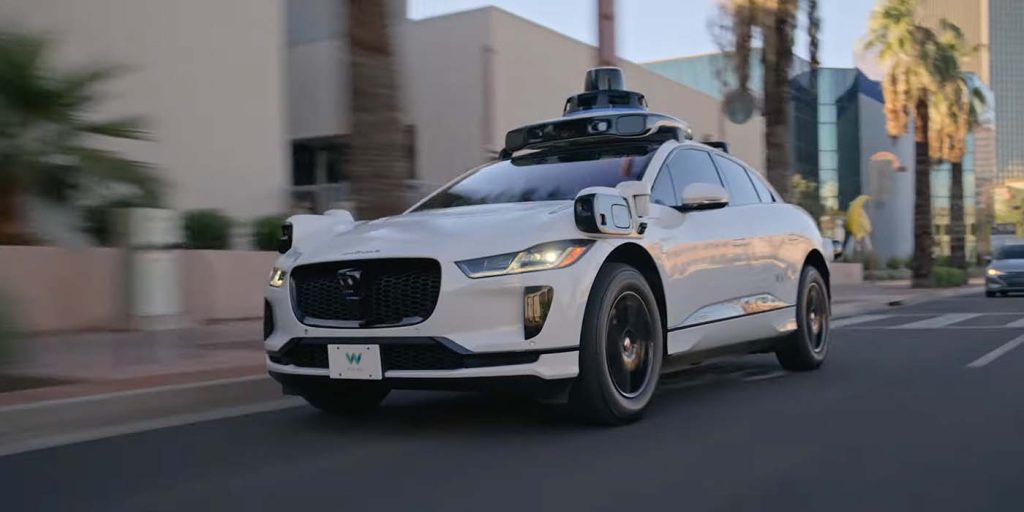
- Fleet Expansion: Integrating more Jaguar I-PACE EVs into active service hubs.
- Geographic Growth: Launching commercial services in cities like Los Angeles, Austin, and Miami.
- Strategic Partnerships: Deepening collaborations with ride-hailing networks such as Uber to streamline user acquisition and vehicle utilization.
The Domestic and Global Competitive Landscape
Waymo’s path to dominance has not been without turbulence. The company has worked tirelessly to rebuild public trust following historical setbacks and PR challenges across the autonomous sector. Incidents such as a minor collision with a cyclist in San Francisco and viral social media clips of Waymo vehicles occasionally getting caught in repetitive loops—such as a recent mishap where a robotaxi became stuck circling a roundabout—underscore the fact that autonomous software still faces edge-case vulnerabilities.
Furthermore, the competitive arena is shifting. Following the high-profile stumbles and subsequent restructuring of rival autonomous operations like Cruise, Waymo’s primary shadow competitor remains Tesla. Tesla recently unveiled its purpose-built "Cybercab" robotaxi during its heavily publicized "We, Robot" event and currently operates an internal employee ride-hailing service in the Bay Area using human safety drivers. However, while Tesla relies heavily on a camera-only Vision approach, Waymo’s multi-modal sensor suite—combining LiDAR, radar, and cameras—continues to set a distinct technological standard for regulatory approvals in complex urban markets like Tokyo.
Official Statements and Industry Perspectives
The announcement of Waymo’s expansion into Japan has elicited widespread commentary from industry analysts, municipal leaders, and corporate partners eager to witness the convergence of American AI development and Japanese transportation infrastructure.
In its official corporate announcement, Waymo emphasized the scientific and operational value of the Tokyo deployment:

"Through the initial phase in Tokyo, we can evaluate how our AI-powered driver generalizes to new environments through simulation and adapts to both left-side driving and new driving nuances in one of the world’s most densely populated cities."
Industry analysts have pointed out that while Tokyo boasts one of the most efficient, punctual, and extensive railway and subway networks in the world, the city—and Japan as a whole—faces a distinct socio-economic challenge. With a rapidly aging workforce and shrinking demographic pool, traditional labor-intensive industries like taxi driving face severe driver shortages. Autonomous mobility solutions are increasingly viewed by Japanese policymakers not as a novelty, but as a critical infrastructure necessity to maintain seamless first-mile and last-mile connectivity for elderly residents.
Furthermore, the partnership with Nihon Kotsu and the integration with the GO taxi app—Japan’s leading ride-booking platform—signal a cooperative approach rather than a disruptive one. By embedding its technology within established local ecosystems, Waymo aims to navigate regulatory nuances and consumer adoption hurdles more smoothly than foreign tech entrants of the past.
Future Outlook: What Lies Ahead for Autonomous Mobility
Waymo’s entry into Tokyo serves as a bellwether for the next era of autonomous driving. As the company completes its human-supervised mapping and simulation phases throughout 2025, industry watchers will be closely monitoring several critical milestones:

- Transition to Driverless Operations: The ultimate test for Waymo in Japan will be securing regulatory permission to remove the safety driver entirely, transitioning from a mapping and testing phase to a public-facing commercial robotaxi service via the GO app.
- Left-Hand Drive Scalability: Success in Tokyo could open the floodgates for expansion into other major left-hand-drive international markets, including the United Kingdom, Australia, and Singapore.
- Regulatory Precedent: As governments worldwide watch how Japan’s revised Level 4 autonomous vehicle laws accommodate a foreign operator, Tokyo’s framework could become a blueprint for other nations seeking to safely integrate driverless technology into congested urban centers.
Ultimately, Waymo’s Tokyo initiative proves that autonomous vehicles have outgrown their Silicon Valley testing grounds. By tackling the dense, complex traffic arteries of Japan’s capital, Waymo is making a bold statement: the future of global urban mobility is autonomous, electric, and increasingly borderless.
