

Executive Overview
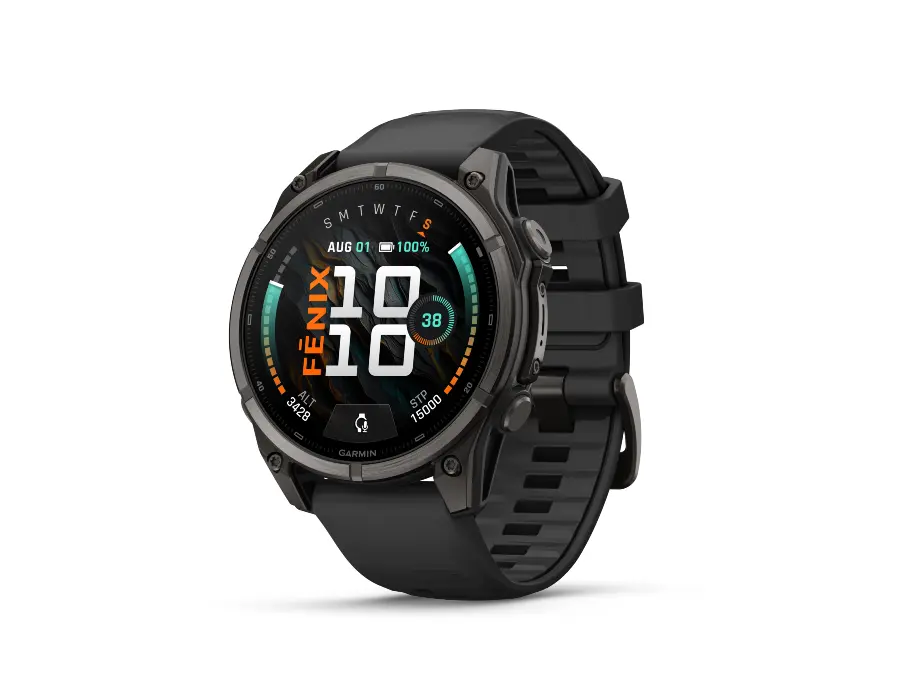
Garmin has once again raised the bar for premium, rugged performance wearables with the official announcement of its flagship Fenix 9 and Fenix 9 Pro smartwatch lineups. Positioned at the apex of the outdoor fitness and adventure tech market, the new generation builds directly upon the legacy of its predecessors while introducing substantial hardware leaps, performance optimizations, and deep software analytics designed for elite athletes, mountaineers, and endurance junkies.
Leading the charge is the base model Fenix 9, which starts at $999.99 for the compact 43mm case option. The standout feature of this year’s standard model is a breathtaking, ultra-bright OLED display capable of outputting a staggering 3,000 nits of peak brightness—effectively doubling the luminosity of the previous generation and ensuring crystal-clear visibility under direct, blinding sunlight. Beneath the surface, Garmin has overhauled the internal architecture by packing in 50 percent more RAM and deploying a completely redesigned map engine that translates to buttery-smooth panning and lightning-fast route rendering.
For users seeking the ultimate titanium build, the Fenix 9 Pro starts at $1,099.99, offering premium aerospace-grade materials, advanced satellite or LTE connectivity options via InReach, and expansive screen real estate. Across both lineages, Garmin has fortified the physical build with scratch-resistant sapphire lenses, increased internal storage to 64GB, and introduced a suite of next-generation health metrics, including the innovative "Garmin Epic" performance consolidation tool and dynamic rucking capabilities.
Available for order starting August 28th, the Fenix 9 and Fenix 9 Pro arrive in a diverse array of case sizes (43mm, 47mm, and 51mm) and distinct colorways, solidifying Garmin’s dominance in the high-end adventure tech sector.
Detailed Chronology: Evolution of the Fenix Legacy to the Fenix 9
To understand the magnitude of the Fenix 9 release, it is essential to trace the trajectory of Garmin’s flagship rugged line. Over the past decade, the Fenix series has transitioned from a niche tactical and mountaineering tool into the gold standard for multi-sport GPS watches.
The Journey to OLED and Peak Performance
Historically, Garmin relied heavily on Memory-in-Pixel (MIP) transflective displays for its outdoor watches. While MIP displays excelled at power efficiency and outdoor legibility in glaring sunlight, they lagged behind consumer smartwatches in vibrancy, contrast, and resolution. With the introduction of AMOLED and high-end OLED technology in recent iterations, Garmin struck a delicate balance, eventually culminating in the blindingly bright 3,000-nit panel seen on the Fenix 9 base model.
Hardware Architectural Shifts
The engineering philosophy behind the Fenix 9 focused heavily on removing bottlenecks that users historically encountered during intensive mapping and navigation tasks. By increasing RAM by 50 percent and doubling the flash storage to 64GB, Garmin has future-proofed the device for massive global topographic map downloads, complex offline routing, and fluid interface responses.
Furthermore, the expansion of the Fenix 9 Pro lineup to include a massive 1.5-inch OLED display on its largest 51mm variant marks a significant milestone. It bridges the gap between massive screen estate and rugged durability, catering to athletes who demand exhaustive data fields visible at a glance without compromising on structural integrity.

Supporting Context & Metrics: Under the Hood of the Fenix 9 Series
The specifications of the Fenix 9 and Fenix 9 Pro read like a wishlist for data-driven endurance athletes. Below is a comprehensive breakdown of the hardware specifications, software enhancements, and battery benchmarks that define this generation.
Display and Build Specifications
- Base Model (43mm and up): Features an upgraded OLED display hitting up to 3,000 nits of brightness. Protected by a rugged, scratch-resistant sapphire crystal lens.
- Pro Model Variants: Available in three distinct case sizes—43mm, 47mm, and 51mm. The largest 51mm Pro model introduces a sprawling 1.5-inch OLED display (superseding the standard 1.3-inch and 1.4-inch footprints).
- Materials: Premium titanium bezels and case options available on the Pro tier, paired with military-grade drop and thermal resistance.
Performance and Storage
- RAM: 50% increase compared to the previous generation, drastically reducing latency during menu navigation and heavy computation tasks.
- Storage: Expanded to 64GB across the board, allowing for offline music synchronization, massive regional mapping packs, and extensive workout history storage.
- Mapping Engine: A rewritten, highly optimized map engine that accelerates panning, zooming, and point-of-interest searching in remote environments.
Advanced Software Features
- Garmin Epic: A revolutionary data aggregation tool that groups historical workout data over extended periods (days, weeks, and months) into a cohesive "Epic" report, giving users a macroscopic view of their training load, recovery curves, and performance plateaus.
- Stamina Tracking 2.0: Real-time energy reserve tracking that adapts dynamically to terrain elevation, thermal stress, and pace variations.
- Expanded Rucking Support: Specifically tailored for tactical operators, hikers, and fitness enthusiasts who train with weighted packs. Users can now manually adjust or input the dynamic weight of their pack mid-workout to ensure accurate caloric burn and exertion calculations.
Connectivity and Battery Performance
- InReach Satellite & LTE Connectivity: Available across all three case sizes of the Fenix 9 Pro (for an additional $100 hardware option and a $7.99/month subscription), ensuring two-way messaging and SOS capabilities completely independent of a cellular phone.
- Standard Battery Life: The largest 51mm Fenix 9 variant delivers up to an impressive 29 days of continuous battery life in standard smartwatch mode.
- Solar-Charged Variants: Select 47mm and 51mm Fenix 9 Pro models feature solar-charging display technology capable of stretching endurance up to 57 days, provided the user logs at least three hours daily in intense 50,000 lux outdoor conditions.
Official Statements and Industry Reception
Garmin’s executive and product development teams have emphasized that the Fenix 9 series was designed without compromise, combining the aesthetic refinement of a luxury timepiece with the indestructible nature of field survival gear.
Industry analysts have noted that by pushing display brightness to 3,000 nits, Garmin has effectively neutralized one of the primary criticisms leveled against outdoor smartwatches—namely, poor visibility in snow-blind or harsh desert environments. Moreover, the integration of seamless satellite and LTE capabilities via InReach on the Pro models positions Garmin not just as a fitness tracker, but as a critical life-saving communication hub for backcountry explorers.
Early impressions from beta testers and gear reviewers highlight the noticeable speed improvements afforded by the upgraded RAM and new map engine. Scrolling through complex topographic maps of national parks no longer suffers from stutter, transforming the wrist-mounted GPS experience into something resembling a high-end handheld navigation unit.
Future Outlook: The Trajectory of Rugged Wearables
The launch of the Garmin Fenix 9 and Fenix 9 Pro sets a formidable benchmark for competitors in the outdoor tech space, including Apple, Suunto, and Coros. As consumers increasingly demand professional-grade physiological monitoring combined with off-grid independence, Garmin’s dual-pronged approach—pairing hyper-vibrant OLED displays with extreme-capacity solar and satellite options—outlines the blueprint for the future of wearable technology.
Looking ahead, we can expect the democratization of these features into Garmin’s broader ecosystem, such as the Epix, Forerunner, and Instinct lines. However, for those who demand the absolute pinnacle of rugged construction, uncompromised battery longevity, and cutting-edge performance metrics, the Fenix 9 series reigns supreme.
With pre-orders opening on August 28th, the market is poised to see how elite athletes and outdoor adventurers harness these advanced capabilities in the wild. One thing is certain: Garmin has firmly secured its throne at the summit of the rugged smartwatch industry.
