

By Global Tech & Gaming Desk
Published: February 2025
Executive Overview
CD Projekt Red (CDPR), the acclaimed Polish game development studio responsible for the critically acclaimed The Witcher trilogy and Cyberpunk 2077, has officially signaled a tentative launch window for its highly anticipated next-generation flagship title, The Witcher 4. According to statements made by joint CEO Michał Nowakowski in a recent corporate video briefing, the studio is actively targeting a 2028 release for the project.
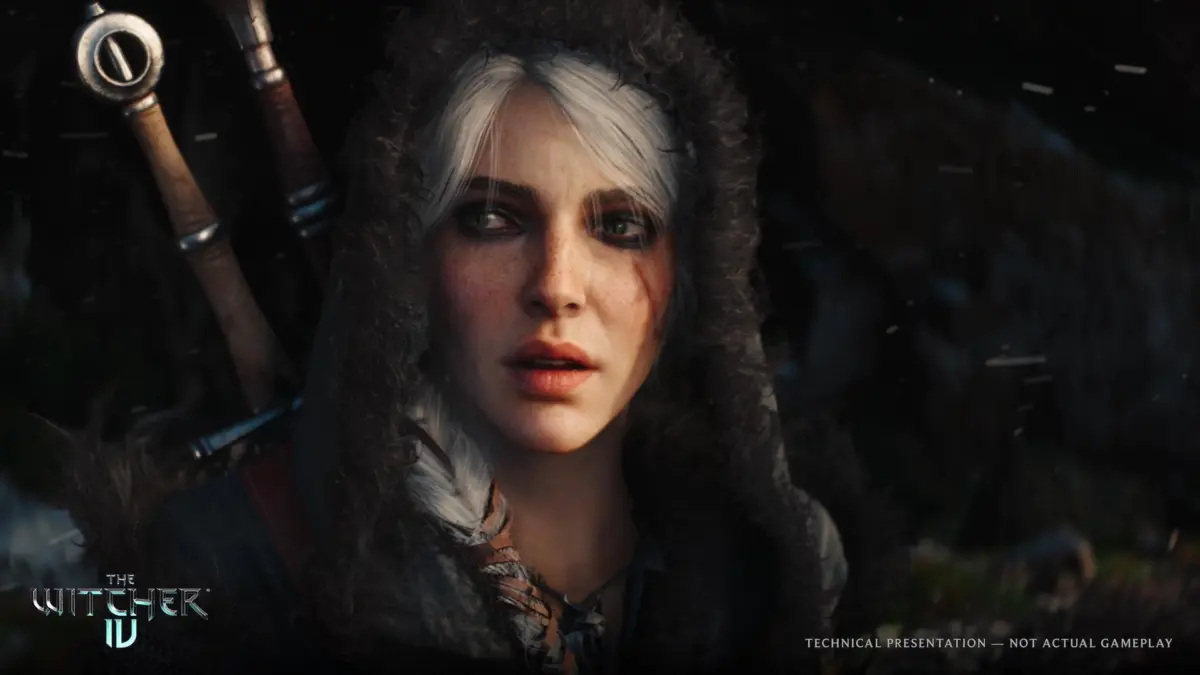
The announcement brings a degree of long-awaited clarity to a development cycle that has been shrouded in mystery since the initial conceptual announcement back in March 2022. While the studio has gradually peeled back the curtain through technical demos, Unreal Engine 5 showcases, and a teaser trailer at The Game Awards 2024, a concrete arrival timeline had previously eluded eager fans and industry analysts alike.
However, the road to 2028 is far from a single-track journey. CD Projekt Red’s strategy involves an expansive, multi-tiered revitalization of The Witcher intellectual property. Before players step into the shoes of the next generation’s primary protagonist, they will be treated to a brand-new expansion for 2015’s monumental The Witcher 3: Wild Hunt, titled Songs of the Past, slated for a 2027 release. Simultaneously, the studio is weathering internal structural shifts, notably marked by recent layoffs on Project Sirius, an experimental multiplayer spin-off set within the same dark fantasy universe.
This comprehensive report examines CDPR’s updated timeline, the technical evolution driving The Witcher 4, the unexpected resurrection of The Witcher 3, and the operational realities shaping the studio’s ambitious multi-project pipeline.
Detailed Chronology: From Unreal Engine 5 Transition to 2028 Horizon
To understand the significance of the 2028 release target, it is crucial to trace the historical timeline of CD Projekt Red’s pipeline development over the past several years.
2022: The Paradigm Shift to Unreal Engine 5
The genesis of the next mainline Witcher game—provisionally referred to in early developer materials as Polaris—was officially communicated in March 2022. In a major strategic pivot away from their proprietary REDengine (which powered The Witcher 3 and Cyberpunk 2077), CDPR announced a long-term strategic partnership with Epic Games. Transitioning to Unreal Engine 5 represented a monumental philosophical shift for the studio, moving away from the costly and time-consuming overhead of maintaining an in-house engine toward a robust, industry-standard ecosystem optimized for vast open worlds.
2024: Visual Showcases and The Game Awards Reveal
For over two years, development occurred primarily behind closed doors as core engineering teams focused on rebuilding foundational systems for Unreal Engine 5. By late 2024, the veil began to lift. In December 2024, during Geoff Keighley’s annual The Game Awards ceremony, CDPR broadcast the first official teaser trailer for The Witcher 4. This was followed by specialized technical demonstrations targeting next-gen hardware architectures, including the PlayStation 5, highlighting advanced global illumination (Lumen), geometry processing (Nanite), and complex physics simulations made possible by Epic’s engine.
2025: Establishing the Horizon
Now, with joint CEO Michał Nowakowski detailing the studio’s internal projections in a strategic video update, the 2028 target has emerged. While six years from announcement to launch is a standard development lifecycle for AAA open-weight role-playing games of this magnitude in the modern era, the timeline underscores CDPR’s commitment to avoiding the premature release controversies that plagued Cyberpunk 2077 in late 2020. By establishing a generous runway, the studio hopes to ensure structural stability, technical polish, and creative integrity.
Supporting Context & Metrics: Filling the Gap Between Now and 2028
A six-year gap between major standalone single-player releases can test the patience of any fanbase and challenge a publicly traded company’s fiscal continuity. To mitigate this, CD Projekt Red has meticulously structured a content cadence designed to keep The Witcher brand front and center throughout the late 2020s.
The Return of The Witcher 3: Songs of the Past
In a surprise announcement generating significant industry buzz, CDPR confirmed that The Witcher 3: Wild Hunt—a game released over a decade prior—is receiving a substantial new narrative expansion titled Songs of the Past.

Scheduled to launch in 2027, Songs of the Past is positioned as a bridge bridging the classic era of Geralt of Rivia with the uncharted territories of the upcoming saga. The project is set to take center stage at the upcoming Gamescom event, with a featured spotlight during Opening Night Live hosted by Geoff Keighley.
Industry analysts view this move as a masterclass in portfolio management. By leveraging the timeless goodwill and technical foundation of The Witcher 3 (which received a comprehensive next-gen patch in late 2022), CDPR can satisfy consumer appetite for fresh narrative content, drive ongoing software sales, and maintain brand relevance without rushing The Witcher 4 out of production.
Project Sirius and Multiplayer Ambitions
Not all developments within the franchise have been frictionless. CD Projekt Red has also been incubating Project Sirius, a multiplayer-focused spin-off set in the Witcher universe being developed by Boston-based studio The Molasses Flood (acquired by CDPR in 2021) with support from the parent company.
Project Sirius was initially envisioned as an ambitious attempt to bring cooperative and multiplayer mechanics to a narrative-driven dark fantasy sandbox. However, the project has faced turbulent waters. Following an early-stage creative reboot in 2023—where the game’s scope and framework were significantly re-evaluated—CDPR confirmed in August 2025 that it had implemented layoffs impacting staff assigned to the title.
While leadership has maintained that Project Sirius remains active, the downsizing reflects a broader macroeconomic and corporate recalibration across the gaming sector, where runaway budgets and sprawling multiplayer scopes are increasingly being re-checked for financial viability.
Official Statements and Industry Impact
The revelation of a 2028 release window carries profound implications for both CD Projekt Red’s corporate valuation and the broader AAA gaming ecosystem.
Speaking through official corporate communication channels, CEO Michał Nowakowski emphasized that the studio’s primary objective is sustainable development. Following the arduous post-launch redemption arc of Cyberpunk 2077, CDPR executive management has repeatedly stressed a cultural transformation centered on workload sustainability, rigorous milestone tracking, and transparent communication with investors and players alike.
"Our focus moving forward is on crafting deeply immersive, technically refined role-playing worlds that respect both the time of our players and the well-being of our development teams," leadership notes suggest. "Setting our sights on 2028 for our next major milestone gives our teams the necessary space to innovate without compromising quality."
Financial markets have reacted with cautious optimism. While a 2028 timeline means investors will have to wait several years for the primary revenue driver of the Polaris trilogy, the planned 2027 release of Songs of the Past provides a near-term financial cushion and guarantees active franchise engagement.
Future Outlook: What Lies Ahead for the Continent
As CD Projekt Red charts its course toward the end of the decade, the studio’s strategy relies on a diversified portfolio. No longer solely dependent on a single monolithic release schedule, the company is effectively building a multi-pillar franchise ecosystem:
- The Core Saga (Polaris / The Witcher 4): The flagship single-player RPG targeting 2028 on Unreal Engine 5, intended to kick off an entirely new trilogy.
- Legacy Expansion (Songs of the Past): A 2027 narrative injection for The Witcher 3, designed to revitalize interest in the existing canon and serve as a thematic bridge.
- Exploratory Spinoffs (Project Sirius): An ongoing attempt to diversify gameplay styles into multiplayer and cooperative spaces, albeit navigating recent structural adjustments and team downsizing.
- Cyberpunk Sequel (Project Orion): Parallel development is also underway on the sequel to Cyberpunk 2077, managed by CDPR’s newly established North American studios in Boston and Vancouver.
For fans of Geralt, Ciri, and the unforgiving Continent, the journey to 2028 will be marked by cautious anticipation. If CD Projekt Red can successfully deliver on the technological promises of Unreal Engine 5 while honoring the narrative depth that defined its past masterpieces, the wait may very well prove to be justified. In the interim, the return to The Witcher 3 in 2027 ensures that the fires of Kaer Morhen will continue to burn brightly for years to come.
