

Executive Overview
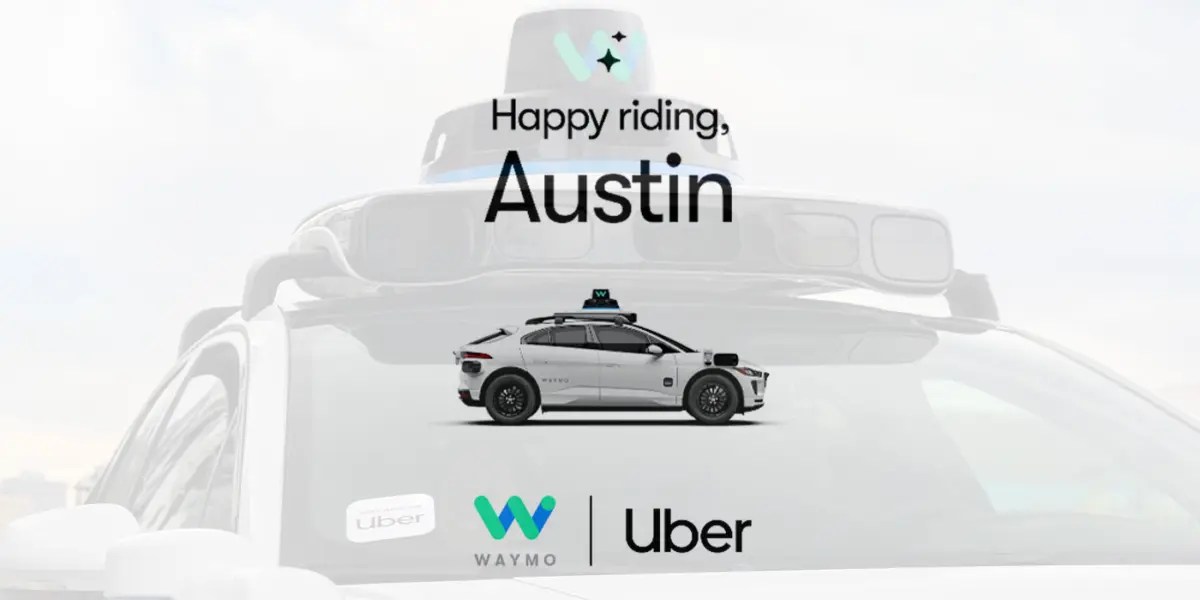
The commercial rollout of autonomous ride-hailing reached a significant new milestone as Alphabet-backed Waymo officially launched its fully autonomous Waymo One service in Austin, Texas. Marking a distinct evolution in how consumers access driverless technology, this launch is exclusively accessible through the Uber application.
By integrating its robotaxi fleet directly into the world’s most widely used ridesharing platform, Waymo is bridging the gap between futuristic autonomous mobility and mainstream consumer habits.
The service initially spans a robust 37-square-mile coverage zone covering vital urban corridors of the Texas capital, including Downtown, Hyde Park, and Montopolis. This launch is not merely another geographic expansion for the autonomous vehicle (AV) pioneer; it serves as the proving ground for a landmark partnership model.
In Austin, Uber is directly managing and dispatching Waymo’s vehicles for the first time. This strategic operational shift offers a glimpse into the future of urban transportation: traditional ridesharing networks and bleeding-edge robotics working in tandem to redefine municipal transit.
Backed by a massive $5.6 billion funding round secured late last year and sustained confidence from parent company Alphabet Inc., Waymo is pressing forward at a time when public skepticism toward autonomous systems remains a hurdle. Yet, armed with safety data showing performance metrics that frequently outpace human drivers, Waymo is systematically turning its ambitious roadmap into reality.
As Austin residents begin booking rides in Jaguar I-Pace electric vehicles completely devoid of human drivers, the entire transportation industry is watching closely to gauge public adoption, logistical efficiency, and the long-term viability of the Uber-Waymo alliance.
Detailed Chronology: From Concept to Austin’s Streets
The journey that culminated in the deployment of driverless vehicles on the bustling streets of Austin has been carefully planned and executed over several years, shaped by strategic partnerships, regulatory navigation, and continuous technological refinement.
![Waymo One begins autonomous rides in Austin, Texas, exclusively through Uber [Video]](https://i0.wp.com/electrek.co/wp-content/uploads/sites/3/2025/03/Waymo-Austin-Uber.jpg?resize=1200%2C628&quality=82&strip=all&ssl=1)
The Foundation of an Alliance
The roots of the Austin rollout trace back to May 2023, when Waymo and Uber forged a multi-year strategic partnership. Initially, the agreement mapped out a collaborative framework for driverless rides and deliveries, signaling a pivot away from closed, proprietary ecosystems. Rather than forcing consumers to download a standalone app to experience autonomous transit, Waymo recognized the immense value of plugging directly into Uber’s massive, pre-existing global user base.
This partnership laid the groundwork for a symbiotic relationship: Waymo provides the state-of-the-art autonomous "Driver" software and hardware stack, while Uber supplies unmatched demand generation, customer routing infrastructure, and local market expertise.
Capital Infusion and the 2025 Roadmap
Momentum accelerated dramatically in October 2024, when Waymo closed a massive $5.6 billion Series C funding round. Led by parent company Alphabet, alongside external heavyweights such as Andreessen Horowitz, Fidelity Management & Research Company, and Perry Creek Capital, the cash injection provided the financial runway necessary to accelerate commercial scaling through 2025.
During that funding announcement, Waymo leadership formally outlined its geographic expansion blueprint. Alongside continued scaling in established markets like San Francisco, Los Angeles, and Phoenix, the company explicitly targeted Austin, Texas, and Atlanta, Georgia, as its next major deployment zones for 2025, with Miami subsequently slated for early 2026.
Testing, Mapping, and Regulatory Milestones
Prior to launching commercial operations, Waymo spent months meticulously mapping Austin’s unique topographical and cultural landscape. Operating in a vibrant, fast-growing city like Austin presents distinct challenges: unpredictable weather events, bustling nightlife districts, complex highway interchanges, and a high volume of pedestrians, cyclists, and scooter riders.
Through extensive manual testing with safety drivers behind the wheel, Waymo’s autonomous system ingested millions of miles of local data, training its neural networks to navigate the nuances of Texas traffic laws, aggressive local driving behaviors, and sudden infrastructure changes.
Launch Day: March 2025
The culmination of these efforts arrived when Waymo officially flipped the switch in Austin. By integrating directly into the Uber app, the service went live without the need for a separate, dedicated Waymo application for local riders. This deployment represents the first market where Uber actively manages the dispatch and fleet operations for Waymo vehicles, setting a operational precedent that will likely be replicated in future metropolitan expansions.
![Waymo One begins autonomous rides in Austin, Texas, exclusively through Uber [Video]](https://electrek.co/wp-content/uploads/sites/3/2025/03/Waymo-Austin-Uber.jpg?quality=82&strip=all&w=1400)
Supporting Context & Metrics: Safety, Scale, and Technology
To fully understand the significance of Waymo’s Austin launch, one must examine the broader metrics governing the company’s operations, safety records, and technological framework.
The Safety Argument Versus Public Skepticism
Despite significant technological leaps, public perception of autonomous vehicles remains mixed. Skeptics frequently point to high-profile software glitches or stalled vehicles from defunct or struggling competitors as proof that full autonomy is still decades away.
However, Waymo has aggressively countered this narrative with empirical data. A comprehensive safety study released in late 2024 revealed that Waymo’s robotaxis demonstrated a significantly higher safety performance profile compared to human drivers operating in similar environments. The data indicated a dramatic reduction in injury-causing crashes and police-reported accidents per million miles driven.
By prioritizing transparency and publishing extensive safety metrics, Waymo has gradually swayed regulatory bodies and urban planners, proving that its sixth- and fifth-generation hardware suites can handle chaotic urban environments with a level of vigilance that surpasses distracted or fatigued human drivers.
Operational Footprint: The 37-Square-Mile Grid
In Austin, the Waymo One service covers an expansive 37-square-mile zone. This geographic footprint is not an arbitrary boundary; it has been strategically drawn to capture high-density commercial, residential, and entertainment districts where ridesharing demand is highest.
The coverage area includes:
- Downtown Austin: The bustling commercial heart of the city, characterized by heavy pedestrian traffic, narrow one-way streets, construction zones, and vibrant nightlife corridors.
- Hyde Park: One of Austin’s historic, picturesque residential neighborhoods, featuring leafy, narrow streets, uncontrolled intersections, and frequent pedestrian and cyclist activity.
- Montopolis: A diverse east-side community offering crucial connectivity to major transit arteries and residential pockets.
The Vehicle Fleet and In-App Experience
Riders matched with a Waymo vehicle in Austin will currently step into custom-equipped Jaguar I-Pace electric SUVs. These vehicles are packed with a comprehensive sensor suite—comprising LiDAR, radar, and high-resolution cameras—providing a 360-degree, long-range field of vision that operates seamlessly day and night, regardless of weather conditions.
![Waymo One begins autonomous rides in Austin, Texas, exclusively through Uber [Video]](https://electrek.co/wp-content/uploads/sites/3/2025/03/Waymo-Austin-Uber-Map.jpg?quality=82&strip=all&w=1024)
The user experience has been streamlined entirely through the familiar Uber interface. When requesting an UberX, Uber Comfort, Uber Green, or Uber Comfort Electric, eligible riders within the 37-square-mile zone may be given the option to opt-in to a driverless ride if a Waymo vehicle is nearby.
Once matched, the Uber app transforms into a remote control hub for the physical vehicle. Riders can use their smartphones to:
- Unlock the Waymo vehicle’s doors upon arrival.
- Pop the trunk to load luggage or groceries.
- Initiate the ride directly from the back seat via a dedicated start button once safely buckled inside.
Official Statements and Industry Implications
The collaboration between Waymo and Uber represents a fundamental shift in how the mobility sector approaches competition and cooperation. For years, tech giants and legacy ridesharing companies viewed one another as existential threats. Today, they are finding that their respective strengths—software intelligence versus logistics and consumer reach—are profoundly complementary.
Industry analysts note that Uber’s decision to dispatch Waymo vehicles marks a watershed moment. Rather than attempting to build an expensive, proprietary autonomous stack from scratch, Uber has positioned itself as the universal aggregator for autonomous fleets. This ensures that whether a consumer hails a human-driven car or a robotaxi, Uber captures the transaction fee.
For Waymo, partnering with Uber solves one of the most difficult challenges in scaling a hardware-heavy business: customer acquisition and localized fleet management. By leveraging Uber’s massive marketing engine and brand loyalty, Waymo can bypass the massive capital expenditures traditionally required to build consumer awareness in a brand-new market.
Waymo’s leadership has consistently emphasized that these strategic partnerships are designed to scale safety and accessibility responsibly. By expanding city-by-city with meticulous regulatory coordination, the company aims to normalize autonomous transit as a safe, reliable, and everyday mobility option for urban dwellers across the United States.
Future Outlook: Beyond Austin to Atlanta and Miami
The successful deployment in Austin serves as a vital stress-test for the broader multi-year roadmap established by Waymo and Uber. The lessons learned on the streets of the Texas capital—ranging from fleet dispatch efficiency to local consumer adoption rates—will directly inform the next waves of expansion.
![Waymo One begins autonomous rides in Austin, Texas, exclusively through Uber [Video]](https://electrek.co/wp-content/themes/ninetofive/dist/images/google-preferred-source-badge-dark.png)
Next on the horizon is Atlanta, Georgia, where Waymo and Uber plan to launch public robotaxi services later this year. Atlanta presents its own unique infrastructure, traffic patterns, and climatic conditions, pushing the Waymo Driver to further generalize its urban navigation capabilities.
Looking further ahead, Waymo confirmed in late 2024 that Miami, Florida, is officially in the pipeline for a commercial rollout projected for early 2026. Expanding into Miami will test the system’s resilience against intense tropical weather events, heavy tourist populations, and complex coastal roadways.
As Waymo steadily expands its footprint from its early strongholds in San Francisco, Phoenix, and Los Angeles into major metropolitan powerhouses like Austin, Atlanta, and Miami, the perception of the robotaxi is undergoing a profound transformation. What was once viewed as a futuristic novelty is rapidly becoming a standard pillar of modern urban infrastructure.
With substantial financial backing, proven safety statistics, and a powerful distribution partnership with Uber, Waymo is well-positioned to lead the autonomous revolution into its next defining chapter.
