

Executive Overview
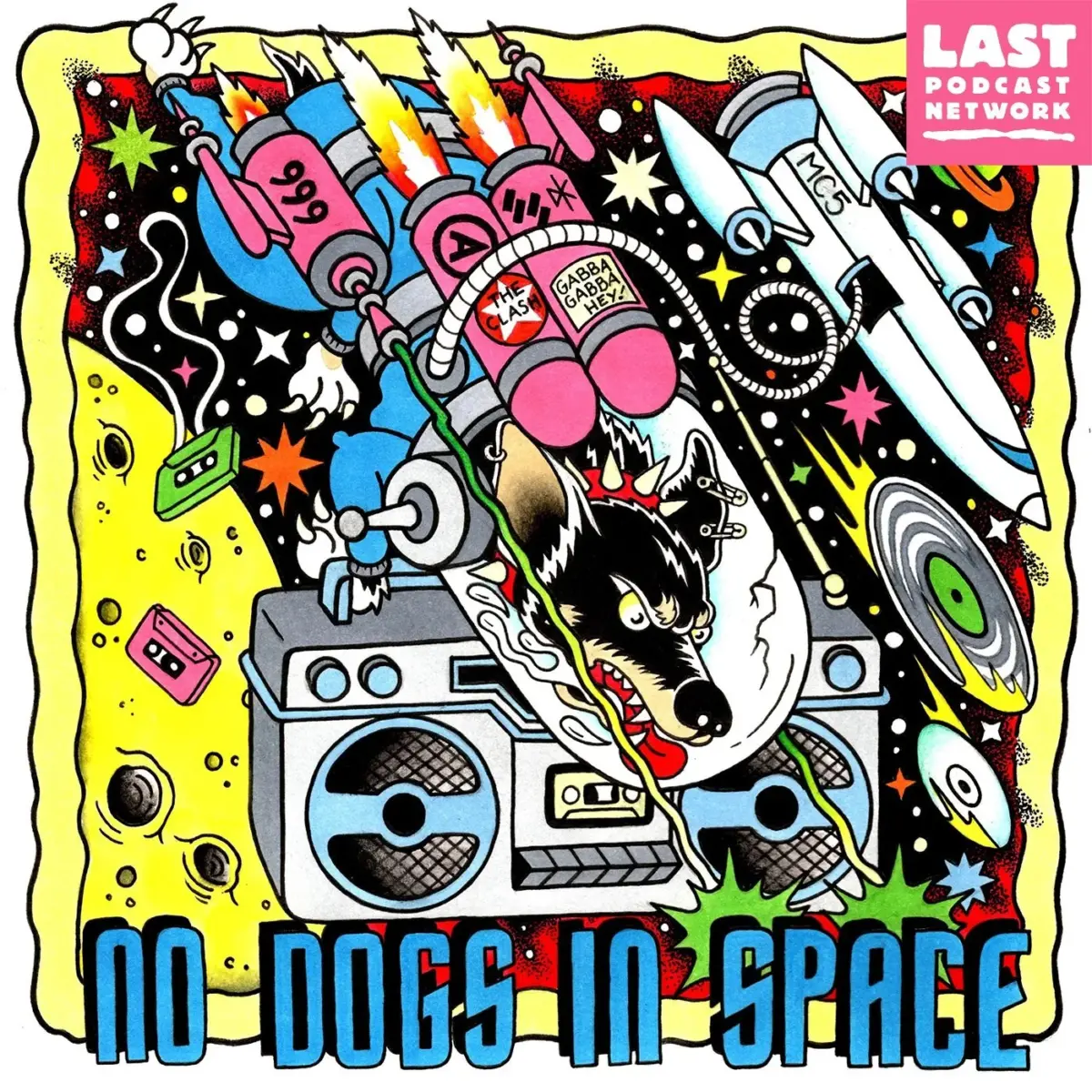
For the better part of half a decade, No Dogs in Space has occupied a peerless niche in the crowded ecosystem of audio entertainment. Co-created, researched, and hosted by the husband-and-wife duo of Marcus Parks—widely recognized for his work on the mega-hit true-crime and paranormal comedy podcast Last Podcast on the Left—and documentarian Carolina Hidalgo, the show treats music history not as a series of Wikipedia bullet points, but as a sprawling, novelistic epic. Across meticulous multi-part series, Parks and Hidalgo have offered listeners exhaustive biographies of foundational artists, from the proto-punk grit of The Stooges to the nocturnal melancholia of Joy Division, the avant-garde friction of The Velvet Underground, and the hip-hop evolution of the Beastie Boys.
Yet, as the calendar turned toward the final quarter of 2024, a palpable quiet settled over the podcast’s RSS feed. Following the conclusion of Season 3—an abbreviated run dedicated to the outer limits of experimental rock that culminated in a triumphant, multi-part exploration of the pioneering German band Can—the show went dark. The final episode, dropping in July 2024, closed out with a tantalizing promise: a pivot back to punk rock, revisiting the genre that served as the bedrock of the show’s inaugural season, but through an expanded, highly anticipated lens.
Months have passed without a new installment, leaving music obsessives, audiophiles, and long-form podcast devotees wondering about the status of the network’s crown jewel. While the show has not been officially canceled, and its creators have occasionally hinted at a future revival across social media and live streams, the current hiatus highlights the precarious nature of elite-tier, heavily researched audio journalism. In an industry increasingly dominated by quick-turnaround chat casts and algorithmically optimized content, No Dogs in Space stands as a monument to the labor-intensive art of the deep dive. This report examines the structural anatomy of the podcast, its unmatched contributions to music history, the current landscape of its hiatus, and what the future holds for Parks, Hidalgo, and their devoted listenership.
Detailed Chronology: From Garage Rock Foundations to Experimental Soundscapes
To understand the weight of the current hiatus, one must trace the evolutionary trajectory of No Dogs in Space from its inception. Launched under the banner of the Last Podcast Network, the show immediately carved out a distinct identity. While Marcus Parks was already a household name to millions through his work dissecting true crime and the occult, No Dogs in Space allowed him to pivot toward his first love: music history. Partnering with Carolina Hidalgo, whose background in documentary filmmaking brought a sharp structural sensibility to the audio format, the show was designed from day one to be an immersive, historical corrective to superficial pop-culture retrospectives.
Season 1: Laying Down the Law with Punk Rock
The inaugural season set a high-water mark for the series, dedicating itself entirely to the genesis, explosion, and global reverberations of punk rock. Eschewing a surface-level glance at the Sex Pistols or The Clash, Parks and Hidalgo cast a wide net, tracing the genre’s DNA back to its garage rock ancestors in the 1960s—bands like The Sonics and The 13th Floor Elevators—before moving through the New York Dolls, the Detroit explosion spearheaded by MC5 and The Stooges, and the Lower East Side crucible of CBGB.
This foundational season established the show’s pacing: listeners were not simply told that an album was influential; they were walked through the socioeconomic conditions of the era, the interpersonal volatility of the band members, the recording sessions track by track, and the immediate cultural backlash. By the time Season 1 concluded, No Dogs in Space had proven that listeners would happily spend dozens of hours in the company of two passionate hosts dissecting the subcultural shifts of the 1970s.
Season 2: Expanding the Canon
Buoyed by early critical acclaim and a fiercely loyal audience, Season 2 broadened the scope. Rather than sticking strictly to a single chronological subgenre, the second season functioned as a masterclass in musical genealogy. The duo tackled heavyweights such as The Velvet Underground, tracing the avant-garde collision of Andy Warhol’s Factory and Lou Reed’s street-level lyricism. They ventured into the rain-slicked industrial decay of Manchester with Joy Division and New Order, mapping the transition from post-punk despair to electronic innovation.
Every multi-part arc felt definitive. The research was encyclopedic, unearthing B-sides, forgotten bootlegs, and obscure fanzine interviews that even seasoned music journalists had long since forgotten. The chemistry between Parks and Hidalgo anchored these dense historical tutorials, transforming what could have been dry academic lectures into gripping, character-driven narratives filled with dark humor, genuine empathy for the artists, and undeniable passion.
Season 3: The Experimental Rock Interlude and the Krautrock Deep Dive
Season 3 represented an aesthetic evolution for the show. Shifting focus toward experimental rock, the season was notably abbreviated compared to its sprawling predecessors, but it lost none of its granular depth. The crown jewel of this shortened run was an expansive, multi-hour dive into Krautrock—the mesmerizing, motorik-driven musical movement that emerged from West Germany in the late 1960s and 1970s, which forever altered the trajectory of ambient, electronic, and alternative rock.
The centerpiece of this movement within the podcast was a monumental two-part exploration of Amon Düül II, followed by a deeply immersive, multi-part examination of Can. For music purists, these episodes were a revelation. Parks and Hidalgo meticulously mapped out how post-war German youth exorcised the trauma of their parents’ generation through sound, utilizing tape loops, unconventional instrumentation, and relentless, hypnotic rhythms.
Yet, it was the conclusion of the Can series in July 2024 that brought the season—and subsequent output—to a sudden halt. In the final moments of that episode, the hosts laid out their roadmap for the future: a planned return to the roots of punk rock for what fans colloquially dubbed "Punk Rock 2.0." Instead of the expected rollout, silence filled the feed.
Supporting Context & Metrics: The Anatomy of a Modern Audio Epic
What separates No Dogs in Space from standard music commentary podcasts is its staggering scale and commitment to long-form audio production. In an era where short-form TikTok snippets and 30-minute banter casts dominate the metrics, Parks and Hidalgo deliberately chose the path of maximum resistance.
The Metrics of Immersion
To truly appreciate the scope of the podcast, one must look at the sheer run-time dedicated to individual subjects across its 73-plus episodes:
- The Beastie Boys Arc: Spanning a massive collection of episodes, this series remains one of the longest continuous deep dives in the show’s catalog, chronicling the group’s journey from hardcore punk misfits in New York City to global hip-hop pioneers, sampling innovators, and cultural icons.
- The Replacements Arc: Clocking in at nearly nine hours, this multi-part exploration examines the tragic, brilliant, self-destructive genius of Paul Westerberg and company, detailing the band’s turbulent career through Midwestern dive bars, major-label pressure, and legendary drunken live performances.
- The Krautrock Introduction: Even the show’s "shorter" thematic dives dwarf standard podcast run-times. The introductory two-parter focusing on Amon Düül II runs well over three hours, serving merely as a runway for the sprawling examinations of Tangerine Dream, Faust, Neu!, and Can that followed.
Balancing Information and Entertainment
Maintaining listener engagement across a nine-hour arc on a single band is no small feat. Parks and Hidalgo achieve this by utilizing a sophisticated structural dichotomy. The episodes are rigorously scripted, ensuring that historical timelines, release dates, producer names, and biographical details are airtight. However, these information-dense sections are regularly punctuated by improvisational sidebars—spontaneous analytical arguments, comedic asides, and personal reflections that highlight their dynamic as a married couple.
Furthermore, transparency is a core pillar of the production. Unlike many modern media projects that rely on vague generalized knowledge, No Dogs in Space publishes comprehensive source lists at the conclusion of every episode. Whether pulling from out-of-print biographies, academic essays, or rare fanzines, the hosts actively encourage listeners to verify their claims and pursue the primary literature themselves. This journalistic integrity has transformed the podcast’s community into one of the most intellectually engaged fanbases in the podcasting sphere.
Official Statements and Creator Signals
As the months stretched on without a new episode following the conclusion of the Can series, speculation mounted across online communities such as Reddit’s r/lastpodcastontheleft and various music discussion boards. Has the show been permanently shelved? Are external professional obligations pulling the creators in separate directions?
While no formal press release has been issued regarding the long-term status of No Dogs in Space, crumbs of information have emerged directly from the creators via social media and live streaming appearances:
- Instagram Engagement: Responding to concerned fan inquiries in late 2024, Carolina Hidalgo addressed the hiatus directly in the comments section of her Instagram account. She explicitly stated that the show is not canceled and that she would personally love to return to the studio to produce more episodes.
- Live Stream Teasers: During various broadcast appearances and network live streams, the possibility of the show’s return has been brought up by both hosts. They have acknowledged the immense workload required to produce an ongoing season of No Dogs in Space and reaffirmed their commitment to the "Punk Rock 2.0" concept once scheduling permits.
These updates offer a reassuring counter-narrative to the silence of the RSS feed. The delay is not a result of creative burnout or network interference, but rather the inevitable casualty of time management in a busy media landscape. Marcus Parks remains heavily engaged with the relentless weekly production schedule of Last Podcast on the Left, alongside other network obligations, while Hidalgo balances extensive documentary and research work.
Future Outlook: What Lies Ahead for No Dogs in Space?
The hiatus of No Dogs in Space serves as a symptom of a broader industry reality: high-craft, research-heavy audio production requires resources, time, and mental bandwidth that cannot be easily rushed. In the wake of the experimental rock season and the monumental deep dives into Krautrock, the bar has been set exceptionally high. Fans do not want a watered-down, truncated version of the show; they expect the uncompromising, exhaustive journalism that defined the Beastie Boys and Replacements retrospectives.
The Prospects for "Punk Rock 2.0"
When—not if—the show returns, the anticipated focus on an expanded, mature look at punk rock offers an exciting narrative full-circle moment. Season 1 laid the groundwork when the podcast was finding its footing; a return to the genre with the benefit of years of storytelling refinement, expanded production budgets, and an even deeper historical lens could yield the finest work of the creators’ careers.
The Enduring Value of the Catalog
In the interim, the existing archive of 73 episodes stands as a timeless resource for music lovers. In an era where algorithms dictate musical discovery, offering homogenized playlists based on immediate past listening habits, No Dogs in Space provides something vastly superior: context, humanity, and narrative weight. It teaches listeners how to listen, how to contextualize art within the political and social ferment of its creation, and how to appreciate the flawed, brilliant human beings behind the master tapes.
Until the day Marcus Parks and Carolina Hidalgo return to the microphones to introduce the next chapter of musical history, the existing catalog remains an essential pilgrimage for anyone who cares about where countercultural sound came from—and why it still matters today.
