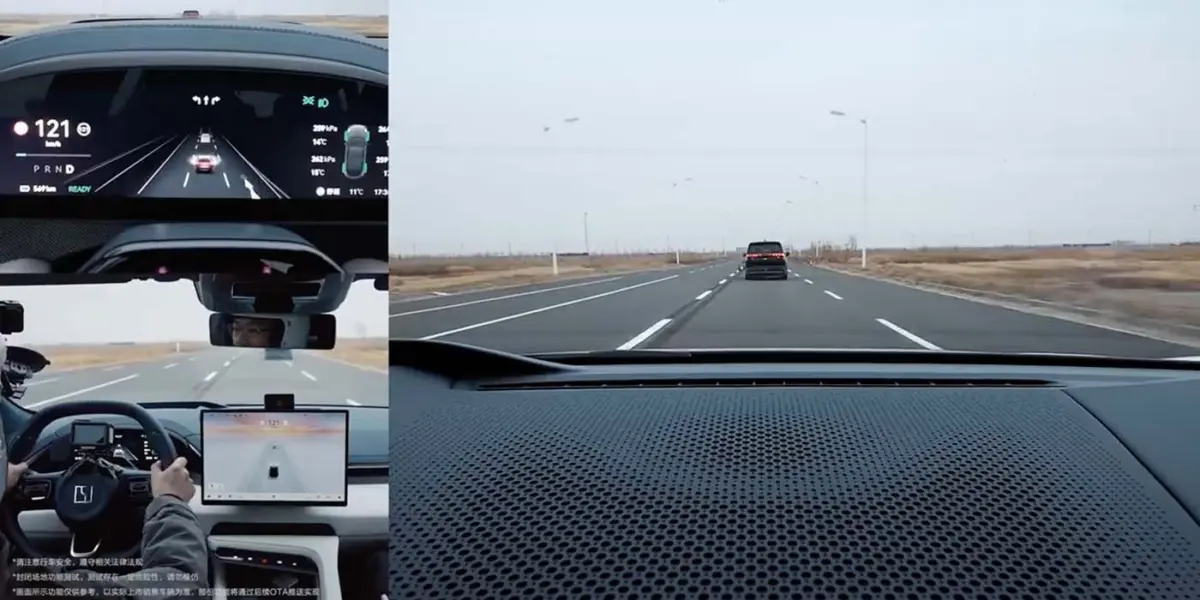
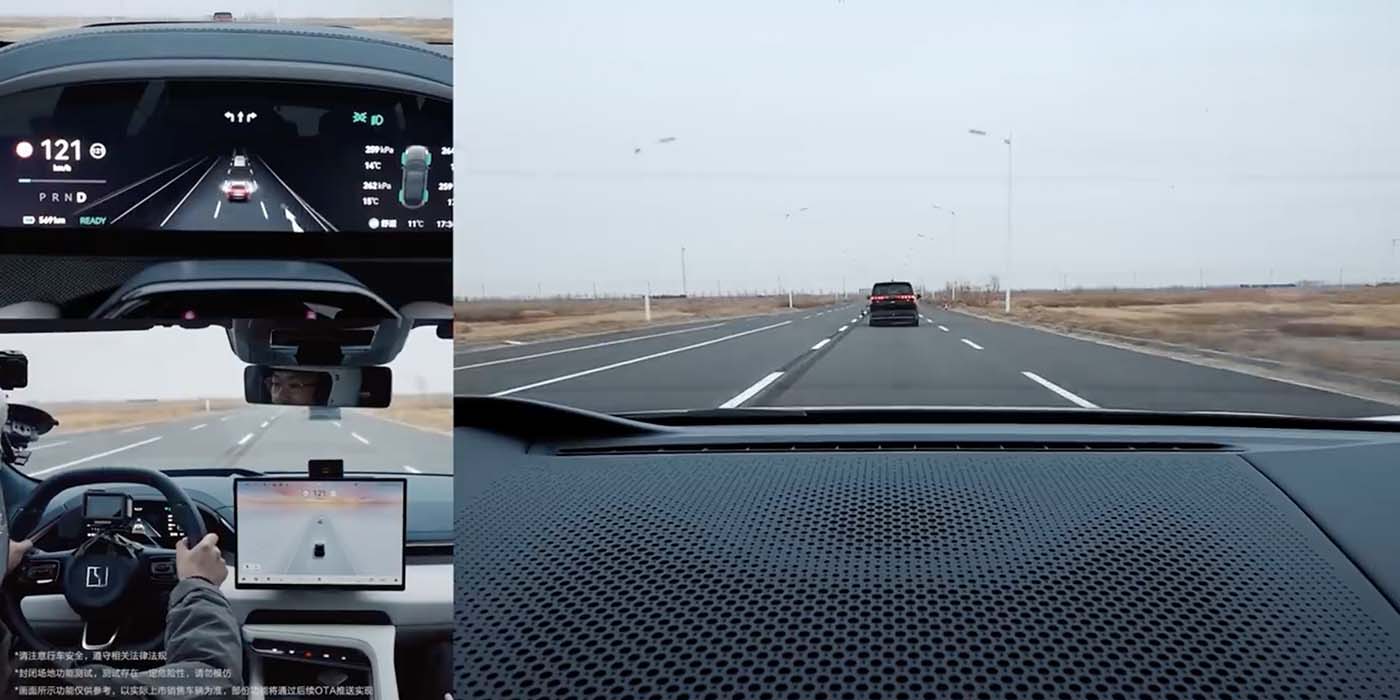
In a high-stakes livestreamed event originating from China, electric vehicle (EV) manufacturer ZEEKR officially pulled back the curtain on its next-generation autonomous driving ecosystem: G-Pilot. As a rapidly ascending marque backed by the automotive powerhouse Geely, ZEEKR has consistently pushed the boundaries of design, vehicle architecture, and software integration since its inception. However, this latest announcement marks a watershed moment for the young brand, officially propelling it into the fiercely competitive realm of Level 3 conditional autonomy.
At the core of the G-Pilot unveiling is a strategic, deep-rooted hardware and software partnership with semiconductor giant NVIDIA. ZEEKR has claimed its place as a pioneering early adopter of NVIDIA’s cutting-edge DRIVE Thor system-on-chip (SoC) architecture. By leveraging this hardware—capable of a staggering 1,400 TOPS (Tera Operations Per Second) of raw computing power—ZEEKR is laying the foundation for door-to-door smart driving, advanced safety avoidance maneuvers, and full-capacity Vehicle-to-Parking (V2P) automation.
The commercial rollout of this technology is set to begin with an upcoming flagship model: the ZEEKR 9X SUV. Poised to make its official global debut at the upcoming Shanghai Auto Show, the 9X will serve as the launchpad for ZEEKR’s newly minted "L3 era." While Level 3 capabilities will initially remain exclusive to the 9X, the company has confirmed that elements of the G-Pilot ecosystem will eventually cascade across its broader vehicle lineup via over-the-air (OTA) software updates.
This comprehensive report details the mechanics of G-Pilot, the hardware partnerships fueling ZEEKR’s ascent, the implications of the upcoming 9X SUV rollout, and what this means for the broader global EV and autonomous driving landscapes.
Detailed Chronology: From CES Teasers to the G-Pilot Reveal
To fully understand the gravity of ZEEKR’s latest announcement, it is necessary to examine the rapid timeline of strategic moves the automaker has executed over the past several months.
January 2025: Laying the Groundwork at CES
ZEEKR’s aggressive push into advanced autonomy did not happen overnight. Earlier this year at the Consumer Electronics Show (CES) in Las Vegas, the automaker captured global attention by outlining an ambitious roadmap for 2025 and beyond. During its CES presentation, ZEEKR confirmed its intention to expand heavily into international markets—particularly Europe—while teasing a robust pipeline of upcoming vehicles.
Among the highlights shared in January was the planned introduction of three bespoke EV models internally codenamed "EX," "DX," and "CC." Crucially, CES served as the venue where ZEEKR solidified its status as NVIDIA’s flagship launch partner for the next-generation DRIVE Thor SoC. Industry analysts immediately recognized the significance of this pairing: by moving away from legacy computing hardware and integrating NVIDIA’s centralized domain controller architecture, ZEEKR was positioning its upcoming vehicles to handle immense sensor suites and complex neural network models required for true autonomous operation.
The Evolution of the ZEEKR Lineup
To contextualize the brand’s current standing, ZEEKR has already established a robust portfolio of six all-electric models in its home market and select international territories. This lineup includes everything from avant-garde crossovers to high-performance sedans, such as the flagship 007 sedan. Building upon the 007’s success, ZEEKR recently teased a sleek GT shooting brake variant, further demonstrating its design versatility.
However, the transition from driver-assist systems (ADAS) like Level 2 and Level 2+ to true Level 3 conditional automation requires a generational leap in both hardware redundancy and software validation. This brings us to the pivotal developments announced in China today.
March 2025: The G-Pilot Debut
During its live-streamed event on Chinese digital platforms, ZEEKR formally introduced G-Pilot. Rather than being a monolithic software package, G-Pilot is structured as a scalable, tiered smart driving solution designed to cater to various driver profiles and hardware configurations.
The crowning achievement of the event was the official confirmation that the upcoming ZEEKR 9X SUV will feature the premier iteration of the system—specifically designated as G-Pilot H9—making it the company’s first vehicle capable of Level 3 conditional autonomy. Following its media splash today, ZEEKR has confirmed that the 9X will make its physical world debut at the Shanghai Auto Show next month, with volume production slated to kick off in the second half of 2025.
Supporting Context & Metrics: Under the Hood of G-Pilot
The technical specifications released by ZEEKR during its event highlight an unprecedented level of computational and sensor integration. Achieving Level 3 autonomy—where the vehicle can safely drive itself under certain conditions while allowing the driver to divert their attention, provided they can take back control when prompted—demands immense redundancy and processing power.
NVIDIA DRIVE Thor: The 1,400-TOPS Engine
At the heart of the G-Pilot system is NVIDIA’s DRIVE Thor architecture. Replacing the previous generation Orin chips, DRIVE Thor consolidates multiple functions—such as digital cockpit, automated driving, and in-vehicle infotainment—onto a single centralized compute platform.
Raw Computing Power: The system deployed in ZEEKR’s upcoming architecture boasts an astonishing 1,400 TOPS. This massive computational capacity allows the vehicle to process real-time data streams from high-resolution cameras, long-range LiDAR sensors, ultrasonic radar, and mapping feeds simultaneously.
Neural Network Scalability: The Thor chip’s advanced transformer engine architecture is specifically optimized for running large multimodal AI models natively in the vehicle, reducing latency and dramatically improving path-planning accuracy in chaotic urban environments.
The General Automated Evasion System (G-AES)
One of the most visually striking elements of the ZEEKR event was the demonstration of an industry-first safety technology dubbed the General Automated Evasion System (G-AES).
While traditional automatic emergency braking (AEB) systems focus primarily on stopping the vehicle within its lane when an obstacle appears, G-AES takes active safety a step further. According to performance data shared by ZEEKR, G-AES enables vehicles to execute universal obstacle continuous automatic avoidance maneuvers at high highway and arterial speeds ranging from 80 to 130 km/h (50 to 81 mph).
In demonstration footage shared on ZEEKR’s official Weibo channel, the vehicle was shown dynamically steering around sudden, unexpected road hazards—such as spilled cargo or stalled vehicles—without human intervention, before smoothly recovering its pathing within the lane. This capability represents a significant evolution in active safety, bridging the gap between passive driver assistance and active accident mitigation.
Full-Capacity Vehicle-to-Parking (V2P) and Door-to-Door Navigation
In addition to highway evasion and Level 3 cruising, G-Pilot introduces advanced Vehicle-to-Parking (V2P) capabilities. Leveraging the spatial awareness afforded by the NVIDIA Thor chips, ZEEKR vehicles can execute complex, multi-point parking maneuvers, navigate multi-story parking structures autonomously, and drop off or pick up passengers at designated door-to-door waypoints.
Official Statements and Industry Insights
ZEEKR’s leadership has maintained an aggressive posture regarding software-defined vehicles, viewing autonomy not merely as a luxury feature, but as a core competitive differentiator in the global EV race.
In communications released across its official digital channels, ZEEKR emphasized that the introduction of the "L3 era" represents years of rigorous R&D focused on functional safety and user trust. The company noted:
"G-Pilot is designed to redefine the boundary between driver and machine. By deploying world-class computing infrastructure through our partnership with NVIDIA, we are delivering an ecosystem that prioritizes uncompromising safety while offering a seamless transition toward true door-to-door autonomous mobility."
Industry analysts have weighed in heavily on the announcement, noting that ZEEKR’s aggressive integration of NVIDIA DRIVE Thor places traditional legacy automakers and rival EV startups under immense pressure. By beating many global competitors to market with a high-TOPS Level 3 production vehicle, Geely and ZEEKR are signaling that Chinese EV manufacturers are continuing to accelerate past Western counterparts in the deployment of consumer-facing smart driving features.
Furthermore, supply chain insiders have pointed out that ZEEKR’s vertical integration strategy—leveraging Geely’s vast manufacturing footprint while partnering with global tech heavyweights like NVIDIA—creates a formidable economic moat.
Future Outlook: What Lies Ahead for ZEEKR and G-Pilot
As the dust settles on today’s announcement, all eyes turn toward the immediate horizon. The roadmap for ZEEKR’s autonomous ambitions spans several key milestones over the remainder of 2025:
The Shanghai Auto Show (April 2025): ZEEKR has confirmed that journalists and consumers will get their first physical look at the ZEEKR 9X SUV at next month’s auto show. Representatives from major automotive publications will be on the ground to inspect the vehicle’s sensor array, interior architecture, and initial software demonstrations firsthand.
Production Launch (H2 2025): Manufacturing lines in China will spool up for the 9X in the second half of the year. The initial batches will serve as the proving ground for the G-Pilot H9 Level 3 software suite under real-world regulatory and driving conditions.
OTA Fleet Expansion: While Level 3 autonomy will initially remain ring-fenced to the flagship 9X model due to specific hardware redundancy requirements, ZEEKR has committed to rolling out lower-tier iterations of G-Pilot to its existing and upcoming vehicle lineups via over-the-air (OTA) updates. This software-first approach ensures that early adopters of models like the 007 sedan and upcoming "EX," "DX," and "CC" platforms will continue to benefit from algorithmic refinements.
International Expansion: With ZEEKR already delivering vehicles to select European markets and laying plans for broader global distribution, questions remain regarding when regulatory bodies outside of China will approve Level 3 systems powered by G-Pilot for public roads. Navigating the complex, fragmented regulatory landscape of the EU and North America will be ZEEKR’s next great hurdle.
Conclusion
ZEEKR’s unveiling of G-Pilot and its foundational integration of NVIDIA DRIVE Thor technology mark a definitive turning point for the brand. By pairing the upcoming 9X SUV with industry-first safety innovations like G-AES and conditional Level 3 autonomy, ZEEKR is no longer just a rising contender in the EV space—it is actively helping to set the technical standard for the next generation of global mobility. The automotive world will be watching closely as the 9X rolls onto the stage in Shanghai next month to see if ZEEKR’s ambitious software promises translate into seamless, real-world execution.