

Executive Overview
In the rapidly expanding landscape of domestic surveillance, few companies have achieved the quiet ubiquity of Flock Safety. With a sprawling network of over 120,000 automatic license plate readers (ALPRs) deployed across the United States, the police-technology giant has transformed local law enforcement’s ability to track vehicular movement in real-time. However, this rapid expansion has triggered a severe counter-reaction. Facing a wave of contract cancellations, mounting legislative challenges, and high-profile exposés detailing systemic officer abuse, Flock Safety has announced a sweeping overhaul of its platform’s access controls and auditing protocols.
The company’s new policy mandate represents a fundamental shift from offering optional privacy safeguards to enforcing mandatory system guardrails. Chief among these changes is a strict requirement that law enforcement officers input a valid criminal case number before conducting searches across Flock’s national database. Additionally, the company is deploying automated auditing tools designed to flag anomalous search behaviors and is recommending that client agencies slash their data-retention windows from 30 days to just one week.
Yet, an investigation into these newly minted protocols reveals a familiar pattern in the private surveillance sector: public-relations-friendly safeguards marred by structural loopholes. Privacy advocates and civil liberties organizations argue that without independent, third-party verification of criminal case numbers, the new restrictions amount to little more than a "honor system" easily bypassed by bad actors. As Flock struggles to balance its aggressive growth model with the constitutional rights of millions of monitored citizens, the company finds itself at a critical crossroads—one that could shape the future of public surveillance, municipal contracting, and the boundaries of the Fourth Amendment.
Detailed Chronology: From Rapid Expansion to Public Backlash
The Rise of the Flock Panopticon
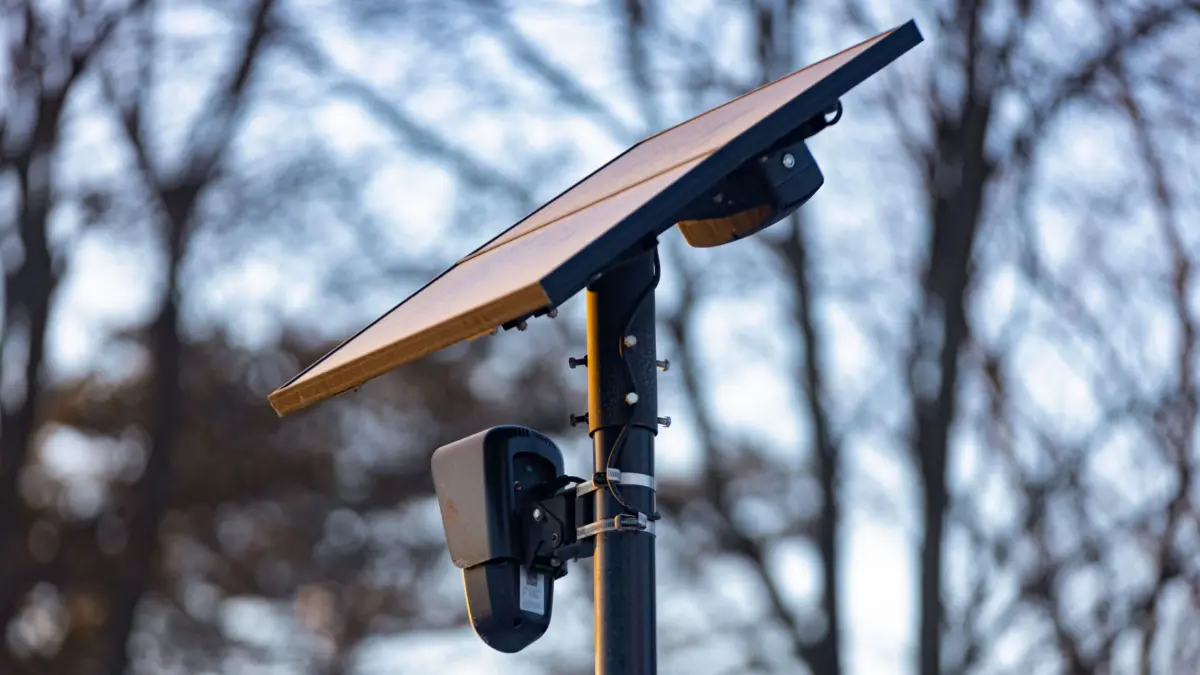
Founded in 2017, Flock Safety positioned itself as a modern solution to property crime and neighborhood safety. Unlike legacy ALPR systems, which were expensive and largely restricted to toll roads or high-crime corridors, Flock introduced an affordable, solar-powered, wireless camera model. This allowed suburban neighborhoods, homeowners’ associations (HOAs), and small-town police departments to establish localized surveillance webs.
Over the next decade, these isolated nodes coalesced into a seamless, searchable national database. By leveraging a peer-to-peer sharing model, Flock enabled local police departments to opt into a nationwide network, effectively granting a patrol officer in a small municipality the power to track a vehicle across state lines.
[Local Camera Capture] ──> [Flock Cloud Database] ──> [National Sharing Network] ──> [Cross-Jurisdictional Access]The Catalyst of Scandal: The Stalking Exposés
The turning point for Flock’s public image arrived when reports surfaced detailing how officers were exploiting this vast surveillance web for personal, non-professional motives. A landmark investigation published by The Washington Post exposed at least 46 distinct cases where law enforcement officers were accused of utilizing Flock’s network to stalk, harass, or spy on current or former romantic partners, ex-spouses, and personal acquaintances.
Because Flock’s database allows users to search historical location data by license plate, vehicle make, color, or unique features like bumper stickers and roof racks, rogue officers possessed an unprecedented tool for real-time tracking. In several documented instances, officers set up automated "hotlist" alerts, receiving immediate text messages whenever their target’s vehicle passed a Flock camera. This effectively transformed a public safety tool into an instrument of intimate partner violence.
The Legislative and Municipal Retreat
As these scandals entered the public consciousness, municipal governments and civic organizations began to push back. Between 2025 and 2026, a growing coalition of left-leaning civil rights groups and right-leaning civil libertarians began demanding the termination of Flock contracts. High-profile political figures, including media personality Tucker Carlson, publicly condemned the technology, warning that the unchecked growth of such networks was laying the groundwork for an authoritarian "slave state."
By early 2026, the financial and reputational toll on Flock became undeniable. Reports from NPR and independent tracking groups confirmed that dozens of municipalities had quietly canceled their contracts, citing concerns over mass surveillance, data security, and the lack of robust internal controls. In response to this existential threat to its business model, Flock’s leadership initiated the policy changes announced today.
Supporting Context & Metrics: The Scale of Surveillance and the Loopholes Within
To understand the stakes of Flock’s policy adjustments, one must examine the sheer scale of the company’s footprint alongside the mathematical and systemic realities of its new safeguards.
| Metric | Figure / Detail |
|---|---|
| Total Active Cameras | 120,000+ across the United States |
| Contracted Law Enforcement Agencies | ~5,000 |
| Standard Data Retention Period | Historically 30 days; Flock now recommends 7 days |
| Documented Abuse Cases (WaPo Investigation) | 46 cases of unauthorized stalking/harassment |
| Municipal Cancellations (Past Year) | At least 30 cities (NPR); activist groups estimate higher |
| Primary Competitors Benefiting from Backlash | Axon, Motorola Solutions |
The Case Number Loophole: A History of Circumvention
The centerpiece of Flock’s reform package is the mandatory prompt requiring officers to input a criminal case number before executing a database search. While Flock presents this as a robust deterrent, historical precedents suggest that without external validation, such fields are routinely bypassed.
During a recent audit of public records, the American Civil Liberties Union (ACLU) discovered widespread, systematic mockery of search-justification prompts by law enforcement personnel. In Oregon, public records revealed that officers at one police department bypassed search-reason requirements by entering generic phrases like "investigation" or "active case." Most egregiously, officers entered the phrase "hehehe" at least 20 times to bypass the system’s prompt and gain access to the tracking data.
[Officer Initiates Search] ──> [System Prompts: Enter Case Number]
                                      │
                                      ├──> [Enters Fake/Generic Number: e.g., "12345" or "hehehe"]
                                      │       │
                                      │       └──> [Access Granted (No Real-Time Verification)]
                                      │
                                      └──> [Enters Legitimate Case Number]
                                              │
                                              └──> [Access Granted]
Because Flock’s system does not cross-reference entered case numbers with active CAD (Computer-Aided Dispatch) systems or court databases in real-time, there is no technical barrier preventing an officer from entering a fabricated case number (e.g., "0000-TEST" or a legacy case number) to track a target.
The "Black Box" of Automated Auditing
To counter the ease with which manual entry prompts can be manipulated, Flock is making its automated auditing system mandatory for all client administrators. According to the company, this system utilizes proprietary algorithms to analyze search patterns, flagging suspicious, repetitive, or anomalous queries for internal review.
However, the efficacy of this tool remains entirely unproven. Flock has kept the inner workings of its auditing algorithms proprietary, declining to release performance metrics, false-positive rates, or false-negative rates. Crucially, the company has refused to open its auditing software to independent, third-party academic evaluators or cybersecurity firms, raising concerns that the tool serves more as a corporate shield than a functional deterrent.
Official Statements and Contrasting Perspectives
The debate surrounding Flock’s policy shift highlights a deep ideological divide regarding the limits of technology in public policing.
The Corporate Defense: Garrett Langley, CEO of Flock Safety
In an interview, Flock Safety CEO Garrett Langley defended his company’s track record, attributing the mounting municipal backlash not to systemic flaws in the technology, but to public relations failures and external narrative manipulation.
"If you look at the main reason we’ve lost customers, it’s misinformation," Langley stated. "There is a persistent, false belief that our systems utilize facial recognition or that we package and sell this location data to commercial third parties. Neither of those things is true."
Addressing the transition from optional features to mandatory guardrails, Langley framed the decision as an evolution of corporate responsibility:
"Our change in stance is more of one from building things that are optional to building more confidence that as a technology company we have a responsibility to enforce guardrails, not provide optionality."
The Civil Libertarian Critique: Chad Marlow, Senior Policy Counsel, ACLU
Chad Marlow, a prominent critic of algorithmic policing and senior policy counsel at the ACLU, views Flock’s concessions through a highly skeptical lens. For Marlow, the issue is not merely the rogue actions of individual officers, but the broader constitutional crisis posed by warrantless, mass location tracking.
"In America, you only get to investigate someone if you think they’ve done something wrong," Marlow argued. "As license plate readers grow more ubiquitous, officers have increasing latitude to investigate people without first establishing suspicion of a crime. Is it worth it to catch a certain number of criminals, or return a certain number of stolen cars, to completely eviscerate Americans’ privacy?"
Commenting on the newly announced guardrails, Marlow characterized them as an act of corporate self-preservation rather than a genuine shift in ethics:
"Flock has come to the table because this incredible, unprecedented nationwide uprising against their company has scared them. But at the same time, they are just absolutely unwilling to make the actual changes they need to make in order to legitimately respond to these concerns. So this is the best that the company is willing to do."
Future Outlook: The Battle for the Streets
As Flock Safety deploys its updated software architecture, the broader market for automated license plate readers is entering a highly volatile phase. The company’s efforts to reform its platform may decide whether it maintains its market dominance or cedes ground to formidable competitors.
The Competitive Realities
Flock’s dominant position is increasingly challenged by traditional defense and police-tech conglomerates, most notably Axon Enterprise (creators of the Taser and body-worn cameras) and Motorola Solutions. Both competitors have rapidly expanded their own ALPR portfolios.
For cities looking to distance themselves from the controversy surrounding Flock, switching to Axon or Motorola is often framed as a safer, more politically palatable alternative. Unlike Flock, which built its reputation on a highly centralized, interconnected national database, its competitors often emphasize localized, siloed data structures that are easier for municipal governments to control and audit.
                       ┌───────────────────────────────┐
                       │    The ALPR Market Divide     │
                       └───────────────┬───────────────┘
                                       │
                ┌──────────────────────┴──────────────────────┐
                ▼                                             ▼
┌──────────────────────────────┐              ┌──────────────────────────────┐
│  Flock Safety Model          │              │  Legacy/Competitor Model     │
├──────────────────────────────┤              ├──────────────────────────────┤
│ • 120,000+ Shared Cameras    │              │ • Locally Owned & Controlled │
│ • National Search Database   │              │ • Siloed Data Warehouses     │
│ • Rapid, Low-Cost Deployment │              │ • Integrated with Body Cams  │
└──────────────────────────────┘              └──────────────────────────────┘
The Legislative Threat
Beyond corporate competition, Flock faces a growing wave of legislative challenges. A rising number of states and municipalities are considering outright bans on automatic license plate readers, or introducing stringent regulatory frameworks that would make the operation of nationwide sharing networks legally unviable.
- Retention Limits: States are increasingly mandating immediate deletion of non-hit data (license plates not associated with an active warrant or amber alert), which would render Flock’s historical search features obsolete.
- Warrant Requirements: Privacy advocates are lobbying for state-level legislation that would require law enforcement to obtain a judicial warrant before querying any ALPR database for historical location data.
- Inter-Agency Sharing Bans: Several municipalities have passed ordinances prohibiting local law enforcement from sharing surveillance data with federal agencies, particularly Immigration and Customs Enforcement (ICE), or with law enforcement in states where certain medical procedures (such as abortion) have been criminalized.
Conclusion: Can Private Surveillance Self-Regulate?
The fundamental question hanging over Flock Safety’s policy overhaul is whether a private, venture-backed surveillance company can ever successfully self-police. By introducing mandatory case numbers and automated audits, Flock has acknowledged that its technology is highly vulnerable to abuse.
However, as long as the system relies on the honesty of the officers operating it, and as long as the underlying database continues to track the daily movements of millions of innocent citizens without judicial oversight, the tension between public safety and constitutional privacy will remain unresolved. Flock’s new guardrails may quiet some municipal critics in the short term, but the systemic debate over the rise of the American surveillance state is far from over.
