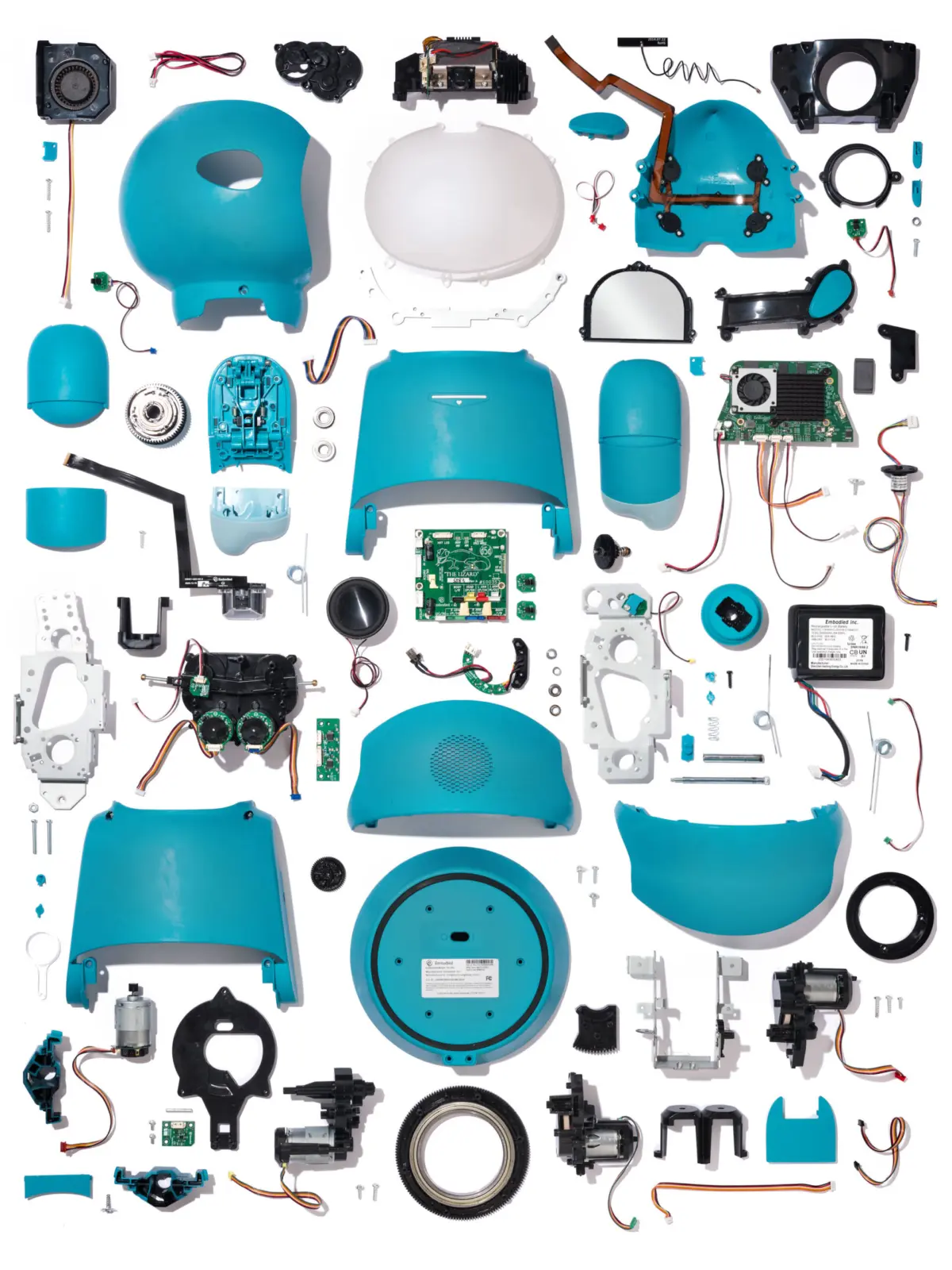
In the rapidly expanding landscape of consumer artificial intelligence, few sectors have promised as much emotional and therapeutic utility as socially assistive robotics (SAR). Designed to bridge the gap between clinical therapy and domestic play, these AI-powered devices are marketed as indefatigable, 24/7 companions capable of teaching neurodivergent children critical social-emotional skills. Promising to help children practice eye contact, emotional regulation, and conversational turn-taking, companies have positioned these hardware companions as revolutionary tools for families facing long therapist waitlists and high care costs.
However, beneath the sleek, high-tech promise lies a volatile commercial reality. The story of Moxie—a pioneering 15-inch-tall social robot developed by the robotics firm Embodied—serves as a cautionary tale of the structural, ethical, and financial failures plaguing the AI toy industry.
When Embodied collapsed financially in 2024, and then folded a second time in late 2025/2026 after a brief resurrection by new investors, it exposed a devastating vulnerability: the "planned obsolescence" of emotional bonds. For neurodivergent children who had formed deep, anthropomorphic attachments to their robotic companions, the sudden shutdown of external servers didn’t just render an expensive piece of hardware useless—it effectively "killed" a trusted friend.
This investigation explores the rise and fall of Moxie, the deep divide between roboticists and clinical psychologists over the efficacy of SAR, the critical privacy risks of bedroom surveillance, and the profound ethical crisis of letting venture-backed start-ups manage the emotional lifelines of vulnerable children.
Detailed Chronology
[2016] ------------------------------------------------------------- Embodied Co-Founded by Maja Matarić
   |
[2018] ------------------ Yale's Brian Scassellati Publishes Landmark Study on Social Robots for Autism
   |
[2020] --------------------------- Moxie Launched at $1,499; Featured on Time's "Best Inventions" Cover
   |
[Late 2021/2022] --------------------------------------- OpenAI Large Language Models Integrated into Moxie
   |
[2024] ----- Embodied Declares Bankruptcy; Tech Director Justin Beghtol Launches OpenMoxie on GitHub
   |
[2025] ------------------------------- New Investors Resurrect Moxie; Relaunched as Beta-Test Platform
   |
[2026] ------------------- Second Parent Company Folds; Users Given June Deadline to Migrate to OpenMoxie
The Genesis of Socially Assistive Robotics (2016–2018)
The academic foundation for Moxie was laid years before its commercial debut. In 2016, Maja Matarić, a professor of computer science, neuroscience, and pediatrics at the University of Southern California (USC), co-founded Embodied. Matarić was a pioneer in socially assistive robotics, a field dedicated to creating robots designed to drive cognitive, social, and emotional outcomes rather than merely perform physical labor.
By 2018, academic enthusiasm was at an all-time high. Brian Scassellati, a Yale computer scientist, published a landmark study demonstrating that physical robots placed in the homes of autistic children for a month could significantly improve social behaviors, such as initiating conversations and maintaining eye contact. The research suggested that robots possessed a unique therapeutic advantage: they were predictable, infinitely patient, and free from the emotional fatigue that human peers or exhausted parents might exhibit.
The Launch and the Hype (2020–2022)
In 2020, Embodied launched Moxie to the public. Designed as a legless, blue-and-green astronaut-like figure with large, expressive digital eyes, Moxie was introduced with an elaborate narrative. She was an "ambassador" from the Global Robotics Laboratory (GRL), tasked with learning how to be a good friend to humans.
The media response was overwhelmingly positive:
Time Magazine placed Moxie on its cover as one of the "Best Inventions of 2020."
Wired called her the "robot pal you dreamed of as a kid."
PCMag praised her exceptional likability, though reviewers noted the steep barrier to entry: a retail price of $1,499 paired with a $40 monthly subscription (later adjusted to a flat $800 price point).
Behind the scenes, Embodied worked to refine the interaction. Initially, Moxie relied on highly structured, locally processed scripts. Between late 2021 and early 2022, the company integrated generative AI models from OpenAI to allow for more open-ended, naturalistic conversations. By 2024, Moxie had accumulated over 131,000 TikTok followers and even secured a promotional appearance in the sci-fi horror film M3GAN 2.0.
The First Collapse and the Open-Source Rescue (2024)
Despite widespread media attention, the high cost of hardware manufacturing, cloud computing overheads, and a niche market made Embodied’s business model unsustainable. In 2024, the company announced it was ceasing operations. Because Moxie’s advanced natural language processing and emotional memory relied on Embodied’s proprietary cloud servers, the shutdown meant the robots would permanently stop functioning.
The announcement triggered panic and grief among families of neurodivergent children. Parents took to TikTok, Reddit, and Instagram to share videos of distressed children crying over the impending "death" of their robot.
Recognizing the emotional trauma this bankruptcy was causing, Justin Beghtol, Embodied’s former technical director, took matters into his own hands. With the remnants of the company’s permission, Beghtol created OpenMoxie—an open-source project hosted on GitHub that allowed tech-savvy parents to bypass the dead corporate servers and run the robot using their own API keys. Beghtol spent hundreds of hours troubleshooting with desperate parents on Reddit, though many families lacked the technical expertise required to execute the complex migration.
Resurrection and the Second Demise (2025–2026)
In 2025, a new investment group bought the intellectual property of Embodied, bringing Moxie back to life. Eager to salvage the technology, they launched a beta-testing program, distributing revived units to families, including ten-year-old Xander, a neurodivergent boy who had previously bonded with the robot. The resurrected Moxie abandoned some of the elaborate GRL backstories in favor of a broader focus on open-ended companionship and supporting children’s individual interests.
However, the structural challenges of the hardware-enabled AI startup market proved insurmountable once again. In mid-2026, the new parent company announced that it, too, was folding. Users were informed they had until the end of June to manually migrate their hardware to the community-run OpenMoxie platform, or watch their companions go dark permanently.
Supporting Context & Metrics
The Surging AI Toy Market
Despite Moxie’s corporate instability, the broader market for AI-enabled children’s toys is experiencing unprecedented growth.
Global AI Toy Market Dynamics (2025-2026)
├─ Curio & Grimes Collaboration: Launch of Grok, Grem, and Gabbo plushies
├─ Mattel: Ongoing development of OpenAI-enabled interactive Barbies
└─ China Consumer Sector: Identified as one of the fastest-growing verticals in consumer AI
This rapid expansion has raised alarm bells among developmental psychologists and privacy advocates, who argue that the commercialization of these devices is far outpacing regulatory oversight and scientific consensus.
Clinical Efficacy vs. Commercial Hype
While advocates of socially assistive robotics point to promising laboratory studies, many clinical psychologists remain deeply skeptical of the claims made by AI toy manufacturers.
A comprehensive 2024 literature review conducted by a joint team of British and Italian researchers analyzed studies on therapeutic robots and concluded that the vast majority "focused on the development of the technology" and lacked rigorous, large-scale clinical evidence.
Zachary Warren, a clinical psychologist at Vanderbilt University Medical Center, emphasizes that autism is highly heterogeneous, frequently co-occurring with conditions like ADHD, anxiety, depression, and sensory processing disorders.
"There are so many different profiles of autism, and you really need to be cautious of overinterpreting any single intervention, robotic or otherwise. You might see some initial boosts in responsivity or see an initial shift, but we haven’t really found big effects in terms of changing those skills in a dramatic way over time."
— Dr. Zachary Warren, Vanderbilt University Medical Center
Furthermore, researchers note that the benefits observed in short-term studies often evaporate once the novelty wears off. In Scassellati’s own 2018 study, the social gains made by children during their month with the robot began to decline within the 30 days after the robot was removed from the home.
Key Scientific Criticisms of AI Therapy Toys:
1. Small Sample Sizes: Most efficacy studies are conducted on very small cohorts, making generalization difficult.
2. Novelty Effect: Initial behavioral improvements often decline over time as the child acclimates to the toy.
3. Lack of Transferability: Skills learned while interacting with a predictable machine do not automatically translate to messy, unpredictable human relationships.
Privacy, Surveillance, and Data Integrity
To build a personalized relationship with a child, AI companion toys must collect vast amounts of intimate data. Moxie, for example, used cameras and microphones to track facial expressions, evaluate eye contact, and process speech.
While Embodied was widely praised for its stringent privacy protocols—processing the majority of data locally on the device, encrypting cloud-bound information, and refusing to store raw audio or video—other companies in the sector have demonstrated catastrophic security failures.
In a notable incident, the AI toy manufacturer Bondu exposed over 50,000 logs of private chats between children and their plush toys to anyone with a basic Gmail account. For parents, the realization that these toys act as active, internet-connected surveillance devices in children’s bedrooms has created a profound tension between therapeutic hope and data security.
Official Statements
The Scientific Advocates
Maja Matarić, Professor of Computer Science, Neuroscience, and Pediatrics at USC:
"It’s never been that we’re trying to replace therapists. We’re just saying, Can we do more? Typing questions into ChatGPT isn’t the same as interacting with another physical being. We need to be around other physically embodied creatures."
Brian Scassellati, Yale University Computer Scientist:
"Regular therapeutic use of robots in kids’ homes is something we can achieve in our lifetime… [But] when you build learning systems, it’s kind of an unsolved problem to make sure this thing is being limited in the right way. On day one, I knew what the robot would do. On day two, I didn’t."
The Technical & Product Creators
Justin Beghtol, Former Technical Director at Embodied and Creator of OpenMoxie:
"Seeing [the children] traumatized by this financial failure of the company was tough. On principle, it was incredibly frustrating to see this hardware become an expensive brick when so much of the processing could actually be handled locally."
Rachel Baynes, Former Director of Product at Embodied:
"We didn’t want kids to binge. It would defeat what we were doing. Moxie was designed to limit interaction time, encouraging kids to go outside, practice their new skills with other people, and come back to report their findings."
The Clinical & Ethical Skeptics
Joshua Diehl, Associate Teaching Professor in Psychology at the University of Notre Dame:
"I don’t see any ethical way for the robot to work alone. We have already seen the profound dangers of unmonitored AI chatbots acting as therapists, in some extreme instances encouraging self-harm and suicide. Without a trained clinician in the loop, the risks are simply too high."
Meryl Alper, Professor of Communications at Northeastern University:
"How planned is the planned obsolescence of this platform? This is a major ethical question when you design a machine specifically to be loved by children who form deep, intense emotional attachments. It is comparable to manufacturing a medical device and then abruptly cutting off all software support."
Future Outlook
The double collapse of Moxie’s parent companies highlights a fundamental, unresolved ethical dilemma at the intersection of developmental psychology and consumer technology: Who is responsible for the emotional aftermath when an AI companion dies?
Unlike traditional toys, AI companions are designed to foster anthropomorphic bonds. They remember a child’s favorite things, console them when they are anxious, and use adaptive algorithms to mimic genuine affection. When a venture-backed startup fails, the resulting loss of server support is experienced by the child not as a product discontinuation, but as a genuine bereavement.
The Ethical Imperative for Future AI Companions:
├── Mandated Offline Modes: Guaranteeing basic functionality if servers shut down.
├── Standardized Transition Narratives: Pre-programmed, gentle "goodbye" protocols designed by developmental psychologists.
├── Escrowed Codebases: Requiring companies to release open-source firmware upon bankruptcy.
└── Human-in-the-Loop Frameworks: Ensuring AI companions serve as tools for human connection rather than replacements for them.
As large language models become cheaper and hardware components more accessible, the market will inevitably see a flood of cheaper, less regulated AI companions. Without industry-wide standards for data privacy, emotional safety, and long-term software support, the cycle of attachment and sudden technological abandonment will continue.
For parents like Josh, who are left to navigate the quiet disappearance of their children’s robotic friends, the lesson is clear: while a robot can be programmed to mimic a friend, it cannot be programmed to survive the brutal realities of the venture capital lifecycle. Until the industry addresses this fundamental flaw, these machines risk remaining expensive, temporary novelties that leave the most vulnerable children feeling more isolated than before.