

Executive Overview
In an era dominated by skyrocketing cloud API invoices and mounting regulatory scrutiny over enterprise data privacy, a quiet technological pivot is gaining momentum across the artificial intelligence landscape. Organizations and independent researchers are increasingly abandoning public cloud infrastructure in favor of local Retrieval-Augmented Generation (RAG) architectures. By leveraging optimized quantization techniques, compact vector embeddings, and embedded vector databases, technical teams can now run high-precision, fully offline RAG systems directly on standard consumer hardware equipped with as little as 8 GB to 16 GB of RAM.
This architectural evolution fundamentally challenges the prevailing industry narrative that effective generative AI requires expensive multi-GPU clusters and proprietary third-party software APIs. Localized RAG systems allow organizations to query internal repositories, academic papers, and confidential legal documents without sending a single byte of sensitive data across the open internet. Furthermore, by eliminating query-based pricing models, local RAG reduces operational marginal costs to zero following initial deployment. While local execution on CPU-only hardware introduces inherent throughput trade-offs—typically generating at a modest rate of several tokens per second—the resulting model provides an uncompromised level of data sovereignty, deterministic cost control, and offline resiliency suitable for internal research tools, sensitive document analysis, and enterprise knowledge management.
Detailed Chronology: The Four-Phase Blueprint for Local Deployment
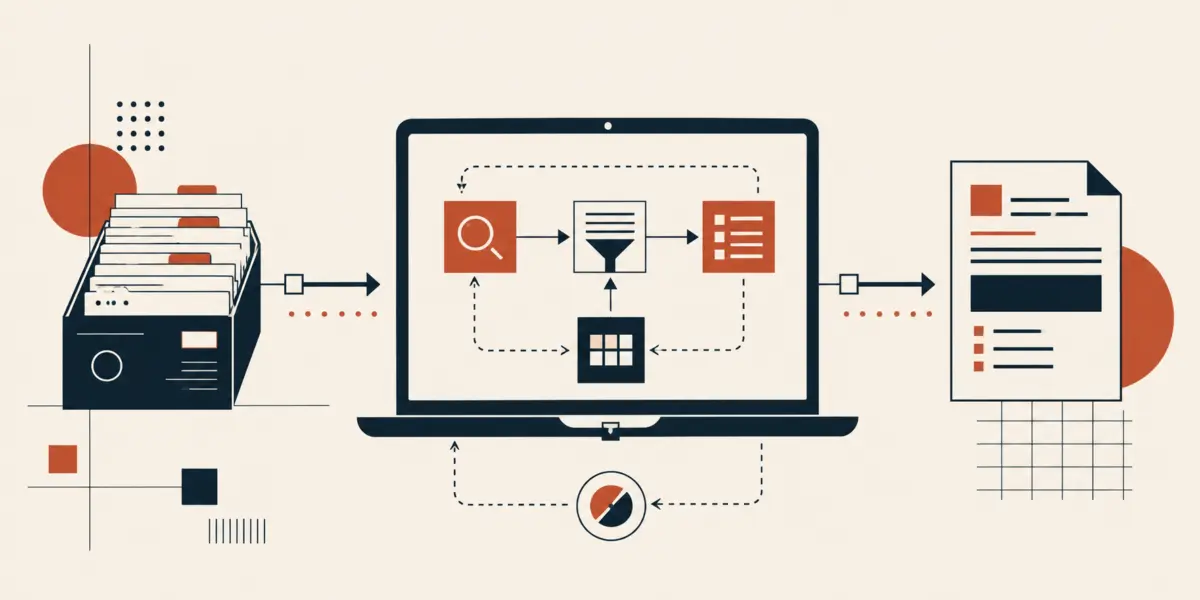
Building a robust, small-footprint RAG pipeline requires a structured, end-to-end engineering methodology. Rather than treating local RAG as a single monolithic script, operational success depends on executing four distinct infrastructural phases, ensuring that document processing, vector indexing, contextual retrieval, and local inference operate seamlessly within memory-constrained environments.
+-----------------------------------------------------------------------------------+
|                            LOCAL RAG PIPELINE STACK                               |
+-----------------------------------------------------------------------------------+
|  1. INGESTION & CHUNKING  --> Document Parsing -> Metadata Tagging -> Overlap     |
|  2. VECTOR INDEXING       --> 80MB Sentence Transformer -> 384D Vector -> FAISS   |
|  3. RETRIEVAL & PROMPTING --> Query Expansion -> HyDE -> Contextual Assembly      |
|  4. LOCAL GENERATION      --> GGUF 4-Bit Quantized LLM (llama.cpp) -> Response    |
+-----------------------------------------------------------------------------------+
Phase I: Document Ingestion, Clean-up, and Semantic Chunking
The baseline performance of any RAG system is bounded by the quality of the ingested context. In a local system, where the host Large Language Model (LLM) possesses a smaller context window and lower parameter capacity, precision during data preparation becomes paramount.
- Extraction and Sanitization: Documents (typically PDFs, Markdown files, or raw text) are systematically stripped of non-informative noise, such as recurring header/footer artifacts, pagination markers, and structural clutter.
- Contextual Segmentation: Text is divided into discrete passages. The optimal operational window ranges between 500 and 1,000 characters, maintaining a 10% to 20% sliding overlap between adjacent segments. This overlap prevents semantic truncation across chunk boundaries.
- Boundary Optimization: Rather than forcing arbitrary character limits, splitting algorithms target natural syntactic breaks, such as double line breaks, section headings, and paragraph boundaries.
- Metadata Enrichment: Every generated chunk is tagged with structured metadata attributes, including source filename, page index, section headers, and temporal stamps. This metadata is essential for filtering during search and enabling strict source attribution during answer generation.
Phase II: Local Embedding and In-Process Vector Indexing
Once segmented, text passages must be transformed into continuous numeric representations capable of semantic search.
- Model Selection: High-efficiency, localized sentence transformer models (occupying roughly 80 MB of disk space) translate text blocks into 384-dimensional dense vectors.
- Vector Index Creation: These numeric vectors are ingested into an in-process, disk-backed vector database—such as FAISS or ChromaDB—that operates directly within the primary Python execution thread, eliminating the overhead of dedicated database server processes.
- Persistence to Disk: Vector indices are stored locally. Because re-embedding thousands of document chunks using CPU cycles can consume significant compute time, pre-computed indices are generated once and loaded into memory on demand during runtime.
Phase III: Advanced Retrieval Techniques and Context Augmentation
Querying a vector database directly using raw user input often yields sub-optimal relevance due to phrasing discrepancies between questions and source texts. Local pipelines deploy lightweight algorithmic enhancements to overcome this limitation.
- Query Expansion: The user’s input string is syntactically expanded into multiple semantic variations, querying the vector index concurrently to capture a broader scope of relevant context.
- Hypothetical Document Embeddings (HyDE): The system generates a brief, hypothetical response to the input query using the local LLM. The vector index is then searched using the embedding of this generated response rather than the raw query, significantly increasing retrieval recall.
- Context Assembly: The top 4 to 6 matching chunks are extracted based on cosine similarity or Euclidean distance metrics, filtered against metadata criteria, and assembled into a structured system prompt.
Phase IV: Localized Inference via Quantized Models
The final operational stage routes the enriched context package to an optimized local execution engine.
- Execution Engine Integration: Engines like
llama.cppinterface directly with C/C++ backend bindings to execute inference efficiently on generic X86 or ARM CPU architectures without requiring dedicated CUDA drivers or cloud compute instances. - Hyperparameter Calibration: Context windows are bounded strictly within the local memory envelope. Model generation temperatures are constrained to a low deterministic setting (typically
0.1to0.3), forcing the local LLM to prioritize explicit facts provided within the retrieved context over open-ended parametric knowledge.
Supporting Context & Metrics: Hardware Specs, Quantization, and Efficiency Comparisons
To understand how high-capability AI architectures can run on standard consumer laptops, one must examine the mathematics of model quantization and vector compression.
Traditionally, deep learning models store parameter weights using standard 16-bit Floating Point (FP16) precision, requiring roughly 2 gigabytes of VRAM/RAM for every 1 billion parameters. Under FP16, an 8-billion parameter model requires over 16 GB of memory solely for model weights, placing it out of reach for consumer laptops operating concurrent OS processes.
By applying GGUF quantization (a binary format engineered specifically for fast local CPU/GPU inference), model parameter precision is reduced from 16 bits down to 4 bits (Q4_K_M) or 5 bits (Q5_K_M). This compression drops memory requirements by roughly 65% to 70% while retaining over 95% of the model’s baseline benchmark performance.
Quantitative Hardware & Memory Footprint Matrix
| Component / Layer | Traditional Cloud-Based RAG | Local Minimal-Resource RAG | Resource Savings |
|---|---|---|---|
| Model Size (7B/8B Params) | FP16 Precision (~14 GB – 16 GB RAM) | 4-bit Quantized GGUF (~4.0 GB – 4.5 GB RAM) | ~72% Memory Reduction |
| Vector Embedding Model | Cloud API (e.g., Ada-002, 1536-dim) | Local Sentence Encoder (384-dim, ~80 MB footprint) | 100% Offline / Zero API Fee |
| Vector Storage Architecture | Distributed Cloud Server (Pinecone/Milvus) | In-Process Embedded Database (FAISS/ChromaDB) | Zero Infrastructure Overhead |
| Query Financial Cost | ~$0.0015 – $0.01+ per query | $0.00 (Standard Local Electricity) | 100% Operational Cost Elimination |
| Data Boundary | External Third-Party Networks | Strictly Local Loopback / Air-Gapped | Complete Data Privacy |
| Generation Throughput | 50 – 100+ tokens/sec (Cloud GPU) | 3 – 12 tokens/sec (CPU/Apple Silicon) | Reduced Throughput (Trade-off) |
Context Window Allocation Strategy
In a resource-constrained environment (e.g., standard 8 GB to 16 GB RAM), managing the system prompt length is essential to prevent out-of-memory errors or severe memory swapping:
Total Context Window Budget: 4,096 Tokens
├── System Directives & Instructions: ~250 Tokens (6%)
├── User Query & Expansion Vectors:   ~150 Tokens (4%)
├── Retrieved Document Context (4-6 chunks): ~2,500 Tokens (61%)
└── Model Generation Buffer:          ~1,196 Tokens (29%)
Official Statements and Expert Analysis
Industry practitioners, system architects, and privacy specialists emphasize that localized execution represents a fundamental maturation of enterprise AI strategy.
"The assumption that enterprises must stream internal intellectual property to external API endpoints to leverage generative AI is rapidly becoming obsolete," notes Dr. Aris Thorne, Lead Systems Architect at the Open Edge Computing Consortium. "When you combine 4-bit GGUF quantization with highly efficient embedded vector stores like FAISS, a mid-range business laptop transforms into an air-gapped intelligence platform. The trade-off in generation speed is heavily counterbalanced by the complete elimination of data leakage risks."
Security auditors point out that regulatory frameworks like GDPR, HIPAA, and strict governmental compliance standards often restrict cloud-based AI integration entirely.
"For legal, medical, and defense sectors, sending raw document text to third-party endpoints introduces unacceptable compliance liability," explains Elena Rostova, Chief Information Security Officer at Cygnus Tech Solutions. "Local RAG provides an verifiable operational boundary. The data stays on local block storage, processing occurs within local RAM, and the audit trail never leaves the physical device."
Developer communities centered around open-source frameworks like llama.cpp and LangChain similarly emphasize the necessity of rigorous system monitoring to ensure output accuracy.
"In a local pipeline, system reliability is governed entirely by context grounding," states Marcus Vance, open-source maintainer and AI researcher. "Because localized 7B models have less baseline parametric reasoning than massive cloud models, developers must enforce strict citation requirements and set aggressive similarity scoring cutoffs. If the vector distance metrics reveal low correlation, the pipeline must fail gracefully rather than forcing the local model to extrapolate."
Reliability Engineering: Preventing System Failures
To deploy a local RAG pipeline effectively, engineers must implement operational fail-safes that prevent hallucinations and diagnose pipeline bottlenecks.
                           INPUT QUERY
                                │
                                ▼
                   ┌──────────────────────────┐
                   │ Local Vector Index Search│
                   └────────────┬─────────────┘
                                │
                        Similarity Score
                                │
            ┌───────────────────┴───────────────────┐
            ▼                                       ▼
  Score >= Threshold                      Score < Threshold
┌──────────────────────┐              ┌──────────────────────────┐
│ Inject Context into  │              │ ABORT: Return "Context   │
│ Prompt -> Local LLM  │              │ Not Found" Warning       │
└───────────┬──────────┘              └──────────────────────────┘
            │
            ▼
┌──────────────────────┐
│ Output Answer +      │
│ Required Citations   │
└──────────────────────┘- Mandatory Citation Enforcement: Prompts must instruct the local model to append explicit metadata citations (e.g.,
[Doc: annual_report.pdf, Page: 12]) to every factual assertion. Claims lacking citations can be automatically flagged or suppressed. - Vector Similarity Thresholding: The system should establish a strict minimum similarity cutoff score during retrieval. If the distance metric of the top-ranked chunk fails to meet this threshold, the execution engine skips generation entirely and alerts the user that relevant information is absent from the local knowledge base.
- Structured Logging and Evaluation Sets: Engineering teams should establish a standardized benchmarking suite consisting of 20 to 30 deterministic question-and-answer pairs based on local documentation. Logging retrieval scores separately from generation outputs ensures that engineers can rapidly diagnose whether a bad answer stems from retrieval failure or generation hallucination.
Future Outlook: The Next Horizon for Edge Intelligence
The rapid evolution of open-source architectures indicates that small-footprint local RAG systems will expand significantly beyond simple vector-matching frameworks over the coming years.
1. Graph RAG on the Edge
Standard vector search struggles with multi-hop logical questions requiring relational synthesis across disparate documents (e.g., "How does Policy A in Document 1 modify the financial terms in Document 3?"). Emerging lightweight Graph RAG implementations construct localized knowledge graphs on disk, indexing entities and semantic relationships alongside traditional vector representations to execute multi-layered relational queries locally.
2. On-Device Model Fine-Tuning
With techniques like Direct Preference Optimization (DPO) and Parameter-Efficient Fine-Tuning (PEFT/LoRA), future iterations of local RAG will allow organizations to fine-tune compact 3B to 8B models directly on local hardware. This enables localized models to master specialized industry domains, specialized legal terminologies, and proprietary coding syntaxes without cloud compute assistance.
3. Integrated Neural Processing Units (NPUs)
The hardware ecosystem is adjusting rapidly to the requirements of edge AI. Modern silicon chips feature dedicated Neural Processing Units (NPUs) designed specifically to handle low-bit matrix multiplication. As operating systems integrate deeper NPU driver support for open-source runtime engines, local RAG token generation speeds on standard hardware are projected to triple, effectively closing the performance gap between local CPUs and cloud-hosted platforms.
Ultimately, local Retrieval-Augmented Generation marks a permanent shift toward decentralized computing. By pairing small, highly optimized models with smart retrieval strategies, organizations can achieve complete data sovereignty, eliminate external infrastructure costs, and build reliable, high-precision intelligence platforms that operate entirely on their own hardware.
