

Executive Overview
Securing a high-performance graphics card at a competitive price point has become an exercise in extreme patience for PC builders and enthusiasts alike. Amidst a turbulent hardware market—exacerbated by an ongoing, volatile surge in global DRAM and NAND flash memory component costs—finding a worthwhile discount on a modern GPU feels increasingly like striking gold. However, a notable exception has just broken through the pricing noise.
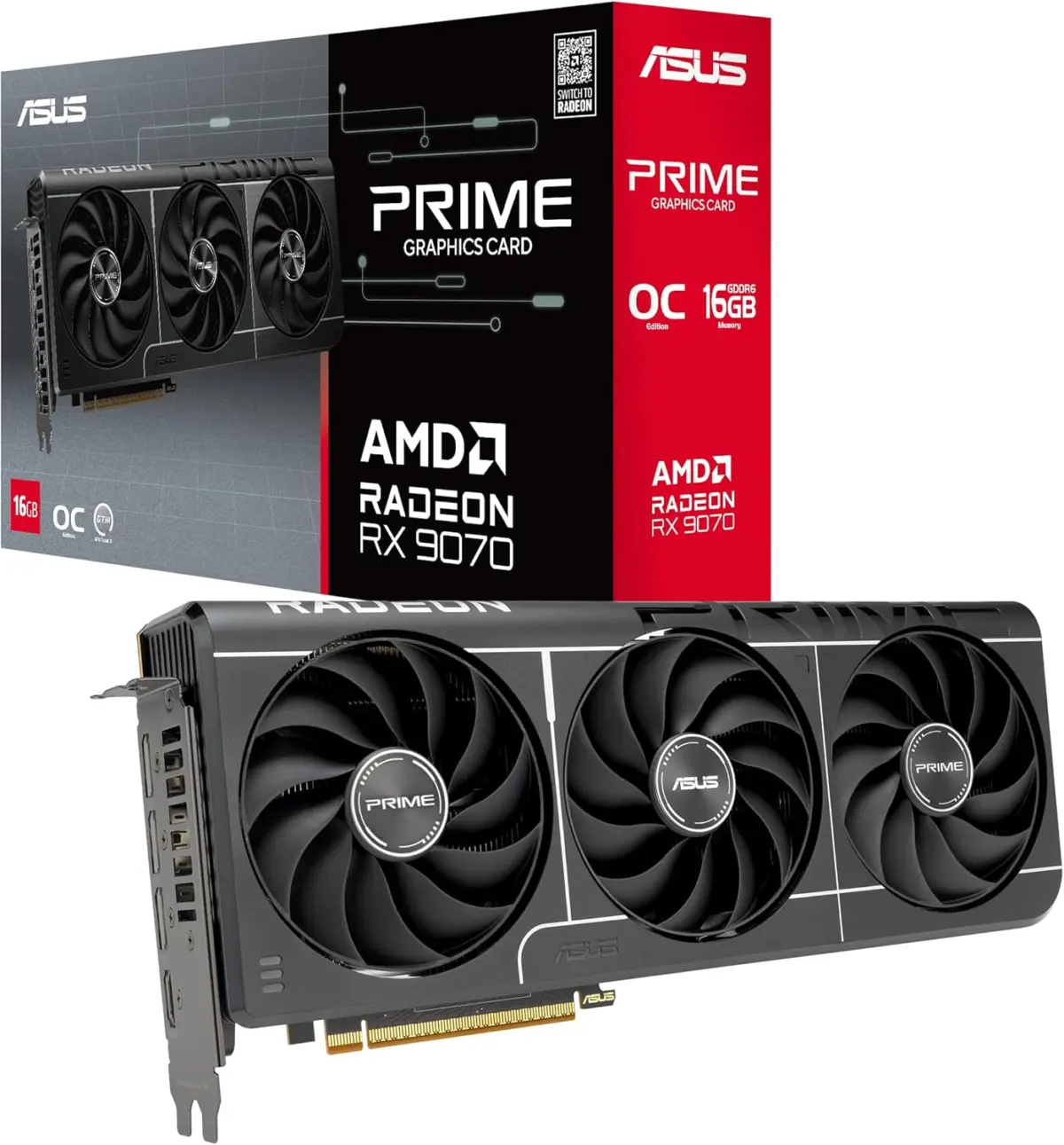
In a surprising retail shift, Amazon has slashed the price of the Asus Prime AMD Radeon RX 9070 OC Edition, bringing the card down to $629.99. This represents a substantial 16% markdown from its standard retail list price of $750, shaving a clean $120 off the cost of entry for gamers looking to make the leap into high-resolution setups.
For a mid-tier graphics card based on AMD’s latest RDNA 4 architecture, this discount elevates the card from a standard option to a genuinely compelling value proposition. Offering performance metrics that comfortably challenge rival hardware from Nvidia—while providing a generous 16GB framebuffer, next-generation ray-tracing accelerators, and dedicated AI processing units—this limited-time promotion arrives at a crucial juncture for the PC component market.
This comprehensive report examines the specifications of the Asus Prime RX 9070 OC, benchmarks its real-world performance against competing architectures, analyzes the broader economic pressures defining the current GPU landscape, and explores what this pricing shift means for consumers mapping out their next system upgrade.
Detailed Chronology: The State of the GPU Market and the Arrival of RDNA 4
The Modern Hardware Pricing Squeeze
To truly understand the significance of a $629.99 price tag on a modern enthusiast-class graphics card, one must examine the broader economic forces currently strangling the component supply chain. Over the past several quarters, the consumer PC market has weathered a punishing cycle of rising material costs. Surges in the manufacturing and distribution costs of DRAM and NAND components have sent ripple effects throughout the entire PC ecosystem. Motherboards, solid-state drives, memory kits, and graphics cards have all seen upward price adjustments or, at best, stubborn price stagnation.
Consequently, the traditional value sweet spot—historically occupied by $500 to $600 GPUs that punch well above their weight class—has transformed. Modern mid-range cards frequently creep toward, and sometimes exceed, the $700 or $800 threshold, pricing out casual builders and forcing budget-conscious enthusiasts to compromise on longevity.
AMD’s Strategic Counter-Offensive with RDNA 4
Against this inflationary backdrop, Advanced Micro Devices (AMD) introduced its RDNA 4 architecture to the consumer market, aiming squarely at the high-volume, high-value segments where gamers demand maximum frames-per-second (FPS) per dollar spent. The Radeon RX 9070 was engineered as a cornerstone of this strategy: a robust mid-to-high-tier GPU designed to democratize smooth 1440p gaming and offer a viable gateway to light 4K rendering without requiring a mortgage-sized investment.
When Asus applied its custom engineering touch to the reference design, creating the Prime AMD Radeon RX 9070 OC Edition, it targeted builders who value thermal efficiency, acoustic tuning, and factory-overclocked headrooms. While the card launched with an MSRP of $750—reflecting its robust custom cooling apparatus and factory tuning—market realities and competitive pressures have finally opened the door for this aggressive 16% price drop on Amazon.
Supporting Context & Technical Metrics
Under the Hood: Architecture and Specifications
The Asus Prime AMD Radeon RX 9070 OC is far more than a simple reference card strapped to an aftermarket cooler. At its core, the GPU harnesses AMD’s RDNA 4 architecture, bringing architectural refinements designed to enhance power efficiency, ray-tracing throughput, and machine learning capabilities.
A breakdown of the card’s core technical specifications highlights its capability:
- Compute Units (CUs): 56
- VRAM Capacity & Type: 16GB GDDR6
- Memory Bus Width: 256-bit
- Total Board Power (TBP): 220W
- Clock Speeds: Factory-overclocked with up to a 2,610 MHz Boost Clock and a 2,140 MHz Game Clock.
The inclusion of 16GB of GDDR6 memory distributed across a wide 256-bit bus is one of the card’s most future-proof features. As modern AAA game titles increasingly demand massive VRAM allocations to stream high-resolution textures—particularly at 1440p and 4K settings—having a 16GB buffer ensures that the card will not face premature obsolescence due to memory bottlenecks. Furthermore, the integration of next-generation ray-tracing accelerators and dedicated AI accelerators positions the RX 9070 to better handle ray-traced lighting models and AI-driven upscaling technologies.
Asus Prime Design and Thermal Engineering
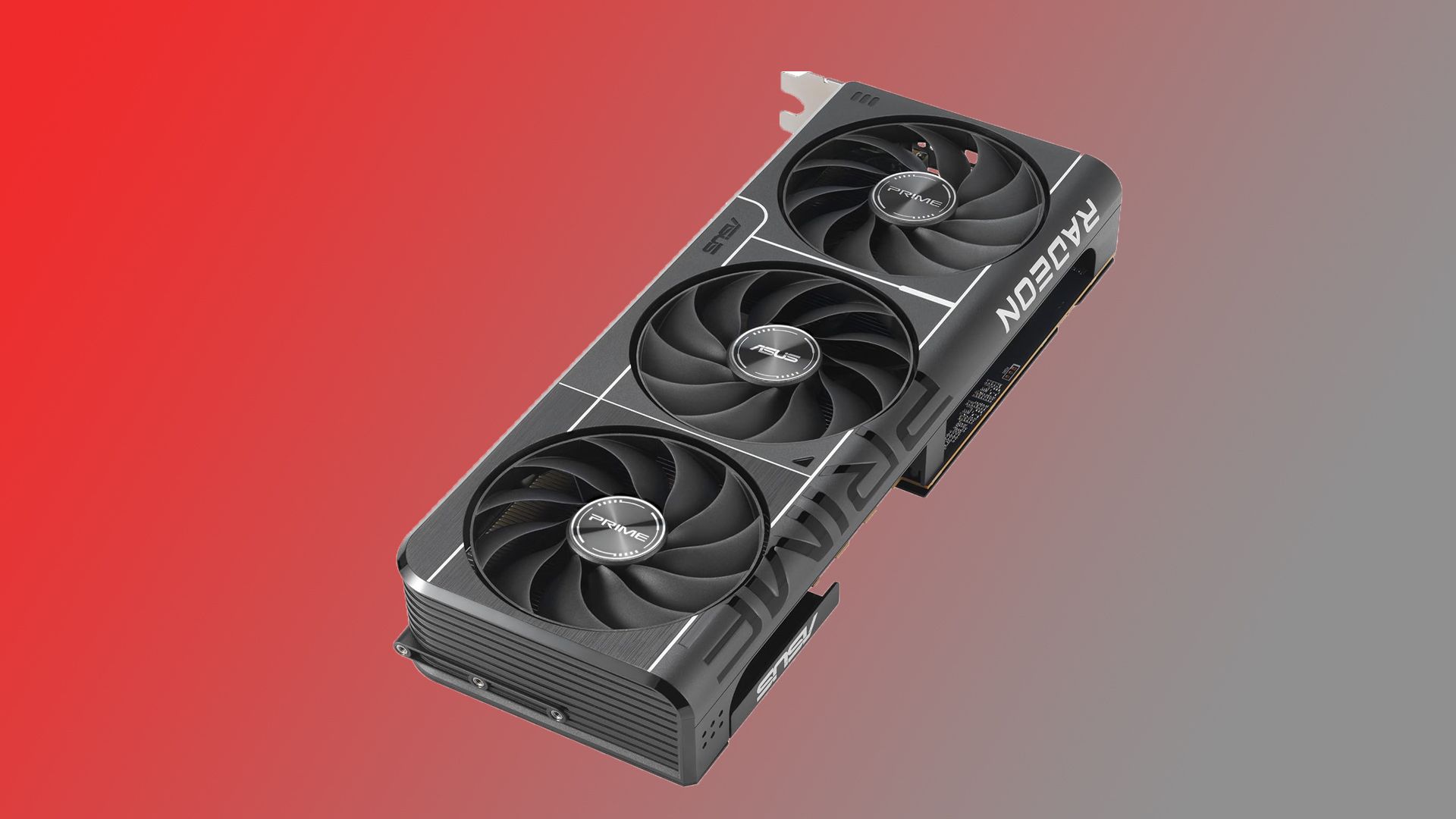
Asus has equipped this model with a custom physical architecture designed to balance form and function within mid-tower and full-tower chassis alike:
- Form Factor: 2.5-slot design spanning a length of 312mm, making it compatible with a wide array of mainstream PC cases while still accommodating a substantial cooling apparatus.
- Dual-BIOS Switch: Gives users the physical flexibility to toggle between Performance Mode (prioritizing maximum clock speeds and aggressive fan curves) and Quiet Mode (reducing acoustic output for noise-sensitive environments).
- Cooling Hardware: Features a triple Axial-Tech fan array boasting lengthened blades designed to direct higher static pressure downward into the heatsink.
- Thermal Interface: Incorporates a phase-change GPU thermal pad, replacing traditional paste to ensure optimal, long-term heat dissipation and prevent thermal throttling under sustained gaming loads.
Performance Benchmarks: How It Stacks Up
Specifications on paper are only as good as the frame rates they deliver on screen. In rigorous lab testing, the AMD Radeon RX 9070 demonstrates performance figures that position it as a direct and formidable competitor to Nvidia’s upper-mid-tier heavyweight: the GeForce RTX 4070 Ti Super.
When evaluating rasterization performance via a comprehensive 16-game geometric mean (geomean):
- At 1440p Ultra Settings: The RX 9070 cruises at an impressive average of 86.6 FPS, ensuring high-refresh-rate monitors can be fully utilized without dialing back visual fidelity.
- At 4K Ultra Settings: The card maintains strong playability, averaging 52.2 FPS, proving that it is fully capable of handling ultra-definition workloads with minor adjustments to rendering settings or with the assistance of upscaling tech.
These numbers confirm that the card delivers high-end enthusiast performance traditionally reserved for cards priced significantly higher, making the $629.99 promotional price point an exceptionally disruptive value proposition.
Official Statements and Industry Perspective
While consumer electronics manufacturers rarely comment on day-to-day retail flash sales, industry analysts and hardware reviewers have closely monitored the strategic positioning of RDNA 4 cards.
Hardware experts and system integrators have noted that custom AIB (Add-in Board) partners like Asus face a delicate balancing act. They must absorb rising component and shipping expenses while keeping their products attractive against fierce generational competition. By offering a $120 discount on a premium-cooled, factory-overclocked variant like the Prime OC, retailers and manufacturers are signaling a willingness to aggressively stimulate demand in a sluggish retail climate.
"The mid-tier graphics card market has been under immense strain due to broader macroeconomic pressures on memory and silicon packaging," notes tech industry analyst Jonathan Vance. "When a manufacturer-customized card with robust cooling, a dual-BIOS, and a generous 16GB VRAM buffer drops from $750 to roughly $630, it effectively realigns the price-to-performance expectations for the entire segment. It forces competing ecosystems to re-evaluate their pricing strategies if they want to capture the crucial holiday and upgrade-season demographic."
Future Outlook: Is Now the Right Time to Buy?
For PC enthusiasts currently weighing an upgrade cycle, the appearance of the Asus Prime AMD Radeon RX 9070 OC at $629.99 offers a clear window of opportunity, though caution is warranted regarding market volatility.
The Urgency of Limited-Time Promotions
As indicated by retail tracking data, promotions of this magnitude on newly minted architectures rarely represent permanent structural price cuts. More frequently, they are managed inventory clearance events, promotional rebates, or limited-time Amazon vendor discounts designed to capture market share. Given the unstable nature of global DRAM and NAND supply chains—which threaten to drive component prices higher later in the year—waiting for a better deal on a 16GB, RTX 4070 Ti Super-tier competitor might prove counterproductive.
Who Should Buy This Card?
- 1440p High-Refresh Gamers: If your current rig features an older mid-range card (such as an RTX 3070 or RX 6700 XT) and you are looking to fully saturate a 1440p high-refresh-rate monitor at Ultra settings, this upgrade will yield an immediate, staggering leap in fluidity.
- Content Creators and Future-Proofers: The 16GB VRAM buffer offers substantial breathing room for video editing, 3D rendering pipelines, and next-generation games that heavily consume texture memory.
- Builders Seeking Thermal Headroom: The Asus Prime cooling solution, complete with phase-change thermal pads and a dual-BIOS setup, provides a quieter and cooler operating environment than bare-bones reference models.
Final Verdict
The Asus Prime AMD Radeon RX 9070 OC Edition at $629.99 bridges the gap between high-end performance and realistic budgeting in a market that desperately needs more consumer-friendly options. Prospective buyers should act swiftly; with stock quantities tied to promotional allocations and component costs showing no signs of systemic long-term relief, deals of this caliber are expected to disappear quickly.
