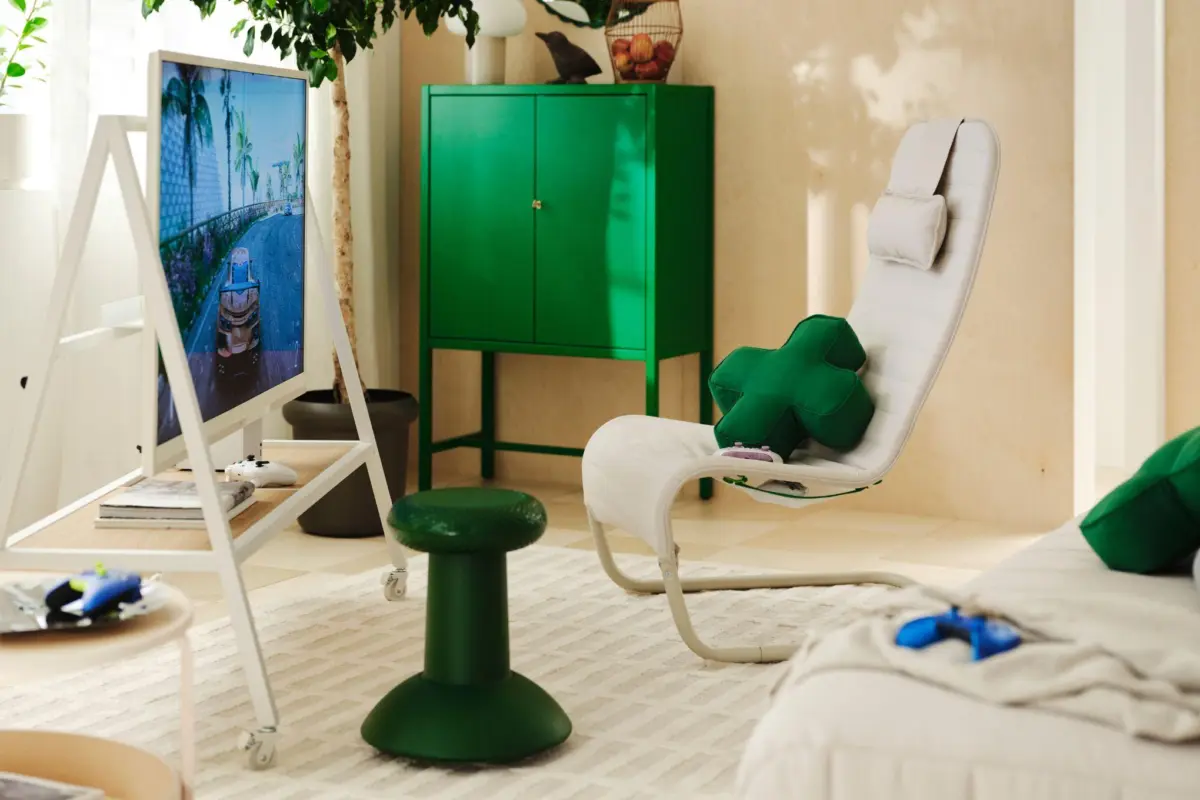
The intersection of interior design and gaming culture has evolved from a niche, DIY subculture into a refined lifestyle market. As gaming establishes itself as the dominant form of modern entertainment, the physical spaces dedicated to it must adapt. Entering this burgeoning space with a sense of both playfulness and Scandinavian minimalism, Swedish furniture giant Ikea has teamed up with tech titan Microsoft to introduce a brand-new, nine-piece collection of gaming-inspired furniture and home accessories.
Christened the Yxstaby collection—a typically phonetic, tongue-twisting Scandinavian moniker—this collaboration arrives just in time to commemorate the 25th anniversary of the very first Xbox console. Rather than leaning into the hyper-aggressive, neon-drenched aesthetic historically associated with "gamer-core" gear—such as faux-leather racing chairs and blinding RGB LED strips—Ikea and Microsoft have opted for a more sophisticated approach. The Yxstaby range successfully bridges the gap between high-performance utility and domestic harmony, integrating seamlessly into existing home environments through neutral color palettes, tactile natural woods, and understated silhouettes, punctuated only by subtle flashes of Xbox’s iconic neon green.
Designed for an era where gaming is as much about social connection, unwinding, and multimedia consumption as it is about competitive performance, the collection comprises a TV stand, laptop stand, side table, lounge chair, and a multi-functional toolbox, alongside standout accent pieces engineered directly from recognizable Xbox controller motifs. Set to launch globally in global markets this autumn, the Yxstaby collection represents a mature evolution in how heritage brands approach the modern digital lifestyle.
Detailed Chronology: From Concept to Controller-Inspired Craftsmanship
The genesis of the Yxstaby collection traces back to years of mutual observation between Ikea’s product developers and Microsoft’s design teams. While Ikea previously dabbled in gaming furniture through partnerships with brands like Asus ROG, those earlier iterations largely targeted the dedicated PC enthusiast whose setup revolves around heavy-duty desks, monitor arms, and rigid ergonomics.
With Yxstaby, the target audience shifts toward console gamers, living-room setups, and casual multiplayer spaces. The design timeline spanned nearly two years of close collaboration, marked by meticulous prototyping and industrial design challenges.
The Thumbstick Stool: Engineering Playfulness
Among the most technically demanding items in the nine-piece range is the Yxstaby stool—a piece that directly mirrors the form and physics of an Xbox controller thumbstick. According to Ikea designer David Wahl, whose personal nostalgia dates back to queuing overnight for the original Xbox launch 25 years ago, the challenge lay in translating a miniature plastic control component into a stable, ergonomic piece of seating.
Developers utilized original 3D design files supplied by Microsoft to map the exact geometry of the thumbstick. However, transforming a concave control surface into a seat required rigorous structural engineering. The resulting stool features a textured, grippy surface—originally designed on the controller to prevent sweaty thumbs from slipping, but repurposed here to keep the user secure while shifting weight. Uniquely, the stool is engineered to pivot and tilt dynamically, mimicking the fluid, responsive range of motion of an analog stick as the user moves.
Furniture That Hides in Plain Sight
Beyond the statement stool, the Yxstaby collection emphasizes functional discretion. The living room lounge chair incorporates a deep under-seat mesh pocket lined with Xbox’s signature vibrant green fabric. While custom-engineered to store game controllers neatly out of sight when guests arrive, the pocket is cavernous enough to swallow large books, tablets, or lifestyle magazines.
The modular side table introduces similar clever storage solutions, featuring integrated side panels that allow the user to effortlessly rotate the furniture piece, hiding or revealing its internal gadget stash at a moment’s notice. Similarly, the easel-style TV stand—offered in stark matte black and minimalist white colorways—includes integrated shelving, discreet cable management hooks, and heavy-duty castors. This mobility allows the entire entertainment hub to be repositioned around the home depending on whether the user is gaming solo or hosting a viewing party.
Rounding out the hardware pieces are a minimalist monitor stand and a multi-purpose wooden toolbox. While the toolbox stands out as one of the least overtly "gaming-coded" items in the collection, its versatile structural layout allows it to double as an impromptu laptop riser or a desktop accessory caddy.
Subtle Nods: The Accessories
For consumers looking for lighter touches of fandom rather than full furniture swaps, the Yxstaby accessory line delivers subtle Easter eggs. A green, X-shaped scatter cushion adds a pop of ergonomic comfort to any sofa. A metallic trinket dish is abstractly shaped after the classic D-pad, remaining subtle enough to pass as modern art to the untrained eye. Finally, a pair of mirrored display boxes in black and white provide museum-quality framing for limited-edition controllers or treasured gaming memorabilia, doubling as stylish shadow boxes for other household trinkets.
Supporting Context & Metrics: The Maturation of the Gaming Demographic
To understand the strategic significance of the Yxstaby collection, one must examine the broader socio-economic shifts defining the modern consumer base. The gaming industry is no longer confined to the bedrooms of teenagers; it is a multi-generational, household-wide pastime.
Demographic Evolution and the Living Room Takeover
According to industry market data, the average gamer is now in their mid-thirties, often balancing career, family, and homeownership. This demographic shift has created a distinct design conflict: adults want the ergonomic support and organizational efficiency required for gaming, but they are increasingly unwilling to compromise the aesthetic integrity of their shared living spaces.
The Domestic Compromise: Market research consistently highlights that interior aesthetics are a primary friction point in households with avid gamers. Bulky black-mesh office chairs, tangled nests of cables, and monolithic plastic consoles frequently clash with contemporary interior design trends like Japandi, mid-century modern, and minimalist scandi styles.
The Rise of "Soft Gaming": As casual gaming, cloud streaming via Xbox Game Pass, and co-op couch gaming surge in popularity, living rooms are reclaiming their status as the primary gaming epicenters. Furniture that successfully multi-tasks—acting as refined lounge seating by day and an optimized media hub by night—commands a high perceived value among urban professionals.
The Power of Nostalgia Marketing
The timing of the Yxstaby release coincides with a golden era of nostalgia marketing. Marking a quarter-century of the Xbox brand—which debuted in November 2001—taps into an emotional baseline for millennials and older Gen-Z consumers who grew up with the original bulky black console and its infamous "Duke" controller. By embedding historical hardware geometries (such as the D-pad and thumbsticks) into high-end home accessories, Microsoft and Ikea are monetizing nostalgia without falling into the trap of tacky novelty merchandise.
Official Statements and Design Philosophy
The underlying ethos of the Yxstaby collaboration centers on a rejection of forced conformity. Rather than asking consumers to adapt their homes to industrial gaming equipment, the collection seeks to integrate play organically into daily life.
"How people play at home has shifted, and it is as much about relaxing and connecting with others as it is about performing, which changes what the space has to do," explains Philip Dilé, Ikea Product Design Developer. "Together, we set out to make furniture people really want in their home, not furniture they accept because it is what you need to game."
This sentiment is echoed by David Wahl, whose emotional connection to the brand’s heritage guided the tactile elements of the collection.
"I queued all night 25 years ago to get my hands on the first Xbox console, so those shapes are nostalgic to me," Wahl shares. "The challenge was making it work as a stool, with the right seating curve and stability, while still feeling like a thumbstick. It even moves the way a thumbstick does, so it tilts with you while you play."
This collaborative dialogue underscores a growing corporate awareness: lifestyle brands must co-create rather than license. By relying on Ikea’s mastery of flat-pack ergonomics and Microsoft’s deep-seated brand equity, the resulting collection avoids the superficial branding pitfalls that often plague cross-industry collaborations.
Future Outlook: What Yxstaby Signals for the Future of Retail
The launch of the Yxstaby collection serves as a bellwether for future cross-sector partnerships. As physical retail spaces face intense pressure to offer experiential value, collaborations that merge pop-culture fandom with functional home goods provide a reliable blueprint for driving foot traffic and e-commerce engagement.
1. The Blurring Lines of Lifestyle Brands
We are witnessing the death of strict industry boundaries. Technology companies are increasingly acting as lifestyle curators, while furniture manufacturers are stepping into tech-adjacent utility spaces. Expect to see further experimentation in smart-home integration, where future iterations of living room furniture may feature built-in wireless charging mats, acoustic dampening panels for voice chat, or adaptive lighting synced to gameplay.
2. Market Reception and Availability
The Yxstaby collection is scheduled to roll out globally across Ikea physical stores and online retail platforms this autumn. While precise pricing tiers and regional release dates remain subject to localized market adjustments, industry analysts anticipate competitive pricing in line with Ikea’s core mid-market strategy.
Given the massive global footprint of the Xbox ecosystem—spanning tens of millions of active users worldwide—demand for limited-run, nostalgia-driven statement pieces like the thumbstick stool and mirrored display boxes is expected to be high.
Conclusion
With Yxstaby, Ikea and Microsoft have successfully sidestepped the novelty trap, delivering a thoughtful, well-engineered collection that honors a major milestone in gaming history. By treating the living room as a dynamic, multi-use sanctuary rather than a dedicated arcade, the collection proves that adulting and gaming can comfortably share the exact same piece of furniture.