

Executive Overview
In the landscape of modern American law enforcement, few technological shifts have been as rapid or as quiet as the proliferation of automatic license plate readers (ALPRs). At the center of this revolution is Flock Safety, a police-technology giant valued at approximately $8 billion, which operates a massive, interconnected network of roughly 120,000 cameras stretching across the United States. Sold to local governments and neighborhood associations as an indispensable shield against crime, Flock’s nationwide dragnet has recently come under intense scrutiny.
Following a series of damaging revelations regarding systemic officer abuse, Flock announced a suite of software updates designed to curb unauthorized surveillance. These updates—which include flagging abnormal search patterns and requiring officers to input active criminal case numbers before querying the database—were framed as a proactive effort to secure public trust.
However, an investigation into the mechanics of these updates reveals a system built on trust rather than verification. The new safeguards rely entirely on self-reporting; Flock does not verify whether the case numbers entered by officers correspond to real, open investigations. This structural loophole has reignited a fierce national debate among civil rights advocates, policy makers, and law enforcement agencies.
At stake is a fundamental question: Has Flock Safety designed a tool to solve crimes, or has it built an unprecedented mass surveillance apparatus under the guise of public safety?
Detailed Chronology
The Rapid Ascent of an $8 Billion Network
To understand the current crisis, one must trace the evolution of Flock Safety from a localized neighborhood-watch startup into a multi-billion-dollar infrastructure player. Founded in 2017, Flock capitalized on a critical vulnerability in traditional law enforcement: the high cost and low connectivity of legacy ALPR systems, which had been used since the 1990s primarily for toll collection and parking enforcement.
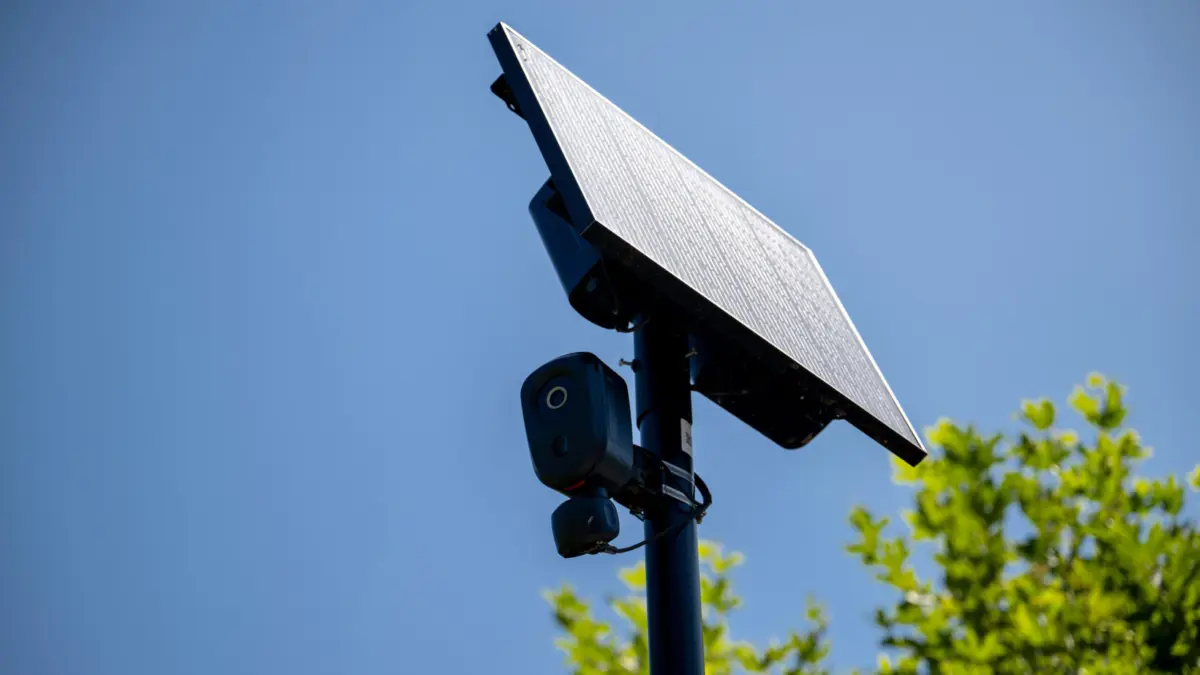
Flock’s innovation was twofold: low-cost, solar-powered cameras and a centralized, cloud-based platform that allowed disparate law enforcement agencies to seamlessly share data across municipal and state lines. By 2026, this network had swollen to 120,000 active cameras, capturing billions of vehicle movements monthly.
[2017: Flock Safety Founded]
       │
       ▼
[Legacy ALPRs upgraded to cloud-based, interconnected cameras]
       │
       ▼
[Rapid expansion to 120,000+ cameras nationwide]
       │
       ▼
[August 2026: Washington Post exposes systemic officer misuse]
       │
       ▼
[Late August 2026: Flock rolls out unverified "case number" updates]
The Exposé: Surveillance as a Tool for Harassment
The vulnerability of this massive database became glaringly apparent in August 2026. A landmark investigative report by The Washington Post documented at least 50 cases across multiple states where police officers used Flock and competitor networks to stalk, harass, and spy on ex-partners, wives, and female acquaintances.
Among the most egregious cases highlighted:
- The Wisconsin Stalking Case: A police officer in Wisconsin allegedly queried a victim’s license plate 179 times over several months, tracking her movements to establish her daily routines and personal associations.
- The Chief of Police Incident: In another jurisdiction, a local police chief used the network to stalk an ex-partner. Because of his position of authority, the victim found herself with no internal department channels through which to safely report the surveillance.
These revelations shattered the industry narrative that ALPR data is anonymous, harmless, and only accessed during active, high-stakes criminal investigations.
The Corporate Response and the Loophole Crisis
Facing a mounting public relations disaster and threats of contract cancellations, Flock Safety moved quickly. In late August 2026, the company announced platform updates intended to close these security gaps. The system would now flag "abnormal search behavior" (such as a sudden spike in queries by a single officer) and mandate that any user entering a query must input an active criminal case number.
Yet, almost immediately upon rollout, technical analysts and civil liberties groups pointed out a glaring vulnerability: Flock’s system does not integrate with police departments’ internal Records Management Systems (RMS) or Computer-Aided Dispatch (CAD) software to verify these numbers.
An officer seeking to spy on an ex-partner can simply input a string of random digits, or reference a completely unrelated case file, and the system will grant full access to the target’s travel history. Flock confirmed this design choice, acknowledging that the system operates on an honor system rather than real-time cryptographic or database verification.
Supporting Context & Metrics
The debate over Flock Safety is often framed in extremes: absolute security versus absolute privacy. However, analyzing the system’s operational metrics reveals that the tension lies in the specific design choices the company has made to protect its business model.
Data Retention vs. Utility
Flock’s marketing campaigns frequently emphasize the necessity of long-term data storage to crack "cold cases" and complex criminal conspiracies. Yet, data obtained from Flock’s own system audits tells a different story.
| Metric | Detail |
|---|---|
| Total Active Cameras | ~120,000 across the United States |
| Current Valuation | ~$8 Billion |
| Average Data Retention Window | 30 days to multiple years (dependent on local contract) |
| Flock-Recommended Retention | 7 Days |
| Search Utility Window | 90% of all successful searches occur within 7 days of capture |
This discrepancy is critical. If 90% of the system’s utility occurs within the first week of data collection, the decision to allow police departments to retain data for months—or years—serves little investigative purpose. Instead, it creates a massive, vulnerable historical archive of law-abiding citizens’ movements.
The Power of Interconnectivity
Unlike traditional ALPRs, which only alerted local officers to stolen vehicles within their immediate jurisdiction, Flock’s platform allows for lateral data sharing. A police department in a small suburb can opt into a "shared network" that grants them access to camera feeds in neighboring cities, counties, or even across state lines.
While this makes the system highly effective for tracking interstate fugitives, it also means a single compromised police credential in one town can be used to track a vehicle across an entire region.
Official Statements
The division between the corporate creators of this technology, the officers who utilize it, and the civil rights attorneys who challenge it highlights a deep-seated philosophical divide.
The Corporate Perspective
Garrett Langley, CEO of Flock Safety, has consistently defended his company’s product design as a necessary compromise to ensure rapid adoption and operational flexibility for resource-constrained police departments. Responding to criticisms regarding the lack of database integration for case numbers, Langley emphasized that imposing heavy technical friction could slow down officers during life-or-death situations, such as active kidnappings or Amber Alerts.
"We are constantly iterating to find the right balance between security and ease of use for the officers on the front lines," Langley stated. Addressing the ideological divide with civil liberties advocates, he noted, "We will probably always have a different view than the ACLU."
The Civil Liberties Counter-Argument
For civil rights advocates, Flock’s self-policing measures are viewed as public relations maneuvers rather than genuine systemic reforms. Chad Marlow, Senior Policy Counsel at the American Civil Liberties Union (ACLU), argues that relying on a private corporation to self-regulate its highly profitable surveillance network is a recipe for systemic failure.
"The only acceptable Flock contract is one that is never signed," Marlow remarked. "You cannot fix a mass surveillance system with minor software patches. The problem is not just that officers can bypass these safeguards; the problem is that a private company has built a nationwide dragnet that monitors the movements of millions of innocent Americans every single day. The only real solution is robust, legally binding statutory limits on this technology."
Future Outlook
As the public becomes more aware of the reach of private surveillance networks, the trajectory of Flock Safety and the broader ALPR industry is poised for significant disruption. The coming years will likely be defined by three emerging battlegrounds.
1. The Municipal Backlash
The era of unquestioned adoption is ending. Several mid-sized and major American cities have begun to pause or outright cancel their contracts with Flock Safety. Some local city councils, pressured by mobilized residents, are shifting their business to smaller competitors that offer strict local-only data storage. Others are choosing to decommission their ALPR programs entirely, redirecting those funds toward community policing and traditional investigative resources.
[Public Awareness of Misuse] ──► [Citizen Mobilization] ──► [City Council Pressure] ──► [Contract Cancellations / Policy Shifts]2. Legislative and Statutory Intervention
Rather than waiting for tech companies to self-correct, state legislatures are step-by-step taking matters into their own hands. Bipartisan coalitions in several states are drafting bills to impose hard limits on ALPR technology. Anticipated legislative trends include:
- Mandated CAD/RMS Integration: Laws requiring that any search of an ALPR database be programmatically validated against an active dispatch call or incident report before results are displayed.
- Strict Statutory Retention Caps: Setting a hard legal limit on data retention (e.g., a maximum of 7 to 14 days) for all non-evidence vehicle captures, effectively outlawing the creation of long-term travel histories.
- Interstate Sharing Bans: Prohibiting local police departments from sharing ALPR data with out-of-state agencies, particularly to protect individuals seeking medical procedures that may be criminalized in neighboring jurisdictions.
3. The Structural Threat to Flock’s Business Model
For Flock Safety, these legislative and cultural shifts present an existential challenge to its $8 billion valuation. The company’s primary selling point is not the physical camera, but the power of its massive, interconnected, cloud-hosted national database.
If cities and states successfully enforce localized data silos, short retention windows, and heavy search verification requirements, the network effect that fuels Flock’s market dominance will erode. The ongoing struggle over Flock Safety is not merely a debate over software updates; it is a battle to determine whether the future of American public safety will be built on a foundation of unchecked, privatized mass surveillance or structured, democratic oversight.
