

Executive Overview
The rapid convergence of machine learning, advanced material science, and sensor integration is fundamentally altering the trajectory of robotics and automated systems. As detailed in the latest global robotics disclosures, the field has officially moved past the era of isolated, highly scripted demonstrations and theoretical simulations. Today, the industry is witnessing the accelerated maturation of "Physical AI"—systems that do not merely process data in the abstract, but actively perceive, navigate, and manipulate the physical world with unprecedented fidelity.
From advanced humanoid platforms equipped with multi-modal artificial skin to scalable foundation models capable of governing thousands of distinct end-effectors, recent developments signal a profound shift in how robots interact with their environments. At the same time, innovations in rapid-deployment aerial platforms, zero-shot simulation-to-real (Sim2Real) reinforcement learning pipelines, and critical infrastructure automation—such as NHS medical drone delivery networks—underscore that robotics is no longer confined to the laboratory. It is aggressively embedding itself into commercial supply chains, healthcare logistics, and industrial workflows. This report provides an authoritative, deep-dive analysis of the technological milestones, architectural innovations, and strategic deployments shaping the current frontier of robotics.
Detailed Chronology & Technological Milestones
1. Humanoid Robotics and Tactile Integration
The boundary between synthetic hardware and biological sensation continues to blur. A primary catalyst in this evolution is the debut of platforms engineered not just for mechanical locomotion, but for high-fidelity tactile feedback.
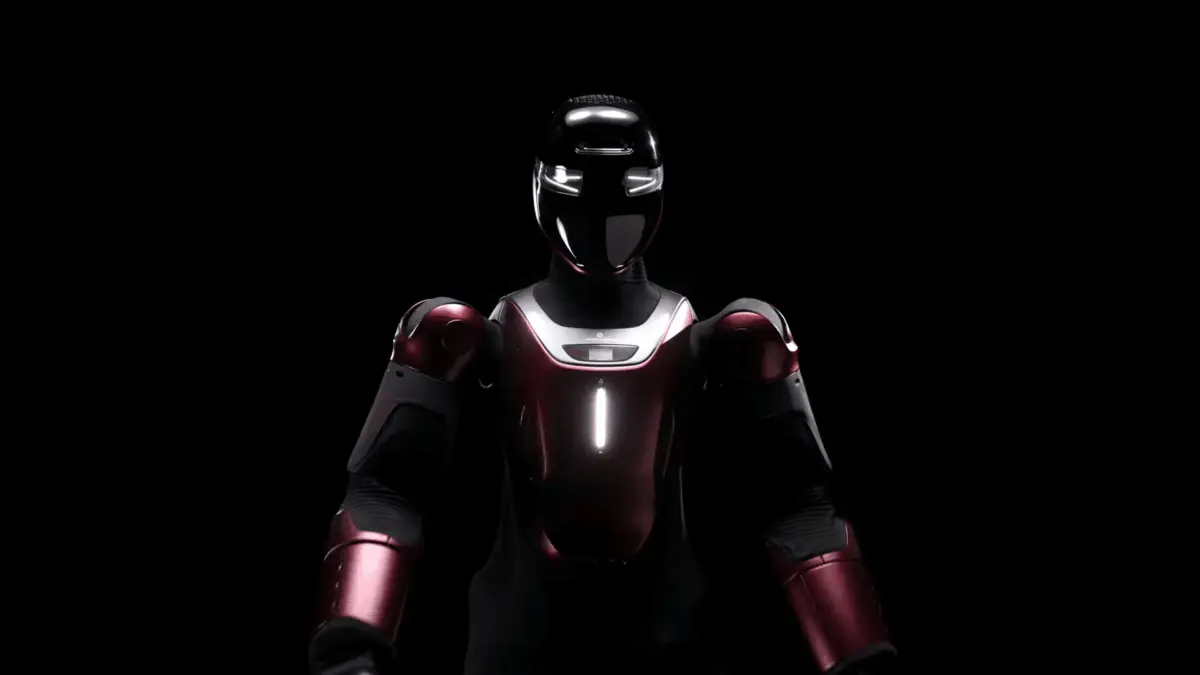
- GENE.01 by Generative Bionics: Achieving a functional humanoid platform within a compressed six-month development cycle, Generative Bionics introduced GENE.01. Eschewing digital renders or vaporware concepts, this fully articulated platform features a comprehensive full-body multimodal skin. The system is engineered to perceive touch, proximity, force, and temperature simultaneously. This dense sensory array is designed to bridge the gap in human-robot collaboration, allowing the machine to sense human presence and applied pressure dynamically, thereby ensuring safe, natural interactions in shared workspaces.
- LimX Dynamics Tron 2 & EngineAI Platforms: Expanding the diversity of bipedal and quadrupedal form factors, systems like LimX Dynamics’ Tron 2—noted for its compact, agile leg architecture—and recent platforms from EngineAI demonstrate robust dynamic balancing and task execution. These systems highlight a growing market emphasis on task-specific morphologies, where form directly serves function rather than adhering strictly to an anthropomorphic ideal.
- PNDbotics and Sharpa Deployments: Commercial integration is also accelerating. PNDbotics and Sharpa have pushed the envelope on service and retail automation. Sharpa’s recent demonstrations of retail-assistive automation—accompanied by necessary food-safety disclaimers regarding autonomous ice-cream preparation and protective glove integration—illustrate that commercial deployment faces as much regulatory and operational hurdle-clearing as it does engineering challenges.
2. Embodied Foundation Models and Sensorimotor Scalability
Controlling robotic manipulation has historically been bottlenecked by the need to program or train separate models for every unique tool or gripper. Recent paradigm shifts reject this piecemeal approach in favor of universal foundational architectures.
- Generalist’s GEN-1: Addressing the limitation of training robot intelligence for a single hand type, Generalist unveiled GEN-1, an embodied foundation model built to support a vast continuum of end-effectors. Ranging from complex five-finger dexterous hands to specialized industrial tools, GEN-1 treats every interface as a distinct sensorimotor translation layer. By scaling pretraining across thousands of these varied interfaces, the model acquires a generalized "physical common sense." This allows the underlying intelligence to seamlessly transfer skills—such as grasping, pushing, pulling, and twisting—to novel hardware without requiring retraining from scratch. A striking demonstration of this capability involved the spontaneous integration of a standard kitchen spatula into the robot’s manipulation repertoire.
- Robotics and AI Institute (RAI) Demonstration-Driven Detection: Overcoming the limitations of traditional Vision-Language Models (VLMs), which routinely falter when tasked with recognizing novel or unusual objects even under careful prompting, RAI introduced a demonstration-based recognition paradigm. By tracking human touch and manipulation during short physical demonstrations, the system automatically builds robust training datasets. It tracks objects through time and handles complex spatial scenarios, such as objects merging or splitting apart, providing a powerful alternative to text-based prompt engineering.
3. Simulation-to-Real Transfer and Advanced Training Pipelines
Training robots safely and efficiently requires bridging the notoriously difficult "Sim2Real" gap—ensuring that policies optimized in virtual physics engines translate without failure into messy, unpredictable physical environments.
- Flexion, Niantic Spatial, and NVIDIA Collaboration: Flexion, in partnership with Niantic Spatial and NVIDIA, announced a breakthrough pipeline designed to eradicate the Sim2Real barrier. By utilizing off-the-shelf hardware to scan real-world deployment sites, the consortium reconstructs spaces into photorealistic Gaussian splats. These digital twins serve as environments for massively parallel reinforcement learning (RL) training. The resulting control policies execute zero-shot transfers directly onto physical robots deployed in those exact sites, drastically compressing the timeline from initial architectural design to field deployment.
- MEVION Open-Source Data Collection: Democratizing access to advanced robotics research, the open-source MEVION system ($14,000) provides researchers and developers with a cost-effective data-collection architecture complete with high-end manipulation and physical resilience capabilities, fostering collaborative advancements across academic and industrial labs.
4. Aerospace, Logistics, and Critical Infrastructure
Beyond terrestrial manipulation, automation is transforming large-scale logistics, last-mile delivery, and rapid-deployment aerial systems.
- AIR Lab’s Flat-Pack Cardboard Flying Wing: Demonstrating radical innovation in low-cost aerospace manufacturing, the AIR Lab at SUTD unveiled a flying wing constructed primarily from corrugated cardboard. Fabricated from just three laser-cut sheets utilizing a fold-and-lock structural architecture, the entire load-bearing airframe can be assembled in under 15 minutes with zero permanent fasteners or specialized tooling. This design points toward ultra-low-cost logistics, rapid field deployment, and potential space-constrained applications (such as CubeSat integration).
- NHS Medical Delivery via Wing and Apian: In healthcare logistics, drone delivery has transitioned from experimental trials to critical infrastructure. The South West London Pathology (SWLP) modernization initiative, operating in partnership with Wing and Apian, has integrated automated delivery aircraft into its daily routine since February 2026. Delivering urgent NHS medical samples across South West London up to 85% faster than conventional ground transport, the initiative highlights how autonomous aviation reduces carbon footprints while accelerating critical clinical responses.
- Aurora Driver’s Next-Generation Freight Integration: On the ground, long-haul autonomy continues its relentless advance. Aurora detailed the next generation of the Aurora Driver, engineered to scale commercial freight transport. Built for a million-mile operational lifespan while slashing hardware production costs in half, this platform represents the commercialization tipping point for driverless logistics networks.
Supporting Context & Metrics
The quantitative indicators underlying these developments reflect a maturation of the global robotics ecosystem:
- Development Velocity: Platforms like Generative Bionics’ GENE.01 demonstrate that integrated hardware-software pipelines can compress foundational humanoid development cycles down to six months, driven by advanced rapid prototyping and modular actuators.
- Logistics Efficiency: In healthcare applications, automated aerial logistics networks (such as the SWLP-Wing deployment) have achieved delivery speeds up to 85% faster than legacy ground transport alternatives, proving vital for time-sensitive pathological samples.
- Durability and Cost Optimization: Commercial autonomy providers like Aurora are targeting structural milestones that include one-million-mile operational lifespans alongside a 50% reduction in core hardware costs, clearing the primary financial hurdles for fleet-wide commercial adoption.
- Simulation Scaling: Utilizing massively parallel GPU-accelerated environments combined with Gaussian splatting spatial reconstructions allows researchers to train complex reinforcement learning policies in hours rather than weeks, solving long-standing latency issues in deployment cycles.
Official Statements and Industry Insights
The discourse surrounding these advancements highlights a collective recognition that physical AI requires new paradigms in both hardware safety and cognitive architecture:
"In just six months, our team turned GENE.01 into a fully functional humanoid platform that can walk, sense and interact. Its full-body multimodal skin perceives touch, proximity, force, and temperature, bringing Physical AI closer to safe and natural collaboration with people. Not a render. Not a concept. This is GENE.01. The future of Physical AI is taking its first steps."
— Generative Bionics
Addressing the shift toward unified intelligence models, robotics researchers emphasize the necessity of cross-interface learning:
"Why create robot intelligence for just one hand, when we could have it learn from many? GEN-1, our latest embodied foundation model, now supports a broad range of end effectors from 5-finger hands, to specialized tools, and everything in between. Scaling pretraining across thousands of these interfaces teaches GEN-1 a universal physical common sense…"
— Generalist AI
On the critical challenge of eliminating deployment friction between virtual training grounds and physical reality, industry partners note:
"The policies trained in our Gym environment then transfer zero-shot to the real robot and environments they were trained for. This enables faster deployment of more capable and robust policies for the end user."
— Flexion, Niantic Spatial, and NVIDIA Joint Briefing
Future Outlook
As the robotics and automation sectors look toward major upcoming industry gatherings—including the Summer School on Multi-Robot Systems in Prague, Actuate 2026 in San Francisco, IROS 2026 in Pittsburgh, and the Humanoids Summit in Seoul—several definitive trends are poised to dictate the next decade of technological evolution:
- Universal Embodied Models: The transition from task-specific programming to generalized foundation models (such as GEN-1 and demonstration-based vision networks) will become the industry standard. Robots will increasingly adapt to novel tools and unpredictable items on the fly, mirroring human improvisational capability.
- Multimodal Tactile Safety: As demonstrated by multimodal artificial skin implementations, future humanoid platforms will prioritize spatial and tactile awareness over raw processing speed. This will enable frictionless, safe collaboration in unstructured human environments, from retail spaces to eldercare facilities.
- Frictionless Sim2Real Workflows: The integration of Gaussian splatting, digital twinning, and massively parallel reinforcement learning will drastically shorten the runway for deploying industrial automation, transforming what used to require months of on-site fine-tuning into an automated, zero-shot deployment process.
- Institutionalization of Autonomous Logistics: Aerial and terrestrial automation will transition completely from auxiliary pilots to core utility infrastructures. Healthcare supply chains, long-haul freight networks, and rapid-response municipal services will increasingly rely on autonomous fleets as baseline operational necessities.
Ultimately, the boundary between the digital intelligence of artificial neural networks and the physical reality of actuators, skins, and end-effectors is dissolving. Physical AI has graduated from theoretical promise to tangible infrastructure, setting the stage for a profound restructuring of labor, logistics, and human-machine interaction.
