

Executive Overview
For endurance athletes, backpackers, bikepackers, and minimalist hikers, every single gram carried on the trail carries a cumulative physical toll. In the modern outdoor ecosystem, however, portable power solutions have increasingly fallen victim to "feature creep." Manufacturers have frequently bloated pocket batteries with extraneous LCD displays, heavy multi-port configurations, ruggedized rubber bumpers, and redundant internal circuitry that add unnecessary bulk and weight.
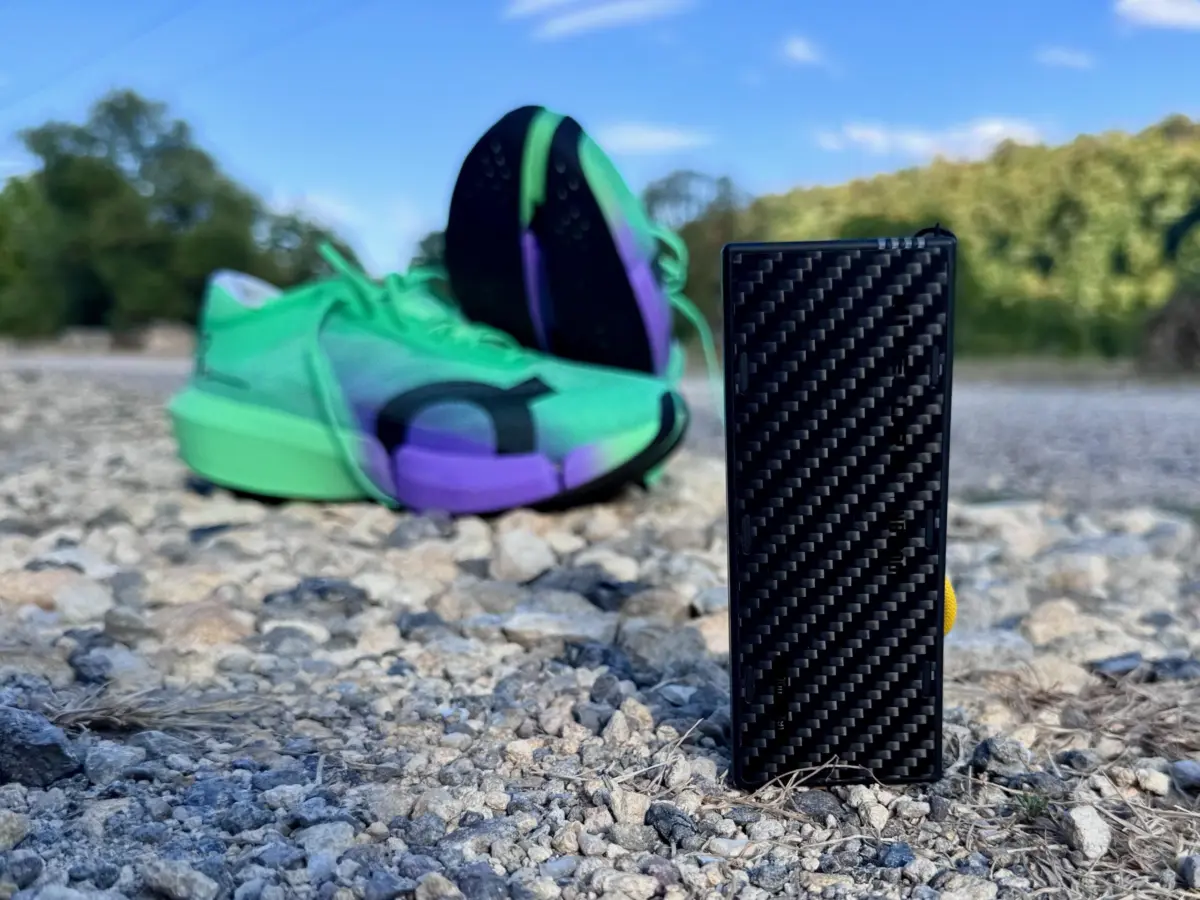
Enter the Nitecore NB10000 Gen 4—a device explicitly engineered to reverse this trend. Priced at $83.95, this next-generation power bank strips away the non-essentials while incorporating cutting-edge Silicon-Carbon (Si-C) anode battery technology, a material innovation rapidly migrating from flagship consumer smartphones to ultra-portable outdoor gear. Tipping the scales at a scant 146 grams (measuring 1.45 x 11.6 x 4.68 cm), the Gen 4 is currently the lightest and most compact 10,000mAh power bank available on the market.
Building upon the success of its predecessor, the Gen 3, this latest iteration manages to shave off precious weight while introducing key performance upgrades, including IPX7 water resistance, a carbon fiber composite shell, and pass-through charging capabilities. While its $84 price tag positions it as a premium luxury purchase—costing two to three times more than standard, consumer-grade 10,000mAh bricks—its unmatched energy density, class-leading efficiency, and targeted feature set make it an indispensable asset for weight-conscious adventurers.

Detailed Chronology
The Pursuit of Gram-Shaving Efficiency
The evolution of Nitecore’s NB series represents a steady, calculated march toward maximum power-to-weight ratios. Two years prior to the launch of the Gen 4, the company introduced the $64.95 Gen 3 model, which quickly became the gold standard for ultralight backpackers seeking to keep navigation apps, satellite messengers, and smartphones operational deep in the backcountry.
Yet, user feedback highlighted specific areas for improvement, particularly regarding thermal management during low-charge states and the vulnerability of standard lithium-ion pouch cells under extreme environmental stressors. With the release of the Gen 4, Nitecore transitioned away from traditional battery chemistry by adopting a Silicon-Carbon anode. This shift allowed engineers to pack 39Wh of energy into an even smaller footprint without inflating the device’s physical dimensions.
Field Testing Across Multi-Day Expeditions
Over a rigorous multi-week testing period spanning alpine backpacking loops and extended trail runs, the Nitecore NB10000 Gen 4 was subjected to diverse environmental conditions, ranging from chilly alpine nights to damp, drizzling precipitation.

Initial setup involved assessing the device’s charging profile against aging smartphone hardware, specifically an iPhone 15 Pro. The power bank successfully achieved two full recharges from zero to one hundred percent, leaving a remaining buffer of watt-hours in reserve. Furthermore, its maximum 22.5W output proved sufficient to provide an emergency top-up to a 14-inch MacBook Pro, showcasing a degree of versatility previously unseen in batteries of this size class.
During these tests, the power bank’s structural integrity was pushed to its limits. Encased in a rigid carbon fiber shell, the Gen 4 demonstrated robust resistance to torsional flex when packed tightly into ultralight running vests. Unlike the Gen 3, which occasionally exhibited thermal throttling and unexpected shutdown behavior when operating near empty, the Gen 4 maintained stable thermal regulation. Although a microscopic power interruption was recorded by diagnostic meters when the battery neared absolute depletion, real-world operation remained entirely seamless, with output resuming almost instantaneously.
Supporting Context & Metrics
Battery Chemistry and Silicon-Carbon Innovation
The secret to the NB10000 Gen 4’s class-leading performance lies within its internal chemistry. Traditional lithium-ion batteries rely heavily on graphite anodes, which have largely plateaued in terms of energy density limits. Silicon-Carbon anodes, however, allow for a significantly higher concentration of lithium ions to be stored per unit of volume and weight.

By integrating this advanced chemistry—similar to the technological leaps seen in premium mobile hardware from manufacturers like Samsung—Nitecore has unlocked unprecedented efficiency metrics:
- Declared Capacity: 39Wh (10,000mAh)
- Measured Capacity: 33.58Wh (verified via professional testing equipment)
- Realized Efficiency: 86.1 percent, representing a minor yet notable improvement over the Gen 3’s 33.33Wh measured output.
- Energy Density (Delivered): 229.98 Wh/kg (excluding cable) / 220.90 Wh/kg (including the 6-gram braided USB-C lanyard).
Protocols, Ports, and Power Delivery
The Gen 4 is equipped with dual USB-C ports that support a wide array of fast-charging standards, including Power Delivery (PD), Quick Charge (QC 3.0), and Huawei’s Smart Charge Protocol (SCP). This broad compatibility ensures that whether a user is plugging in a high-end tablet, a Garmin sports watch, or a headlamp, the power bank negotiates the optimal charging speed safely and efficiently.
Additionally, the device supports full pass-through charging. This feature allows the power bank to be plugged into a portable solar panel or wall outlet while simultaneously outputting power to connected devices—an invaluable asset for basecamp setups during extended thru-hikes.

Ergonomics, Controls, and Controversial Features
Nitecore’s design choices on the Gen 4 strike a balance between minimalist utility and modern aesthetics, though not without minor design controversies:
- The Touch-Sensitive Wake Button: Eschewing traditional mechanical buttons, Nitecore opted for a touch-sensitive interface to wake the device and check battery levels. While this interface successfully registered input from wet fingers during rain testing, tactile feedback is inherently missing.
- Knock-to-Wake Feature: To compensate for the touch button, Nitecore implemented a physical "double-knock" accelerometer feature near the top of the unit. Tapping the housing illuminates the battery status and ambient LEDs, a helpful addition when fumbling through cold, gloved hands in a dark tent. However, this feature demonstrated an approximate 75 percent reliability rate in field testing.
- Animated RGB Lighting: Positioned subtly around the dual USB-C ports, the ambient lighting serves a dual purpose: guiding cable connection in pitch-black environments and indicating operating modes.
- Eco Mode: Activated by a long-press of the power button, Eco Mode drops maximum output to a steady 5W (5V at 1A). This prevents the power bank from automatically shutting down when encountering low-draw electronics (such as smartwatches, wireless earbuds, and specialized headlamps) that fail to register on heavy-draw power delivery circuits. It additionally minimizes thermal waste, squeezing out slightly more usable charge capacity.
Official Statements and Industry Reception
While Nitecore has not issued expansive press statements regarding the consumer reception of the Gen 4, product documentation emphasizes the company’s commitment to "extreme lightweight durability." Industry analysts and outdoor gear reviewers have widely lauded the transition to Silicon-Carbon anodes, noting that the NB10000 Gen 4 sets a definitive benchmark for portable power engineering.
Outdoor gear communities have embraced the device’s IPX7 water-ingress rating, which ensures that accidental submersion in alpine streams or exposure to torrential downpours will not catastrophically short-circuit the internal cells. Nevertheless, market analysts point out that the $83.95 retail price point represents a significant barrier to entry. Compared to standard consumer power banks that retail for $25 to $30, the Nitecore commands an approximate 300% markup, justified almost entirely by its 146-gram weight profile and aerospace-grade carbon fiber construction.

Future Outlook
As Silicon-Carbon battery technology matures and manufacturing yields improve across the global supply chain, we can anticipate further democratization of high-density energy storage. In the near future, outdoor brands will likely follow Nitecore’s lead, phasing out bulky plastic casings and graphite-anode limitations in favor of ultra-lightweight composite materials.
For the ultralight community, the Nitecore NB10000 Gen 4 signals the direction of travel for portable electronics. While the price remains high and minor design quirks—such as the touch-sensitive button—invite critique, the sheer physical relief of shedding 50 or more grams from a pack makes the investment worthwhile. For those for whom every gram counts, Haribo sweets and redundant backup batteries can safely stay at home; the future of trail power has officially arrived, and it weighs less than an apple.
