

Executive Overview
The rapid acceleration of robotics research has reached an inflection point, marked by a paradigm shift from rigid automation to deeply adaptive, context-aware machine intelligence. As documented in this week’s comprehensive survey of cutting-edge robotic developments, the industry is transcending traditional engineering boundaries. Breakthroughs are no longer confined to isolated mechanical improvements or localized software patches; instead, they represent a holistic convergence of foundational artificial intelligence, advanced materials science, biomechanical translation, and multi-agent coordination.
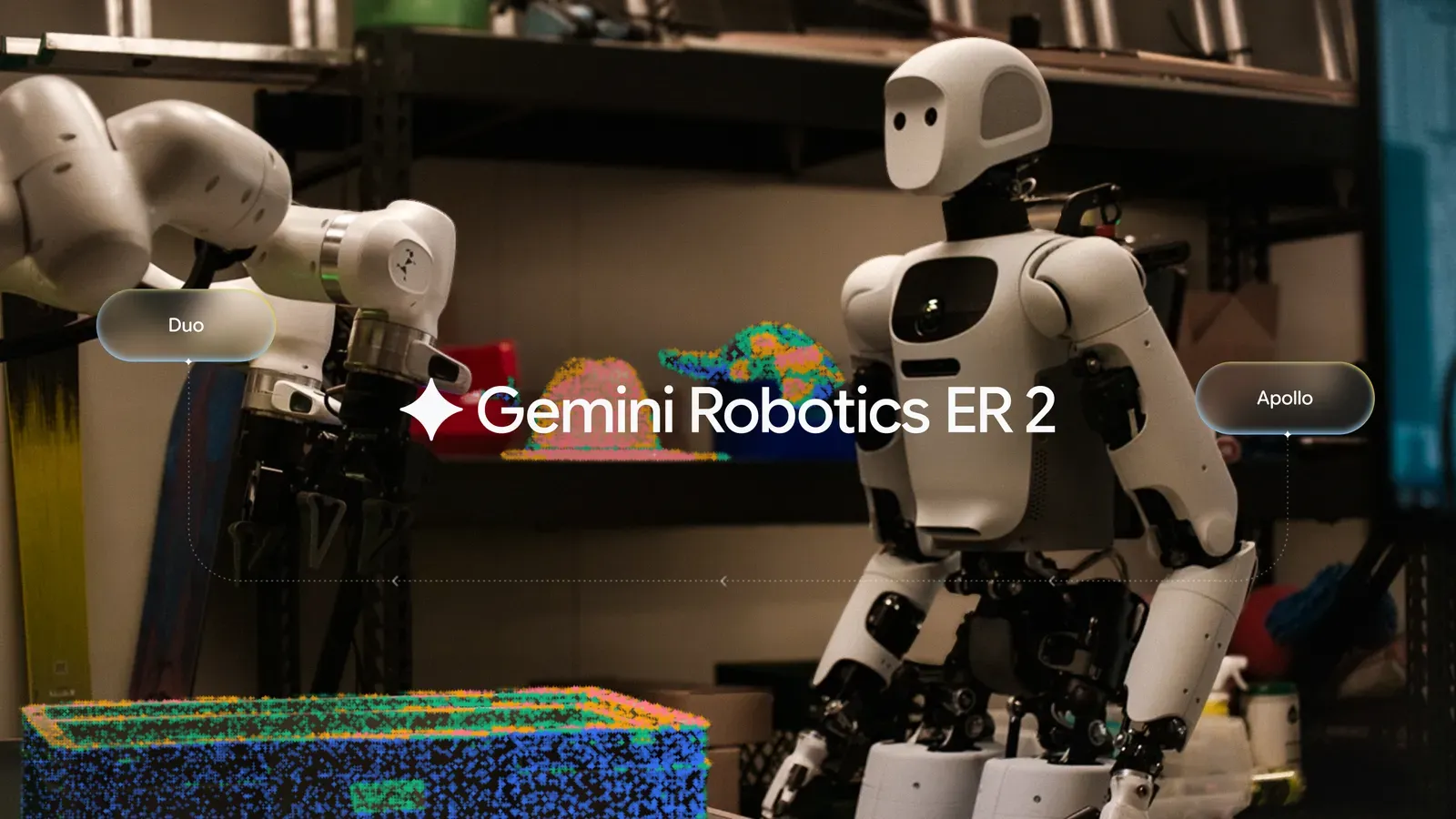
At the vanguard of this movement is Google DeepMind with the introduction of Gemini Robotics 2. This foundational intelligence layer seeks to redefine how physical agents perceive, process, and interact with the world through intelligent whole-body control, high-level dexterity, and multi-robot collaboration. Concurrently, specialized labs and global research institutions are pushing the envelope in niche domains—ranging from expressive, shadow-casting robotic hands developed by the General Robotics Lab and Disney Research’s human-to-quadruped motion transfer systems, to space-exploration quadruped frameworks spearheaded by the University of Southern California (USC) and NASA.
This report provides an exhaustive, investigative analysis of the latest milestones in global robotics. By examining the underlying technologies, institutional frameworks, hardware innovations, and broader industry implications, we explore how these advancements are reshaping the trajectory of automation across domestic, industrial, and extraterrestrial environments.
Detailed Chronology: Key Innovations and Technological Milestones
The current wave of robotics development is characterized by rapid, cross-disciplinary iterations. To understand the momentum driving the industry, it is essential to trace the recent breakthroughs featured across prominent global research hubs and commercial laboratories.
1. Google DeepMind and the Era of Whole-Body Intelligence
The unveiling of Gemini Robotics 2 marks a significant milestone in embodied AI. Historically, artificial intelligence models applied to robotics operated on segregated architectures: one subsystem handled visual perception, another managed path planning, and a third executed low-level motor commands. Gemini Robotics 2 consolidates these disparate layers into a unified intelligence engine.
As demonstrated in early deployment footage, the framework enables robots to take their first synchronized, adaptive steps while dynamically adjusting their center of gravity. This whole-body control paradigm allows robotic hardware to leverage its entire physical structure—torsos, limbs, and end-effectors—to solve complex physical tasks. Furthermore, the system incorporates advanced dexterity and multi-robot collaboration protocols, allowing disparate units to share spatial awareness and coordinate physical actions in real-time without centralized human oversight.
2. Agility Robotics, Unitree, and Dynamic Hardware Resilience
As software grows increasingly sophisticated, hardware platforms must evolve to endure the physical realities of dynamic environments. Agility Robotics continues to test the operational limits of bipedal locomotion, famously prompting field analysts to question established deployment roadmaps as their platforms navigate unpredictable terrain.
Concurrently, platforms like the Unitree As2-W prompt critical inquiries regarding mechanical resilience and maintainability. In robotics engineering, wear-and-tear remains an unavoidable constant; however, recent intersections between modular design and self-healing systems—such as robotic actuators integrated with liquid-metal tendons—signal a future where field repairs can be partially automated, minimizing costly downtime in industrial settings.
3. Biomechanics, Expression, and Human-Robot Interaction
Bridging the gap between human intent and robotic execution has inspired novel methodologies in kinematic mapping and expressive communication.
- The General Robotics Lab has introduced a pioneering robotic system capable of dynamic shadow expression. Utilizing a 21-degrees-of-freedom dexterous hand fitted with compliant soft skin and a learned shadow self-model, the system translates internal mechanical states into expressive visual abstractions—such as shadows and silhouettes—mirroring the nuanced ways humans communicate non-verbally.
- Disney Research has similarly disrupted conventional teleoperation and control paradigms with its Two2Four generative quadruped framework. By translating human motion directly into quad-pedal puppeteering, the system redefines how biological movement profiles can be seamlessly mapped onto non-human skeletal structures, unlocking unprecedented fluidity in animated and autonomous four-legged movement.
4. Domestic Integration and Specialized Automation
Moving beyond industrial warehouses and research laboratories, commercial developers are actively refining systems designed for human-centric living spaces.
- Hello Robot has advanced the domestic conversation with Stretch 4.0, a compact, one-armed, three-wheeled mobile manipulator engineered specifically for safe, intuitive navigation within residential environments. The ongoing industry debate between humanoid bipedalism and purpose-built wheeled-manipulator hybrids like Stretch highlights the pragmatic engineering trade-offs between mechanical simplicity and universal form factors.
- Meanwhile, specialized applications continue to push technical boundaries. PHYBOT has demonstrated high-precision agility systems capable of tracking complex spatial dynamics, while firms like PNDbotics explore edge-case automation scenarios that challenge traditional assumptions of workspace design.
5. Aerospace, Planetary Exploration, and Extreme Environments
The utility of advanced robotics extends far beyond terrestrial constraints. A collaborative initiative involving the University of Southern California (USC), NASA, and affiliated research bodies is actively training quadruped "robot dogs" for planetary exploration. Designed to withstand the unforgiving conditions of Mars, the Moon, and beyond, these autonomous systems utilize advanced reinforcement learning to traverse jagged, low-gravity landscapes where wheeled rovers historically struggle.
On the home front, the intersection of autonomous aerial vehicles and natural wildlife continues to yield stark reminders of environmental realities. Field tests involving drone interceptors and observations of apex predators like golden eagles—which routinely ignore or bypass unmanned aerial surveillance—underscore the ongoing challenges of airspace management and biological-technological coexistence.
6. Historical Reflections and Long-Horizon Horizons
To fully appreciate contemporary achievements, industry historians frequently look backward to evaluate the pace of progress. Archival demonstrations from the Takanishi Lab at Waseda University—celebrating the legacy of WABOT-1, widely recognized as the birth of the modern humanoid robot in Japan—serve as a vital benchmark. Systems that once required massive supercomputing mainframes to execute rudimentary limb shifts have been superseded by edge-computed neural networks capable of real-time spatial reasoning.
At the same time, specialized domain automation continues to refine specific repetitive tasks. Platforms such as Sunday Robotics’ Memo system demonstrate high-speed domestic manipulation (such as garment folding), though commentators frequently note that accelerated playback ratios (such as 5x speed) remind observers of the vast temporal and computational investments still required to achieve human-speed domestic independence.
Supporting Context & Metrics
To contextualize these advancements, industry analysts rely on several key performance indicators (KPIs) and systemic metrics:
- Degrees of Freedom (DoF): Modern dexterous hands and humanoids now routinely integrate between 21 and 50+ active DoF, allowing for human-like manipulation granularity.
- Inference Latency: Transitioning from cloud-based AI to onboard edge processors has driven inference latency down below 20 milliseconds, a prerequisite for real-time dynamic balance and bipedal stabilization.
- Payload-to-Weight Ratios: Domestic manipulators like Hello Robot’s Stretch and industrial quadrupeds have optimized their structural weight profiles, achieving payload efficiencies that exceed 40% of total unit mass.
- Collaborative Multi-Agent Synchronization: Next-generation frameworks like Gemini Robotics 2 rely on decentralized mesh networking, reducing packet loss and ensuring sub-second response coordination across multi-robot fleets.
Official Statements and Industry Insights
The trajectory of modern robotics is shaped by the visionaries leading its foundational institutions:
"Introducing Gemini Robotics 2—the intelligence layer powering the next generation of truly adaptable robots. As it takes its first literal steps, this major advance unlocks intelligent whole-body control, advanced dexterity, and multi-robot collaboration."
— Google DeepMind
Reflecting on the psychological and communicative facets of physical computing, academic researchers emphasize the importance of implicit interaction:
"Humans routinely communicate through abstractions of their bodies, including shadows, silhouettes, and reflections. Here, we present a robotic system capable of dynamic shadow expression using a 21-degrees-of-freedom dexterous hand with compliant soft skin and a learned shadow self-model."
— General Robotics Lab
Looking toward interplanetary expansion, academic and space agency partnerships underscore the necessity of robust field-testing:
"University of Southern California researchers work with NASA and others to train robot dogs for planetary exploration on Mars, the moon, and beyond!"
— Research in Applied Decisions (RAD Lab) & USC
Future Outlook: The Next Decade in Robotics
As the robotics industry looks toward major upcoming forums—such as Actuate 2026 in San Francisco (August 18–19, 2026), the Humanoids Summit Seoul (September 22–23, 2026), and IROS 2026 in Pittsburgh (September 27 – October 1, 2026)—several defining trends will dictate research and commercialization priorities:
- Convergence of Foundational Models and Physical Hardware: The successful deployment of systems like Gemini Robotics 2 signals the end of purely mechanical engineering dominance. Future robotics companies will succeed or fail based on their ability to integrate large-scale multimodal AI models into physical form factors.
- Standardization of Safety and Interoperability: As multi-robot collaboration scales across industrial warehouses, healthcare facilities, and public spaces, regulatory bodies and engineering consortia will be forced to establish universal communication and safety protocols.
- Materials Science Integration: The development of compliant soft skins, self-healing liquid-metal actuators, and lightweight carbon-composite frames will bridge the gap between fragile electronic machinery and resilient biological organisms.
- Democratization of Teleoperation and Learning: Innovations in motion transfer—such as Disney’s human-to-quadruped puppeteering frameworks—will dramatically lower the barrier for training robots, moving away from explicit programming toward intuitive, demonstration-based learning models.
Ultimately, the convergence of whole-body intelligence, advanced material resilience, and decentralized multi-agent coordination ensures that robotics is no longer merely a branch of mechanical engineering, but a cornerstone of the next technological revolution.
