

Executive Overview
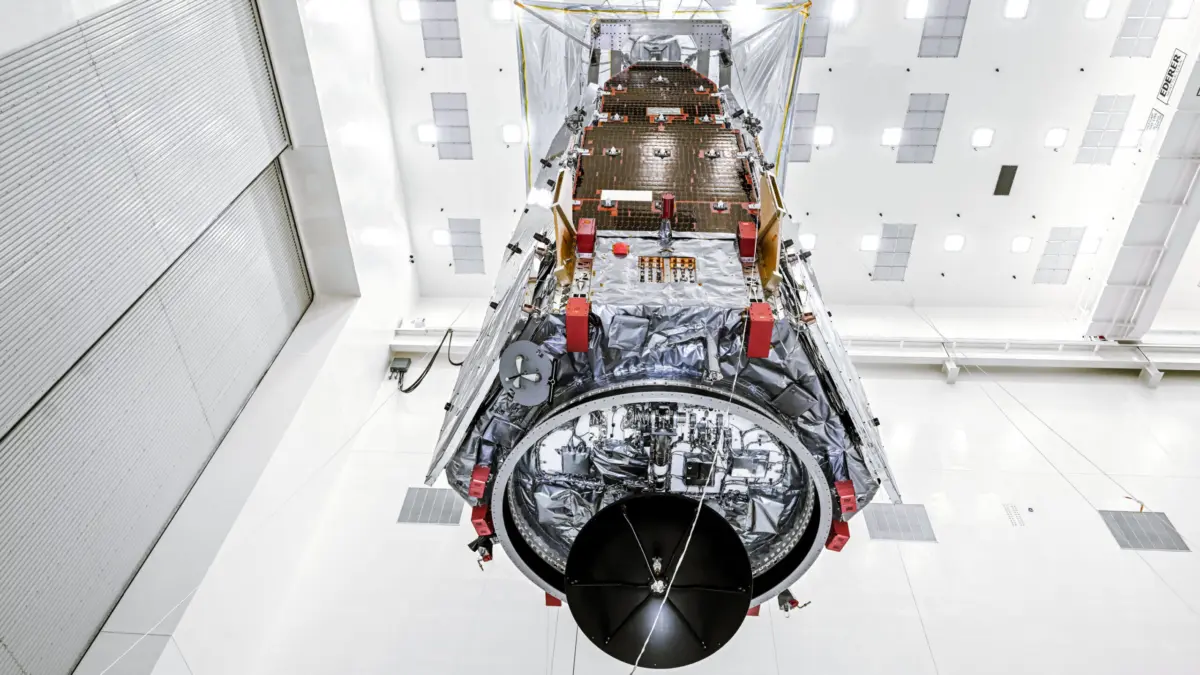
As humanity reaches deeper into the cosmos, the tools we build to unravel the fundamental mysteries of the universe are increasingly finding a secondary, terrestrial purpose: defending our home planet. Scheduled for launch at the end of August from the Kennedy Space Center in Florida, NASA’s Nancy Grace Roman Space Telescope was conceived to peer into the deepest recesses of space. Named after NASA’s first chief astronomer, the observatory was engineered primarily to map the large-scale architecture of the cosmos, study the invisible glue of dark matter, and measure the accelerated expansion driven by elusive dark energy.
Yet, as a multi-institutional team of planetary scientists and astronomers is set to announce at the Europlanet Science Congress in The Hague, Roman is uniquely positioned to serve as a vital instrument in planetary defense. Equipped with a super-wide-angle, 300-megapixel infrared camera capable of capturing a patch of the sky roughly 100 times larger than the Hubble Space Telescope can manage at once, Roman can scan vast swaths of the night sky with unprecedented efficiency.
This accidental superpower could not come at a more crucial time. Amid recurring budgetary pressures from the political landscape—including significant funding cuts previously threatened by the Trump administration—project scientists have increasingly emphasized the mission’s dual utility. By pivoting some of its capabilities toward tracking near-Earth objects (NEOs), Roman promises to bolster a growing fleet of space- and ground-based observatories. While its primary mission remains the discovery of thousands of exoplanets, tens of thousands of supernovae, and over a billion galaxies, Roman’s sprawling field of view and infrared vision will allow it to spot small, hazardous space rocks down to 60 feet in length.
Far from operating in isolation, Roman is set to become a foundational node in an interconnected global defense network. Alongside dedicated planetary defense instruments like the upcoming Near-Earth Object (NEO Surveyor) and the Vera C. Rubin Observatory, Roman will help astronomers rapidly sort, track, and characterize potentially hazardous asteroids. In doing so, it bridges the gap between deep-space astrophysics and immediate planetary survival, proving that the pursuit of fundamental science can simultaneously safeguard humanity’s future.
Detailed Chronology: From Deep-Space Pioneer to Accidental Planetary Defender
The journey of the Nancy Grace Roman Space Telescope—formerly known as the Wide-Field Infrared Survey Telescope (WFIRST)—has been characterized by ambitious scientific goals, technical triumphs, and persistent political headwinds. Understanding how this cosmic surveyor became an asset for planetary defense requires tracing its timeline from early conceptualization through recent adaptive proposals.
[Decade of Design] ──> [July 2025: Strategic Pivot] ──> [September 2025: EPSC Presentation] ──> [August Launch Window]The Architectural Blueprint
Originally conceptualized to solve the universe’s greatest riddles regarding dark energy and dark matter, Roman was designed to look far beyond our solar system. Its optical architecture features a 2.4-meter primary mirror—the same size as Hubble’s—paired with a wide-field instrument that covers an area of the sky vastly superior to its predecessor. This massive field of view was selected to ensure that statistical surveys of galaxies and supernovae could be completed in months rather than decades.
However, optical systems designed to look deep into the universe inherently capture everything crossing their line of sight. Space-faring instruments peering outward must contend with foreground objects—satellites, cosmic rays, and stray asteroids passing through the solar system. For astrophysicists, these interruptions are historically treated as noise: data corruption to be filtered out and discarded.
The Political and Strategic Pivot (Summer 2025)
The re-evaluation of Roman’s planetary defense utility was catalyzed by external pressures. During the summer of 2025, as the mission once again faced administrative funding scrutiny and proposed cuts under the Trump administration, NASA and academic scientists sought ways to amplify the mission’s legislative and public value.
In July 2025, NASA planetary scientist Rick Cosentino posed a critical question to his colleagues: how could Roman’s capabilities be leveraged to protect Earth, thereby demonstrating immediate, tangible benefits to lawmakers and taxpayers? This prompted Bryan Holler of the Space Telescope Science Institute (STScI) in Baltimore, alongside Andy Rivkin of the Johns Hopkins Applied Physics Laboratory and other planetary researchers, to formally investigate the telescope’s tracking potential.
The Europlanet Science Congress Breakthrough (September 2025)
The culmination of this rapid research effort materialized in a formal proposal submitted for the Europlanet Science Congress. The team demonstrated that with minor software adjustments, Roman’s automated data pipelines—which typically scrub out linear "streaks" caused by moving bodies—could be repurposed. Instead of discarding these tracks, astronomers could isolate them, revealing the trajectories, sizes, and compositions of previously uncatalogued near-Earth asteroids.
This revelation transformed Roman from a pure astrophysics platform into an agile, highly capable scout for planetary defense, perfectly timed ahead of its late-August launch window from the Kennedy Space Center.
Supporting Context & Metrics: The Threat Matrix and Telescope Synergy
To appreciate Roman’s role in planetary defense, one must understand the scale of the threat it helps mitigate and the ecosystem of telescopes it joins.
The Asteroid Threat Matrix
NASA’s Planetary Defense Coordination Office, alongside international partners, categorizes near-Earth objects by scale and destructive potential:
- "City-Killer" Asteroids (460 feet and larger): Approximately 25,000 of these objects are estimated to inhabit near-Earth orbits, with just over half currently mapped. An impact by an object of this magnitude would result in catastrophic, irreversible regional destruction.
- Intermediate Asteroids (approx. 165 feet): Astronomers estimate there are roughly 230,000 objects in this class near Earth, with less than 10% catalogued to date. While not globally catastrophic, a direct strike on a major metropolitan area would release energy comparable to a large thermonuclear weapon—devastating urban centers through blast waves and thermal radiation.
- Small Impactors (approx. 60 feet): Comparable to the 2013 Chelyabinsk meteor that exploded over Russia with the force of 500,000 tons of TNT, injuring 1,500 people. Roman’s infrared optics are uniquely tuned to spot objects in this size class long before they enter Earth’s atmosphere.
The Multi-Telescope Ecosystem
Roman does not operate in a vacuum. It is part of a sophisticated, multi-tiered international observing network designed to detect, track, and characterize potential impactors:
| Observatory | Primary Role | Key Advantage |
|---|---|---|
| NEO Surveyor (Launching 2027) | Dedicated planetary defense | Positioned between Earth and the sun; specialized infrared optics optimized for finding hidden NEOs. |
| Vera C. Rubin Observatory | 10-year all-sky survey (Chile) | Expected to catalog roughly 89,000 near-Earth asteroids using wide-angle ground optics. |
| James Webb Space Telescope (JWST) | Deep-space infrared astronomy | Exceptional high-resolution follow-up capability for detailed targeting of high-risk objects. |
| Nancy Grace Roman Space Telescope | Astrophysics & wide-field survey | Massive field of view; rapid orbit refinement for multiple candidates simultaneously. |
The Collaborative Workflow in Action
When ground-based or space-based assets like the Vera C. Rubin Observatory or NEO Surveyor flag a cluster of suspicious asteroids, initial orbital calculations often carry high degrees of uncertainty. Because telescope time across global facilities is heavily oversubscribed, following up on every non-zero impact probability object is impossible.
This is where Roman shines. By directing its wide-angle infrared eye toward a targeted sector of the sky, Roman can capture multiple candidate asteroids simultaneously. Within days, its observations dramatically narrow orbital uncertainties by orders of magnitude.
[Detection by NEO Surveyor / Rubin]
               │
               ▼
[High Orbital Uncertainty / Multiple Targets]
               │
               ▼
[Roman Space Telescope Rapid Survey (Wide Field)] ──> [Benign: Discard / Relax]
               │
               ▼ (If Impact Risk Persists)
[Targeted Deep Follow-up (JWST / Ground Assets)] ──> [Deflection or Mitigation Mission]
If Roman’s data confirms that an asteroid is safely passing Earth, researchers can move on. If an object maintains a non-zero impact probability, high-precision assets like the James Webb Space Telescope can be deployed for targeted tracking. Furthermore, Roman’s infrared data yields crucial insights into an asteroid’s composition—differentiating between stony bodies, water-rich carbonaceous rocks, and dense metallic asteroids—providing the foundational density and mass metrics needed to plan a deflection mission (such as kinetic impactors tested by NASA’s DART mission) or other mitigation strategies.
Official Statements and Expert Insights
The integration of astrophysics assets into planetary defense represents a cultural shift within the space science community. Key leaders and researchers have articulated the strategic importance of this development:
-
Bryan Holler (Space Telescope Science Institute):
"My colleague Rick Cosentino said to me in July 2025 that we need to show what Roman can do for planetary defense as a way to further increase the visibility of the mission with lawmakers and taxpayers… Roman can provide infrared observations of more asteroids than JWST could hope to observe in a reasonable amount of observing time."
Holler further emphasizes the compositional value of the telescope’s data:
"This in turn provides strong clues to the composition and thereby the density and mass of the asteroid, which are important when estimating the impact damage or, less ghoulishly, the effort required to nudge it out of its current orbit."
-
Andy Rivkin (Johns Hopkins Applied Physics Laboratory):
"Streaks, whether caused by cosmic rays or glitches or asteroids, are caught by the software and discarded. But astronomers could go in, study those streaks, and pick out those they identify as asteroids… Roman’s field of view is much bigger [than JWST’s]."
-
Alise Fisher (NASA Headquarters Astrophysics Communications Lead):
"Roman will sample such a large volume of the cosmos that we’ve long known it will offer vast opportunities for a range of additional science."
Future Outlook: A Safer Horizon for Earth
As the launch date at the end of August approaches, the impending deployment of the Nancy Grace Roman Space Telescope marks a pivotal moment for both cosmology and planetary safety. While its primary operational directives remain fixed on unlocking the mysteries of dark matter, dark energy, exoplanets, and supernovae, its expanded mandate as an auxiliary planetary defense scout highlights the adaptability of modern space architecture.
The coming years will see an unprecedented convergence of technological capabilities. With the Vera C. Rubin Observatory actively mapping the southern sky, the scheduled 2027 launch of the dedicated NEO Surveyor, and the agile, wide-field surveillance offered by Roman, humanity’s blind spots in the solar system are shrinking rapidly.
By repurposing software to catch the telltale streaks of wandering space rocks, astronomers are ensuring that Roman will do more than just peer into the ancient history of the universe. While it maps billions of galaxies across the expanse of space, it will simultaneously stand watch over the roughly eight billion souls inhabiting Earth—turning an instrument of deep cosmic discovery into an indispensable guardian of our planetary future.
