

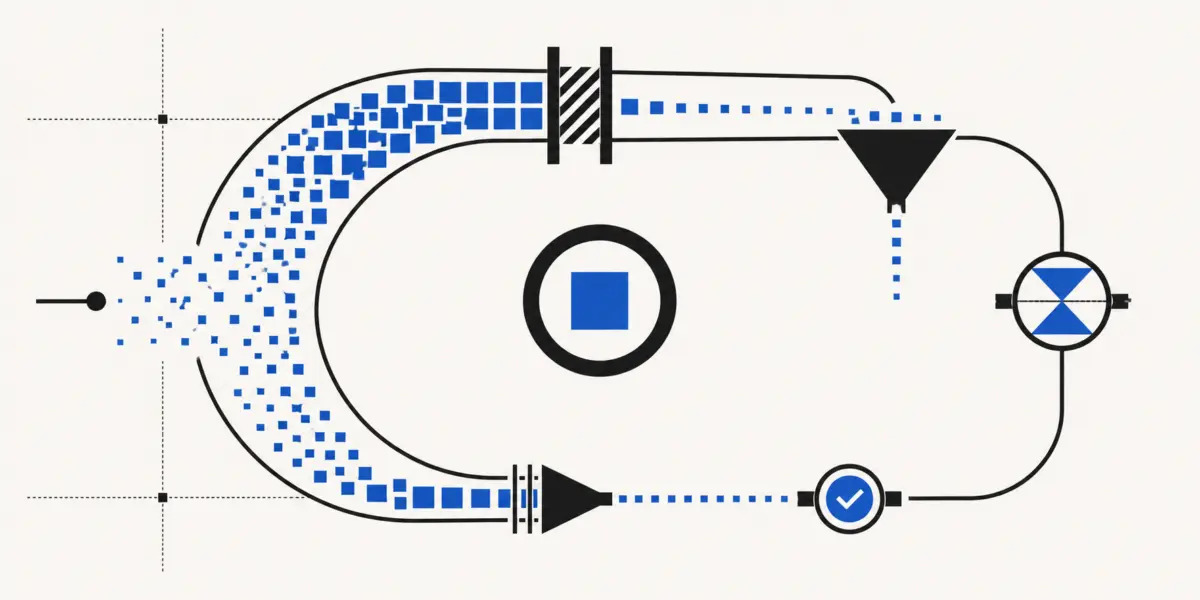
Executive Overview
As enterprise software architecture rapidly shifts from single-turn Large Language Model (LLM) wrappers to fully autonomous, multi-step agentic systems, engineering teams are encountering an unexpected operational barrier: catastrophic token cost compounding. While building a prototype chatbot or Retrieval-Augmented Generation (RAG) endpoint is straightforward and inexpensive, deploying autonomous agents capable of multi-tool execution, dynamic planning, and iterative error recovery over extended deployments introduces non-linear cost scaling.
In standard conversational interfaces, context length increases linearly with user interaction. Conversely, in an autonomous agentic loop—where an LLM continuously evaluates state, selects external tools, parses unstructured responses, and re-plans across dozens of execution steps—token consumption behaves quadratically. Without explicit context control, a seemingly routine $0.05 automation workflow can silently balloon into a $5.00+ transaction loop without raising a single operational error or triggering a traditional health-check alert.
       TRADITIONAL LINEAR CHATBOT                   AUTONOMOUS AGENTIC LOOP
      (Linear Context Growth: O(N))              (Quadratic Context Growth: O(N²))

   Turn 1: [Prompt 1] -> Model                 Step 1: [System + Tools + Step 1] -> Model
   Turn 2: [P1 + R1 + Prompt 2] -> Model       Step 2: [System + Tools + Step 1 + Tool 1 + Step 2] -> Model
   Turn 3: [P1 + R1 + P2 + R2 + P3] -> Model   Step 3: [System + Tools + S1 + T1 + S2 + T2 + S3] -> Model
                                               ...
                                               Step 20: Re-reads steps 1-19 history on EVERY call
At the core of this economic efficiency challenge lies a widespread architectural oversight: confusing State with Context.
- State represents the absolute minimal set of deterministic facts, key-value variables, and structural checkpoints required to advance a task from step $k$ to step $k+1$.
- Context represents the complete, verbose, raw transcript of execution history, including intermediate API payloads, past reasoning steps, system instructions, and error logs.
When orchestration frameworks conflate state with context by default—appending every tool output and system turn into an unmanaged message array—they expose enterprise infrastructure to five distinct financial failure modes. This investigative analysis dissects the mechanics of these runaway token traps, provides empirical models of their cost impacts, and details the mitigation patterns required to achieve production-grade financial governance.
Detailed Chronology: Anatomy of an Agentic Loop Financial Collapse
To understand how token expenditure escalates, we must trace the lifecycle of a runaway execution loop across a multi-turn task. Consider a enterprise IT automation agent tasked with diagnosing a service slowdown, reading log files, querying database tables, and executing a server restart.
+-----------------------------------------------------------------------------------+
|                        EXECUTION LIFECYCLE OF A RUNAWAY AGENT                     |
+-----------------------------------------------------------------------------------+
| PHASE I: INITIALIZATION                                                           |
| Step 1: Inject 5,000-token System Prompt + 20 Tool Specs                          |
|         Total Input: 5,500 Tokens | Cost: ~$0.016                                  |
+-----------------------------------------------------------------------------------+
| PHASE II: PAYLOAD SATURATION                                                      |
| Step 5: Ingest Raw Unfiltered Server Log (15,000 Tokens)                          |
|         Total Input: 23,500 Tokens | Cost: ~$0.070                                  |
+-----------------------------------------------------------------------------------+
| PHASE III: EXCEPTION CASCADE                                                      |
| Step 10: API 400 Bad Request Error -> Agent Retries 5x without clearing trace    |
|          Accumulated Trajectory: 48,000 Tokens per retry                           |
|          Total Retry Cost: ~$0.720                                                |
+-----------------------------------------------------------------------------------+
| PHASE IV: TERMINAL RUNAWAY                                                        |
| Step 20: Context Size: 85,000 Tokens per step                                     |
|          Cumulative Cost for Task: $5.42 (vs Target Budget: $0.10)                |
+-----------------------------------------------------------------------------------+
Phase I: Context Initialization & Broad Tool Exposure (Steps 1–3)
The agent initializes with a static system prompt containing behavioral guidelines, edge-case constraints, and full JSON schemas for 20 potential external tools.
- Input Load: 5,000 tokens of static prompt + 500 tokens of user query.
- Execution: Step 1 executes cleanly. Step 2 appends the assistant’s thought process and a tool call request. Step 3 appends the tool response.
- Cumulative Cost Impact: Negligible (~$0.01 to $0.02).
Phase II: Payload Saturation & Quadratic Scaling (Steps 4–9)
The agent executes a tool designed to query a monitoring service. The tool returns a raw, unparsed JSON payload containing system metrics, infrastructure metadata, null fields, and redundant timestamps totaling 15,000 tokens.
- Architectural Flaw: The framework appends the raw JSON directly into the conversation history array.
- Execution: On Step 5, the model must re-process the initial prompt (5,500 tokens), prior reasoning steps (2,000 tokens), and the raw payload (15,000 tokens). Total input context now stands at 22,500 tokens.
- Cumulative Cost Impact: The cost per step jumps from $0.01 to $0.07.
Phase III: Exception Cascades & Stale Error Accumulation (Steps 10–15)
At Step 10, the agent attempts to execute a remediation API call using an incorrectly formatted payload. The external API returns a 400 Bad Request with a 1,000-token stack trace.
- Architectural Flaw: The standard ReAct (Reasoning and Acting) loop catches the exception, appends the error trace to the context array, and prompts the model to correct its action. The model attempts a minor parameter modification, fails again, and repeats the cycle five times.
- Execution: Retries 1 through 5 carry the initial prompt, previous steps, the 15,000-token database payload, and an expanding series of multi-thousand-token stack traces. Each failed retry costs approximately $0.15 in processing fees.
- Cumulative Cost Impact: The retry sub-loop alone consumes over $0.75 across six steps without achieving state progression.
Phase IV: Terminal Degradation & Storage Collateral Costs (Steps 16–20+)
By Step 20, the agent is managing an active context array of over 85,000 tokens per API call. Because attention mechanisms in Transformer architectures scale quadratically with sequence length, processing latency increases significantly alongside API billing.
- Outcome: A workflow designed to execute in under 10 seconds for $0.05 takes 110 seconds and costs $5.42.
- Downstream Infrastructure Toll: The uncompressed session state (now ~500 KB of JSON data) is written to primary application databases (e.g., PostgreSQL or Redis) on every step for observability, leading to database write-amplification, index bloat, and elevated latency across long-term audit storage systems.
Supporting Context & Empirical Metrics
To quantify the financial impact of unmanaged agentic loops, consider a theoretical comparative analysis evaluating three distinct architectural approaches executing a standard 20-step data processing task:
- Naive Loop: Uncompressed context, raw tool payloads, monolithic routing (flagship model throughout), static prompt injection.
- Partially Managed Loop: Truncated error messages and dynamic model routing, but retaining uncompressed tool payloads and static system prompts.
- Optimized Architecture: Context compaction, payload filtering middleware, circuit-breaker error pruning, dynamic model routing, and dynamic tool retrieval.
Comparative Performance Metrics (20-Step Task Execution)
| Metric | Naive Loop | Partially Managed Loop | Optimized Architecture | Variance (Optimized vs. Naive) |
|---|---|---|---|---|
| Average Context per Step | 48,500 tokens | 18,200 tokens | 3,800 tokens | -92.1% |
| Total Cumulative Tokens Processed | 970,000 tokens | 364,000 tokens | 76,000 tokens | -92.1% |
| LLM API Cost per Execution | $4.85 | $0.91 | $0.06 | -98.7% |
| Average Latency per Step | 4.2 seconds | 1.8 seconds | 0.6 seconds | -85.7% |
| Database State Growth per Run | 8.4 MB | 2.1 MB | 0.2 MB | -97.6% |
| Task Failure / Loop Rate | 18.5% | 8.2% | 1.1% | -94.0% |
Mathematical Formulation of Token Scaling
The total token cost $C_total$ of an $N$-step agentic loop can be modeled mathematically.
In a Naive Configuration, where $S$ is static prompt size, $P_i$ is tool payload size at step $i$, and $R_i$ is output reasoning size:
$$Cnaive = sumi=1^N left( S + sum_j=1^i-1 (R_j + Pj) right) cdot textRatemodel$$
Assuming an average combined step contribution of $k = R_j + P_j$, the scaling behavior simplifies to:
$$Cnaive = N cdot S + k cdot fracN(N-1)2 cdot textRatemodel = O(N^2 cdot k)$$
In an Optimized Architecture, where context compaction limits historical payload context to a bounded window $W$, payload filtering reduces input payload sizes by a factor of $alpha$ ($0 < alpha ll 1$), and model routing applies lower cost rates $textRate_tier$ based on task complexity:
$$Coptimized = sumi=1^N left( S_dynamic + W + alpha Pi right) cdot textRatetier(i) = O(N)$$
This demonstrates that mitigating agent loop failure is fundamentally an exercise in reducing mathematical complexity from quadratic $O(N^2)$ to linear $O(N)$.
Architectural Deep-Dive: The Five Cost Traps & Mitigation Strategies
+-----------------------------------------------------------------------------------+
|                       FIVE PRODUCTION TOKEN COST TRAPS                            |
+-----------------------------------------------------------------------------------+
| 1. O(N²) Context Accumulation Tax  ---> Remedy: Rolling Summaries & KV Caching    |
| 2. Unbounded Retry Loops          ---> Remedy: Circuit Breakers & State Pruning   |
| 3. Unfiltered Payload Bloat       ---> Remedy: Extraction Layers (jq/Regex/Schemas)|
| 4. Monolithic Model Routing       ---> Remedy: Dynamic Multi-Model Graph Nodes    |
| 5. Static System Prompt Inflation ---> Remedy: Dynamic RAG-Driven Tool Injection  |
+-----------------------------------------------------------------------------------+
1. The $O(N^2)$ Context Accumulation Tax
The Failure Mode
Standard orchestration engines default to maintaining state via a simple append operation: messages.append(new_message). Over extended execution graphs, the language model re-reads all historical interactions, prior tool inputs, and intermediate thought processes on every single turn. This repetition forces the enterprise to re-purchase the same historical token volume dozens of times.
Architectural Mitigation
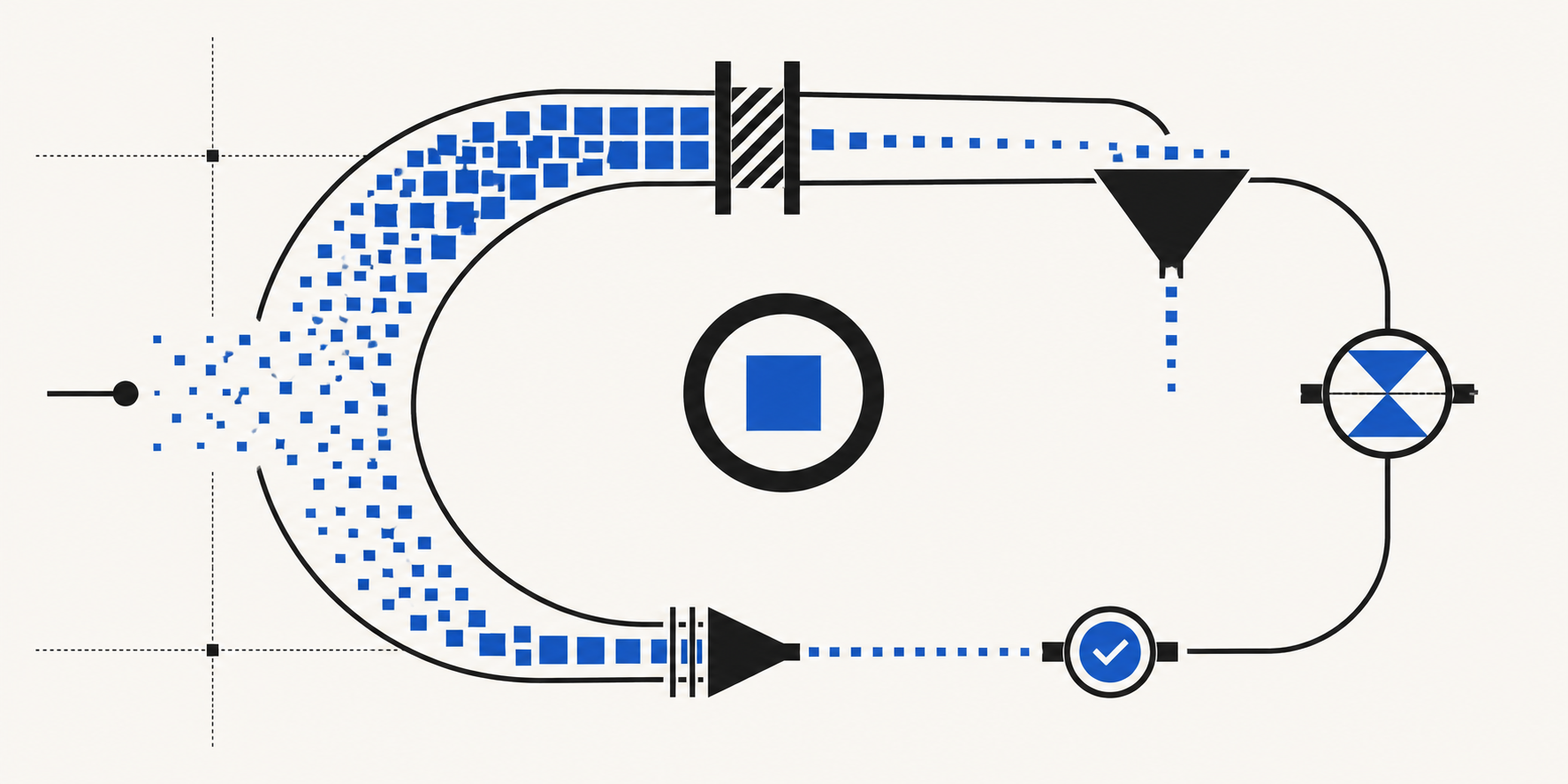
Implement Cache-Aware Context Compaction. When context length exceeds a designated threshold (e.g., 8,000 tokens), the orchestration layer triggers an asynchronous background process that collapses older turns into a high-density rolling state summary.
Simultaneously, engineers should structure prompts to exploit Key-Value (KV) Cache Prefix Caching offered by modern API providers. By keeping static system rules and persistent state variables at the absolute beginning (prefix) of the context window and appending new variable outputs strictly at the suffix, providers can freeze the prefix KV-cache, reducing token input billing on static prefixes by up to 80-90%.
# Conceptual Architecture: Context Compactor Middleware
def compact_context(messages: list[dict], threshold: int = 8000) -> list[dict]:
    total_tokens = count_tokens(messages)
    if total_tokens < threshold:
        return messages

    # Preserve system instructions (prefix) and the last N turns
    system_instruction = messages[0]
    recent_history = messages[-4:]
    intermediate_turns = messages[1:-4]

    # Generate high-density state summary
    summary_text = summarize_intermediate_state(intermediate_turns)

    return [
        system_instruction,
        "role": "system", "content": f"STATE SUMMARY: summary_text",
        *recent_history
    ]
Operational Risk
Over-aggressive compaction introduces Context Amnesia. If the summary drops a subtle parameter retrieved in Step 2 (such as an ephemeral access token or session UUID), the agent will hallucinate a replacement value in Step 8, initiating a downstream sequence of failing tool calls.
2. Unbounded Retry Loops on Stale Error State
The Failure Mode
When an external tool invocation returns an exception (e.g., HTTP 500, Schema Validation Error, or Timeout), standard agent loops append the raw stack trace directly into the message array and re-prompt the model: "An error occurred, please try again."
If the underlying issue is deterministic (e.g., a missing required field), the model will often repeat the same bad call or attempt minor variations while keeping the full historical record of previous failures in its context. The context grows rapidly, and token costs scale dramatically during error recovery.
       NAIVE RETRY PATTERN                         CIRCUIT-BREAKER PATTERN
 (Error Bloat & Repeated Failures)              (Clean Trajectory Pruning)

  Step 1: Call Tool A                          Step 1: Call Tool A
  Step 2: Error 400 Trace (10k tokens)         Step 2: Error 400 Detected
  Step 3: Retry Tool A + Keep Error 1                 --> Strip Stack Trace
  Step 4: Error 400 Trace 2 (20k total)               --> Inject Heuristic Filter
  Step 5: Retry Tool A + Keep Errors 1 & 2            --> Route to Alternate or Halt
  Result: Cost Spikes, Eventual Timeout        Result: Predictable Cost & Immediate Recovery
Architectural Mitigation
Deploy an Orchestrator Circuit Breaker with Trajectory Pruning. The orchestrator must intercept errors before they are written to the persistent context array. Raw stack traces must be sanitized via deterministic filters that reduce them to minimal, structured error state heuristics (e.g., "Tool X failed: Parameter 'user_id' expected String, received Int").
If a specific tool call fails twice consecutively, the circuit breaker trips, stripping the failed trajectory from the execution history and routing control to a alternative strategy or human-in-the-loop fallback.
3. Unfiltered Tool Payload Bloat
The Failure Mode
Agents frequently interface with enterprise databases, REST APIs, or web scraping modules. A single database query or API call can easily return thousands of lines of verbose JSON data containing UI metadata, structural keys, tracking hashes, and null parameters. Feeding raw payloads directly into the context window forces the LLM to filter signal from noise, consuming high token volumes purely to read structural overhead.
Architectural Mitigation
Place a Deterministic Payload Extraction Middleware between tool outputs and the context manager. Use lightweight, zero-LLM processing layers—such as jq filters, regex masks, or Pydantic structural parsers—to strip unnecessary fields before context injection.
+-------------------+      +-----------------------+      +-------------------+
|  Raw Tool Output  | ---> | Extract/Filter Layer  | ---> | LLM Context Window|
|  (15,000 Tokens)  |      |  (jq / Pydantic Filter)|      |   (400 Tokens)    |
+-------------------+      +-----------------------+      +-------------------+
| Verbose JSON      |      | Strips metadata, nulls|      | Clean Key-Value   |
| Tracking Hashes   |      | & unused parameters   |      | Essential State   |
| Metadata/Nulls    |      +-----------------------+      | Inputs            |
+-------------------+                                     +-------------------+
// RAW TOOL OUTPUT (1,200 Tokens)
"status": "success",
"code": 200,
"server_metadata": "datacenter": "us-east-1", "node_id": "ip-10-0-4-12", "rack": "b4",
"response_timestamp": "2026-03-30T14:22:01.002Z",
"data":
"users": [
"id": 801, "name": "Jane Doe", "status": "active", "internal_flags": null, "audit_hash": "a8f9c01..."
]
// FILTERED TOOL OUTPUT INJECTED TO CONTEXT (45 Tokens)
"users": ["id": 801, "name": "Jane Doe", "status": "active"]4. Monolithic Model Routing
The Failure Mode
Engineers frequently configure agents with a single high-tier model (e.g., GPT-4o, Claude 3.5 Sonnet) to handle the entire execution loop. While complex reasoning and long-term planning require these flagship models, simple execution turns—such as parsing a date, classifying an user intent, or reformatting data into JSON—do not.
Architectural Mitigation
Transition from monolithic agent loops to Heterogeneous Multi-Model Orchestration Graphs. Define the agentic system as a Directed Acyclic Graph (DAG) using frameworks like LangGraph, AutoGen, or CrewAI, where individual nodes are routed to the smallest model capable of reliably performing that node’s specific function.
                  +-----------------------------------+
                  |   Task Orchestrator / Planner     |
                  |     (Flagship Heavyweight)        |
                  +-----------------------------------+
                                    |
            +-----------------------+-----------------------+
            |                                               |
            v                                               v
+-----------------------+                       +-----------------------+
| Intent Classifier Node|                       | Semantic Reasoning    |
| (Lightweight Model)   |                       | & Synthesis Node      |
| e.g. Llama-3-8B /     |                       | e.g. Claude 3.5 Sonnet|
| GPT-4o-mini           |                       | GPT-4o                |
+-----------------------+ +-----------------------+- Planning & Complex Reasoning Nodes: Flagship models (e.g., Claude 3.5 Sonnet, GPT-4o).
- Intent Classification & Routing Nodes: Lightweight models (e.g., Llama 3 8B, GPT-4o-mini).
- Data Transformation & Structural Validation Nodes: Deterministic code interpreters or ultra-fast, targeted small models.
5. Static Context Duplication & Prompt Inflation
The Failure Mode
To prepare an agent for every possible contingency, engineering teams often build comprehensive system prompts that contain instructions, edge-case protocols, and schemas for dozens of tools. As a result, the model processes 5,000+ tokens of static instructions on every turn, even if the specific step only requires a basic calculation.
Architectural Mitigation
Implement Dynamic Just-In-Time (JIT) Prompt Assembly. Instead of loading all tool definitions into every prompt call, index the schemas inside a local vector database or lightweight rule table.
At each turn, the orchestrator evaluates the agent’s current state and dynamically injects only the tool definitions and behavioral instructions relevant to the immediate next step.
+-----------------------------------------------------------------------------------+
|                       STATIC vs. DYNAMIC TOOL INJECTION                           |
+-----------------------------------------------------------------------------------+
| STATIC INJECTION (Naive)                                                          |
| [System Prompt: 5,000 Tokens] + [20 Tool Schemas: 4,000 Tokens]                  |
| Inputs Processed Every Turn: 9,000 Tokens minimum                                |
+-----------------------------------------------------------------------------------+
| DYNAMIC JIT INJECTION (Optimized)                                                 |
| Step 1: Evaluates intent -> Retrieves Tool #3 Schema via Vector Index             |
| [Minimal System Prompt: 500 Tokens] + [Target Schema: 250 Tokens]                 |
| Inputs Processed This Turn: 750 Tokens (91.6% Reduction)                          |
+-----------------------------------------------------------------------------------+
Security Consideration
Dynamic tool injection introduces potential Prompt Injection vulnerabilities. If the tool retrieval system queries a vector database using untrusted inputs (e.g., scraped web text), an attacker could manipulate the vector retrieval score to load a tampered tool schema. Always run dynamic tool injection through strict privilege and authorization validation layers.
Official Statements & Industry Perspectives
The enterprise shift toward rigorous token governance is widely recognized across software engineering and AI architecture disciplines:
"The industry’s focus is pivoting from model capability to orchestration efficiency. Building an agent that solves a task once in a notebook environment is straightforward. Building an agent system that can execute tens of thousands of automated operations daily without encountering cost growth requires managing state with the same discipline as distributed database design."
— Senior AI Solutions Architect, Enterprise Cloud Infrastructure
"We frequently observe engineering teams suffering from ‘Context Inflation Syndrome.’ They treat the LLM context window as an infinite bucket for logs, schemas, and state history. The teams that successfully deploy agentic workflows to production treat context as a volatile, expensive cache that must be flushed, compressed, and managed continuously."
— Principal Systems Engineer, AI Orchestration Frameworks
Future Outlook & Strategic Roadmap
As agentic architecture matures, managing token costs will transition from manual orchestration logic to native infrastructure protocols and automated compiler optimizations.
+-----------------------------------------------------------------------------------+
|                         AGENT FINOPS EVOLUTION ROADMAP                            |
+-----------------------------------------------------------------------------------+
| CURRENT STATE (Orchestration Layer)                                               |
| Manual State Compaction, Middleware Filtering, Static Dynamic Routing Graphs      |
+-----------------------------------------------------------------------------------+
| MID-TERM (Protocol & Hardware-Level Caching)                                      |
| Widespread MCP (Model Context Protocol) Adoption, Native Provider Cache Sharing   |
+-----------------------------------------------------------------------------------+
| LONG-TERM (Autonomous LLM Compilers)                                              |
| Speculative Execution Engines, Dynamic State Partitioning, Token-Aware FinOps     |
+-----------------------------------------------------------------------------------+- Protocol Standards (Model Context Protocol – MCP): Emerging open protocols are defining standardized interactions between client applications, agents, and local tools. MCP facilitates clean state boundary separation, ensuring tool inputs and execution results are passed via clean references rather than raw text dumps.
- Provider-Level Cache Optimization: Major model vendors are expanding native support for persistent prefix KV-caching and state-aware context management. Future APIs will allow developers to explicitly update, query, and mutate server-side KV-caches, eliminating the need to resend context histories over network boundaries.
- LLM-as-a-Compiler Frameworks: Advanced runtime managers will operate similarly to traditional database compilers. These engines will automatically analyze agent step graphs, rewrite execution strategies, prune historical contexts, and optimize model selection dynamically based on real-time budget constraints and target latencies.
Summary Checklist for Production Engineers
To ensure agentic deployments remain cost-effective, architectural teams should enforce the following operational controls:
- [ ] Separate State from Context: Maintain task state variables in an external key-value database; supply only current state summaries to the prompt window.
- [ ] Enforce Context Compaction: Apply sliding-window summaries and prefix-friendly formatting whenever interaction context exceeds baseline limits.
- [ ] Sanitize Tool Payloads: Filter raw JSON responses through structural middleware (
jq, Pydantic) to remove unused fields before context injection. - [ ] Deploy Circuit Breakers: Catch tool call exceptions, strip full stack traces from the context, and enforce retry limits before errors cascade.
- [ ] Optimize Model Routing: Direct simple nodes (e.g., parsing, classification) to lightweight models; reserve flagship models for complex reasoning.
- [ ] Inject Tools Dynamically: Replace massive static tool lists with JIT schema retrieval based on step requirements.
- [ ] Set Lifecycle TTLs: Implement strict Time-To-Live (TTL) retention policies on session history stores to prevent downstream log bloat.
