

Executive Overview
The rapid acceleration of robotics engineering continues to redefine the boundaries of what autonomous systems can achieve. In this comprehensive review of the latest developments in the global robotics landscape, researchers, institutions, and industrial pioneers are pushing past traditional operational limitations. From breakthroughs in whole-body machine intelligence and advanced spatial reasoning to novel biomechanical interfaces and extraterrestrial exploration trials, the field is undergoing a fundamental transformation.
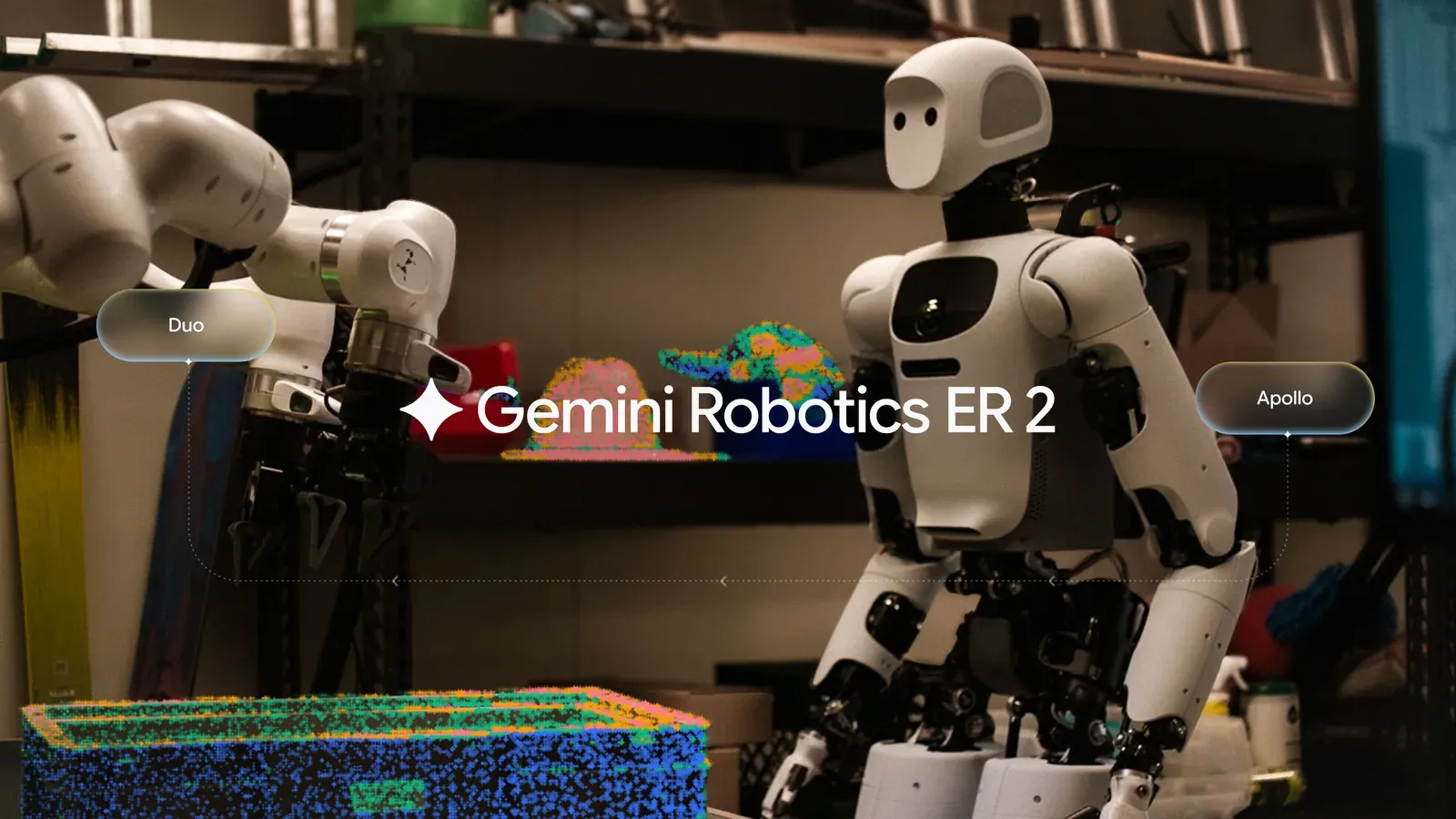
At the forefront of this evolution is Google DeepMind with the introduction of Gemini Robotics 2, an intelligence layer designed to orchestrate whole-body control, high-level dexterity, and multi-robot collaboration. Concurrently, academic institutions, specialized startups, and research giants—including Disney Research, NASA, and the General Robotics Lab—are introducing systems that bridge the gap between abstract human movement and physical robotic execution.
This article explores the defining technical achievements, institutional milestones, and philosophical questions currently shaping the robotics sector. By examining these developments through an authoritative, journalistic lens, we map the trajectory of a technology on the precipice of widespread commercial and scientific integration.
Detailed Chronology of Recent Robotic Innovations
The contemporary robotics ecosystem is characterized by an unprecedented convergence of artificial intelligence, advanced sensor suites, and material science. Below is a detailed chronology of the most notable platform updates, experimental breakthroughs, and conceptual demonstrations highlighted across the international research community.
1. Google DeepMind Unveils Gemini Robotics 2
The rollout of Gemini Robotics 2 marks a paradigm shift in how foundational AI models interface with hardware. Serving as a robust intelligence layer, this iteration moves beyond narrow task execution to power the next generation of adaptable robots. Designed to handle complex environments, Gemini Robotics 2 unlocks intelligent whole-body control, allowing systems to coordinate their entire physical structure to interact with objects, navigate cluttered spaces, and collaborate seamlessly with other robotic agents.
2. Biomechanical Integration and Shadow Expression
Advancements in soft robotics and human-machine interaction have yielded novel ways for machines to express spatial awareness. The General Robotics Lab recently debuted a robotic system utilizing a 21-degrees-of-freedom dexterous hand equipped with compliant soft skin. Powered by a learned shadow self-model, the system achieves dynamic shadow expression. This development mirrors how humans communicate through body abstractions, shadows, silhouettes, and reflections, offering a more intuitive framework for human-robot interaction.
3. Generative Quadruped Puppeteering by Disney Research
Bridging the gap between biological movement and robotic locomotion, Disney Research introduced its "Two2Four" generative framework. This system enables human-to-quadruped motion transfer, translating human kinetic inputs directly into quadrupedal puppeteering. While the concept of mapping bipedal human motion onto four-legged machines presents unique kinematic challenges, the resulting fluidity opens new doors in entertainment, animatronics, and teleoperation.
4. Domestic Assistants and Specialized Hardware
In the realm of domestic robotics, Hello Robot continues to refine human-centered automation with the introduction of Stretch 4.0. As a one-armed, three-wheeled platform engineered to navigate residential environments safely, Stretch 4.0 reignites the industry-wide debate over form factor: should domestic assistants emulate human morphology (humanoids), or should they optimize for efficiency and safety through specialized, non-anthropomorphic designs?
Complementing domestic automation, industrial and academic teams are pushing the limits of specialized mechanics:
- Agility Robotics continues to stress-test bipedal resilience, prompting ongoing industry discussions regarding structural durability and field logistics.
- Unitree has drawn attention with agile quadruped platforms that invite critical examination regarding maintainability, field repairability, and structural longevity.
- Sunday Robotics showcased long-horizon manipulation capabilities through accelerated laundry-folding tasks executed by its Memo platform, highlighting the persistent challenges of speed and efficiency in soft-object manipulation.
5. Extraterrestrial Trials and Aerospace Adaptations
Robotics is no longer confined to Earth. Collaborative research initiatives involving the University of Southern California (USC), NASA, and external partners are actively training advanced robot dogs for planetary exploration. These quadrupeds are being optimized to endure the extreme terrains of Mars, the Moon, and beyond, serving as autonomous scouts capable of navigating hazardous, unmapped extraterrestrial landscapes without human intervention.
6. Historical Reflections: Honoring the Roots of Humanoid Robotics
As modern engineering achieves unprecedented feats of dexterity and intelligence, the industry occasionally pauses to reflect on its origins. Archival highlights from the Takanishi Lab at Waseda University remind the global engineering community of the monumental impact of WABOT-1, widely recognized as the birth of the humanoid robot in Japan. This historical touchstone underscores the exponential acceleration of hardware and software design over the past half-century.
Supporting Context & Metrics
To fully understand the weight of these recent developments, one must analyze the underlying metrics driving modern robotics research. The integration of large language models (LLMs) and vision-language-action (VLA) models into physical hardware has fundamentally altered development timelines.
- Degrees of Freedom (DoF): Modern dexterous end-effectors routinely exceed 20 DoF per hand, matching or approaching the complex articulation of human musculature and skeletal joints.
- Multimodal Integration: Systems like Gemini Robotics 2 process visual, auditory, and kinetic data streams simultaneously, reducing latency in closed-loop control systems to milliseconds.
- Payload-to-Weight Ratios: Specialized domestic platforms, such as Hello Robot’s Stretch series, emphasize lightweight, high-reach kinematics to ensure safety in human-populated environments, balancing low mass with operational torque.
- Field Durability: Across quadrupedal and bipedal categories, research groups are heavily prioritizing modular component design to facilitate rapid field repairs—addressing the long-standing industry bottleneck of mechanical wear and tear.
Official Statements and Industry Perspectives
The rapid commercialization and academic expansion of robotics have elicited strong commentary from leading researchers and institutional directors:
"Introducing Gemini Robotics 2—the intelligence layer powering the next generation of truly adaptable robots. As it takes its first literal steps, this major advance unlocks intelligent whole-body control, advanced dexterity, and multirobot collaboration."
— Google DeepMind
Reflecting on the psychological and communicative aspects of machine design, academic researchers note:
"Humans routinely communicate through abstractions of their bodies, including shadows, silhouettes, and reflections. Here, we present a robotic system capable of dynamic shadow expression using a 21-degrees-of-freedom dexterous hand with compliant soft skin and a learned shadow self-model."
— General Robotics Lab
Highlighting the interdisciplinary nature of modern space exploration, academic collaborators emphasize:
"University of Southern California researchers work with NASA and others to train robot dogs for planetary exploration on Mars, the moon, and beyond!"
— Research in Applied Decisions (RAD Lab)
Future Outlook
The trajectory of the robotics sector points toward deeper cognitive autonomy, seamless multi-agent cooperation, and increasingly blurred lines between digital AI and physical execution. As foundational models mature into whole-body intelligence layers, robots will transition from executing pre-programmed scripts to reasoning through novel, unstructured environments in real time.
Looking ahead, key milestones for the industry will include:
- Standardized Benchmarks for Dexterity: Establishing universal testing protocols for soft-material manipulation and bipedal balance across unpredictable terrain.
- Autonomous Extraterrestrial Deployment: Moving from controlled terrestrial simulations to fully autonomous planetary surface missions managed by multi-robot constellations.
- Sustainable Hardware Ecosystems: Addressing the environmental and economic cost of robotic hardware through modular manufacturing, self-healing materials, and circular maintenance models.
Ultimately, the advancements cataloged across these recent developments demonstrate that the industry is advancing past mere proof-of-concept demonstrations. We are entering an era where robots are equipped with the whole-body intelligence, adaptive dexterity, and contextual awareness required to operate safely and effectively alongside humanity—both on Earth and among the stars.
