

Executive Overview
The PC gaming landscape is currently undergoing a transitional phase, marked by the rapid adoption of next-generation hardware architecture, advanced artificial intelligence integrations, and escalating component costs. For enthusiasts seeking to upgrade their rigs without emptying their bank accounts, finding a balanced, future-proof prebuilt desktop can feel like hunting for a needle in a haystack. However, a standout retail promotion has emerged that fundamentally shifts the value equation for mid-to-high-tier gaming systems.
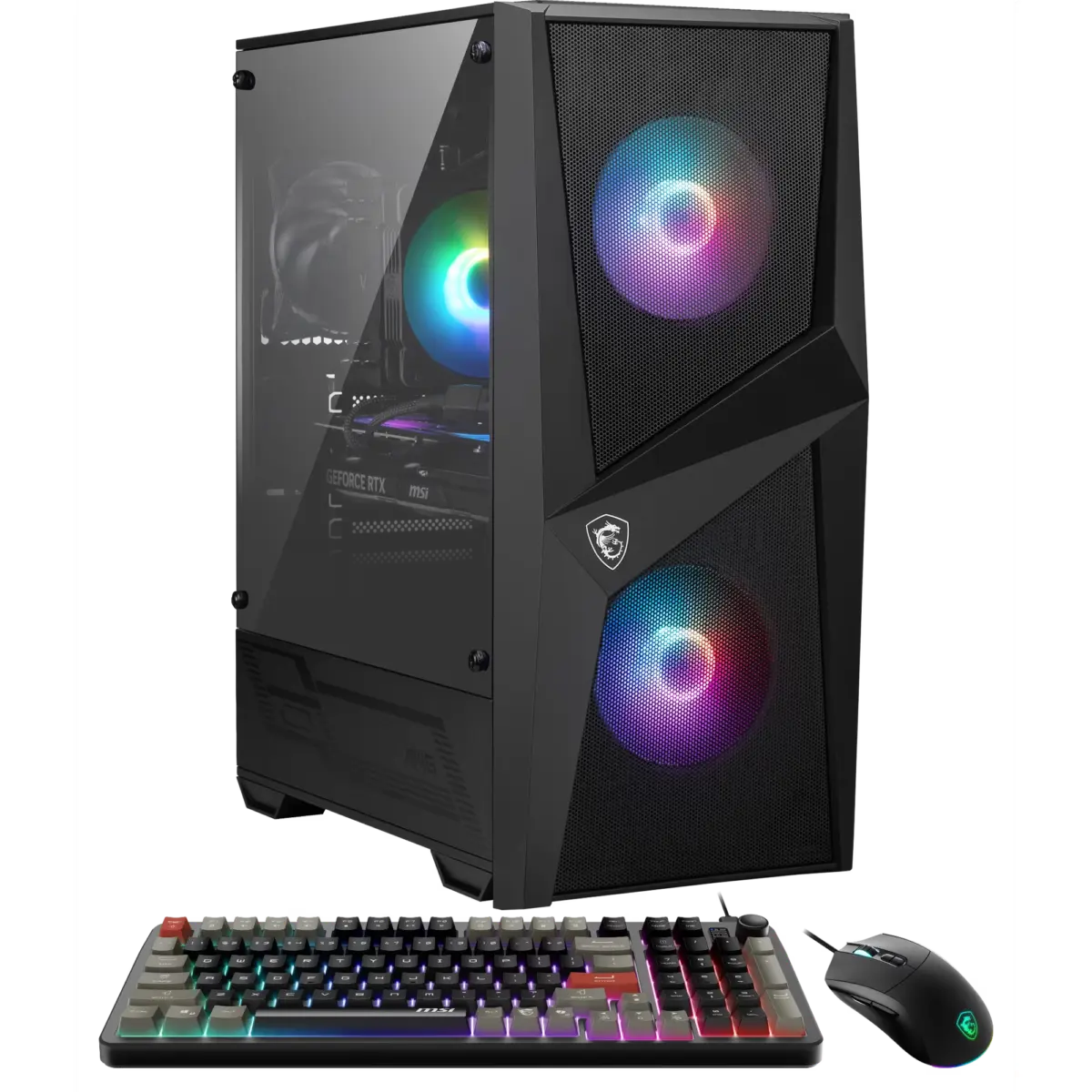
Walmart has slashed the price of the MSI Codex R2 AI Gaming Desktop—a powerhouse system equipped with a brand-new Nvidia GeForce RTX 5070 graphics card and an Intel Core Ultra 7 processor—by an impressive $500.99. Originally commanding a steeper MSRP, this heavily discounted configuration is now available for $1,499.
This comprehensive review and news analysis explores the underlying hardware specifications, evaluates the performance metrics of the newly released RTX 5070 architecture, weighs the pros and cons of the Intel Arrow Lake CPU pairing, and determines whether this Walmart exclusive deal represents the definitive mid-range gaming bargain of the season.
Detailed Chronology of the Hardware Market and the Rise of the RTX 50-Series
To understand why a $1,500 price point for an RTX 50-series prebuilt system is causing waves in the enthusiast community, one must look closely at the recent timeline of graphics card and desktop pricing trends.
The Shift to Next-Gen Architectures
Over the past several years, the graphics card market has seen generational leaps in performance heavily tied to proprietary machine-learning technologies. When Nvidia first introduced DLSS (Deep Learning Super Sampling) years ago, it revolutionized how gamers approached high-resolution rendering. Fast forward to the current era, and the deployment of cutting-edge hardware features—such as DLSS 4 and advanced multi-frame generation—has become an essential cornerstone for achieving ultra-smooth gameplay at demanding resolutions like 1440p and 4K.
The release of Nvidia’s GeForce RTX 50-series marked the official arrival of current-generation graphics tech. Positioned squarely as the optimal all-round Nvidia GPU for mainstream and performance-conscious gamers, the RTX 5070 has quickly dominated hardware review boards.
The Retail Response and Prebuilt Pricing Pressures
Historically, early adopters of new GPU architectures pay a hefty "early bird tax," particularly when buying prebuilt desktops. System integrators often bundle newly launched components with top-tier components, driving baseline retail prices well past the $2,000 threshold.
However, increased competition among major retailers like Walmart, Best Buy, and Newegg has accelerated promotional cycles. The sudden $500.99 markdown on the MSI Codex R2 AI signals a strategic effort by retailers to move inventory rapidly and capture market share from DIY builders who might otherwise hesitate to invest in brand-new platform ecosystems. By dropping the entry barrier to sub-$1,500, MSI and Walmart have effectively democratized access to Nvidia’s latest graphics architecture.
Supporting Context & Hardware Metrics: Under the Hood of the MSI Codex R2 AI
A flashy discount means little if the underlying components fail to deliver synergistic performance. A closer examination of the MSI Codex R2 AI reveals a well-rounded spec sheet designed to handle modern AAA titles and intensive multitasking workloads alike.
1. The Crown Jewel: Nvidia GeForce RTX 5070 (12GB GDDR7)
At the heart of this prebuilt system lies the Nvidia GeForce RTX 5070, a GPU that has quickly established itself as a benchmark for mid-to-high-tier performance.
- CUDA Cores: 6,144
- VRAM: 12GB of ultra-fast GDDR7 memory operating on a 192-bit memory bus.
- Architecture Benefits: The inclusion of GDDR7 memory significantly boosts memory bandwidth compared to previous-generation GDDR6 implementations, allowing for faster asset loading and superior handling of high-resolution textures.
What this means for gameplay:
The RTX 5070 is engineered to effortlessly chew through high frame rates at 1080p, even when cranked up to maximum Ultra graphics presets. For 1440p gaming—widely considered the sweet spot for modern display monitors—this card delivers consistent, steady frame rates. While the most resource-heavy, unoptimized AAA titles may require users to toggle down one or two graphics settings (such as volumetric fog or ray-tracing intensity), the integration of AI-driven DLSS 4 helps bridge the gap. By leveraging advanced upscaling and multi-frame generation, players can enjoy buttery-smooth visual fidelity without sacrificing visual sharpness.
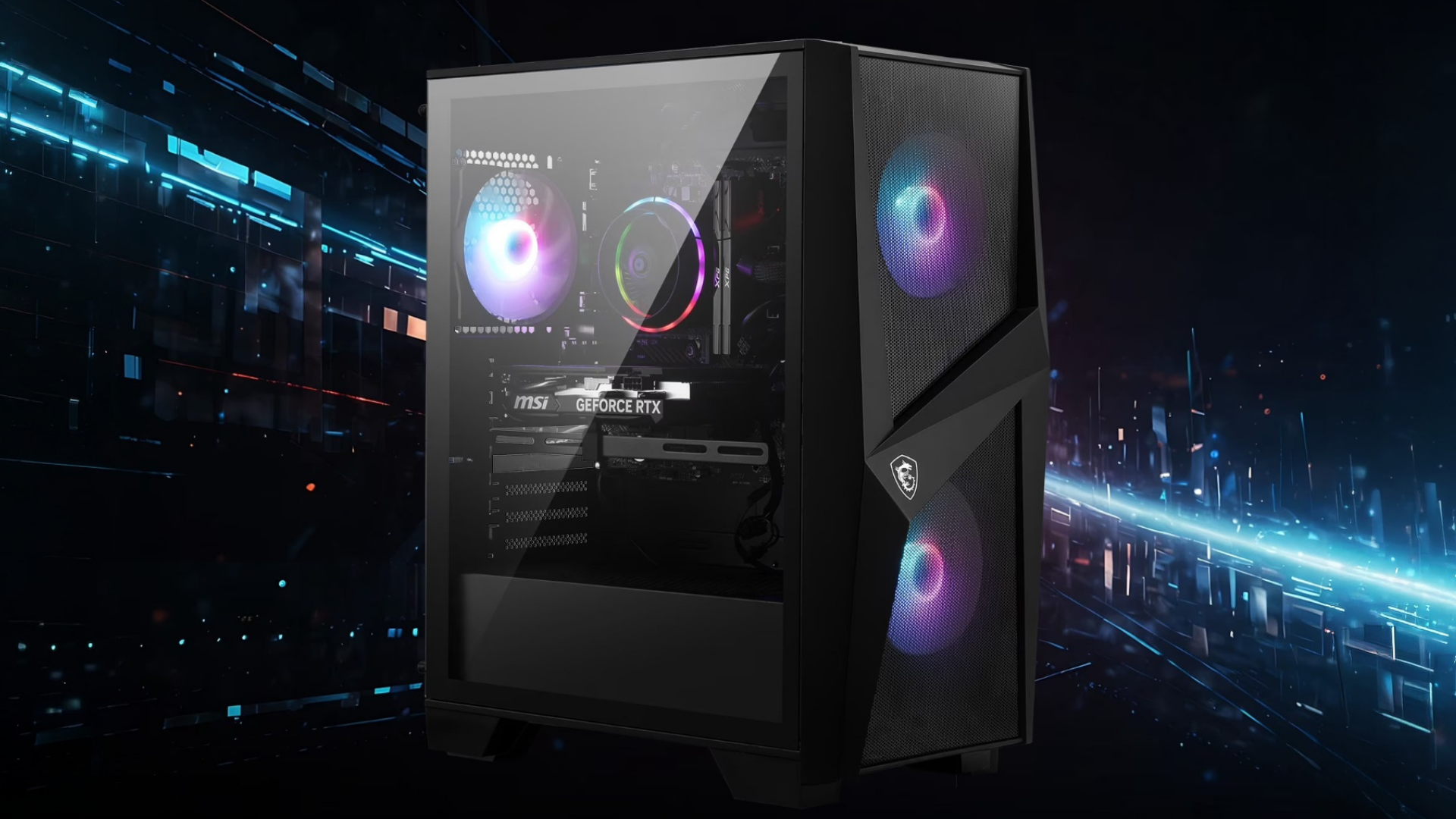
When compared directly against its predecessor, the RTX 4070, the new RTX 5070 exhibits a noticeable, quantifiable performance uplift, securing its spot as the definitive go-to GPU for gamers who want current-gen longevity without paying flagship prices.
2. The CPU: Intel Core Ultra 7 265F (Arrow Lake Architecture)
Powering the system’s compute tasks is the Intel Core Ultra 7 265F, a member of Intel’s Arrow Lake CPU family.
- Core Configuration: 20 total cores (8 Performance-cores and 12 Efficiency-cores).
- Workload Optimization: The hybrid architecture divides responsibilities intelligently. The 8 high-performance cores focus intensely on gaming threads and primary application rendering, while the 12 efficiency cores handle background tasks, operating system housekeeping, and heavy multitasking.
While enthusiast communities note that Intel’s Arrow Lake chips occasionally trail specialized AMD X3D processors (such as the Ryzen 7 9800X3D) in pure, unadulterated gaming benchmarks, the Core Ultra 7 265F is nonetheless a powerhouse. Paired with the RTX 5070, it eliminates potential CPU bottlenecks in the vast majority of gaming scenarios, ensuring that frames generated by the GPU are translated smoothly onto the screen. Furthermore, its formidable multi-threaded capability makes the MSI Codex R2 an excellent secondary workstation for content creation, video editing, and streaming.
3. Memory and Storage Considerations
Every prebuilt system requires compromises to hit a specific price point, and the MSI Codex R2 AI makes calculated choices regarding its memory and storage layout:
- System RAM: The PC comes equipped with 16GB of DDR5 RAM. While DDR5 ensures that you are operating on fast, modern memory standards rather than legacy DDR4, 16GB is essentially the baseline requirement for modern gaming rigs. Fortunately, the motherboard features open slots, allowing users to easily upgrade to 32GB or 64GB down the line as their workload demands.
- Storage: Storage is handled by a swift 1TB NVMe SSD. In an era where individual AAA game titles can easily consume upwards of 100GB to 150GB of disk space, 1TB will comfortably hold your operating system and a handful of massive flagship games. Users with sprawling Steam libraries will likely want to supplement this with an additional secondary SSD or mechanical drive later, but out of the box, it provides snappy boot times and rapid game asset loading.
Industry Reception and Expert Analysis
Tech analysts and hardware reviewers have closely monitored the rollout of RTX 50-series prebuilt systems to gauge consumer sentiment. Industry consensus suggests that while standalone component prices remain volatile, prebuilt bundles featuring deep promotional discounts represent some of the smartest purchases for consumers who prefer an out-of-the-box solution over sourcing individual parts.
Hardware experts emphasize that building an equivalent system independently—sourcing a standalone RTX 5070, an Intel Core Ultra 7 processor, a Z-series or B-series motherboard, DDR5 RAM, a 1TB NVMe SSD, a cooling solution, power supply, and a dedicated chassis—would easily eclipse the $1,499 mark at retail pricing, especially when factoring in the cost of a Windows 11 license.
By passing these savings directly to the consumer, MSI and Walmart have effectively absorbed the early-adopter premium, making high-refresh-rate 1440p gaming accessible to a broader demographic.
Future Outlook: Is the MSI Codex R2 AI Worth Your Investment?
As the PC gaming ecosystem marches further into 2026 and beyond, demands on hardware will only intensify. Developers are increasingly relying on sophisticated ray-tracing pipelines, path-tracing technologies, and machine-learning upscalers to push graphical boundaries.
Investing in a system built around the Nvidia RTX 5070 and an Intel Core Ultra 7 processor ensures that your hardware lineup is well-equipped to handle upcoming software innovations. Features like DLSS 4 and dedicated AI processing blocks guarantee that even as future games become more demanding, your system will possess the architectural headroom required to maintain playable, high-fidelity frame rates.
For gamers currently struggling with aging hardware—such as GTX 10-series, RTX 20-series, or even early RTX 30-series cards—the MSI Codex R2 AI Gaming Desktop represents a transformative upgrade. At the heavily discounted promotional price of $1,499 (a $500.99 saving off its regular retail price), it stands out as one of the most compelling prebuilt gaming PC values currently available on the market.
Interested buyers can view the promotion directly via Walmart’s official listing for the MSI Codex R2 AI.
