

Executive Overview
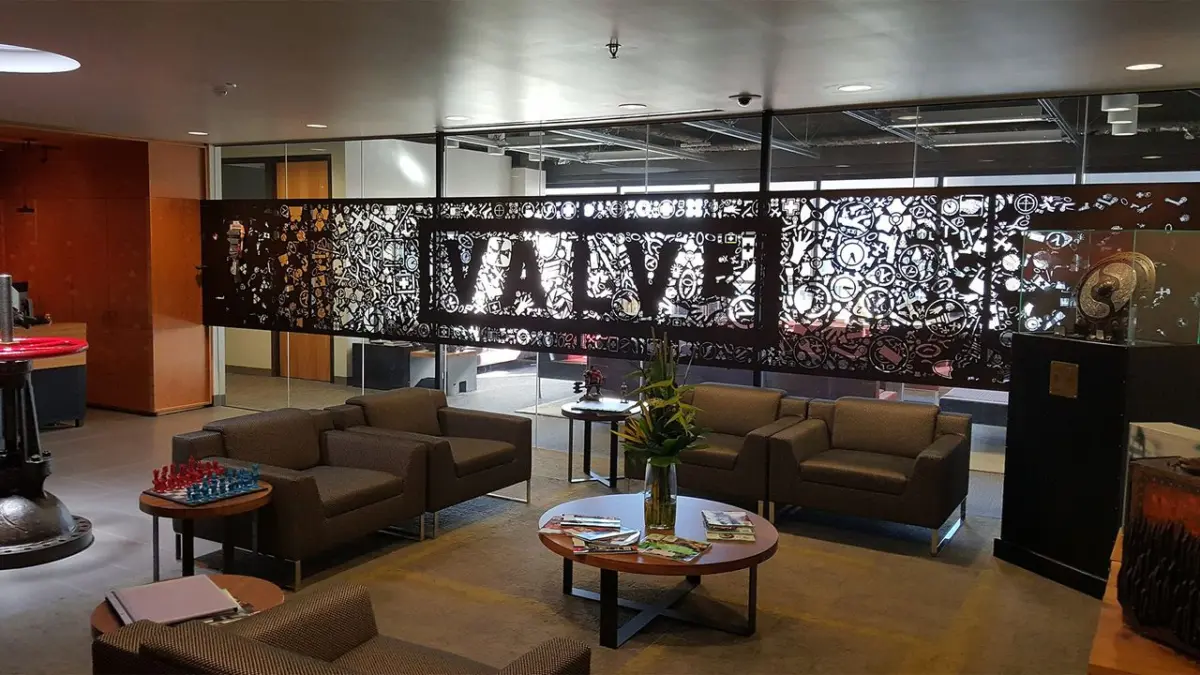
Thirty years ago today, on August 24, 1996, a fledgling software developer was born that would fundamentally alter the trajectory of interactive entertainment. Founded by Microsoft veterans Gabe Newell and Mike Harrington, Valve Corporation emerged not from a garage or a basement as a typical bedroom-coder startup of the 8-bit and 16-bit eras, but from the seasoned ranks of corporate software engineering.
Armed with deep technical expertise in operating systems, large-scale software architecture, and game porting, Newell and Harrington set out to prove that video games could transcend simple arcade loops and morph into cinematic, deeply immersive narrative vehicles.
In the decades since its inception, Valve’s footprint on the PC gaming ecosystem has evolved from a disruptive first-person shooter studio into an absolute titan of digital commerce and hardware innovation. From rewriting the design playbook of the FPS genre with 1998’s Half-Life to launching Steam in 2003—a platform that pioneered modern digital storefronts—Valve has consistently outmaneuvered wealthier, more entrenched rivals.
Today, as the company celebrates its 30th anniversary, its influence extends deep into portable hardware with the Steam Deck, open-source Linux gaming via Proton, and a software ecosystem that continues to command billions in sales, causing palpable anxiety in the halls of Microsoft and traditional console manufacturers alike.
Detailed Chronology
1996–1998: The Genesis and the Seismic Shift of Half-Life
When Gabe Newell and Mike Harrington walked away from Microsoft—where Newell had spent 13 years and Harrington 9 years contributing to the foundations of personal computing—they brought with them a profound understanding of software scalability and technical execution. Unlike many game developers of the mid-1990s who relied on iterative sequels and traditional publishing pipelines, Valve approached game design with system-level ambition.
In 1998, just two years after incorporation, Valve released its debut Half-Life. The game shattered the Doom-clone mold that had dominated the PC landscape. Instead of forcing players through disconnected, text-crawl-driven levels, Half-Life integrated seamless level design, tightly scripted narrative sequences, advanced enemy artificial intelligence, and real-world physics into a cohesive, uninterrupted experience.
Players stepped into the hazardous materials suit of theoretical physicist Gordon Freeman at the Black Mesa Research Facility, experiencing a catastrophic alien invasion entirely through the eyes of the protagonist without ever cutting away to a traditional cinematic. The title swept industry awards, won over critical acclaim, and laid the structural bedrock for modern narrative-driven first-person shooters.
2003: The Launch of Steam and the Digital Distribution Revolution
By the early 2000s, PC gaming was facing a fragmentation crisis. Physical retail channels were cumbersome, patch management was a manual chore, and multiplayer matchmaking was disjointed. Valve tackled this logistical nightmare head-on with the 2003 launch of Steam.
Initially met with skepticism and technical hiccups by players forced to use it to play Counter-Strike: Source, Steam gradually transformed from a simple content-delivery client for automatic game patches into a comprehensive digital marketplace. Valve systematically added features that redefined player expectations:
- Cloud Saves: Eliminating the dread of lost progress during hardware failures.
- Community Hubs and Steam Workshop: Democratizing mod distribution and turning user-generated content into multi-billion-dollar phenomena (such as Counter-Strike, Dota 2, and Team Fortress).
- Automatic Patching & Indie Publishing: Lowering the barrier to entry for independent developers through initiatives like Steam Greenlight and later Steam Direct.
By refusing to fragment the market with closed, proprietary vendor silos, Valve successfully fought off early attempts by deep-pocketed competitors to build rival platforms, cementing Steam as the undisputed heartland of PC gaming.
2013–2022: Hardware Ambitions and the Hardware Breakthrough
Valve’s journey into hardware has been marked by both visionary missteps and triumphant breakthroughs. In the mid-2010s, the company attempted to bridge the gap between the living room and the desk with the first generation of Steam Machines—compact pre-built desktop PCs running SteamOS. While the initial wave struggled due to high price points, limited software optimization, and confusion over the Linux-based operating system, Valve treated the failure as a protracted R&D phase.
That perseverance paid off exponentially in February 2022 with the release of the Steam Deck. By packing custom AMD architecture, console-like ergonomics, and the entire breadth of the Steam library into a portable handheld form factor, Valve created an entirely new product category. The Steam Deck proved that portable PC gaming could be both accessible and powerful, shifting the paradigm of handheld gaming away from closed mobile ecosystems and Nintendo monopolies.
Supporting Context & Metrics
Financial Growth and the Global Market
Steam’s economic dominance continues to shatter internal and industry records. Market reporting indicates that Steam sales alone topped an astounding $11 billion during the first half of 2026. This staggering growth has been supercharged by shifting global gaming trends, most notably a massive influx of active players from mainland China and the enduring commercial vitality of massive legacy game catalogues.
To contextualize Valve’s engineering and operational scale, consider the following metrics:

- Simultaneous User Milestones: Steam routinely shatters concurrent online user records, frequently surpassing 35 to 40 million active users online simultaneously during peak weekend periods.
- Proton Compatibility Layer: Through continuous updates to Proton and SteamOS, thousands of Windows-exclusive games now run seamlessly on Linux-based hardware without native developer ports.
- Mod Economy: Valve’s early foresight in industrializing game engines (such as the Source Engine) and empowering modders has birthed some of the most profitable esports titles in history, generating billions in microtransaction and marketplace revenue.
Official Statements & Industry Perspectives
Valve’s corporate philosophy has historically favored long-term technical innovation over short-term quarterly earnings reports, a luxury afforded by its privately held status. Speaking on the evolution of the company and the broader PC ecosystem, industry analysts and company leadership have consistently emphasized the importance of open platforms.
"Valve didn’t just build a store; they built an enduring digital infrastructure that protects PC gaming from the kind of walled-garden fragmentation that suffocates other platforms," notes industry analyst Marcus Vance. "Their willingness to invest years into foundational software like Proton and SteamOS—long before hardware profits materialized—demonstrates a strategic patience that public corporations simply cannot afford."
Meanwhile, competitors are taking notice. Valve’s recent pushes into upgrading SteamOS (such as SteamOS 3.8, which introduces early support for reviving the Steam Machine living-room concept with improved performance gains and controller support) have reportedly caused growing concern within Microsoft’s Windows and Xbox divisions. As PC hardware becomes increasingly versatile, Valve’s software stack threatens to decouple PC gaming entirely from traditional Windows operating system dependencies.
Future Outlook
As Valve enters its fourth decade, the company stands at a fascinating crossroads. While the broader personal computing and gaming industry navigates a difficult hardware pricing cycle—pressured by soaring component costs and supply chain disruptions—Valve’s hardware roadmap remains exceptionally aggressive.
The company is actively positioning SteamOS to scale beyond handhelds, laying the groundwork for a modern revival of the Steam Machine desktop concept. If Valve can successfully navigate the current economic headwinds of the PC hardware market, its open-platform software ecosystem may soon challenge not just Microsoft’s PC dominance, but traditional home console manufacturers as well.
For thirty years, Valve has balanced the creative risk-taking of a boutique game studio with the infrastructural prowess of a tech giant. As Half-Life redefined how stories are told in virtual spaces and Steam redefined how games are bought and played, the next chapter of Valve’s history promises to test the boundaries of hardware, operating systems, and player freedom once more.
