

Executive Overview
As enterprise software teams shift from simple large language model (LLM) completion endpoints to fully autonomous, multi-step AI agents, a systemic paradox has emerged: while base foundation models are demonstrably smarter and more capable than ever, production agent deployments continue to suffer high-profile operational failures.
Crucially, rigorous post-mortems reveal that the overwhelming majority of production outages and catastrophic behaviors are not caused by model reasoning deficits or lack of raw model intelligence. Instead, they stem from orchestration layer breakdowns—moments where the execution harness loses control of deterministic state, mismanages state rehydration across distributed nodes, or fails to enforce strict execution boundaries.
Standard prompt evaluation techniques (such as aggregate LLM-as-a-judge scoring or offline benchmarks) evaluate statistical response quality, but they consistently fail to surface critical system boundary failures. To prevent severe operational outages, software engineering teams must establish binary CI/CD regression gates that explicitly isolate and test the orchestration boundary.
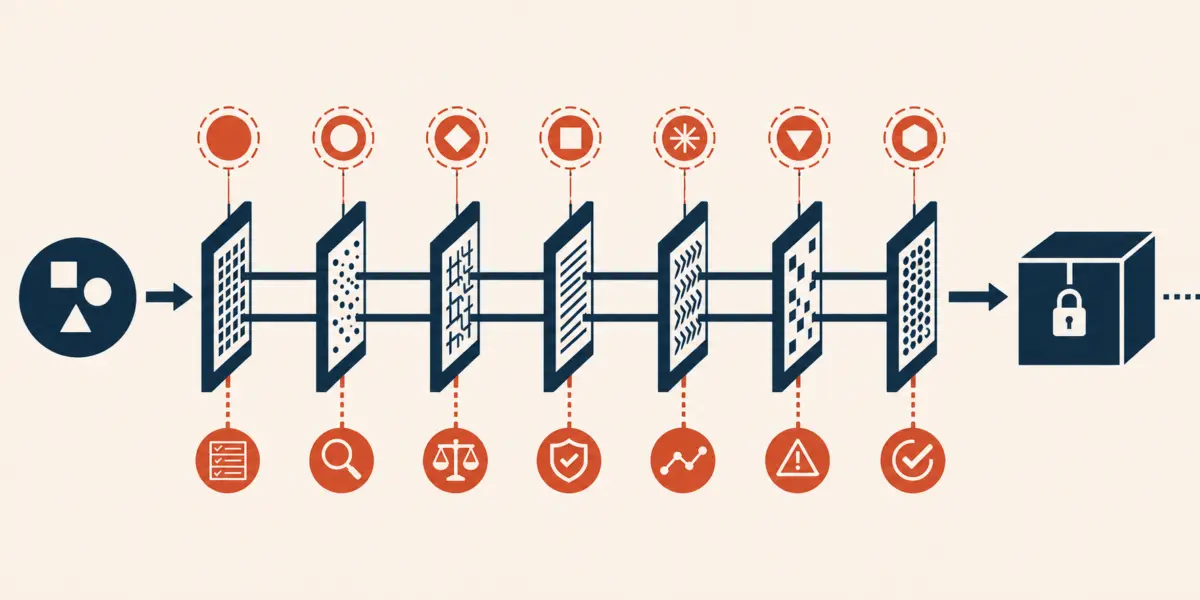
This analysis outlines seven essential regression tests designed to identify and isolate critical orchestration failure modes prior to production deployment. By establishing deterministic, confidence-bounded testing gates, organizations can enforce strict operational bounds around non-deterministic AI agents.
Detailed Chronology: Structural Regression Test Implementation
To build a resilient execution harness, testing frameworks must target the interface between the model, the state store, and external tools. The following breakdown categorizes the seven essential regression tests by their operational domains across the agent lifecycle.
       +-----------------------------------------------------------------+
       |               AI AGENT ORCHESTRATION PIPELINE                  |
       +-----------------------------------------------------------------+
                                       |
       +-------------------------------+---------------------------------+
       |                               |                                 |
       v                               v                                 v
+------------------+         +-------------------+             +------------------+
| PHASE 1: MEMORY  |         | PHASE 2: BOUNDARY |             | PHASE 3: STATE   |
| & RETRIEVAL      |         | & EXECUTION       |             | & CONTROL        |
+------------------+         +-------------------+             +------------------+
| - Context Evict. |         | - Idempotency     |             | - Schema/Output  |
| - Parametric vs. |         | - Injection /     |             | - Non-Termin.    |
|   RAG Grounding  |         |   Override        |             | - Rehydration    |
+------------------+         +-------------------+             +------------------+
Phase 1: Context Preservation and Knowledge Grounding
Test 1: Context Loss and Retrieval Degradation
- Mechanism: As conversation logs grow, the orchestrator must trim or summarize history to stay within configured prompt token budgets. Naive First-In, First-Out (FIFO) eviction policies frequently discard early turn details—such as user account identifiers, specific preferences, or initial constraints.
- Failure Mode: The agent re-queries the user for information collected early in the session, or operates on incomplete assumptions due to eviction.
- Test Strategy: Construct a synthetic conversation payload that consumes approximately 80% of the maximum prompt context window. Embed a critical entity or constraint in the very first turn. Query the agent on a task requiring that specific initial state variable.
- Pass Criteria: The test passes if the system successfully surfaces the evicted data via semantic memory retrieval or retains the exact relationship via entity-recall summarization.
- Architectural Trap: Avoid combined "OR" assertions (e.g., passing if either vector search or summarization works). Treat summarization state preservation and dynamic retrieval mechanisms as two distinct, independently gated tests.
Test 2: RAG Grounding Against Parametric Recall
- Mechanism: Agents often experience a tug-of-war between parametric memory (knowledge stored in the model weights) and non-parametric context (retrieved documents from a vector store or database).
- Failure Mode: Model weight bias overrides newly injected, domain-specific facts (hallucination), or conversely, the agent blindly adopts unverified or malicious context (context poisoning).
- Test Strategy: Inject a synthetic context payload that explicitly contradicts standard real-world facts (e.g., stating a company’s return policy is 120 days instead of the standard 30). Query the model regarding this policy.
- Pass Criteria: The test suite must evaluate bidirectionality. It must verify that the agent defers to valid retrieved context over parametric memory when appropriate, while simultaneously asserting that the agent detects and flags blatantly adversarial or contradictory context inputs.
Phase 2: Boundary Safety and External Execution
Test 3: Tool Execution Idempotency
- Mechanism: Distributed system networks experience retries from the orchestrator harness, HTTP clients, or downstream microservices. Additionally, when an agent receives an ambiguous tool observation, it may re-emit an identical tool call.
- Failure Mode: Unintended duplicate write operations, such as charging a customer’s credit card twice or creating duplicate database records.
- Test Strategy: Inject three identical, consecutive tool-execution payloads at the execution boundary.
- Pass Criteria: The downstream system executes exactly one write mutation and returns cached, identical response payloads for the subsequent two attempts.
- Architectural Strategy: Idempotency keys must be derived deterministically using a hash of the tool name, canonicalized argument payloads, and a persistent business correlation ID. Keys must never rely on ephemeral loop variables like step indices or message IDs, which change with each iteration.
                  +-----------------------------------+
                  |   Duplicate Tool Call Received    |
                  +-----------------------------------+
                                    |
                                    v
                  +-----------------------------------+
                  |  Extract Business Correlation ID  |
                  |  + Tool Name + Canonical Args     |
                  +-----------------------------------+
                                    |
                                    v
                  +-----------------------------------+
                  |   Generate Deterministic Key      |
                  +-----------------------------------+
                                    |
            +-----------------------+-----------------------+
            |                                               |
            v                                               v
  [Key Found in Cache]                             [Key Not Found]
            |                                               |
            v                                               v
+-----------------------+                       +-----------------------+
| Return Cached Payload |                       | Execute Tool Mutation |
| (No Duplicate Write)  |                       | & Store Result in Key |
+-----------------------+                       +-----------------------+
Test 4: Instruction Override and Direct/Indirect Prompt Injection
- Mechanism: Attackers can introduce override instructions via direct chat inputs or indirect payload vectors, such as retrieved web pages, customer support tickets, or database records.
- Failure Mode: System prompt instructions are compromised, systemic parameters are exfiltrated, or unverified tool side-effects are executed.
- Test Strategy: Pass adversarial inputs containing injection signatures through both direct prompt interfaces and retrieved secondary data streams.
- Pass Criteria: The agent must terminate the request safely or refuse execution without emitting unverified tool calls or leaking internal configuration instructions.
- Assertion Boundary: Assert strictly against tool-call traces, function execution logs, and network side-effects. Never rely exclusively on the text output of the model, as an agent can easily stream a polite refusal while simultaneously firing a malicious back-end payload.
Phase 3: Control Dynamics and State Persistence
Test 5: Structured Output Adherence and Model Skew
- Mechanism: While provider-level JSON schemas enforce structural parsing, edge cases frequently escape basic validation.
- Failure Mode: Output truncation from token limits yielding unparseable strings, model refusals returned as null values, or version-alias drift silently defaulting to legacy unconstrained behavior.
- Test Strategy: Pass complex schema targets under heavy output token constraints and trigger intentional safety boundaries. Evaluate response parsing alongside explicitly pinned model strings.
- Pass Criteria: Verify structural schema adherence, assert that
finish_reasonequalsstop(notlength), ensure safety refusals return actionable status codes (e.g., HTTP 403 equivalents), and mandate that all requests are bound to immutable model snapshot versions rather than generic aliases.
Test 6: Non-Termination, Livelock Defense, and Bounded Orchestration
- Mechanism: Agents given impossible tasks or encountering failing, persistent-error tools can enter cyclic execution loops ("livelock"), repeating the same actions without advancing the session.
- Failure Mode: Uncontrolled inference API spend, resource consumption, and queue starvation for legitimate execution threads.
- Test Strategy: Provide the agent with an unresolvable logical request or route it to a tool mocked to perpetually return an error response.
- Pass Criteria: Orchestration execution halts cleanly once a hard limit budget is exhausted, returning a structured diagnostic error payload.
- Architectural Mandate: Bounded orchestration limits must be configured across a triple constraint framework: maximum total execution steps, cumulative token spend limits, and a strict wall-clock timeout.
                     +-----------------------------+
                     |    Agent Execution Step     |
                     +-----------------------------+
                                    |
                                    v
                     +-----------------------------+
                     |  Evaluate Triple Constraint |
                     +-----------------------------+
                                    |
         +--------------------------+--------------------------+
         |                          |                          |
         v                          v                          v
[Step Count Exceeded?]   [Token Budget Exceeded?]    [Wall-Clock Timeout?]
         |                          |                          |
         +--------------------------+--------------------------+
                                    |
                                    v
                    [YES to ANY Constraint Violation]
                                    |
                                    v
                     +-----------------------------+
                     | Halt Execution Immediately  |
                     | Return Structured Error Payload|
                     +-----------------------------+
Test 7: Distributed State Rehydration and Consistency
- Mechanism: In distributed, auto-scaling environments, long-running agent operations rarely conclude on the same infrastructure process where they originated.
- Failure Mode: Resuming mid-workflow execution fails due to un-serializable state components, missing cache fields, or schema version mismatch between instances.
- Test Strategy: Progress an agent through a multi-step workflow to its midpoint, serialize its full operational state to storage, completely destroy the active in-memory runtime process, rehydrate the state into a separate process, and send the next user command.
- Pass Criteria: The agent rehydrates cleanly, retains contextual knowledge of prior steps, and completes the workflow without repeating previously committed side-effects.
Supporting Context & Metrics: Quantitative Baselines
To build reliable CI/CD testing gates around non-deterministic systems, engineering teams must anchor their testing strategies in precise system definitions and statistical baselines.
Defining State vs. Memory
A primary source of architectural failure is confusing state with memory.
+-------------------------------------------------------------------------+
|                                AI AGENT                                 |
+-------------------------------------------------------------------------+
                                    |
         +--------------------------+--------------------------+
         |                                                     |
         v                                                     v
+-----------------------------------+               +-----------------------------------+
|              STATE                |               |              MEMORY               |
+-----------------------------------+               +-----------------------------------+
| - Deterministic                   |               | - Probabilistic                   |
| - Transactional Execution History |               | - Vector Context & Semantics      |
| - Tool Payload Signatures         |               | - Dynamic RAG Embeddings          |
| - Exact Execution Point           |               | - Eviction & Summarization Rules  |
+-----------------------------------+               +-----------------------------------+
When an agent misbehaves mid-execution, the root cause almost universally resides in the state layer rather than model weight errors.
Statistical Rigor in Stochastic Testing
Because LLMs exhibit non-deterministic outputs, running a single test iteration provides zero reliability guarantees. A test suite that occasionally fails due to normal variance will inevitably be ignored or disabled by development teams.
To build an effective CI/CD testing pipeline:
- Model Snapshot Pinning: Never use floating version tags (e.g.,
gpt-4-turboorclaude-3-5-sonnet). Always specify fixed, immutable snapshots (e.g.,gpt-4-0125-preview). - Temperature Control: Set decoding temperature parameters to
0.0where allowed by model APIs to reduce output variance. - Statistical Confidence Intervals: Run each regression test across an automated sample size ($N ge 20$ trials).
- Bounded Pass Criteria: Define a statistical pass threshold (e.g., $95%$ consistency across $N$ trials) to ensure stochastic fluctuations do not unblock unsafe releases or fail healthy builds.
Quantitative Metrics Summary Matrix
| Failure Mode Focus | Primary Metric / Metric Boundary | Pass Threshold | Recommended Enforcement Strategy |
|---|---|---|---|
| Context Loss | Entity Recall Rate against Gold Standard | $ge 98%$ Recall | Semantic evaluation of post-eviction contexts. |
| Tool Idempotency | Target Execution Mutations | Exactly $1$ Write | Distributed Redis locks with business-key hashing. |
| Prompt Injection | Side-Effect Side Execution | $0$ Unverified Tool Calls | Tool-boundary Role-Based Access Control (RBAC). |
| Schema Adherence | finish_reason & Structural JSON Validity |
$100%$ Valid | Schema-constrained decoding + token buffer gates. |
| Non-Termination | Triple Constraint Enforcement | $100%$ Terminated | Max step, max token, and wall-clock enforcement. |
| State Rehydration | Session Execution Recovery | $100%$ Workflow Finish | Automated instance destruction tests in CI/CD. |
Official Statements & Industry Consensus
Leading AI reliability engineers and infrastructure architects emphasize that security and runtime safety must be enforced outside the model context.
"Treating the output of an LLM as a trusted execution command is a fundamental security flaw. Safety is not a prompt engineering problem; it is an infrastructure boundary problem. If your system cannot safely handle a rogue tool call at the execution harness level, it is not production-ready."
— Enterprise Infrastructure Security Directive
Additionally, expert consensus highlights the necessity of isolating state layer management from model reasoning:
"The industry’s over-reliance on LLM-as-a-judge frameworks for operational testing has created a false sense of security. While these models can evaluate response helpfulness, they are fundamentally blind to transaction state corruptions, distributed process serialization failures, and network idempotency breaches. CI/CD gating requires binary infrastructure checks."
— Consensus from the Systems Architecture Working Group
Furthermore, system engineers note that relying on model-level classifiers for safety gates introduces unquantified risk:
"Classifiers are probabilistic components subject to their own error distributions. Gating a deployment pipeline on a classifier means gating on a confidence curve, not a hard boundary. System security must rely on deterministic authorization barriers at the tool interface."
— Production AI Security Report
Future Outlook: Beyond Structural Gating
While implementing these seven regression tests secures the foundational execution layer, enterprise agent operations present additional ongoing challenges. Systems teams must address several emerging operational risks:
                      +----------------------------------+
                      |    ENTERPRISE OPERATIONAL RISKS  |
                      +----------------------------------+
                                       |
       +-------------------------------+-------------------------------+
       |                               |                               |
       v                               v                               v
+------------------+         +-------------------+           +------------------+
| API SCHEMA DRIFT |         | EMBEDDING SHIFT   |           | PII & TRACE LEAKS|
+------------------+         +-------------------+           +------------------+
| Upstream changes |         | Encoder updates   |           | Secrets inside   |
| alter response   |         | break legacy      |           | execution trace  |
| payload format.  |         | vector spaces.    |           | payload stores.  |
+------------------+ +-------------------+ +------------------+- Upstream Tool Contract Drift: External third-party APIs frequently update schema parameters, return payloads, or error codes without notice, breaking downstream agent tool execution.
- Vector Space and Embedding Skew: Upgrading a text embedding model requires completely reindexing the vector database. Running mismatched encoders leads to subtle degradation in retrieval quality.
- Data Exfiltration via Observability Traces: High-verbosity execution logging can inadvertently capture sensitive Personally Identifiable Information (PII) or API keys within tool payload histories.
Building a robust regression framework serves as the baseline requirement for production readiness. Maintaining operational integrity over time requires extending these checks into continuous testing pipelines—running fixed snapshots, enforcing bounded confidence gates, and systematically testing execution boundaries before real user traffic uncovers hidden failure modes.
