The landscape of open-source artificial intelligence is undergoing a seismic shift. As proprietary models demand recurring subscriptions and raise valid privacy concerns regarding corporate data harvesting, the open-weight community is fighting back with hyper-efficient, locally-run architectures that rival commercial cloud offerings. At the center of this movement is Muse Glimmer, an exceptionally powerful model in the 27B–30B class that is capturing the attention of developers worldwide.
Often compared favorably against Qwen’s celebrated 27B-class architectures, Muse Glimmer punches well above its weight class, delivering performance that makes localized agentic workflows and "vibe coding" not just possible, but exceptionally practical.
However, running a massive 30-billion-parameter language model locally has historically presented significant hardware and latency bottlenecks. This comprehensive technical guide outlines how developers can bridge this gap by deploying Muse Glimmer locally using llama.cpp with CUDA acceleration, accelerating generation speeds drastically via DFlash speculative decoding, and integrating the model with the Pi coding agent. By the end of this workflow, your local terminal will transform into an autonomous development environment capable of building, testing, debugging, and refining complex software projects entirely offline.
Setting up an autonomous, high-performance local coding environment requires careful orchestration of model weights, inference engines, and agentic wrappers. Follow this chronological deployment guide to configure your machine.
Phase 1: Acquiring Muse Glimmer and the DFlash Drafter
To run Muse Glimmer efficiently, you need to download both the primary model weights and the specialized DFlash drafter from Hugging Face. The DFlash file acts as a draft model for speculative decoding, enabling blazing-fast token generation.
First, initialize the Hugging Face Command Line Interface (CLI) within your environment:
Verify your installation by running a quick version and build check. Once verified, boot up the local inference server using DFlash speculative decoding:
llama-server
  -m /workspace/muse-glimmer/muse-glimmer-30B-kquant-17gb.gguf
  -md /workspace/muse-glimmer/dflash-kquant.gguf
  --spec-type draft-dflash
  --spec-draft-n-max 15
  -ngl all
  --spec-draft-ngl all
  -fa on
  --ctx-size 16384
  --alias muse
  --host 0.0.0.0
  --port 8080
  --jinja
This configuration loads both the primary model and the DFlash drafter directly into your GPU VRAM, activating flash attention (-fa on) and establishing a robust 16,384-token context window.
Phase 3: Validating Inference Performance
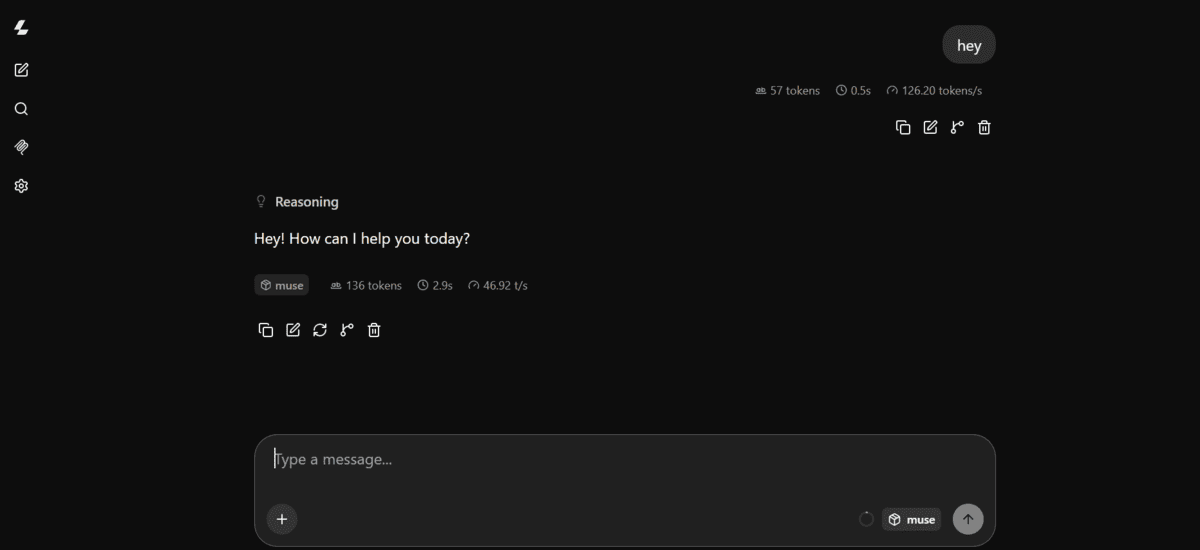
With the server running, navigate to http://localhost:8080/ in your web browser to access the built-in llama.cpp Web UI. Initial prompt evaluations typically yield baseline speeds around 46 tokens per second. However, during sustained, structured text generation and coding tasks, speculative decoding kicks in, pushing generation speeds past 127 tokens per second. This velocity ensures that interactive, multi-turn coding sessions feel instantaneous.
Phase 4: Installing the Pi Coding Agent
To transform Muse Glimmer from a passive text generator into an active software engineer, we need a coding agent harness. Pi serves as this orchestration layer.
Install Pi globally:
curl -fsSL https://pi.dev/install.sh | sh
Install Hugging Face’s native llama.cpp extension to allow Pi to communicate with our local inference server:
pi install git:github.com/huggingface/pi-llama
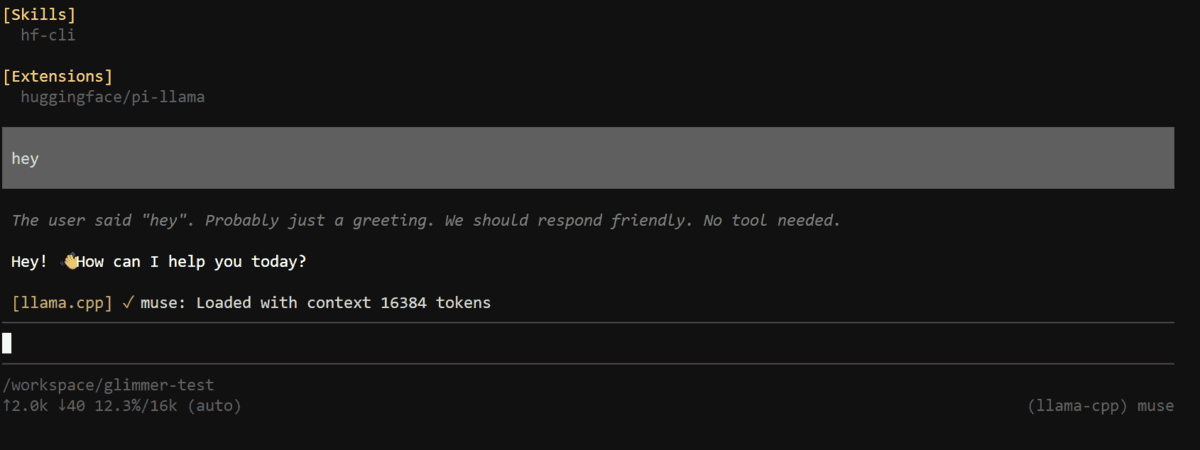
Restart your terminal session. The pi-llama extension automatically targets http://localhost:8080/v1, removing the need for manual configuration files.
Phase 5: Initializing the Vibe Coding Environment
Create a clean directory for your target software project and launch the agent:
mkdir -p /workspace/glimmer-test
cd /workspace/glimmer-test
pi
Inside the Pi terminal interface, select your model provider:
Type /model
Search for llama-cpp
Select muse
Phase 6: Executing Autonomous Software Development
To test Muse Glimmer’s capabilities as an autonomous agent, challenge it with a comprehensive end-to-end development prompt that requires zero human intervention:
"Build a complete Python task management API from scratch using FastAPI.
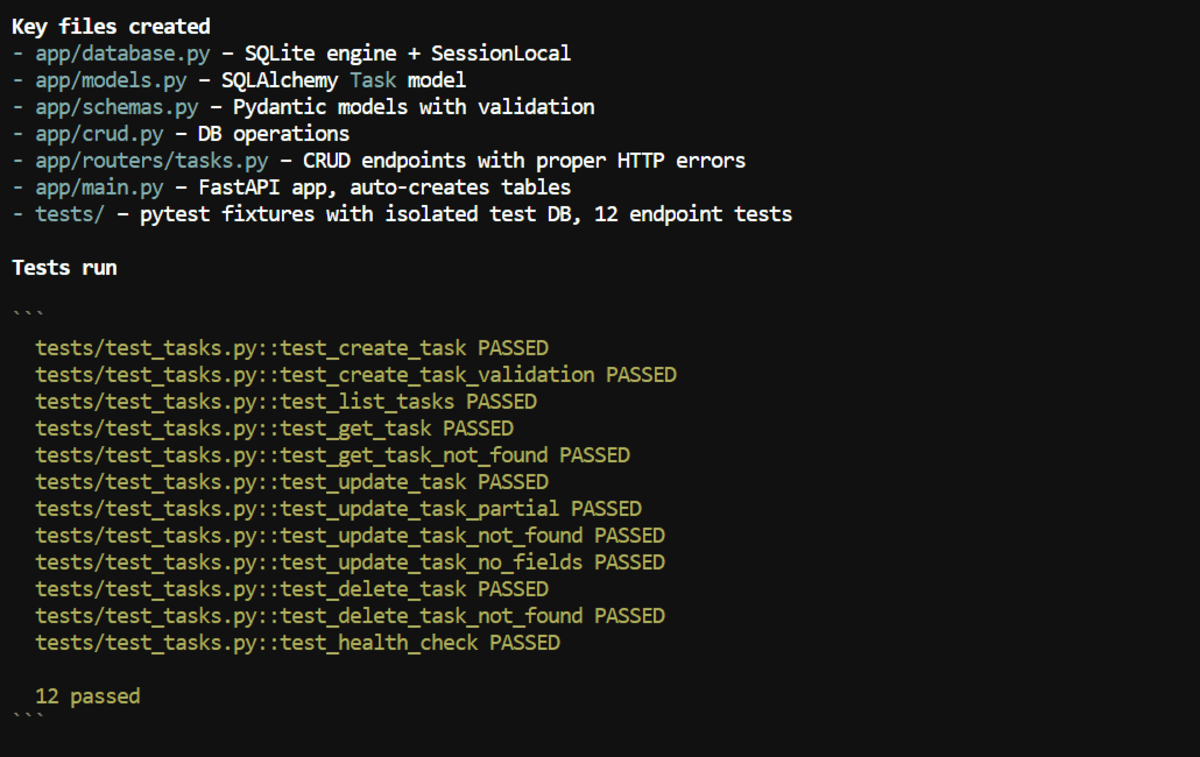
Requirements: – Create a clean project structure. – Add endpoints to create, list, update, and delete tasks. – Use SQLite for persistence. – Add input validation and error handling. – Add pytest tests for all endpoints. – Create requirements.txt and README.md. – Run the tests yourself. – Fix any errors and rerun the tests until everything passes.
Do not ask me to create files or run commands for you. Build and test the complete project yourself."
Within approximately two minutes, Muse Glimmer scaffolding, code generation, file writing, and test execution are completed. You can verify the application locally by running:
Navigate to http://localhost:8000/docs to inspect the generated Swagger documentation, or ask Muse Glimmer to execute the test suite autonomously and summarize the diagnostic report.
Supporting Context & Performance Metrics
The architectural triumph of running a 30B-parameter model locally relies heavily on hardware efficiency and algorithmic breakthroughs like speculative decoding.
Hardware Realities and Benchmarks
Running Muse Glimmer comfortably requires robust consumer or enterprise hardware equipped with high-bandwidth VRAM—specifically GPUs like the NVIDIA RTX 3090, 4090, or the emerging 5090 series.
Baseline Throughput: ~46 tokens/second during initial prompt analysis and standard generation.
Peak Speculative Throughput: Up to 127 tokens/second during sustained coding workflows, enabled by the DFlash drafter predicting token sequences ahead of the primary model.
Context Handling: Stable performance across a 16K context window, allowing the model to parse entire codebase structures without losing track of dependencies or variable scopes.
Comparative Analysis: Muse Glimmer vs. Competitors
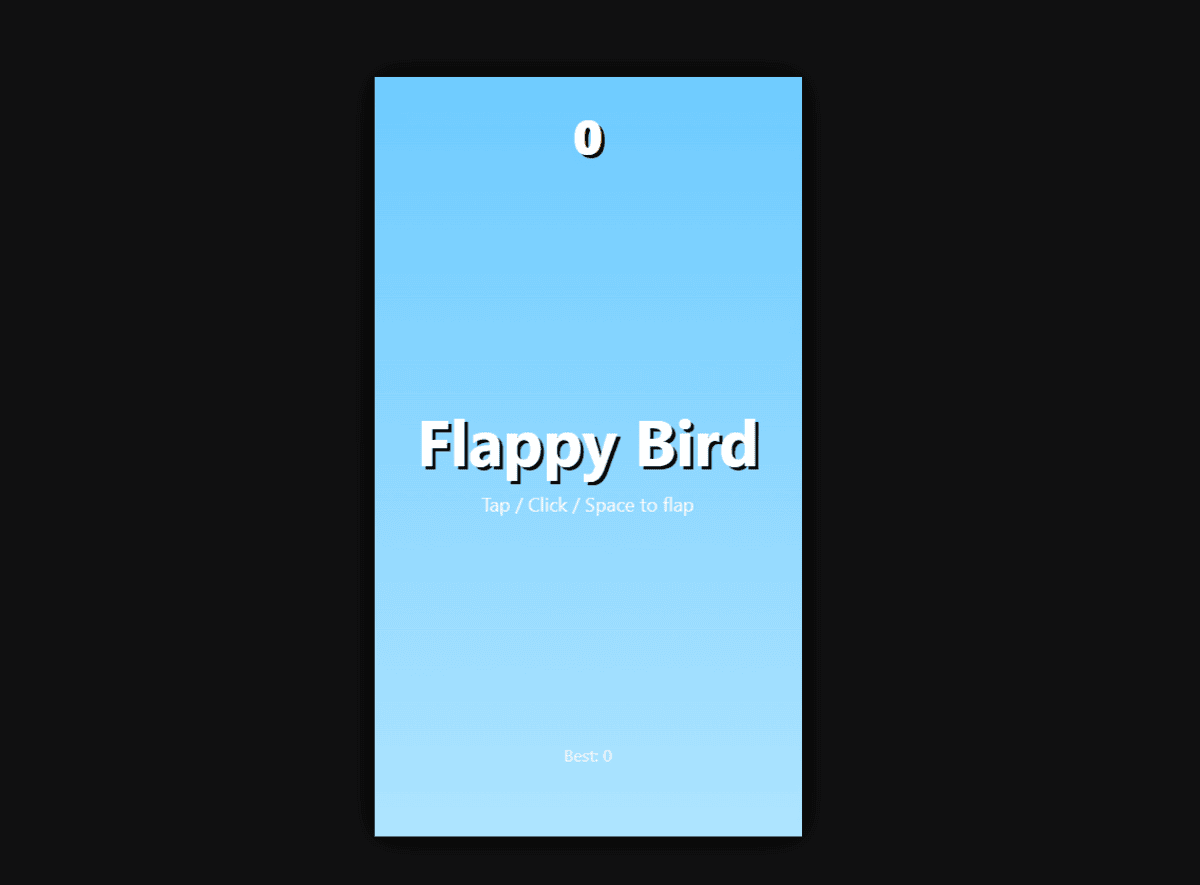
While Muse Glimmer excels in raw execution speed and autonomous file generation using agentic harnesses, comparative evaluations reveal nuances in domain-specific tasks. For instance, when tasked with rendering functional HTML5 games or frontend UI components, alternative models like Qwen3.8-27B occasionally yield more reliable, bug-free front-end outputs out-of-the-box. However, for backend API architecture, database schema design, and iterative bug fixing via pytest integration, Muse Glimmer holds its ground as a top-tier local development assistant.
Official Statements and Community Reception
The open-source AI community has embraced Meta’s aggressive push into open-weight architectures. Leading voices in local machine learning communities have noted that models in the 27B–30B bracket are rapidly closing the capability gap previously monopolized by closed-source, API-gated giants.
Developers are increasingly vocal about AI data sovereignty. By migrating coding workflows away from cloud-hosted IDE extensions and proprietary chat interfaces, engineers ensure that proprietary source code, internal API keys, and sensitive enterprise data never leave their local machines. The endorsement of standardized inference frameworks like llama.cpp and modular agent layers like Pi signals a broader industry maturation: open-source AI is no longer just a hobbyist pursuit; it is a viable, enterprise-grade alternative.
Future Outlook: The Horizon of Local Agentic AI
The trajectory of local artificial intelligence points toward a future where running state-of-the-art coding agents on local hardware is standard operating procedure. As hardware manufacturers push VRAM boundaries higher and algorithm developers refine speculative decoding techniques like DFlash, the performance penalty of running large models locally will continue to shrink.
We anticipate several critical developments over the next few hardware and software iterations:
Deeper Agentic Autonomy: Future iterations of local models will feature native tool-use optimization, reducing multi-step execution errors and minimizing hallucinations during complex refactoring tasks.
Standardized Local Tooling: Integrations between inference servers (llama.cpp, Ollama, vLLM) and coding harnesses (Pi, Aider, Continue) will become completely plug-and-play, eliminating configuration friction for everyday developers.
Closing the Proprietary Gap: As architectures like Muse Glimmer evolve, the functional delta between local open-weight models and proprietary cloud models will narrow to the point where commercial API dependencies become entirely optional for the vast majority of software development tasks.
For developers equipped with modern GPU hardware, the economic and privacy arguments for local AI are undeniable. The era of paying per token to build software in the cloud is rapidly drawing to a close, replaced by local sovereignty, blistering generation speeds, and truly autonomous coding agents.