

Executive Overview
The relentless, hyper-accelerated trajectory of the artificial intelligence boom has fundamentally transformed the technology landscape. In this era of massive large language models (LLMs) and compute-hungry diffusion workloads, virtually no matrix-math floating-point operations (FLOPS) are considered disposable. As high-end enterprise hardware remains bottlenecked by staggering costs and supply chain constraints, resourceful hardware modification services and specialized vendors are breathing an unprecedented second wind into aging consumer graphics cards.
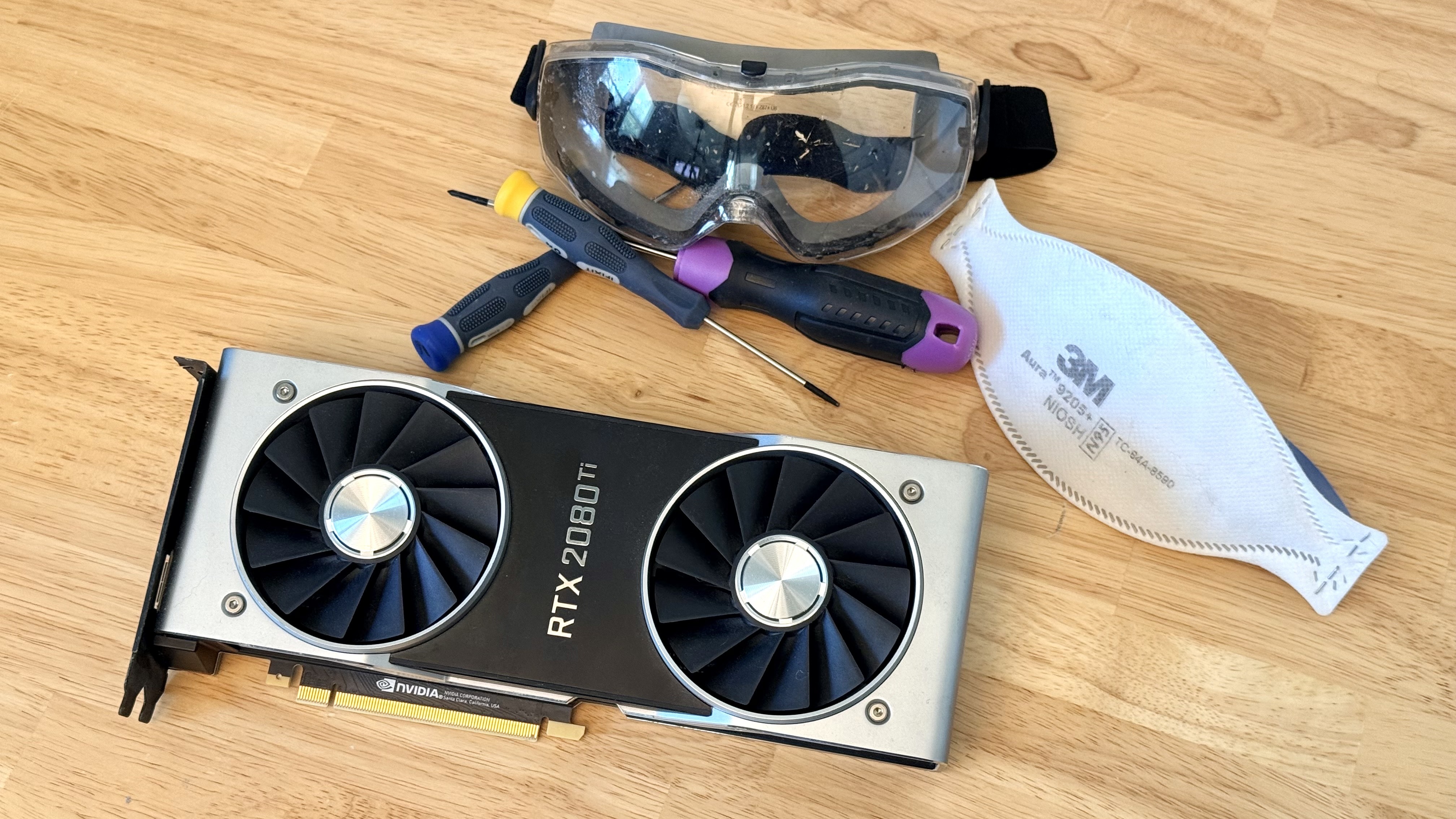
At the center of this grassroots hardware revolution is the Nvidia GeForce RTX 2080 Ti—a consumer flagship originally launched in late 2018. Thanks to a burgeoning niche of specialized PCB modifications, third-party repair shops are now successfully doubling the stock VRAM of these aging flagships from 11GB to a substantial 22GB. For developers, data scientists, and local AI enthusiasts priced out of high-end data center hardware, these upgraded cards represent a lifeline.
For those lacking the technical prowess or a donor card to execute the complex PCB adjustments themselves, the aftermarket has stepped up. International vendors—most notably a Hong Kong-based hardware supplier—are now listing pre-modded, blower-style 22GB RTX 2080 Ti graphics cards on eBay for an accessible $499. Backed by proven buyer satisfaction and solid operational metrics, these modified GPUs offer a compelling, budget-friendly gateway into the deep-pocketed realm of local machine learning, proving that hardware once destined for the e-waste bin can command a formidable second act.
Detailed Chronology: From Gaming Flagship to VRAM-Boosted AI Workhorse
To understand the significance of the 22GB RTX 2080 Ti modification, one must trace the timeline of Nvidia’s Turing architecture and the subsequent structural shifts in the hardware market over the past six years.
2018–2020: The Turing Launch and Initial Reception
When Nvidia introduced the GeForce RTX 2080 Ti in September 2018, it arrived as the undisputed king of consumer graphics. Built on the 12nm "TU102" silicon and packing 4,352 CUDA cores, the card was revolutionary for introducing dedicated Tensor Cores and Real-Time Ray Tracing (RT Cores) to the consumer market. However, its original 11GB GDDR6 frame buffer—coupled with a steep $1,199 launch price tag—positioned it strictly as a high-end gaming and enthusiast halo product.
For the first few years of its life cycle, the RTX 2080 Ti served valiantly as a top-tier gaming GPU. Yet, as newer architectures like Ampere (RTX 30 series) and Ada Lovelace (RTX 40 series) debuted, aging Turing cards naturally began to slip from the bleeding edge of gaming performance, sliding down the secondary market ladder.
2022–2023: The Generative AI Explosion
The launch of OpenAI’s ChatGPT in late 2022 and the concurrent democratization of open-source diffusion models (such as Stable Diffusion) completely upended the PC hardware ecosystem. Suddenly, consumers and researchers alike were no longer just rendering pixels; they were hosting local LLMs and generating complex visual assets.
In the world of AI inference and fine-tuning, VRAM is king. Models require massive memory pools to load weights into local memory. An 11GB frame buffer, once generous for 4K gaming, rapidly became a severe bottleneck for running modern 7B or 13B parameter models locally. Consumer cards quickly fractured into two camps: those with enough VRAM to be useful for AI, and those relegated to trivial tasks. Consequently, high-VRAM enterprise hardware skyrocketed in price, leaving budget-conscious developers stranded.
Late 2024–Present: The VRAM Modification Wave
Driven by necessity, independent hardware modders and repair technicians began experimenting with physical PCB adjustments. By lifting stock memory chips and replacing them with higher-density modules—while physically manipulating the strap resistors on the printed circuit board (PCB) to force motherboard and BIOS recognition—technicians discovered they could double the memory capacity of select Nvidia cards.
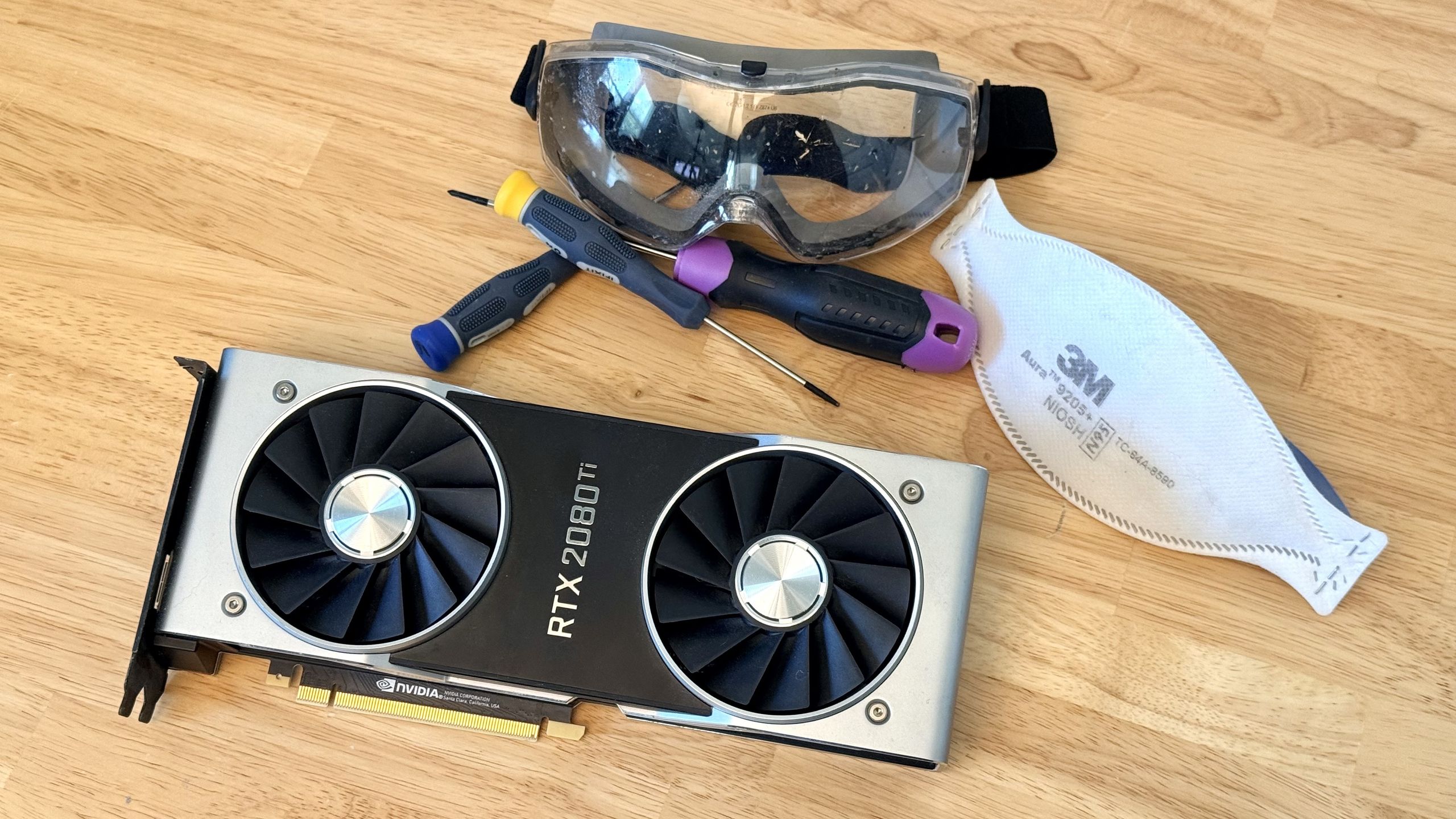
What began as proof-of-concept experiments in electronics repair labs quickly transitioned into commercial repair services. Owners of sluggish or dated RTX 2080 Ti cards could now pay to have their 11GB boards upgraded to 22GB. Soon after, enterprising overseas vendors bypassed the need for customer-supplied donor cards entirely, sourcing wholesale batches of decommissioned blowers and offering fully pre-modded 22GB units directly to the global market via digital storefronts like eBay.
Supporting Context & Metrics: Evaluating the 22GB RTX 2080 Ti in the Modern AI Ecosystem
Evaluating whether a modified 22GB RTX 2080 Ti is a wise investment requires examining its raw specifications, memory bandwidth, and performance metrics relative to contemporary alternatives on the secondary market.
Hardware Specifications and Performance Profile
- Graphics Processor: TU102 (Turing Architecture)
- CUDA Cores: 4,352
- Tensor Cores: 544 (1st Generation)
- Modified VRAM Pool: 22GB GDDR6
- Memory Bus Width: 352-bit
- Memory Bandwidth: ~616 GB/s
While the first-generation Tensor Cores found on Turing architecture lack the advanced data-type support (such as native FP8 acceleration) found in newer Ampere, Ada Lovelace, or Blackwell cards, the inclusion of a massive 22GB frame buffer dramatically alters the card’s utility profile.
At 22GB, the modified RTX 2080 Ti can comfortably house and execute larger local language models that would outright crash or refuse to load on an 8GB or 12GB consumer card. Furthermore, its robust 352-bit memory bus delivers a respectable 616 GB/s of memory bandwidth. While this trails the 936 GB/s offered by the legendary RTX 3090, it easily outpaces many mid-range modern cards that feature heavily constrained, narrow memory buses (such as 128-bit or 192-bit interfaces).
Secondary Market Comparisons
To contextualize the $499 price point of the pre-modded eBay units, one must look at alternative high-VRAM options currently dominating the used market:
| GPU Model | VRAM Capacity | Memory Type & Bandwidth | Approximate Secondary Market Price |
|---|---|---|---|
| Modified RTX 2080 Ti | 22GB | GDDR6 (~616 GB/s) | ~$499 |
| Nvidia Titan RTX | 24GB | GDDR6 (~672 GB/s) | ~$800 |
| Nvidia Quadro RTX 6000 | 24GB | GDDR6 (~672 GB/s) | ~$900 |
| Nvidia GeForce RTX 3090 | 24GB | GDDR6X (~936 GB/s) | ~$1,200 |
As illustrated above, acquiring 20GB+ of VRAM traditionally required an investment well north of $800 to $1,200. By undercutting these legacy professional and enthusiast cards by hundreds of dollars, the $499 modified 22GB RTX 2080 Ti hits a sweet spot for budget-constrained AI researchers, students, and hobbyists.
Industry Landscape: Competitor Architecture and the CUDA Monopoly
The longevity of Nvidia’s 2018-era architecture on the secondary market highlights a broader, systemic issue within the graphics card industry: the distinct disparity in hardware-level AI acceleration and software ecosystem support across competing silicon vendors.
Nvidia’s Unassailable Software Monopoly
Beyond raw hardware specifications, Nvidia’s absolute dominance in the AI space stems from its proprietary CUDA (Compute Unified Device Architecture) software ecosystem. For nearly two decades, nearly every major machine learning framework, library, and tool (PyTorch, TensorFlow, TensorRT, etc.) has been meticulously optimized for CUDA.
Even as older Nvidia cards age out of mainstream gaming, their complete and unhindered compatibility with the CUDA software stack makes them infinitely more desirable for developers than faster competing hardware that lacks robust software translation layers.
The Competitive Landscape: AMD, Intel, and Apple
- AMD: While AMD has incorporated matrix-math accelerators (Matrix Core engines) into its architecture since the CDNA 1 data center line in 2020, consumer-facing accessibility remained severely restricted. It was not until the rollout of RDNA 4 architecture that consumer-level matrix acceleration became widely integrated. Historically, AMD’s ROCm software stack has also lagged behind CUDA in terms of plug-and-play developer adoption.
- Intel: Intel made a bold re-entry into the discrete GPU space with its Alchemist architecture (Arc graphics) in late 2022, packing XMX matrix engines into consumer silicon from day one. However, Intel’s journey has been plagued by driver maturity hurdles, inconsistent software optimization, and architectural growing pains that have limited its adoption in heavy-duty local AI workflows.
- Apple: Apple Silicon has taken a unified memory approach that naturally benefits localized AI processing through its high-bandwidth architecture. However, Apple only recently integrated dedicated Neural Accelerators natively into its GPU lineup with the introduction of the M5 family, leaving generations of earlier Apple silicon relying on CPU/Neural Engine allocations.
Against this backdrop, Nvidia’s continuous support for its Tensor Core architecture—spanning everything from consumer-grade GeForce cards to multi-thousand-dollar data center accelerators—has created an unbroken thread of usability.
Future Outlook: The Sustainability and Risks of Hardware Modifications
As the market for modified legacy hardware matures, several key questions emerge regarding the long-term viability, risks, and implications of these aftermarket upgrades.
The Mechanics and Caveats of the Modification
Executing a 22GB VRAM upgrade is no trivial task. It requires precision micro-soldering, physical removal of original memory integrated circuits, placement of higher-density memory chips, and delicate manual adjustment of the PCB’s strap resistors. These resistors act as hardware configuration flags, telling the GPU’s BIOS how to address the newly expanded memory pool.
For buyers purchasing pre-modded units from overseas sellers—such as the Hong Kong-based suppliers maintaining strong positive feedback across dozens of completed transactions—quality control is a primary consideration. While initial buyer feedback indicates high reliability and operational stability, these cards operate outside official warranty channels. Buyers are essentially acquiring enterprise-tier utility backed only by third-party vendor reputation.
Environmental and Economic Implications
On a macroeconomic level, the rise of VRAM modification services represents a triumph of circular economy principles in tech. For years, the rapid pace of planned obsolescence has consigned millions of powerful silicon chips to electronic waste (e-waste) landfills simply because their frame buffers or peripheral specs no longer matched modern mainstream demands.
By upgrading memory capacities, technicians are successfully rescuing GPUs from premature destruction, mitigating e-waste, and providing an ecologically sound alternative to the constant manufacturing of new silicon.
Conclusion
The emergence of the 22GB modified RTX 2080 Ti is a direct symptom of a market starving for accessible AI compute. While these cards may lack the cutting-edge FP8 data-type support or the raw throughput of a modern RTX 40-series or 50-series flagship, they offer an unbeatable combination: 22 gigabytes of high-speed VRAM, full integration with the universal CUDA software ecosystem, and a sub-$500 price tag. For anyone looking to break into local LLM development and generative AI tinkering without breaking the bank, this eight-year-old architectural marvel has officially found a brilliant, highly functional second life.
