

Executive Overview
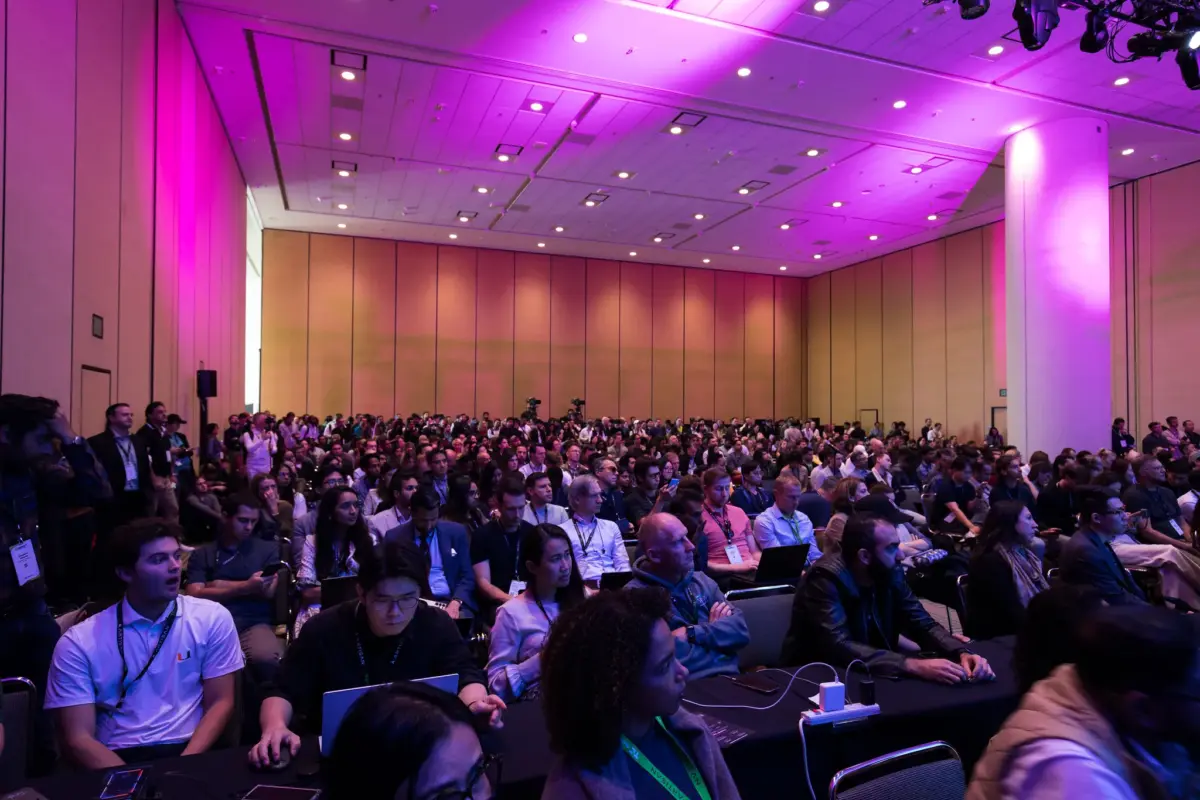
The tech ecosystem’s calendar is rapidly converging on one of its most anticipated annual gatherings: TechCrunch Disrupt 2026. Scheduled to take place from October 13 to October 15 at Moscone West in San Francisco, the three-day conference is gearing up to host more than 10,000 founders, venture capitalists, enterprise leaders, and forward-thinking technologists. As the industry navigates a complex macroeconomic landscape defined by rapid artificial intelligence integration, infrastructure strains, and shifting SaaS business models, Disrupt remains the premier crucible for early-stage momentum and high-stakes networking.
In a move designed to mobilize the builder community, organizers have launched a limited-window flash sale, offering an additional $100 discount stacked on top of the existing $300 early-registration savings for founder, investor, and general attendee passes. This exclusive promotion underscores a critical inflection point for prospective attendees: the final opportunity to secure maximum pricing advantages before the next rate tier goes into effect on August 21.
With the initial speaker lineup already generating considerable industry buzz—featuring heavyweights from Amazon, Replit, and beyond—alongside specialized programming across five distinct content tracks and the legendary Startup Battlefield, Disrupt 2026 is shaping up to be an unmissable forum for those actively architecting the future of technology.
Detailed Chronology: The Lead-Up to Disrupt 2026
To understand the magnitude of TechCrunch Disrupt 2026, one must examine the systematic rollout of its agenda, which has steadily captured the attention of the global tech community over the summer months.
July: Setting the Stage for Industry Transformation
The foundation for this year’s conference was laid through a series of major programmatic announcements throughout July, each targeting the acute pain points and emerging frontiers of the technology sector:
- July 1 (The Builders Stage): Organizers unveiled the agenda for the Builders Stage, traditionally one of the most popular tracks at the event. Designed as a tactical masterclass, this track focuses on the foundational mechanics of scaling early-stage companies—navigating fundraising rounds, structuring equity, hiring top-tier engineering talent, and executing go-to-market strategies.
- July 24 (The Smart Money Stage): Recognizing the profound convergence of finance and technology, Disrupt introduced the New Smart Money Stage. This track was engineered to tackle the shifting paradigms of fintech, exploring the maturation of stablecoins, the rollout of instant payment architectures, and the complex integration of artificial intelligence into institutional and consumer financial trust frameworks.
- July 27 (The Smart Systems Stage): Infrastructure has become the ultimate bottleneck—and opportunity—of the AI boom. The newly minted Smart Systems Stage agenda offered a first look at discussions surrounding energy grid strains, nuclear fusion breakthroughs, and the heavy hardware demands required to sustain the next decade of artificial intelligence development.
- July 28 (The AI Stage): Moving beyond the initial hype cycle, the AI Stage was structured to confront hard realities. Sessions were slated to dissect the SaaS reckoning—how traditional software-as-a-service business models are being upended by generative agents—alongside critical examinations of emerging agent security gaps.
- July 30 (The Disrupt Stage Initial Reveal): The marquee announcement dropped at the end of the month, teasing the heavyweight conversations slated for the flagship Disrupt Stage. Industry leaders, including Amazon’s Senior Vice President of Devices and Services Panos Panay and Replit founder and CEO Amjad Masad, were confirmed to headline, signaling deep dives into post-smartphone ecosystems and democratized software development.
August: The Flash Sale and Price Tier Thresholds
As summer transitions into fall, the focus shifts sharply from agenda curation to community mobilization.
- August 7: The launch of the exclusive flash sale provides a temporary, high-value window for budget-conscious founders and investors. By stacking an extra $100 discount onto the pre-existing $300 price reduction, organizers have created a brief surge in ticket acquisition activity ahead of the flash sale’s expiration at 11:59 p.m. PT.
- August 21: This date marks the official expiration of the broader discounted pricing tier. Industry participants who miss out on the early-to-mid summer savings windows will face standard gate pricing as the countdown to October enters its final home stretch.
- October 13–15: The culmination of the months-long buildup. Over the course of three intensive days at Moscone West, thousands of innovators will convene to pitch, partner, debate, and deploy the next generation of technological breakthroughs.
Supporting Context & Metrics: The Anatomy of TechCrunch Disrupt
TechCrunch Disrupt is not merely a conference; it is a meticulously engineered ecosystem designed to catalyze venture creation, foster high-level discourse, and provide a public stage for the world’s most disruptive startups.
The Scale of the Gathering
Hosting over 10,000 attendees requires an expansive physical and intellectual footprint. Moscone West in San Francisco provides the necessary canvas for an event of this magnitude, which bridges the gap between raw, garage-built innovation and institutional venture capital. The demographic breakdown of Disrupt typically encompasses a balanced triad:
- Founders: Early-to-growth-stage entrepreneurs seeking capital, partnerships, and technical guidance.
- Investors: Angel investors, venture capitalists, and corporate development leads hunting for the next breakout outlier.
- Technologists & Builders: Engineers, product managers, and enterprise leaders evaluating enterprise software shifts and infrastructure evolution.
The Five-Pillar Programming Architecture
Disrupt 2026 distinguishes itself through a multi-tracked content strategy designed to segment complex industry discussions into digestible, highly specialized domains:
- The Disrupt Stage: The epicenter of the conference. Reserved for macro-level prognostications, industry-shifting announcements, and debates involving top-tier executives from the world’s most influential technology giants.
- The AI Stage: Dedicated entirely to the operational, ethical, and architectural transformations driven by machine learning and autonomous systems. It serves as a testing ground for theories regarding enterprise automation and software obsolescence.
- The New Smart Money Stage: A specialized forum addressing the friction between traditional finance and decentralized or algorithmic monetary systems. Discussions here are critical for fintech founders navigating regulatory and infrastructural headwinds.
- The New Smart Systems Stage: Focused upstream on the physical realities of the digital age. From semiconductor supply chains to green energy fusion projects, this stage connects deep tech with software scalability.
- The Builders Stage: The tactical engine room of Disrupt. Founders share unvarnished post-mortems, growth metrics, and scaling playbooks, offering actionable takeaways for early-stage teams.
The Startup Battlefield: The Crown Jewel
For many, the primary draw of Disrupt is the Startup Battlefield. Historically featuring 200 early-stage startups competing live on stage for the coveted Battlefield Cup, this arena has launched numerous unicorns and household tech names. Participating companies receive mentorship from elite VCs, unprecedented media exposure, and a direct line to institutional investors. Beyond the competitive stage, the sprawling Expo Hall allows hundreds of additional startups to showcase their innovations directly to the thousands of professionals walking the convention floor.
Official Statements and Industry Perspectives
The discourse surrounding TechCrunch Disrupt 2026 reflects a broader anxiety and optimism within the technology sector. As generative AI matures from an experimental novelty into an enterprise baseline, industry leaders are grappling with structural reorganization.

Speaking on the curation of this year’s flagship panels, event programmers emphasize the necessity of moving beyond surface-level technology trends. "Disrupt has never been about passive observation," notes the event editorial board. "We are curating an itinerary for individuals who are actively building, investing, and trying to decipher what the next decade looks like. When you bring Panos Panay on stage to discuss a post-smartphone future, or Amjad Masad to debate a world where everyone is a software developer, we aren’t talking in hypotheticals—we are examining operational realities that every tech company must adapt to immediately."
Venture capital participants have similarly echoed the value of the conference’s networking infrastructure. In an era where deal flow has become increasingly bifurcated—hyper-competitive at the top tier and intensely selective at the seed level—events like Disrupt provide a high-density environment to test thesis assumptions against real-world founders.
Furthermore, the introduction of specialized tracks like the Smart Systems and New Smart Money stages has drawn praise from deep-tech investors who previously found generalist tech conferences too software-centric. By addressing the physical constraints of the AI revolution—such as energy grids and hardware infrastructure—Disrupt has positioned itself at the literal intersection of software ambition and physical reality.
Future Outlook: What Disrupt 2026 Portends for the Tech Landscape
As the tech sector looks toward October, TechCrunch Disrupt 2026 is poised to serve as a bellwether for the remainder of the decade. Several defining themes are expected to emerge from the panels, pitches, and hallway conversations at Moscone West:
1. The Decentralization of Software Development
With platforms like Replit championing environments where nearly anyone can build functional software, the barrier to entry for founding a tech company is plummeting toward zero. This democratization will undoubtedly flood the market with novel applications, but it will simultaneously create unprecedented challenges in software maintenance, security vulnerability management, and market saturation. Disrupt’s panels on agent security and the SaaS reckoning will provide critical frameworks for founders attempting to build defensible moats in an automated world.
2. The Infrastructure Bottleneck
The sheer electrical and computational hunger of modern AI models cannot be overstated. Discussions on the Smart Systems Stage regarding fusion energy, grid strain, and advanced silicon manufacturing will highlight an uncomfortable truth: the digital future is entirely dependent on physical infrastructure. Investors and founders will need to align their expectations with the harsh realities of power generation and hardware supply chains.
3. The Evolution of Financial Trust
As autonomous agents begin executing financial transactions on behalf of users and corporations, the architecture of money must evolve. The New Smart Money stage will likely preview a future where instant payments, stablecoin adoption, and AI-driven fraud detection merge into a singular, frictionless financial layer.
Conclusion: Securing Your Place in the Dialogue
TechCrunch Disrupt remains an essential fixture because it refuses to rest on the laurels of past technological cycles. Whether you are an early-stage founder seeking your Series A, a venture capitalist looking to deploy dry powder into resilient infrastructure, or an enterprise strategist trying to future-proof your organization, the insights generated at Moscone West will resonate across the industry for years to come.
With the current flash sale offering an aggressive bonus discount before the midnight deadline, and the impending price tier shift on August 21, prospective attendees face a clear choice. Locking in a pass now is not merely a financial optimization; it is a commitment to engaging directly with the vanguard of the tech economy.
Register today to secure your discounted pass, and prepare to join over 10,000 innovators in San Francisco this October.
