

Executive Overview
Hearing loss is one of the most pervasive yet chronically neglected medical conditions in the modern world. According to public health data, an estimated 50 million adults across the United States grapple with diminished hearing acuity. Yet, despite the availability of diagnostic tools, a staggering 80% of individuals diagnosed with hearing loss never seek treatment. The reasons are as complex as they are deeply ingrained in human psychology: the prohibitive cost of traditional devices, physical discomfort, complicated configurations, and—perhaps most perniciously—the social stigma attached to wearing visible hearing aids.
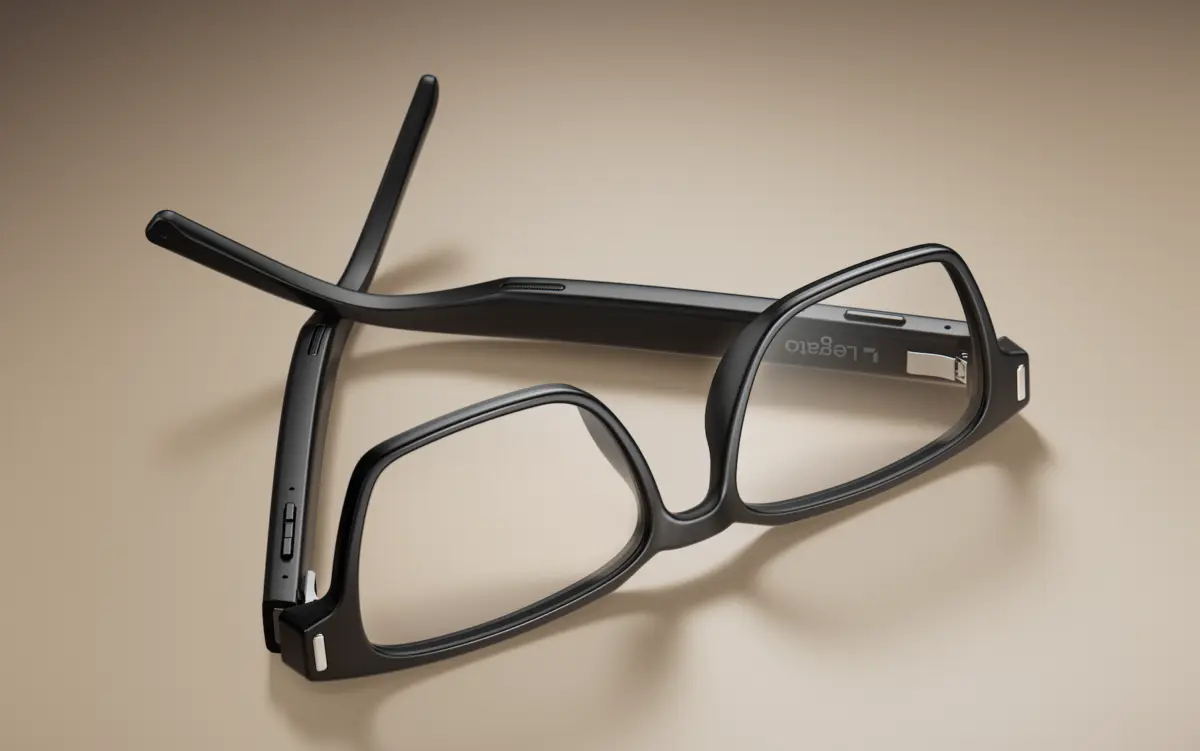
Enter Legato, an ambitious new contender in the wearable technology space aiming to completely dismantle these barriers. Launching out of stealth mode with $12 million in early-stage venture backing from prominent investors including Neotribe Ventures, Listen, and Village Global, Legato is introducing a product category designed to bridge the gap between utility, fashion, and healthcare. Its flagship innovation, the Legato Frames, embeds cutting-edge, proprietary hearing-assistance technology directly into the arms of stylish, everyday eyewear.
Slated for a commercial rollout later this fall, the company’s mission extends far beyond simple audio amplification. By framing hearing enhancement through the universally accepted, stigma-free lens of corrective eyewear, Legato is attempting to achieve what its founders describe as the holy grail of sensory health: making hearing care as ubiquitous, effortless, and unselfconscious as wearing prescription glasses.
Detailed Chronology: From Industry Giants to Startup Innovation
The genesis of Legato is rooted in decades of collective corporate experience within the consumer electronics, wearables, and audiology sectors. The startup was officially founded in late 2024 by industry veterans Mehul Trivedi and Steve Romine, whose professional paths previously intersected at Bose, a titan in audio engineering.
During their tenure at Bose, Trivedi spearheaded the groundbreaking creation of Bose Frames—pioneering audio-augmented sunglasses that popularized open-ear wearable tech—while Romine served as the head of the company’s hearing aids division. Following their time at Bose, the two co-founders expanded their industry footprints independently. Trivedi transitioned to EssilorLuxottica, where he led smart eyewear initiatives and collaborated closely on the development of the Meta Ray-Ban smart glasses. Meanwhile, Romine deepened his expertise in the healthcare sphere, serving as the Chief Operating Officer of Audicus, a prominent direct-to-consumer hearing aid provider.
Despite their success within larger corporate ecosystems, both executives recognized a persistent market failure. Millions of consumers who desperately needed mild-to-moderate hearing support were rejecting traditional medical devices due to antiquated form factors and social embarrassment.

The turning point occurred during a sabbatical taken by Trivedi. While exploring the intersection of advanced hearing technology and consumer smart eyewear, Trivedi encountered proprietary acoustic architecture and signal-processing concepts that he believed could finally marry the two fields seamlessly. Recognizing the disruptive potential of this breakthrough, Trivedi reached out to Romine. By late 2024, the blueprint for Legato was finalized, bringing together top-tier audio engineering talent and direct-to-consumer healthcare distribution experience under one roof.
Supporting Context & Metrics: The Hearing Loss Crisis and Technological Breakthroughs
To understand the market necessity for Legato, one must examine the staggering scale of untreated hearing loss and its cascading health implications. Hearing degradation is rarely just an isolated sensory issue; it is a critical public health variable tied directly to cognitive and psychological well-being.
The Scale of the Problem
- The Population Affected: Approximately 50 million adults in the U.S. live with some degree of hearing loss.
- The Treatment Gap: Only 20% of diagnosed individuals actively pursue medical or technological interventions.
- The Core Demographic: Legato is specifically focusing on the mild-to-moderate hearing loss demographic, which constitutes the vast majority of the overall hearing-impaired population.
The Health Toll of Untreated Hearing Loss
As co-founder Mehul Trivedi emphasizes, addressing hearing loss is fundamentally about human connection and neurological preservation. Medical research increasingly correlates untreated hearing impairment with severe downstream health risks:
- Cognitive Decline: Sensory deprivation in the auditory cortex forces the brain to expend excessive cognitive energy just to decipher spoken words, accelerating overall cognitive decline and elevating the risk of dementia.
- Mental Health: Social withdrawal, isolation, and clinical depression are disproportionately high among seniors and middle-aged adults who abandon conversations due to hearing fatigue.
- The 16-Hour Standard: Traditional hearing aids are frequently removed due to discomfort, feedback loops, or social awkwardness. Legato’s hardware is meticulously engineered to be worn continuously for a standard 16-hour waking day.
Overcoming Technical Hurdles
Traditional hearing aids rely heavily on directional microphones designed to focus on audio coming from a singular, frontal vector. While effective in quiet libraries or doctor’s offices, this technology frequently fails in dynamic, cacophonous environments like crowded restaurants or bustling city streets, where ambient noise overwhelms speech.
Legato bypasses this legacy limitation through an advanced AI-powered signal-processing stack. Instead of simply turning up all environmental volume, the startup’s proprietary algorithms dynamically distinguish between background chatter and human speech, selectively isolating and amplifying voices. This dramatically reduces the cognitive load on the user, creating a natural, effortless listening experience.
Furthermore, engineers addressed the perennial problem of audio leakage inherent in open-ear speaker systems. The Legato Frames incorporate a sophisticated dual-speaker architecture that projects sound inward toward the wearer’s ear canal while actively canceling escaping sound waves. This proprietary dampening tech reduces sound leakage by an astonishing 99% just inches away from the frame, ensuring total user privacy in public spaces.

Official Statements and Vision
The leadership team at Legato envisions a paradigm shift in how society views auditory health. Rather than treating hearing loss as a sign of aging to be hidden away, the company wants to normalize the care cycle entirely.
"Our goal is to make hearing as ubiquitous as vision," said Mehul Trivedi in an exclusive interview. "It’s kind of a no-brainer that you go to an eye exam, you get your glasses, you wear your glasses, and you’re happy, and you do that for the rest of your life — and the idea of it being blurry again where you would just stop wearing them is not a consideration. I think that’s what we want to do with hearing: just make it something that people address and almost forget about."
Describing the user experience, Trivedi noted the deliberate absence of complex controls:
"We wanted to deliver an experience that was unique. So a form factor that’s really discreet and looks normal. They’re meant to feel and look like regular glasses. And so, we want it to be a product that’s effortless, easy to use, with kind of no controls that you need to fiddle with, works everywhere, works throughout your day, doesn’t need a ton of configuration, and just delivers you better hearing."
With $12 million in seed capital secured from prominent venture funds—specifically Neotribe Ventures, Listen, and Village Global—the company is dedicating its war chest primarily to accelerated product refinement, engineering optimization, and targeted go-to-market marketing campaigns.
Future Outlook: Commercial Launch and Market Accessibility
As Legato prepares for its commercial debut later this fall, the startup’s distribution strategy is as calculated as its product design. Rather than relying solely on traditional, clinical audiology offices—which can often feel sterile and intimidating to consumers—Legato plans to make its smart frames available through a network of select, high-end eye-care providers nationwide.

This strategic choice leverages existing consumer habits. By placing hearing-enhancement technology inside optical stores, Legato places its product directly in front of consumers who are already comfortable purchasing vision correction.
Economically, the startup intends to undercut traditional medical-grade hearing aids significantly. While premium medical hearing aids can easily cost thousands of dollars out-of-pocket and are rarely covered by standard health insurance, Legato Frames are projected to cost "a fraction" of legacy devices. Moreover, because they are sold and calibrated through eye-care clinics alongside standard eyewear, consumers may find themselves eligible for vision insurance reimbursements—further lowering the financial barrier to entry.
By seamlessly blending cutting-edge artificial intelligence, acoustic privacy, high-fashion frames, and accessible retail channels, Legato is positioned to redefine the intersection of consumer electronics and preventative healthcare. If the company successfully executes its vision this fall, millions of adults may finally find themselves stepping out into a clearer, more connected world—one stylish pair of glasses at a time.
