

Executive Overview
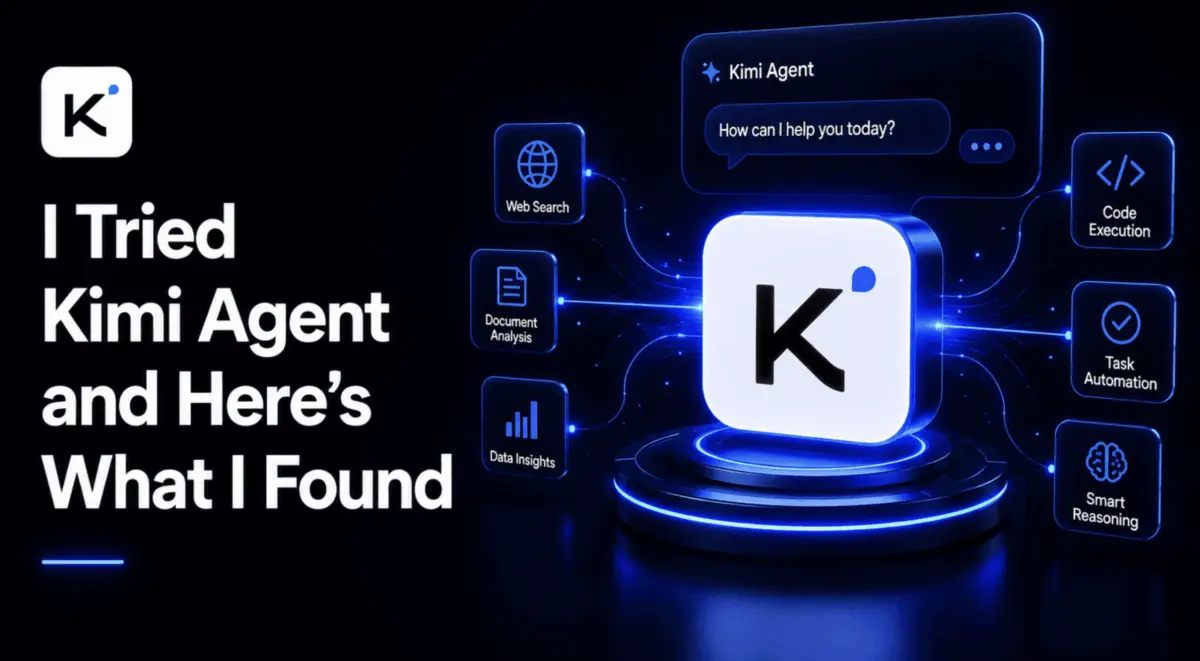
The artificial intelligence landscape is witnessing a seismic shift toward autonomous, agentic workflows. Among the leading contenders in this space is Kimi Agent, a sprawling and multifaceted product family developed by Beijing-based Moonshot AI, with strategic backing from Alibaba. However, evaluating "Kimi" requires cutting through considerable marketing noise. "Kimi" is not a singular application or model; rather, it is a deeply integrated stack spanning foundational mixture-of-experts (MoE) architecture, massive multi-agent orchestration frameworks, local desktop and cloud-control applications, and a developer-friendly command-line interface.
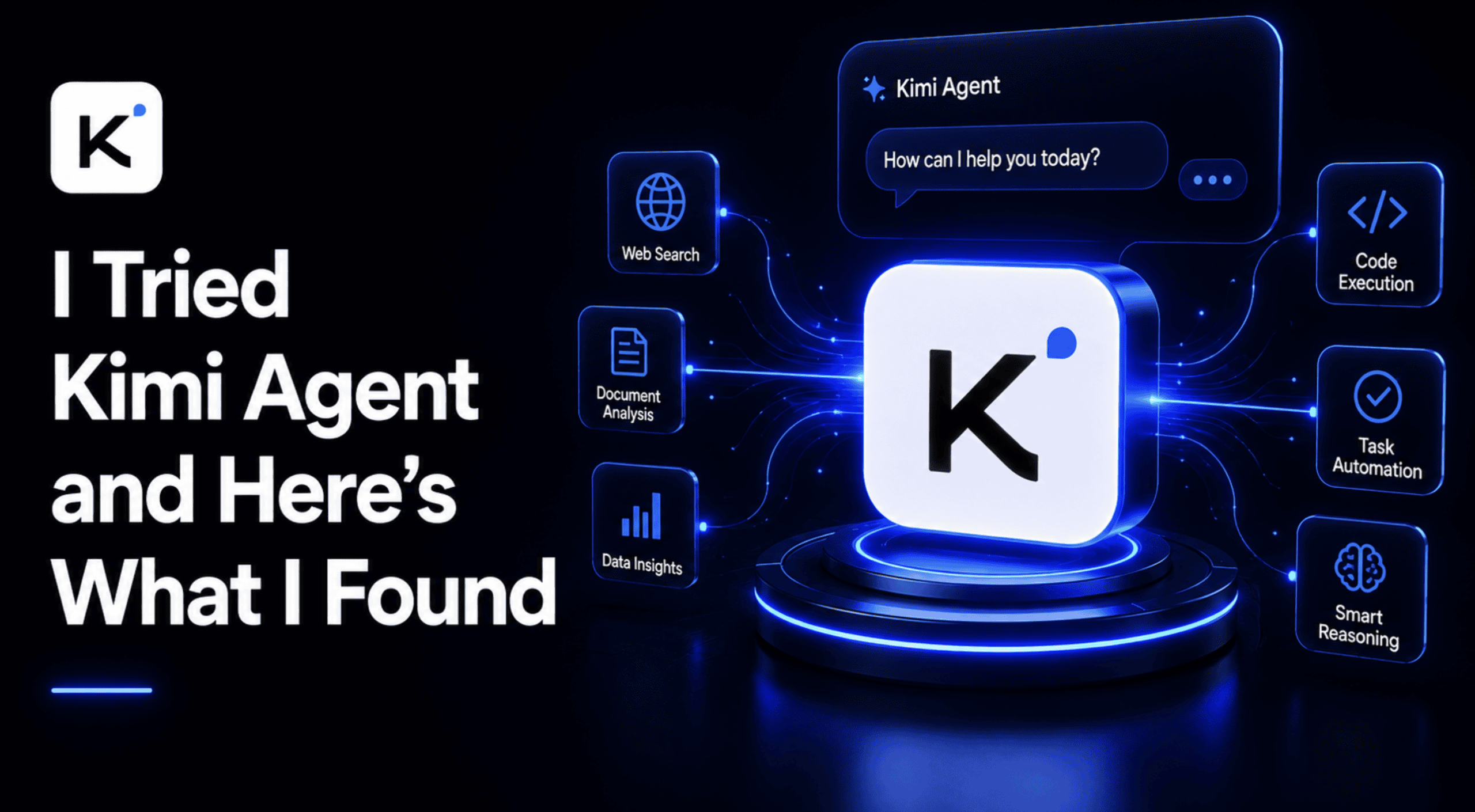
At the heart of this ecosystem is Kimi K3, a massive 2.8-trillion-parameter MoE model boasting an impressive 1-million-token context window. Built on top of K3 is Agent Swarm, an infrastructure designed to spin up hundreds of concurrent sub-agents to tackle complex, multi-step goals in parallel. Complementing these are tools like Kimi Work, Kimi Claw, and Kimi Code, which bring autonomous interaction directly to the user’s desktop, cloud environments, and development workflows.
While Moonshot AI has achieved remarkable breakthroughs in long-context document synthesis and cost-effective pricing—charging $3 per million input tokens and $15 per million output tokens—independent testing and the vendor’s own admissions reveal distinct operational trade-offs. Kimi K3 excels in document-heavy analysis and high-volume coding tasks, yet it encounters performance ceilings in complex multi-agent coordination when compared against Western frontier models like OpenAI’s GPT series and Anthropic’s Claude.
This deep-dive technical investigation examines Kimi’s architectural innovations, hands-on API implementation, pricing economics, infrastructure scaling bottlenecks, and independent benchmarking results to provide a comprehensive, objective assessment of where the Kimi ecosystem stands today.
Detailed Chronology and Ecosystem Anatomy
To properly evaluate the Kimi ecosystem, one must first untangle its components. Moonshot AI has systematically rolled out interconnected layers of models, execution frameworks, and end-user interfaces over the past several quarters.
1. The Foundational Architecture: Kimi K3
Released as the successor to the K2 line, Kimi K3 is a 2.8-trillion-parameter mixture-of-experts model. It activates 16 out of 896 total experts per token, optimizing inference efficiency while preserving massive capacity. Its native 1-million-token context window allows developers and end-users to ingest entire codebases, massive financial filings, or libraries of academic literature in a single prompt.
2. Multi-Agent Orchestration: Agent Swarm and Goal
First previewed alongside K2.5 in January 2026 and significantly expanded with the K2.6 release in April 2026, Agent Swarm represents Moonshot’s flagship architectural leap. Unlike traditional sequential agent systems that process tasks one step at a time, Agent Swarm acts as a scale-out orchestrator. It can spin up to 300 simultaneous sub-agent instances and execute over 4,000 tool calls in a single task.
- Goal Feature: Users set plain-language, multi-step objectives, and the system autonomously plans, delegates, and executes the required workflows without manual intervention.
3. User-Facing Interfaces: OK Computer, Kimi Work, and Kimi Claw
Moonshot has aggressively pushed Kimi into daily productivity workflows through dedicated software layers:
- OK Computer: An agent mode integrated directly into Kimi’s chat interface capable of generating multi-page web applications and presentation slide decks from a single conversational prompt.
- Kimi Work: Launched on June 10, 2026, this is a native desktop application for macOS (Apple Silicon) and Windows. Utilizing a browser-control extension called WebBridge, Kimi Work can autonomously search the web, scroll pages, and fill out complex online forms just like a human operator.
- Kimi Claw: Recognizing that local tasks in Kimi Work halt the moment a laptop lid closes or goes to sleep, Kimi Claw serves as its cloud-based counterpart, keeping persistent, long-running agentic tasks active 24/7.
- Kimi Code: A dedicated command-line interface (CLI) optimized for software engineering, debugging, and automated refactoring tasks.
Supporting Context, Metrics, and Technical Implementation
Understanding Agent Swarm’s Parallelism Mechanics
Moonshot’s technical disclosures regarding Agent Swarm are refreshingly candid. The architecture coordinates sub-agent collaboration dynamically, eliminating the need for predefined roles or manually scripted workflows. During peak operations, it handles up to 300 parallel sub-agents and 4,000+ tool calls, yielding a claimed 4.5x speed advantage over sequential processing.
However, Moonshot has openly documented two primary failure modes inherent to this scale-out model:
- Serial Collapse: A phenomenon where the orchestrator successfully fans out work, but the downstream sub-agents inadvertently block on each other’s outputs, collapsing back into a sequential bottleneck.
- Fake Parallelism: Instances where work appears distributed across multiple agents, but the sub-tasks lack sufficient independence, resulting in redundant execution overhead without performance gains.
API Integration and Hands-On Demonstration
Moonshot’s API adheres closely to the OpenAI chat-completions contract, enabling developers to integrate Kimi K3 using the standard Python SDK by simply swapping the base URL and model identifier.
Below is a fully functional, production-ready implementation demonstrating how to invoke Kimi K3 with custom tool-calling loops and reasoning configuration:
import os
import json
from openai import OpenAI

# Initialize the OpenAI client pointing to Moonshot AI's infrastructure
client = OpenAI(
    api_key=os.environ.get("MOONSHOT_API_KEY", "your-key-here"),
    base_url="https://api.moonshot.ai/v1",
)

MODEL = "kimi-k3"

# Define a custom tool for the model to invoke
TOOLS = [
    "type": "function",
    "function":
        "name": "count_words",
        "description": "Counts the exact number of words in a provided block of text.",
        "parameters":
            "type": "object",
            "properties":
                "text": "type": "string"
            ,
            "required": ["text"],
        ,
    ,
]

def count_words(text: str) -> int:
    """Utility function executed locally upon model request."""
    return len(text.split())

def run_task(task: str, max_turns: int = 6) -> dict:
    """
    Executes a multi-turn task through Kimi K3, managing tool calls,
    token consumption, and reasoning effort parameters.
    """
    messages = ["role": "user", "content": task]
    total_prompt_tokens = 0
    total_completion_tokens = 0
    turns_used = 0

    for turn in range(max_turns):
        turns_used = turn + 1

        # Note: K3 replaces the legacy 'thinking' parameter with 'reasoning_effort'
        response = client.chat.completions.create(
            model=MODEL,
            max_tokens=1024,
            tools=TOOLS,
            messages=messages,
            reasoning_effort="max",
        )

        usage = response.usage
        total_prompt_tokens += usage.prompt_tokens
        total_completion_tokens += usage.completion_tokens

        message = response.choices[0].message

        # If the model does not request a tool call, return the final answer
        if response.choices[0].finish_reason != "tool_calls":
            return
                "answer": message.content,
                "turns_used": turns_used,
                "prompt_tokens": total_prompt_tokens,
                "completion_tokens": total_completion_tokens,


        # Append assistant message containing tool calls to history
        messages.append(message.model_dump(exclude_none=True))

        # Execute requested tool calls and append results back to message stack
        for tool_call in message.tool_calls:
            if tool_call.function.name == "count_words":
                args = json.loads(tool_call.function.arguments)
                result = count_words(args["text"])
                messages.append(
                    "role": "tool",
                    "tool_call_id": tool_call.id,
                    "content": str(result),
                )

    return
        "answer": None,
        "turns_used": turns_used,
        "error": "Hit max_turns without concluding execution."


if __name__ == "__main__":
    sample_task = (
        "Write a two-sentence technical description of a mixture-of-experts model, "
        "then use the count_words tool to verify the exact word count of your output."
    )
    report = run_task(sample_task)
    print(json.dumps(report, indent=2))
Pricing Economics and Token Caching
Kimi K3 operates on a flat pricing model across its entire 1-million-token context window:
- Input Tokens: $3.00 per million.
- Output Tokens: $15.00 per million.
- Cached Input Tokens: $0.30 per million (via automatic prefix caching).
While this represents roughly a 5x price increase over the ultra-cheap K2.6 generation, the inclusion of aggressive prefix caching dramatically alters the unit economics for long-context, multi-turn conversational retrieval.

Official Statements, Performance Comparisons, and Vendor Transparency
Moonshot AI has taken a notably transparent approach to competitive benchmarking, acknowledging that Kimi K3 trails top-tier Western models like Claude Fable 5 and GPT-5.6 Sol in internal evaluations. Rather than positioning K3 as an unassailable frontier winner, Moonshot markets it as an exceptionally capable, highly cost-effective alternative.
| Evaluation Metric / Feature | Kimi K3 / Agent Swarm | Claude (Opus / Sonnet Class) | GPT-Class Agent Architectures |
|---|---|---|---|
| Context Window | 1,000,000 tokens | Varies; generally smaller than K3 | Varies by model implementation |
| API Pricing (Per Million Tokens) | $3 input / $15 output (Cached: $0.30) | Higher commercial list pricing | Higher commercial list pricing |
| Parallel Agent Capacity | Native fan-out (Up to 300 sub-agents, 4,000+ tool calls) | Orchestration via Claude Code Teams (Lower fan-out scale) | Handoff-based orchestration via Agents SDK |
| Independent Hard-Task Score | 68/100 (FlowGraph test; coordination gap noted) | 91/100 on identical benchmark suite | Proprietary internal benchmarks |
| Vendor Market Positioning | Strong long-context processing at lower cost; trails top Western frontier models internally | Premium frontier capability and structured reasoning | General-purpose enterprise dominance |
| Model Weights Availability | Open-weight under bespoke non-OSI license | Closed-source commercial API | Closed-source commercial API |
| Infrastructure Hosting | China-based server infrastructure | United States-based infrastructure | United States-based infrastructure |
Independent evaluations, such as those conducted by TechRadar Pro and independent benchmark testers using the FlowGraph framework, yield a consistent narrative:
- Strengths: Kimi shines in document-heavy analysis. Ingesting multiple lengthy PDF documents into a single session and querying cross-referenced sections yields highly accurate, well-structured results. Kimi Code performs admirably on Python refactoring and code generation tasks, offering clean logic that justifies its lower cost compared to specialized developer tools.
- Weaknesses: On rigorous multi-agent coordination tests (such as complex FlowGraph evaluations), Kimi K3 scored 68/100, trailing leading competitors that scored upwards of 91/100. The performance drop is concentrated specifically in multi-agent synchronization and complex task handoffs.
Operational Challenges and Rough Edges
Organizations evaluating the Kimi ecosystem for enterprise deployment must account for several structural hurdles:
- Infrastructure Constraints and Capacity Surges: Following a massive demand surge in July 2026, Moonshot AI temporarily paused new K3 subscription tier sign-ups entirely due to GPU cluster limitations, highlighting potential scaling growing pains.
- "Excessive Proactiveness": K3 has been heavily trained on complex, long-horizon tasks. Consequently, independent users and internal testers have documented a behavioral quirk termed "excessive proactiveness"—where the model makes autonomous, unprompted decisions when encountering ambiguity mid-task rather than pausing to query the user.
- Harness Compatibility and Reasoning History: K3 is trained to preserve deep reasoning history across sessions. If an external agent harness fails to pass this exact history back, or if a conversation is swapped to K3 mid-stream from another model, output quality degrades sharply. Moonshot strongly advises using verified-compatible native tooling.
- Data Sovereignty and Compliance: Hosted API calls route through China-based servers, presenting a significant regulatory and compliance hurdle for enterprises operating under strict data residency mandates (e.g., GDPR, HIPAA).
- Licensing Realities: The open weights released for K3 operate under a bespoke Kimi K3 License. While downloadable and locally runnable, it is not an OSI-recognized open-source license, which may restrict commercial compliance in certain legal frameworks.
Future Outlook
The Kimi Agent ecosystem represents a fascinating evolution in applied artificial intelligence. Moonshot AI has successfully demonstrated that massive mixture-of-experts models with million-token context windows can be delivered at disruptive price points without sacrificing baseline utility. Agent Swarm introduces a genuinely innovative take on parallelized sub-agent execution, backed by an unusually honest taxonomy of its own failure modes.
However, Kimi is not yet a drop-in replacement for the most rigorous multi-agent workflows handled by Western frontier counterparts. Enterprises considering Kimi should adopt a bifurcated strategy:
- Immediate Adoption: Ideal for cost-sensitive, high-volume document analysis, large-scale codebase ingestion, and asynchronous background research where price-to-performance ratio is paramount.
- Cautious Evaluation: For mission-critical, highly autonomous multi-agent coordination tasks, organizations should run rigorous internal benchmarks on their specific workloads before deploying Kimi at scale.
As Moonshot AI resolves its GPU capacity constraints and refines its agentic synchronization layers, the Kimi ecosystem will undoubtedly remain a formidable force shaping the future of autonomous software engineering and enterprise automation.
