
Executive Overview
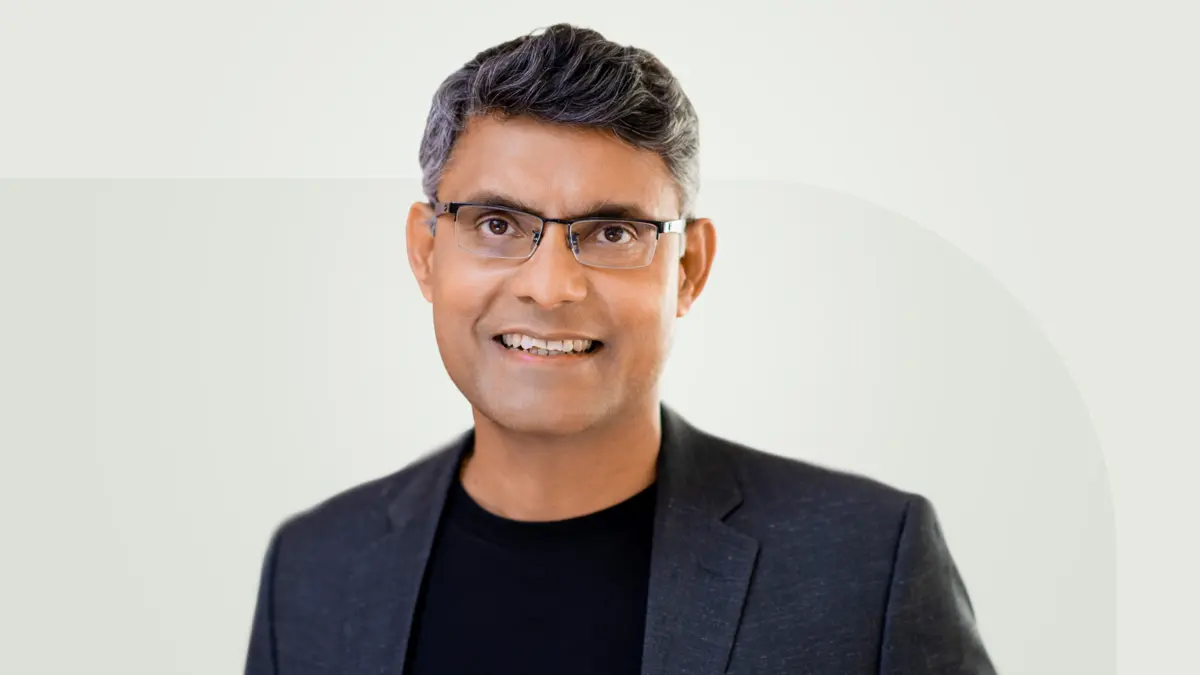
In the high-stakes landscape of financial services, legacy infrastructure is often the silent killer of innovation. For decades, traditional institutions have grappled with the anchor of outdated technologies—systems built in eras defined by entirely different computing standards, consumer expectations, and security paradigms. When Sastry Durvasula stepped into his role as Chief Operating, Information, and Digital Officer at TIAA in early 2002 [sic: early 2022], he encountered an organization wrestling precisely with these ghosts of tech architecture past. What followed was not a tentative patch job, but one of the most ambitious and comprehensive IT overhauls in the financial sector: the Technology Ecosystem Transformation initiative, better known as TETRIS.
Spanning multiple phases and anchoring its architecture in modern cloud and artificial intelligence (AI) paradigms, TETRIS was pitched to the TIAA board as a multi-million-dollar, three-pronged strategy designed to empower business growth, fuel continuous innovation, and radically transform the IT core. Rather than treating technical debt as a background engineering nuisance, Durvasula and his leadership team elevated infrastructure modernization to an executive-level strategic imperative.
The results have been striking. By systematically slashing technical debt, migrating core mainframe applications and data center infrastructures to the cloud, and pivoting from pure technology modernization to a business outcome-driven priority model, TIAA achieved a historic leapfrog moment. The initiative’s first phase earned a prestigious CIO 100 Award in 2025 for modernizing the core technology stack, while the second phase secured a subsequent CIO 100 Award in 2026 for enabling 87 distinct business use cases across all major enterprise lines.
This deep-dive investigation explores the anatomy of the TETRIS initiative, chronicling its evolution from a foundational infrastructure build to a business-accelerating powerhouse. We will examine the critical metrics, architectural choices, transparency frameworks, and cultural change management strategies that enabled TIAA to beat the notoriously high failure rates of enterprise digital transformations and future-proof its operations for the AI era.
Detailed Chronology: The Evolution of TETRIS
To understand the magnitude of TIAA’s transformation, one must first understand the baseline state of the organization’s technology prior to the project’s inception. In 2022, just before the launch of TETRIS, over 80% of TIAA’s IT workloads resided in fragmented, end-of-life platforms. This heavy reliance on legacy systems introduced profound operational risks, compromised security postures, weakened system resilience, and fundamentally constrained the company’s ability to compete in a rapidly digitizing wealth management marketplace.
Phase One: Building the Foundation (2023–2024)
Launched in 2023, Phase One of TETRIS was deliberately scoped as an infrastructure-first initiative. The primary directive was clear: stabilize the core, decommission end-of-support architectures, and establish a modern enterprise-grade foundation without being immediately shackled to specific commercial deliverables.
During this initial crucible, TIAA’s IT organization successfully overhauled its core technology stack by deploying 10 new enterprise platforms. This involved the consolidation of multiple middleware systems and data lakes, alongside the large-scale migration of legacy mainframe applications and traditional data center infrastructure to modern cloud environments.
Durvasula noted that Phase One metrics were intentionally tied to foundational delivery milestones—such as hitting platform migration targets and deploying enterprise data clouds and design studios—rather than immediate revenue generation. This deliberate phasing allowed the engineering teams to surgically remove deep-seated technological decay without triggering operational bottlenecks across customer-facing business units.
Phase Two: The Business-First Pivot (Late 2024–Present)
As Phase One successfully established the technological scaffolding, Phase Two of TETRIS—launched in late 2024—pivoted sharply toward a business outcome-driven prioritization model. Once the data cloud, design studios, and core platforms were operational, the focus shifted from how systems were built to what those systems could enable for customers and internal stakeholders.
This second wave unlocked 87 high-impact use cases across all major lines of business. Among the most visible commercial successes was the rapid launch of TIAA’s MyChoice Multi-Year Guaranteed Annuity (MYGA) product. Furthermore, the initiative enabled the creation of the TIAA Gateway portal—an advanced, API-based suite designed to integrate seamlessly with external partners in retirement and wealth planning using strict industry standards.
By embedding a business-first focus into the operational rhythm of the IT modernization strategy, TIAA ensured continuous executive sponsorship and clear return on investment (ROI) at every major project milestone.
Supporting Context & Metrics: Cutting Debt and Accelerating Delivery
Enterprise digital transformation is notoriously perilous. Industry estimates suggest that between 70% and 95% of digital transformation projects fail to meet their stated objectives, often buckling under the weight of scope creep, budget overruns, cultural resistance, and poor alignment with business strategy. TIAA’s ability to successfully navigate this treacherous terrain stands out as a masterclass in enterprise project management and architectural discipline.
Taming the Technical Debt Monster
At the core of the TETRIS initiative was a relentless drive to eradicate technical debt. When Durvasula arrived, TIAA was contending with workflows and platforms designed decades prior—some originating from the very dawn of the consumer internet era.
Through the combined efforts of Phases One and Two, TIAA managed to cut its legacy tech debt nearly in half, shrinking the percentage of workloads trapped in fragmented, end-of-life platforms. This reduction directly translated into improved system resilience, enhanced cybersecurity postures, and vastly mitigated operational risk.
Speed, Scale, and Accessibility
The architectural cleanup yielded immediate dividends in product velocity and user experience. By consolidating 17 disparate design systems—which previously caused digital products to look and behave inconsistently depending on the design team—TIAA accelerated its product launch cycles by 35%.
Beyond speed, the modernization program democratized access to TIAA’s digital offerings. The unified design and platform architecture enabled robust multi-lingual capabilities, significantly expanding digital accessibility for more than 185,000 customers who do not speak English as their primary language.
By unifying middleware, standardizing APIs, and migrating heavily siloed databases into agile cloud environments, TIAA transformed from a legacy-bound institution into an agile financial services provider capable of iterating at the speed of modern software.
Official Statements and Strategic Insights
Transforming an organization of TIAA’s size requires more than just clean code and cloud migrations; it demands rigorous governance, honest stakeholder communication, and a profound understanding of organizational psychology. Sastry Durvasula has been candid about the realities of executing a program of this scale.
Managing the Complexities of Scale
"As you expect in a company of our size, we have problems of yesterday, today, and tomorrow being solved at the same time," Durvasula explains. This duality is central to understanding the friction of legacy modernization. Financial institutions cannot simply halt operations to rewrite their codebases; they must maintain legacy engines while building the jet engines that will replace them mid-flight.
Reflecting on the nature of the systems his team inherited, Durvasula draws a sharp distinction between routine platform rationalization and overdue crisis management:
"There’s your classical platform and application rationalization, and then there’s your end-of-support, end-of-life stuff that should’ve been remediated long ago. Some of the processes we have, because we’re such a large, old company, were designed when the internet just came along."
Metrics, Transparency, and the Art of the Pivot
A cornerstone of TETRIS’s governance model was absolute transparency with the TIAA board and executive committee. Large-scale transformation programs often fail because leaders overpromise early results, leading to panic when initial quarters show heavy capital expenditure without immediate revenue spikes.
Durvasula emphasizes the necessity of honest metric setting and realistic expectations:
"Not everything is as pretty as it sounds in an awards application, but the success measures we established with our board were based on both phases. For the first one, we said we’d deliver enterprise-grade platforms and accomplish migration objectives, but not tied to any specific business objectives."
Furthermore, Durvasula stresses that goals must possess a degree of operational flexibility. Transparency with leadership frequently involves the uncomfortable admission that a chosen tool or path is not delivering the desired outcome and requires a strategic reset. "If something doesn’t go well, what’s the level of fungibility you have?" he asks. "We pick this tool, but what if it doesn’t work? You need to have a plan B."
Change Management and the Human Element
Perhaps the most critical insight from the TETRIS case study is that enterprise IT transformation is fundamentally a human and cultural initiative disguised as a technology project. Retiring decades-old systems requires an organization to guide its employees through deep professional anxieties.
To address this, TIAA established a multi-disciplinary team dedicated to change management, focused on breaking down internal silos and establishing common adoption goals across all business lines. Regular stakeholder forums and continuous, transparent communication helped employees understand why the changes were necessary rather than viewing them as arbitrary management decrees.
Durvasula highlights the psychological threat legacy systems pose to human talent:
"It’s a big organizational change. If you’re working on a legacy system, and you think at some point it’s going to be modernized, then you become a legacy talent, and won’t have a job."
However, TIAA framed the modernization initiative not as a threat, but as an upskilling opportunity. By assuring employees that their deep domain and functional business knowledge remained immensely valuable—provided they paired it with modern technical competencies—the organization turned potential resistance into active participation.
This cultural alignment was supercharged by external market forces. Because TETRIS coincided with the explosive emergence of generative AI and enterprise AI tools, employees across the organization were already acutely aware of the shifting technological landscape. "Because of AI, everybody woke up to this new reality," Durvasula notes. "We rode that wave when transformation drove from a cultural and organizational change management point."
Future Outlook: Sustaining Momentum in the Age of AI
As TIAA looks beyond the successes of TETRIS Phases One and Two, the organization faces the ultimate test of modern IT governance: preventing tomorrow’s tech debt while digesting today’s innovations.
In the fast-moving financial technology sector, software systems considered cutting-edge three years ago risk sliding into legacy status today, accelerated by the relentless velocity of artificial intelligence. By building a modular, cloud-native, and API-driven architecture through TETRIS, TIAA has positioned itself to continuously ingest emerging capabilities—such as advanced machine learning models, automated compliance auditing, and hyper-personalized wealth-planning tools—without requiring another disruptive, ground-up overhaul.
The blueprint established by TIAA offers a vital lesson for legacy enterprises across all industries. Technology modernization cannot succeed in a vacuum; it requires a phased approach that separates foundational infrastructure remediation from commercial value generation. It demands unyielding transparency with governing boards, robust contingency planning when architectures fail to perform, and, above all, a deeply empathetic approach to change management that brings the workforce along on the journey.
In successfully executing TETRIS, TIAA has proven that even the most deeply entrenched legacy institutions can escape the gravity of their past, turning decades of technical debt into a springboard for future market leadership.
